Introduction
Wolverhampton Wanderers (Wolves) have not always been labelled a “high-press team” in the way Liverpool under Jürgen Klopp or Manchester City under Pep Guardiola are. But across recent Premier League seasons, Wolves repeatedly use aggressive, organised pressure in specific moments—often to protect leads, swing momentum, or attack opponents who build up short. Under managers like Gary O’Neil (Premier League 2023–24) and Julen Lopetegui (Premier League 2022–23), the pressing intensity may vary week to week, but the principles remain educationally useful: Wolves try to win the ball high when the opponent is unstable, force play toward the touchline, and set traps around predictable passes. For fans learning tactics, Wolves are a great case study because their press is not just “run a lot.” It is about coordinated roles: the first line chooses the right moment to jump, midfielders lock nearby options, and defenders hold a line that squeezes space behind. Understanding these details helps you watch any European match with sharper eyes, from the Premier League to the UEFA Europa League.
How It Works
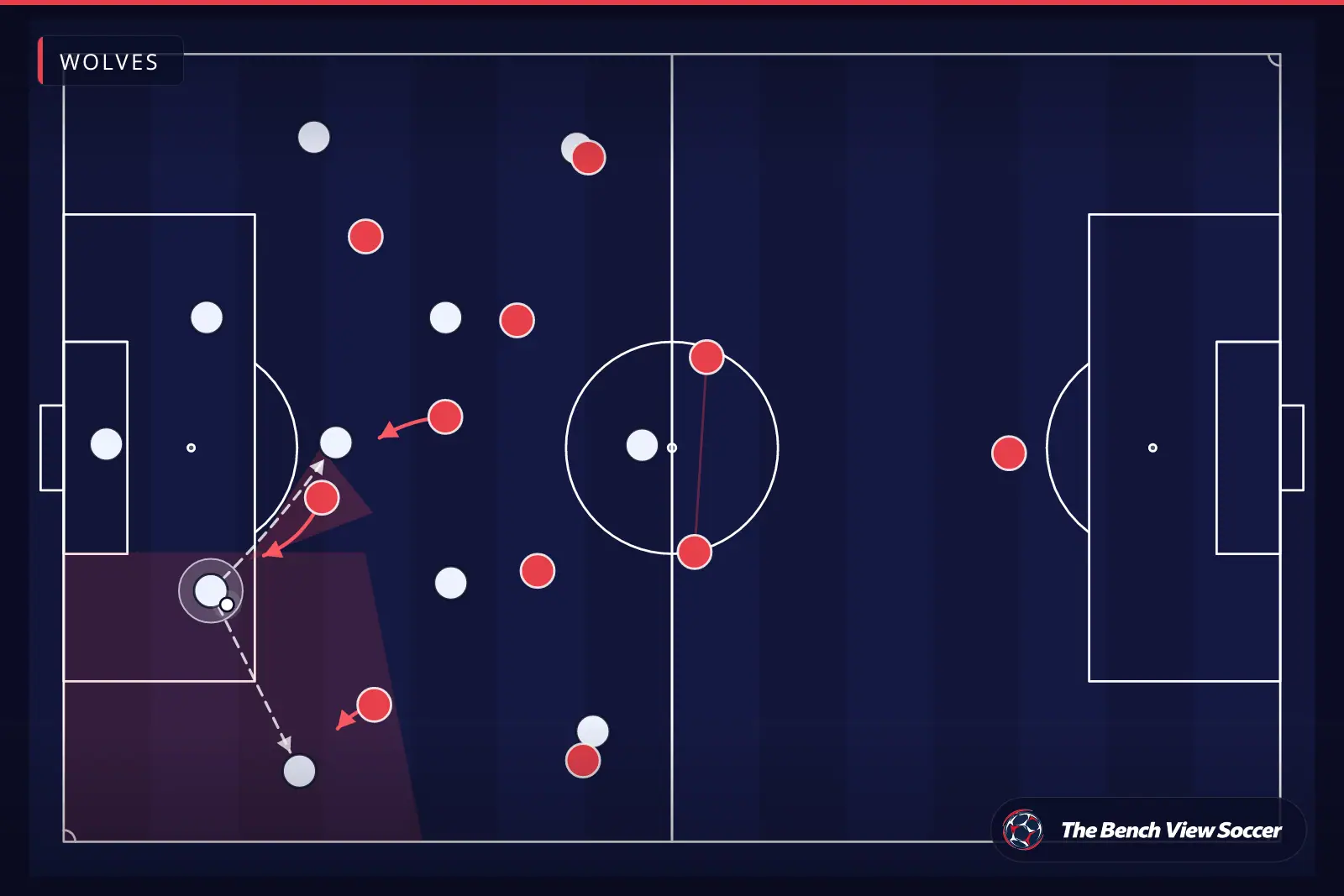
Wolves’ high press is best understood as a set of coordinated decisions rather than a constant all-game sprint. In many matches they start from a mid-block (defending around the middle third), then switch into a high press when the opponent shows a weak building pattern. The front line—often a striker plus two wide forwards or inside forwards—positions to block central passes into midfield. This is called “cover shadow”: a presser runs toward the ball-carrier while using their body angle to hide a passing lane behind them. Wolves often press with a curved run to force the ball wide, because the touchline becomes an extra defender. Once the ball goes to a full-back or wide centre-back, Wolves set a trap: the nearest winger jumps to press, the striker cuts the return pass to the centre-back, and the nearest central midfielder steps up to mark the opponent’s midfielder. The back line squeezes up to keep distances short; if the team is stretched (big gaps between lines), a high press becomes easy to break. Another key detail is the “rest defence”: even while pressing high, Wolves keep enough players behind the ball—typically centre-backs plus one midfielder—to deal with long balls or quick counters. When it works, the opponent either panics into a long clearance (a ‘forced turnover’) or plays a risky pass that Wolves intercept in advanced areas.
Match Examples
A clear example of Wolves using high pressure to tilt the pitch comes in the Premier League 2023–24 season under Gary O’Neil, especially in matches where opponents insist on building short from the goalkeeper. In Wolves’ 2–1 win away at Tottenham Hotspur (Premier League, 11 November 2023), Tottenham under Ange Postecoglou keep trying to progress with brave passes even under pressure. Wolves do not press constantly, but they increase aggression when Spurs play into the full-back zone, and Wolves’ wide players jump to lock the touchline while midfielders step in to attack the second ball. The result is sustained territory that helps Wolves finish the match strongly. Another useful reference point is Wolves vs Manchester City in the Premier League 2023–24 (Wolves win 2–1 at Molineux on 30 September 2023). City under Pep Guardiola are elite at playing through presses, so Wolves choose selective triggers: when City’s receiver takes a heavy touch or faces their own goal, Wolves’ nearest player presses at speed and the next line squeezes to remove short options. Even when Wolves cannot win the ball cleanly, the press delays City’s rhythm and forces them to recycle wider than they prefer. Finally, looking back to Julen Lopetegui’s period in Premier League 2022–23, Wolves often use pressing bursts after losing the ball (a quick counter-press) to stop counters immediately—especially versus mid-table sides who attempt to play out. These examples show an important lesson: Wolves’ “high press” is frequently about timing, triggers, and collective spacing, not nonstop pressure for 90 minutes.
Related Concepts & Skills
Training Implications
To train a Wolves-style high press, focus on coordination, distances, and clear triggers. First, run a 6v6+2 possession drill in a 35x25 metre area: one team builds up, the other presses. Give the pressing team a rule—“press hard only after a backward pass or a pass into the full-back channel.” This teaches selective pressing rather than mindless running. Coach the first presser to use a curved run to force play wide, and pause the drill to show the correct body shape (hips angled to block the inside pass). Second, add a “trap zone” near each touchline: if the ball enters that zone, the nearest winger must jump, the striker must block the return pass, and the nearest midfielder must step up to mark the inside option. Score a point for a win within 6 seconds, which builds intensity and timing. Third, train the back line’s squeeze with a simple rule: defenders must stay within 10–12 metres of the midfield line during the press, unless a long ball is clearly played. Use cones as reference lines so players learn spacing visually. Finally, include a transition finish: if the pressing team wins the ball, they have 8 seconds to create a shot on two mini-goals. This connects pressing to the real reward—attacking quickly while the opponent is disorganised.
The Bench View app
Don’t just read football — train it
Everything you read here, turned into training you can follow step by step.
Physical training at home
AI daily sessions adapted to your level and position. No equipment needed.
Tactical training courses
Step-by-step courses on positioning, pressing, build-up and decision making.
- 7 days free
- No commitment
- Cancel anytime
Free account: 2 physical sessions + the first tactical course. PRO: 7-day free trial — cancel before day 8 and you pay nothing.