

Lead: Denmark delivered a comprehensive 4-1 victory at Braga over Portugal in a match that doubled as Portugal’s first international without Cristiano Ronaldo. Rasmus Højlund scored twice as Denmark moved into second in Group A4 and edged closer to a quarter-final berth, while Norway beat Wales in Oslo with Erling Haaland prominent in the win; Wales dropped to the bottom of their group after a 3-1 loss.
What happened
Denmark travelled to Braga and produced an exceptional display, beating Portugal 4-1. The result was notable as Portugal were playing their first match since Cristiano Ronaldo’s retirement. Rasmus Højlund scored two goals in the game, a double that stood out in the visitors’ attacking show. The win elevated Denmark into second place in Group A4 and moved them closer to qualification for the Nations League quarter-finals. In a separate fixture, Norway beat Wales in Oslo — a match in which Erling Haaland featured — leaving Wales bottom after a 3-1 defeat.
The tactical reading
The scoreline in Braga and the description of Denmark’s display as "exceptional" point to a side that executed a clear, coherent game plan rather than relying on isolated moments. A 4-1 away win against a high-profile opponent typically suggests dominance in transitional moments, clinical finishing, and effective use of forward runners. Højlund’s double implies Denmark managed to create high-quality chances for their striker, likely by exploiting spaces in and around the box and timing forward movements to finish transitions.
Playing in Portugal’s home stadium would usually mean the home team expects to control possession and press high. Denmark’s success there points to a strategy that either neutralised Portugal’s ball progression or punished turnovers rapidly. That pattern typically involves compact defensive organisation to force opponents into mistakes, then quick, vertical passing and runners sprinting into the half-spaces to create overloads in dangerous channels. The double from a central forward hints that Denmark’s forward recruitment and timing were central to breaking down Portugal’s defensive structure.
Norway’s win in Oslo with Haaland highlighted a different but complementary tactical idea: the value of a dominant central forward as a focal point for transitions. When a team has a forward capable of converting opportunities consistently, it changes how teammates approach progressive play—more direct passes into and beyond lines, more movement to create pockets of space, and a willingness to commit men forward at the risk of exposing the flanks. That trade-off often yields high returns in the short term but requires disciplined recovery shapes to avoid being punished on the counter.
Both results underline the modern tactical premium on pressing efficiency and transitional sharpness. Teams that press in coordinated waves and immediately exploit the disorganisation they produce gain a disproportionate advantage. The trade-off is defensive vulnerability if the press is bypassed; a successful game plan therefore balances aggression with positional cover, channeling opponents into less dangerous areas and protecting the space behind the pressing lines.
Key tactical points
- Coordinated pressing that targets specific passing lanes can force turnovers in high-value areas and create quality chances for central forwards.
- Timing of forward runs is crucial — synchronised movement from wingers and the striker creates penetrative angles and overloads the box.
- Transition finishing beats possession dominance: clinical execution in the final third converts pressing success into decisive scorelines.
- Using a focal striker, as Norway did around Haaland, allows teams to play more direct and aggressive, provided there is a recovery plan to cover the flanks.
- Balance between pressing intensity and defensive cover is a strategic trade-off; teams that win away vs. strong opponents usually manage that balance consistently.
What to watch next
In upcoming matches, watch whether Denmark maintains the same pressing structure and transitional tempo that produced four away goals in Braga. Can they replicate the coordination and finishing that created Højlund’s double against opponents who adapt to deny quick vertical passes and central penetration?
For Norway, observe whether their game continues to pivot around Haaland’s presence as a focal point for attack. The questions to track are: will teammates continue to commit runners into the box and risk counter-exposure, and do Norway have the defensive recovery mechanisms to sustain an aggressive, direct approach over a tournament run?
Train it
Theme: Rapid transition pressing into vertical finishing. A practical drill to train the sequence is a 6v6+2 transitional rondo that moves into a finishing phase once a turnover is won in the middle third.
- Coaching point 1: Encourage immediate vertical passes after a turnover — the first pass should aim to break the line and find a forward runner within two touches.
- Coaching point 2: Defenders and midfielders must form compact pressing banks to funnel opponents into predictable zones, then sprint to the next phase to support the counter-attack.
- Coaching point 3: Finishers (forwards) time their runs to arrive simultaneously with the first inversion pass; practise both near-post and far-post finishing scenarios under pressure to build composure.
Sources
The Bench View app
Don’t just read football — train it
Everything you read here, turned into training you can follow step by step.
Physical training at home
AI daily sessions adapted to your level and position. No equipment needed.
Tactical training courses
Step-by-step courses on positioning, pressing, build-up and decision making.
- 7 days free
- No commitment
- Cancel anytime
Free account: 2 physical sessions + the first tactical course. PRO: 7-day free trial — cancel before day 8 and you pay nothing.

More Analysis
England’s Madrid Masterclass and The Hairline Hold: Tactical lessons from the 3-2 win over Spain
November 16, 2026
Team StudySpain v England: what the build-up tells us — the influence of Unai Simón, Tuchel's selections and the off-field backdrop
November 15, 2026
Tuchel, protocols and selection dilemmas: tactical lessons from England’s Madrid build-up
November 15, 2026
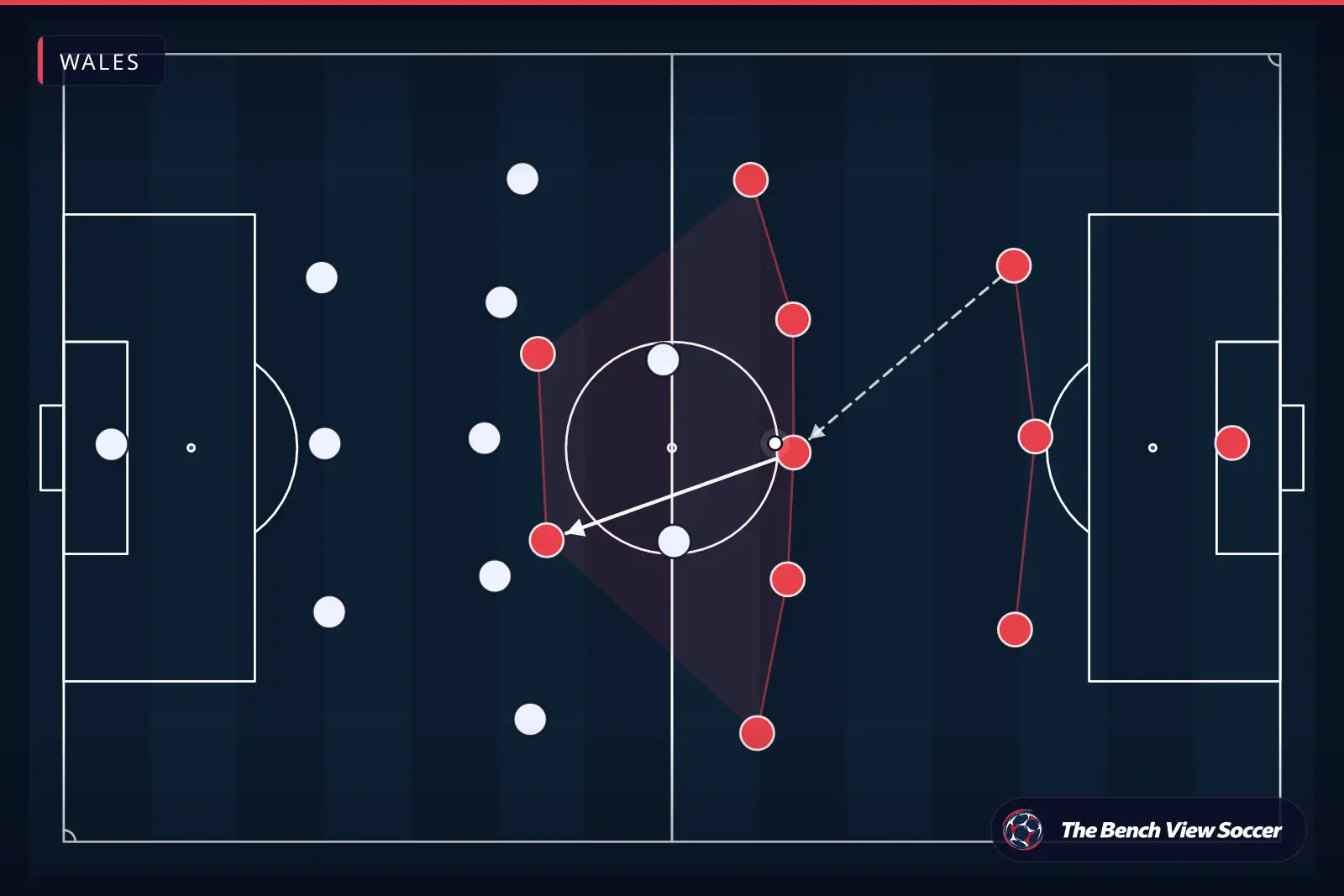
Norway 3-1 Wales — what the result says about Wales’ Nations League peril and tactical lessons
November 14, 2026