

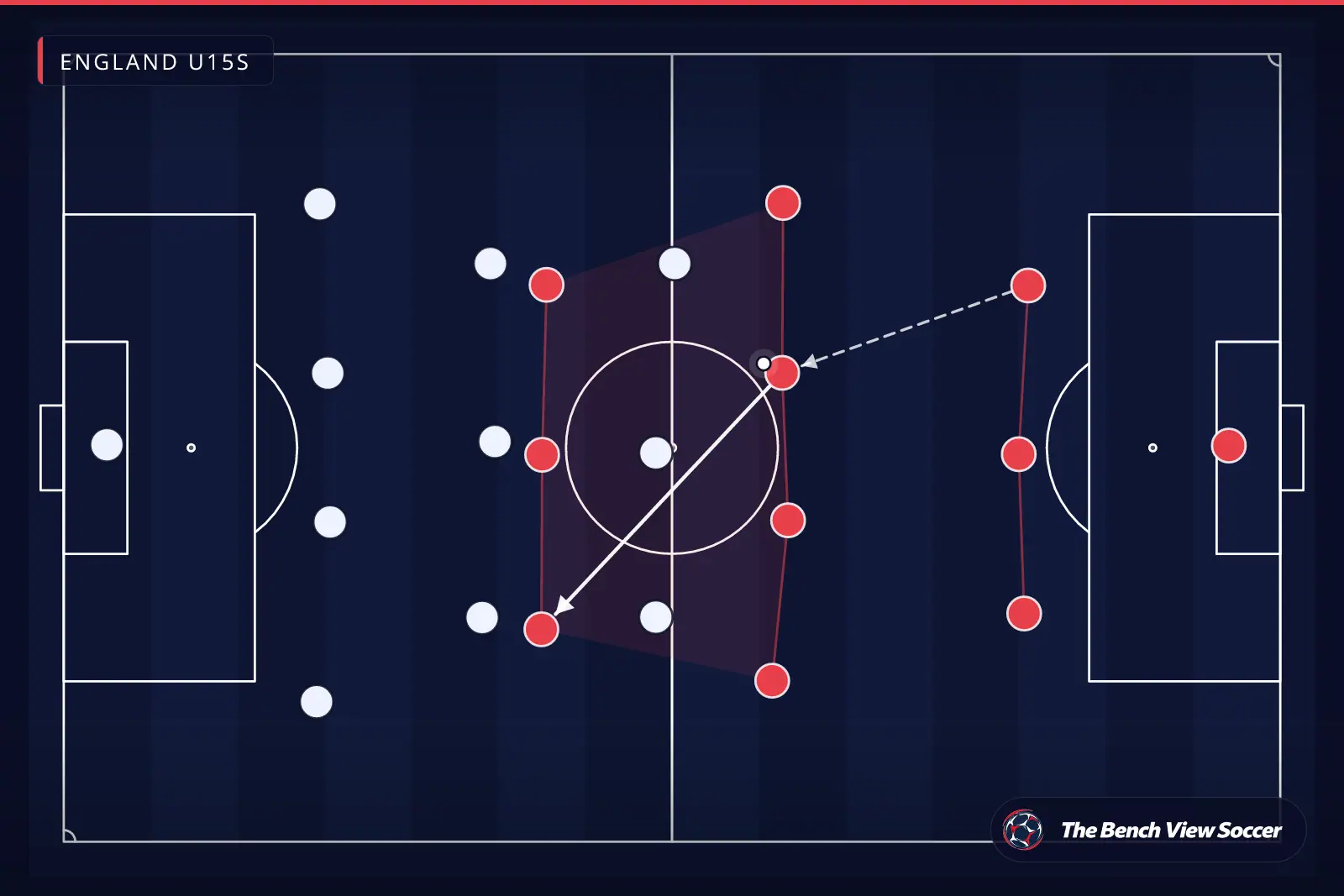
The England Under-15s match against the Republic of Ireland in the Under-15 World Cup was abandoned after England alleged a player had been subjected to a racist comment. The incident occurred in the final minute of the Group C fixture in Baku, Azerbaijan, when Ireland were leading 4-1. England's players refused to resume the match and footage showed an England player approaching the bench after an altercation. FIFA has confirmed it is investigating the events.
What happened
During the final minute of the Group C game in Baku, with the Republic of Ireland leading 4-1, an England player is reported to have alleged he was subjected to a racist comment by an opponent. Following an on-field altercation, video footage captured an England player walking toward his team's bench. The England team then declined to continue the match, and the fixture was abandoned. FIFA has announced an investigation into the incident.
The tactical reading
When an incident leads to a match being halted or abandoned, it immediately changes the priorities and decision-making for coaches and players. The situation in Baku—an allegation arising in the final minute of a one-sided scoreline—highlights how off-field or off-the-ball incidents intersect with on-field management. In youth matches especially, coaches must juggle development aims with player safety and team cohesion, and an event like this forces those choices into sharp relief.
From a structural perspective, the timing of the incident matters. In a game with a clear scoreline late on, teams commonly shift focus from attacking ambition to game management and emotional control. An allegation that affects player wellbeing interrupts that process and typically requires immediate intervention from staff and match officials. The decision by England's players to refuse to resume points to the primacy of protecting players and collective response mechanisms over continuing play in contested circumstances.
The roles of bench staff and team captains become pivotal in moments like these. A coach or captain often acts as the intermediary between officials and players, communicating intent, calming individuals, and influencing whether a team continues. Video showed an England player approaching the bench after the altercation, which underscores how players often seek guidance or support from staff in the heat of the moment. That dynamic usually determines whether a team keeps playing or withdraws.
There are trade-offs inherent in both continuing and abandoning a fixture. If a team elects to play on after a serious allegation, it risks perceived complacency toward player welfare and potential long-term damage to trust within the squad. Conversely, abandoning a match can have competitive ramifications and uncertainty around administrative outcomes. For coaches, the priority tends to be safeguarding young athletes and ensuring a clear, consistent protocol for handling discriminatory incidents.
Key tactical points
- Establish clear, rehearsed protocols for discriminatory incidents so players and staff know who speaks to match officials and how decisions are made.
- Train captains and senior youngsters in on-field leadership so they can immediately manage teammates' emotions and communicate calmly with referees.
- Practice late-game management scenarios that include non-football disruptions (e.g., confrontations, crowd incidents) to maintain composure under stress.
- Ensure bench-staff roles are defined in emergency moments: who consoles the player, who liaises with referees, and who manages substitutes.
- Prioritize player welfare over competitive outcomes; create a culture where reporting and collective action are supported and understood.
What to watch next
Observers should follow the outcome of the formal investigation and any directives from the competition organisers or FIFA on match protocol after discriminatory incidents. How governing bodies clarify responsibilities for match officials, teams, and organisers in these situations will shape future behaviour.
For clubs and national setups, watch whether teams refine their in-game protocols and leadership training at youth levels. Will coaches change how they prepare captains and benches to act during incidents? Will training programmes place greater emphasis on emotional management and reporting mechanisms? Those adaptations will be visible in the way teams respond to similar disruptions going forward.
Train it
Exercise: "Incident Response Rondo" — a rondo-style drill that adds an off-ball confrontation component to simulate emotional disruption while maintaining focus on possession and decision-making.
- Coaching point 1: Emphasise quick, calm communication—players should signal to the coach-captain figure when an incident occurs and follow a pre-agreed protocol (e.g., freeze, speak to captain, re-form shape).
- Coaching point 2: Practice composed ball retention under provocation—introduce a controlled stimulus (a shout or simulated confrontation) and reward teams that keep structure and complete a set number of passes.
- Coaching point 3: Reinforce roles—assign a player on each side to act as the on-field liaison to the coach so youngsters rehearse how to seek guidance without escalating the situation.
Sources
The Bench View app
Don’t just read football — train it
Everything you read here, turned into training you can follow step by step.
Physical training at home
AI daily sessions adapted to your level and position. No equipment needed.
Tactical training courses
Step-by-step courses on positioning, pressing, build-up and decision making.
- 7 days free
- No commitment
- Cancel anytime
Free account: 2 physical sessions + the first tactical course. PRO: 7-day free trial — cancel before day 8 and you pay nothing.
More Analysis
Infantino dismisses resignation talk, says he has backing of 'vast majority'
October 25, 2026
England claim first Cerebral Palsy World Cup after final win over USA
October 25, 2026
FIFA doubles Women’s World Cup preparation funds to equal men’s
October 23, 2026
Haiti’s Nations League 'Home' Tie Shifted to Miami’s Nu Stadium
October 23, 2026