Introduction
Manchester City under Pep Guardiola turns “building from the back” into a controlled way of attacking. For many fans, the phrase can sound simple—centre-backs pass to midfield, then City moves forward. But City’s real edge is positional rotation: players exchange roles and zones so the team always keeps safe passing options while pulling opponents out of shape. This matters in the Premier League, where teams like Liverpool, Arsenal, and Tottenham press aggressively, and in the UEFA Champions League, where small mistakes get punished. City’s build-up is not about taking risks for style; it is about reducing risk by creating multiple exits from pressure at the same time. When one passing lane closes, another opens because a full-back steps inside, a midfielder drops between centre-backs, or a winger stays high to pin the opposition full-back. The goal is consistent: progress with control, keep the ball, and arrive in advanced areas with numbers and structure—without losing defensive stability if possession breaks down.
How It Works
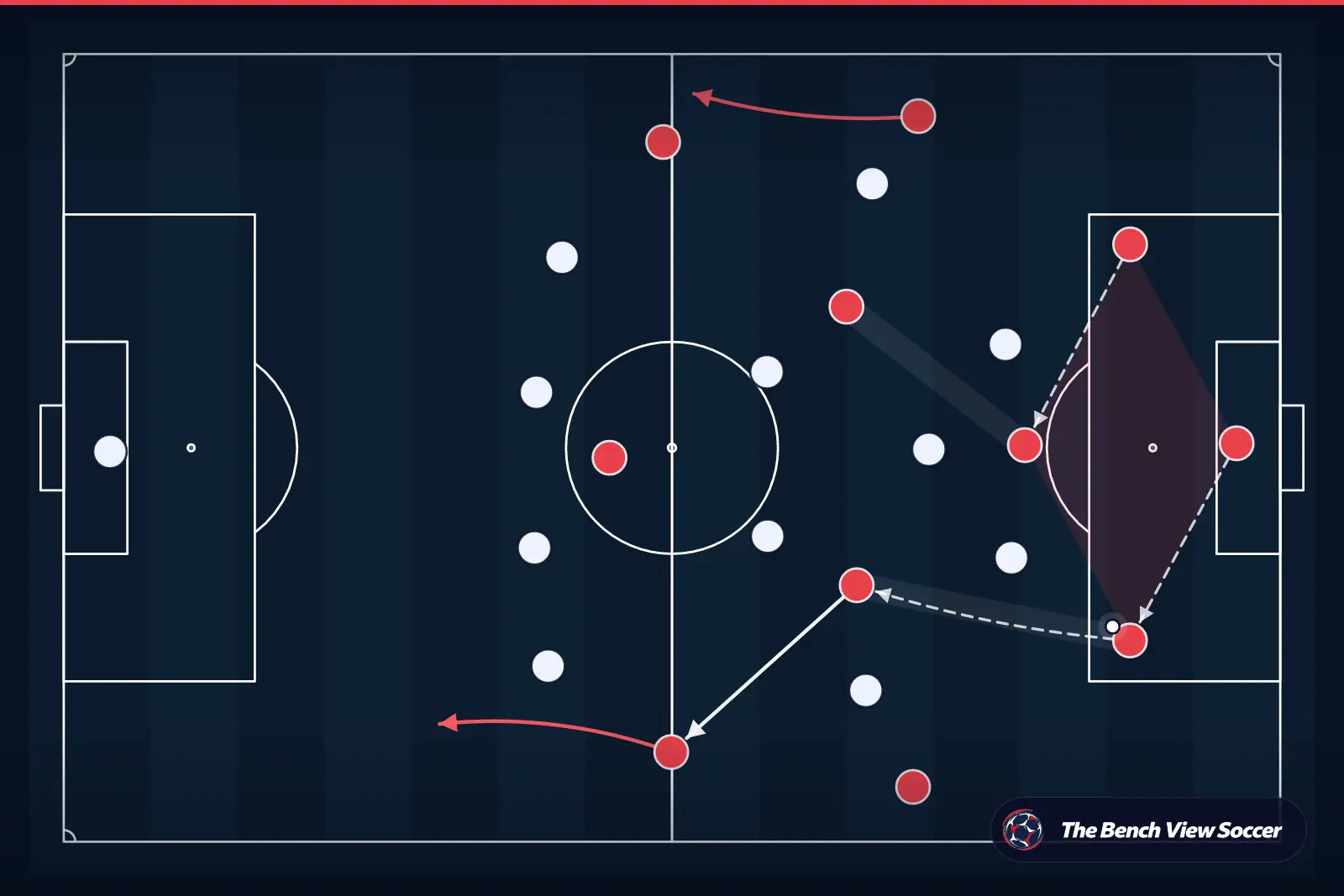
City’s build-up usually starts with Ederson acting like an extra outfield player. He stays calm and uses short passes to invite pressure, because pressure creates space elsewhere. The key idea is that City rarely keeps a fixed “back four” shape during possession. One full-back—often John Stones in recent seasons, or previously Oleksandr Zinchenko or João Cancelo—moves inside next to Rodri, forming a “box midfield” (two players deeper, two slightly higher). This gives City central superiority against common pressing shapes like a 4-4-2 or 4-2-3-1. Meanwhile, the centre-backs (Rúben Dias, Manuel Akanji, Nathan Aké) spread wider to stretch the first line of pressure and open lanes into midfield. Rotation is what makes this structure hard to press. If an opponent follows Rodri tightly, a midfielder like Bernardo Silva or İlkay Gündoğan (in earlier seasons) drops into the first line to receive, while a centre-back steps forward to fix the pressing forward. If the opponent blocks central passes, City switches: Dias plays wide to Aké, then into the inside full-back, then into a “third man.” The third man concept means Player A passes to Player B, who is marked, but Player B sets the ball to Player C who is free because the marker is attracted to B. Up front, Erling Haaland pins centre-backs by staying high, while Kevin De Bruyne or Phil Foden positions between lines to receive the next pass. Wide players like Jack Grealish hold the touchline to keep the opposing full-back deep, creating space inside for City’s midfielders to rotate and receive.
Match Examples
A clear modern reference is Manchester City vs Inter Milan in the 2022–23 UEFA Champions League final. Inter under Simone Inzaghi presses in a compact 3-5-2/5-3-2 shape and tries to block central access to Rodri. City responds by shifting the build-up: Stones steps into midfield next to Rodri, while Akanji and Aké hold wide positions to stretch Inter’s first line. City uses patient circulation to move Inter’s midfield laterally, then finds the moment to play into De Bruyne’s zone between the lines (even though he goes off injured) and later into the area where Rodri scores. The point for learners: City does not force one “pattern”; they keep rotating the start positions until the opponent’s block becomes slightly late. Another strong example is Manchester City vs Arsenal in the Premier League 2022–23 at the Etihad Stadium (April 2023). Mikel Arteta’s Arsenal presses with intensity and wants to lock City on one side. City’s rotations—especially Stones stepping inside and Bernardo Silva’s flexible role—help City escape pressure and then attack the space behind Arsenal’s midfield. Haaland’s presence pins defenders, and De Bruyne’s movements become more dangerous because Arsenal’s midfield line is constantly being manipulated by City’s passing triangles. For an earlier Guardiola reference, Manchester City vs Liverpool in the Premier League 2018–19 at the Etihad shows how City builds to beat a famous press under Jürgen Klopp. City’s defenders and goalkeeper invite Liverpool forward, then use quick, clean passes into midfield and out to the wings. The rotations are not as “box midfield” heavy as later seasons, but the same principle appears: create multiple angles, drag pressers out, then play through or around them with a free man.
Related Concepts & Skills
Training Implications
To train a “City-like” build-up with rotation, start with simple rules and repeatable constraints. First, run a 6v4 build-up rondo: goalkeeper + back four + one pivot (6) versus four pressers. Set a target: complete 8 passes then find a mini-goal (representing a pass into midfield). Coach the centre-backs to split wide, and coach the pivot to scan (look over shoulder) before the ball arrives. Second, add a full-back-inverting rule: when the ball is with the goalkeeper or centre-back, one full-back must step inside next to the pivot. Rotate who inverts every 2–3 minutes so players learn the movement, not just one specialist. Third, coach “third-man” patterns with a triangle drill: CB plays into pivot (marked), pivot sets to an interior midfielder, who then plays forward to a winger or striker. Emphasise body shape: receive on the half-turn where possible, and use one-touch sets when under pressure. Fourth, include a transition rule to teach rest defence: if the pressing team wins the ball, they have 6 seconds to score in a counter mini-goal. This forces the build-up team to keep two players connected behind the ball and react immediately on loss. Finally, give players simple communication cues—“man on,” “turn,” “set”—and grade sessions on decision-making, not just pass completion. The goal is not copying Manchester City’s exact players, but building habits: create angles, rotate intelligently, and protect yourself if you lose the ball.
The Bench View app
Don’t just read football — train it
Everything you read here, turned into training you can follow step by step.
Physical training at home
AI daily sessions adapted to your level and position. No equipment needed.
Tactical training courses
Step-by-step courses on positioning, pressing, build-up and decision making.
- 7 days free
- No commitment
- Cancel anytime
Free account: 2 physical sessions + the first tactical course. PRO: 7-day free trial — cancel before day 8 and you pay nothing.