Introduction
In the fast-paced world of soccer, creating space and opportunities is crucial for strikers. One effective method to bypass defenders is through one-two combinations, also known as wall passes. This tactic not only allows players to evade challenges but also opens up the field for potential scoring chances. In this article, we will delve into the mechanics of one-two combinations, explore their tactical significance, and provide insights on how to incorporate them into training sessions. Understanding and mastering this technique can elevate a striker's game, making them a more formidable presence in the attacking third.
Tactical Breakdown
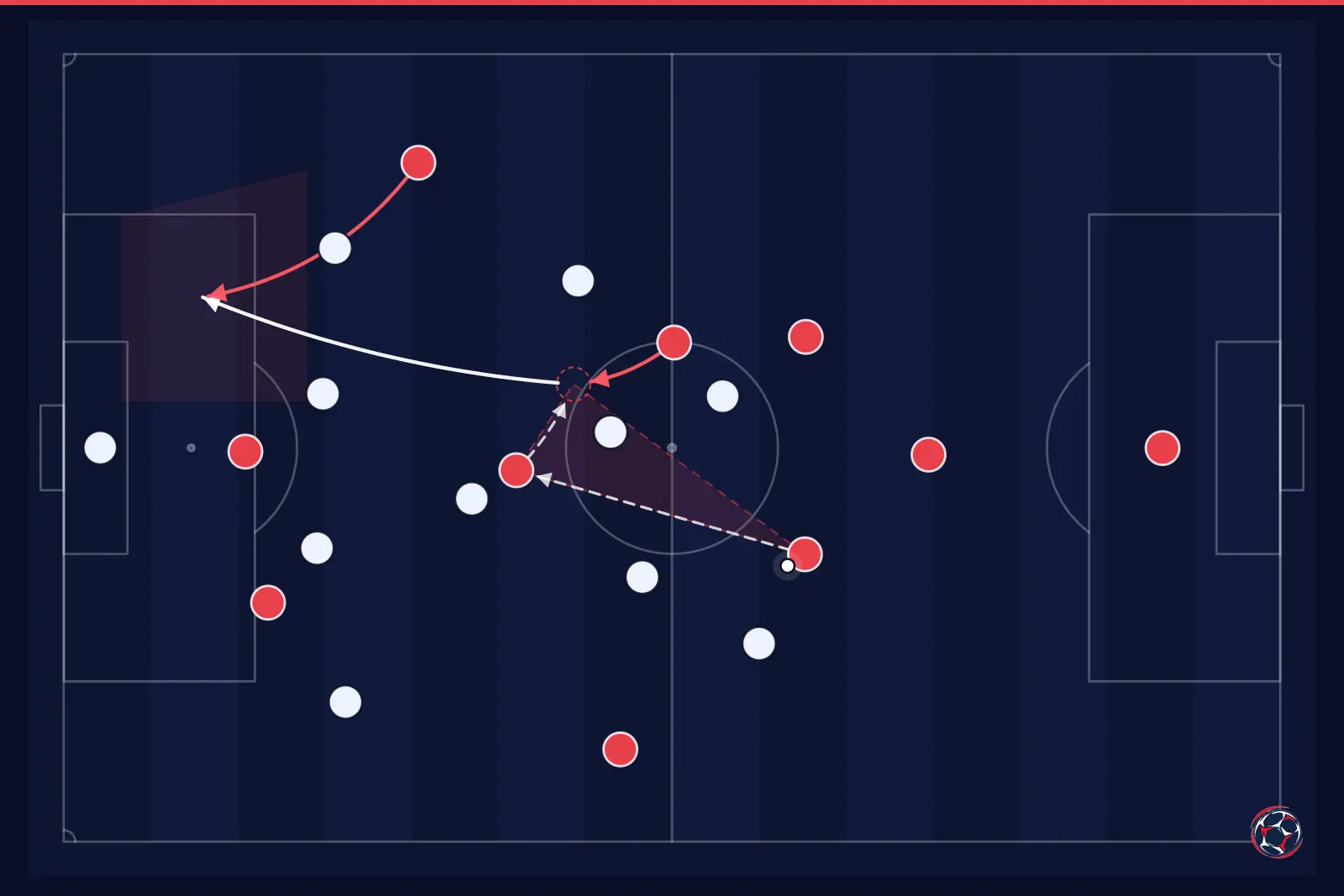
One-two combinations involve two players working in tandem to outmaneuver a defender. The first player, typically the striker, initiates the move by passing the ball to a teammate, then immediately makes a run to receive the ball back, often in a more advantageous position. This swift exchange is designed to exploit the momentary confusion or displacement of the defender. Key to this tactic is timing and spatial awareness; the striker must recognize the defender's positioning and predict the optimal moment to receive the return pass.
In terms of positioning, the striker should aim to create an angle that maximizes passing lanes while maintaining proximity to the defender. The teammate receiving the initial pass must be aware of the striker's movement and ready to deliver a precise return pass. Successful execution often relies on the understanding between players, making communication and practice vital components.
Real Match Examples
One of the most notable implementations of one-two combinations in modern football can be seen in Pep Guardiola's Manchester City. During their 2019-2020 Premier League campaign, players like Kevin De Bruyne and Raheem Sterling frequently utilized this tactic to breach tight defenses. In a match against Arsenal, De Bruyne's quick one-two with Sterling resulted in a decisive goal, showcasing how effective this combination can be in real match situations.
Another prime example is Liverpool under Jürgen Klopp, where Mohamed Salah and Sadio Mané often engage in these rapid exchanges. In a critical Champions League match against Barcelona in 2019, Salah's one-two with Mané allowed him to evade defenders and create a goal-scoring opportunity, highlighting the effectiveness of the tactic in high-pressure scenarios.
Key Principles
- Timing is Crucial: Execute the one-two at the right moment to catch defenders off-guard.
- Spatial Awareness: Understand the positioning of both teammates and defenders to maximize effectiveness.
- Communicate: Develop a rapport with teammates to anticipate movements and passes.
- Practice Makes Perfect: Regularly incorporate one-two drills in training to build instinct and fluidity.
Training Implications
To effectively integrate one-two combinations into practice sessions, coaches should focus on creating game-like scenarios that encourage quick exchanges. Start with small-sided games that emphasize the importance of movement off the ball and quick decision-making. Drills can include rondos where players must execute one-two passes under pressure, or set up scenarios where strikers must navigate through defenders using this tactic.
Additionally, incorporating video analysis of elite teams successfully executing one-two combinations can provide players with visual understanding. Coaches should encourage players to experiment with variations of the one-two, such as using a backheel or a flick, to enhance creativity in their play.
The Bench View app
Don’t just read football — train it
Everything you read here, turned into training you can follow step by step.
Physical training at home
AI daily sessions adapted to your level and position. No equipment needed.
Tactical training courses
Step-by-step courses on positioning, pressing, build-up and decision making.
- 7 days free
- No commitment
- Cancel anytime
Free account: 2 physical sessions + the first tactical course. PRO: 7-day free trial — cancel before day 8 and you pay nothing.