Alexia Putellas has won a record-equalling third Ballon d'Or Feminin as Spain and Barcelona dominated the 2026 awards. The result underlines an ongoing pattern of individual recognition concentrated around players from Spain and Barcelona.
What happened
Reports list the full set of 2026 Ballon d'Or winners and highlight a dominance by Spanish players and representatives from Barcelona. Among the winners, Barcelona and Spain featured prominently. Alexia Putellas, a Barcelona and Spain midfielder, received the Ballon d'Or Feminin for a third time, equalling the existing record for the award.
The tactical reading
That a midfielder has again taken the top individual honour points to the contemporary premium placed on central players who control tempo and link phases of play. When award panels repeatedly single out a midfielder, it typically reflects that the player is perceived as decisive in ball progression, transitional control and the orchestration of attacking patterns. In teams associated with technical build-up football, such midfield figures often occupy roles that combine creativity with defensive responsibility.
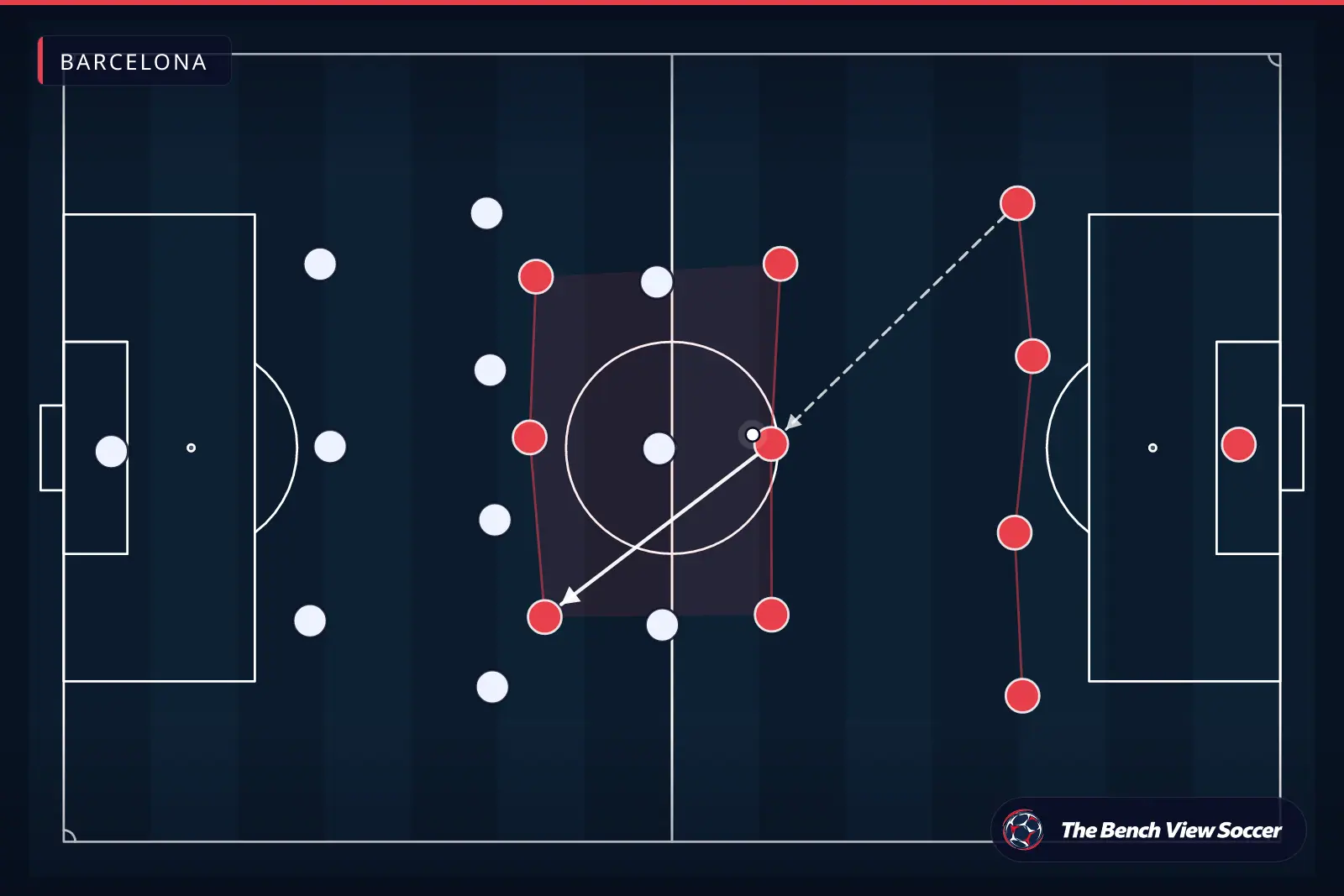
The clustering of winners around Barcelona and Spain suggests a stylistic continuity: both the club and national contexts are frequently linked to a possession-oriented approach that values progressive passing, positional rotation and high levels of technical proficiency. That environment tends to produce midfielders whose tasks include creating passing lanes, unlocking compact defensive lines and maintaining possession under pressure—responsibilities that are visible to observers and influential when individual awards are decided.
For coaches and players, the pattern of recognition highlights the interplay between individual excellence and system design. Outstanding midfield performances are rarely isolated; they typically sit within a structure that accentuates a player’s strengths. Systems that encourage short passing, third-man runs, and coordinated pressing can amplify a central player’s influence. Conversely, a coach who asks a midfielder to take on expanded duties—such as initiating transitions, covering wide spaces or orchestrating high-press triggers—accepts trade-offs in terms of defensive risk or energy expenditure across a season.
Finally, the recurring success of players from the same club and country signals how talent development and tactical philosophy reinforce each other. A club or national programme that consistently produces high-performing individuals often does so through coherent coaching across age groups, a shared identity that simplifies role adaptation, and match models that allow elite players to express a high football IQ. For opponents, repeatedly facing teams with this profile demands tactical countermeasures that target rhythm disruption and collective defensive organisation rather than one-on-one neutralisations.
Key tactical points
- Midfield control remains a decisive factor: teams that prioritise a central conduit for tempo and progression increase the visibility and impact of their midfielders.
- System amplifies skill: individual brilliance is most effective when embedded in a consistent team structure that purposefully channels the player’s strengths.
- Positioning and rotation: dominant teams often rely on coordinated positional rotations to create overloads and open passing lanes for central creators.
- Pressing and counter-pressing roles elevate midfield value: midfielders who lead or coordinate pressing phases are central to both winning the ball high and protecting transitional vulnerabilities.
- Development pipeline matters: clubs and nations with aligned coaching philosophies can repeatedly produce players who fit a high-possession, technical mould.
What to watch next
Going into upcoming matches and selection windows, watch how opposing coaches attempt to blunt the influence of players who serve as their team’s tempo engines. Will opponents choose to compress space centrally to force long play, or will they risk leaving channels open that could be exploited by quick combination play? The manner in which teams set their defensive block and whether they commit numbers to press the ball-carrier will reveal how seriously they take neutralising the creative hub.
Also observe whether clubs and national sides that have produced multiple award winners continue to rely on the same tactical template or introduce variations to preserve unpredictability. Adjustments in player roles—such as deploying midfielders with freer roaming licences or pairing them with more defensive-minded partners—will show how coaches balance creative freedom with collective balance over a season.
Train it
To cultivate the type of midfield control that frequently wins individual acclaim, teams should work on a rondo-based progression drill that moves beyond static possession to emphasise transition, positional rotation and vertical threat. The exercise trains quick decision-making under pressure while encouraging off-the-ball movement to create passing triangles and third-man options.
- Set up a 6v2 rondo in a 25x20m area with two target players outside the short ends. The team of six must complete a set number of passes before switching the ball to a target, who returns it into a new 6v2 phase on the opposite end.
- Key coaching points: encourage first-touch orientation toward the next pass, demand constant scanning for receiving lines, and reward third-man moves and short rotations that destabilise the passive defenders.
- Progression: add a time limit or reduce touches to pressure decision speed; introduce a recovering defender who can neutralise one receiving lane to simulate in-game constraints.
Sources
The Bench View app
Don’t just read football — train it
Everything you read here, turned into training you can follow step by step.
Physical training at home
AI daily sessions adapted to your level and position. No equipment needed.
Tactical training courses
Step-by-step courses on positioning, pressing, build-up and decision making.
- 7 days free
- No commitment
- Cancel anytime
Free account: 2 physical sessions + the first tactical course. PRO: 7-day free trial — cancel before day 8 and you pay nothing.