Introduction
Set-pieces are one of the most valuable opportunities in football, providing teams with the chance to score without the dynamic play of open-field scenarios. However, the effectiveness of set-pieces often hinges on meticulous preparation and tactical foresight, particularly in the moments leading up to the delivery. In this article, we delve into the concept of set-piece creation, emphasizing the importance of crafting scoring chances before the ball even moves. From positioning to movement, we’ll explore how attacking midfielders can play a pivotal role in set-piece execution, drawing on insights from elite teams like Manchester City, renowned for their innovative approaches.
Tactical Breakdown
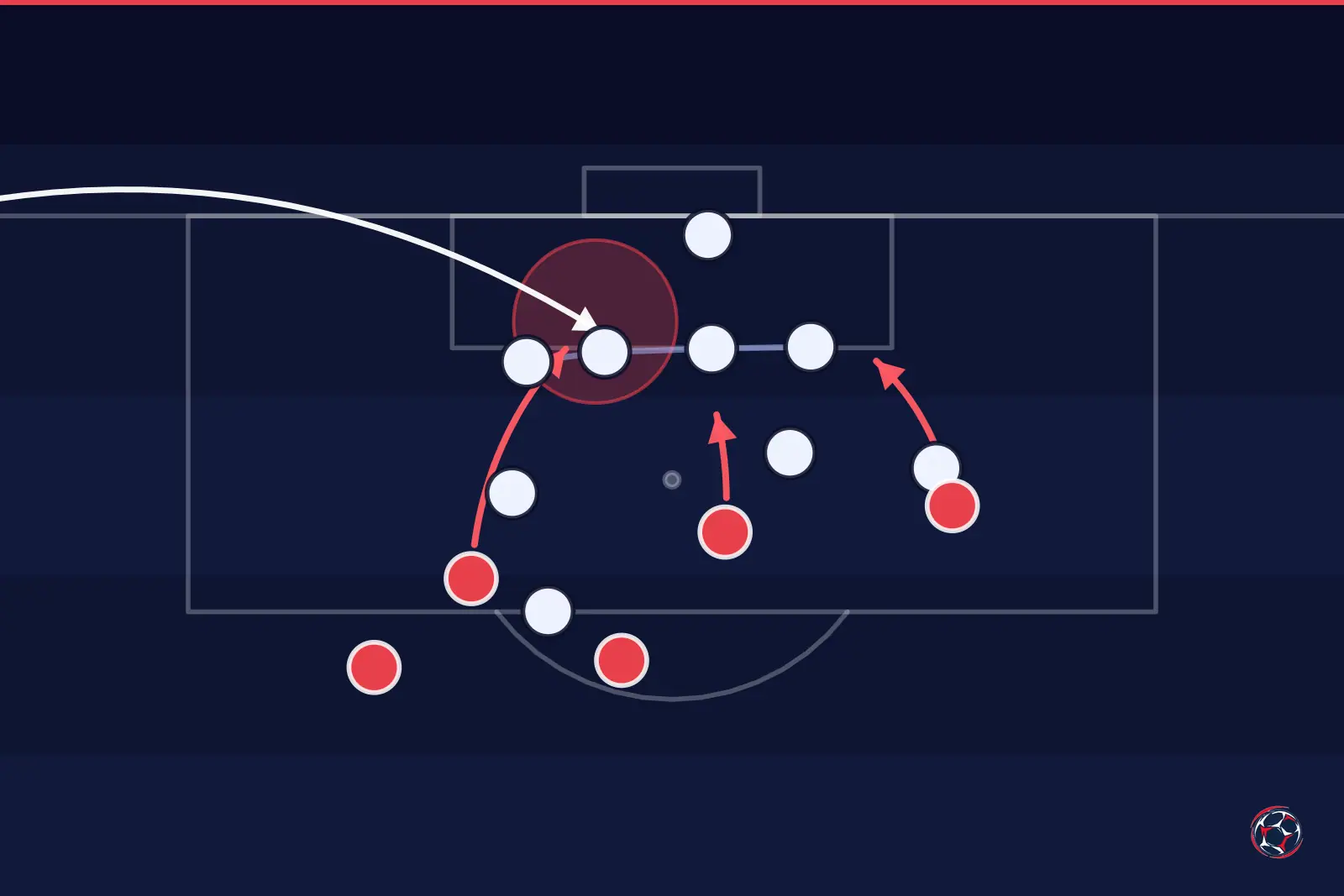
At its core, set-piece creation involves designing specific movements and formations that maximize scoring potential during dead-ball situations. The attacking midfielder is crucial in this setup, orchestrating movements and signaling for teammates to create confusion among defenders. A successful strategy often begins with the placement of players; attackers should occupy spaces that draw defenders away from high-probability scoring zones. For instance, using 'decoy' runs—where players feign movements to mislead defenders—can open up gaps for others to exploit. Additionally, understanding the defensive alignment of the opposing team allows for strategic adjustments, such as overloading one side of the pitch or utilizing short corners to create mismatches. This proactive approach not only prepares players for the delivery but enhances their ability to react quickly to changing scenarios.
Real Match Examples
One of the most illustrative examples of effective set-piece creation can be seen in Manchester City's approach under Pep Guardiola. During the 2021 Premier League season, City utilized intricate routines from corners where players would spread out and create a numerical advantage in critical areas. In a match against Chelsea, City executed a routine that involved players pulling defenders away and creating a 2v1 scenario, resulting in a clear shot on goal. Similarly, the Brazilian midfielder Bruno Fernandes has shown exceptional ability in manipulating defensive shapes during set-pieces for Manchester United, often taking crucial free-kicks that catch defenders unprepared. His ability to read the game and adjust his positioning has led to many scoring opportunities, showcasing the importance of anticipation and awareness in set-piece scenarios.
Key Principles
- Anticipation: Train players to anticipate defensive movements and adjust their positioning accordingly.
- Decoy Runs: Incorporate drills that emphasize the use of decoy runs to create space for teammates.
- Communication: Foster a culture of communication where players signal intentions and movements clearly.
- Versatility: Encourage adaptability in set-piece routines to keep opponents guessing and unprepared.
Training Implications
To effectively train set-piece creation, coaches should design practice sessions that simulate real match conditions. Begin by focusing on positioning and movement, allowing players to experiment with various formations. Incorporate drills that emphasize timing and communication, ensuring that players understand their roles within the routine. For example, practice corner kicks where players must read the defensive setup and adjust their movements accordingly. Additionally, film analysis can be an invaluable tool; reviewing successful set-pieces from elite teams can inspire creativity and tactical innovation among players. Ultimately, the goal is to make set-pieces a routine yet dynamic aspect of the game, empowering players to seize every opportunity to score.
The Bench View app
Don’t just read football — train it
Everything you read here, turned into training you can follow step by step.
Physical training at home
AI daily sessions adapted to your level and position. No equipment needed.
Tactical training courses
Step-by-step courses on positioning, pressing, build-up and decision making.
- 7 days free
- No commitment
- Cancel anytime
Free account: 2 physical sessions + the first tactical course. PRO: 7-day free trial — cancel before day 8 and you pay nothing.