

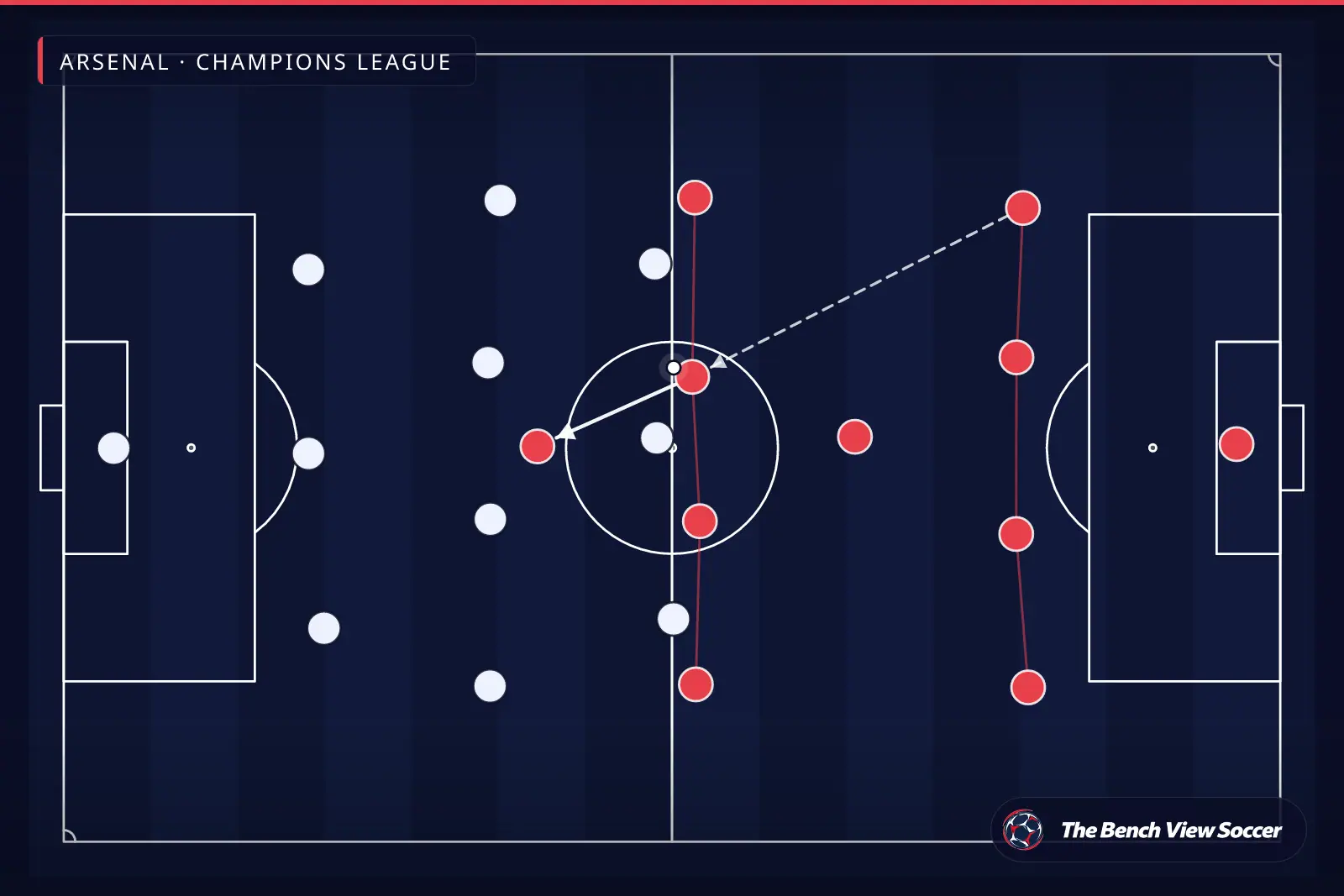
In the space of a few days Arsenal experienced two sharply contrasting evenings. The men’s side were knocked out of the Carabao Cup after League Two Fleetwood Town beat the Premier League champions on penalties on a wet, windy night on England’s north-west coast. Meanwhile the Arsenal women produced a commanding 3-0 win over Benfica at Meadow Park, where Alessia Russo scored a hat-trick and became England’s all-time leading goalscorer in the Women’s Champions League.
What happened
On a night described as wet and windy on the north-west coast, League Two Fleetwood Town progressed at the expense of Arsenal in the Carabao Cup after the tie was decided by a penalty shootout. The result meant the Premier League champions were eliminated from the competition.
Separately, at Meadow Park, Arsenal’s women beat Benfica 3-0. Alessia Russo scored all three goals, recording a hat-trick and in the process becoming the leading England goalscorer in the history of the UEFA Women’s Champions League.
The tactical reading
The men’s upset points to a classic cup trade-off between the favoured side’s tendency to rotate or manage resources and the lower-league team’s capacity to operate with greater cohesion and intensity. When a League Two team eliminates a top-flight champion on penalties, it typically suggests the underdog managed to blunt the superior side’s most threatening patterns and force the match into a lottery where concentration, set-piece organisation and clinical finishing from the spot become decisive.
From a structural viewpoint, games that go to penalties after a tight, weather-affected contest often indicate low margins in transitional moments. Wind and rain increase the unpredictability of long balls, crosses and goalkeeper distribution; they also favour compact defending and simplified attacking patterns. An underdog will usually prioritize defensive organisation, man-marking in key areas, and quick, direct counters to generate set-piece opportunities or pressure late in games. For the favoured side, the challenge is to retain possession quality and creativity under adverse conditions while managing fatigue and squad rotation.
The women’s result at Meadow Park offers a contrasting tactical message. A 3-0 win where a single player nets a hat-trick points to clinical forward play and effective supply lines. Russo’s three goals and the clean sheet suggest Arsenal Women produced sustained attacking danger while maintaining defensive stability. In the Women’s Champions League context, success on the day typically reflects an ability to control the tempo in key phases: winning duels in the attacking third, exploiting half-spaces, and converting chances with high efficiency.
Across both matches the trade-offs are evident. The men’s team faced the cost of a cup elimination — the price paid sometimes when managers balance squad rotation and fixture congestion — whereas the women’s side reaped the benefits of coherent attacking patterns and finishing. Coaches can read these twin outcomes as reminders about the importance of game model clarity: a coherent, repeatable structure is crucial when conditions or personnel change, and finishing quality often separates parity from dominance.
Key tactical points
- Weather and pitch conditions amplify the value of compact defending and straightforward attacking channels; underdogs can use this to neutralise superior possession play.
- Penalty shootouts level many technical advantages, so organisation for set plays and psychological preparation become decisive in knockout ties.
- Rotating a squad in cup competitions carries strategic risk; maintaining a recognisable team shape helps preserve in-game patterns despite personnel changes.
- Clinical finishing can transform a match: converting a high share of clear chances removes pressure and allows a team to impose its game plan.
- Attacking supply routes into forwards — whether through half-space occupancy or well-timed service into the box — are key to producing multiple goals from one player or unit.
What to watch next
For the men’s side, the immediate questions are about how the coaching staff respond to an unexpected cup exit. Will selection consistency return to prioritise cohesion, or will rotation remain a strategic focus across competitions? Watch for whether defensive compactness and set-piece preparation receive renewed emphasis in upcoming lineups and training sessions.
For the women’s team, attention should fall on whether the attacking patterns that produced the hat-trick can be replicated against stronger Champions League opponents. Will the team sustain the efficient final-third output and defensive solidity that produced a 3-0 scoreline, and can other attackers combine to share the goalscoring burden while maintaining overall control of matches?
Train it
To bridge the two tactical themes — defensive organisation under pressure and creating clinical chances — use a conditioned transition rondo that emphasises compact defending, quick counters, and finishing under time pressure.
- Coaching point 1: Keep the defensive block tight in the outer zone; winning the ball should trigger an immediate, two-touch outlet to a striker or wide runner.
- Coaching point 2: Limit touches in the central zone to encourage quick combinations into the penalty area; reward vertical passes that break the defensive lines.
- Coaching point 3: Finish every successful transition with a conditioned finish (one-touch or two-touch) to simulate match pressure and improve composure in front of goal.
Sources
The Bench View app
Don’t just read football — train it
Everything you read here, turned into training you can follow step by step.
Physical training at home
AI daily sessions adapted to your level and position. No equipment needed.
Tactical training courses
Step-by-step courses on positioning, pressing, build-up and decision making.
- 7 days free
- No commitment
- Cancel anytime
Free account: 2 physical sessions + the first tactical course. PRO: 7-day free trial — cancel before day 8 and you pay nothing.

More Analysis
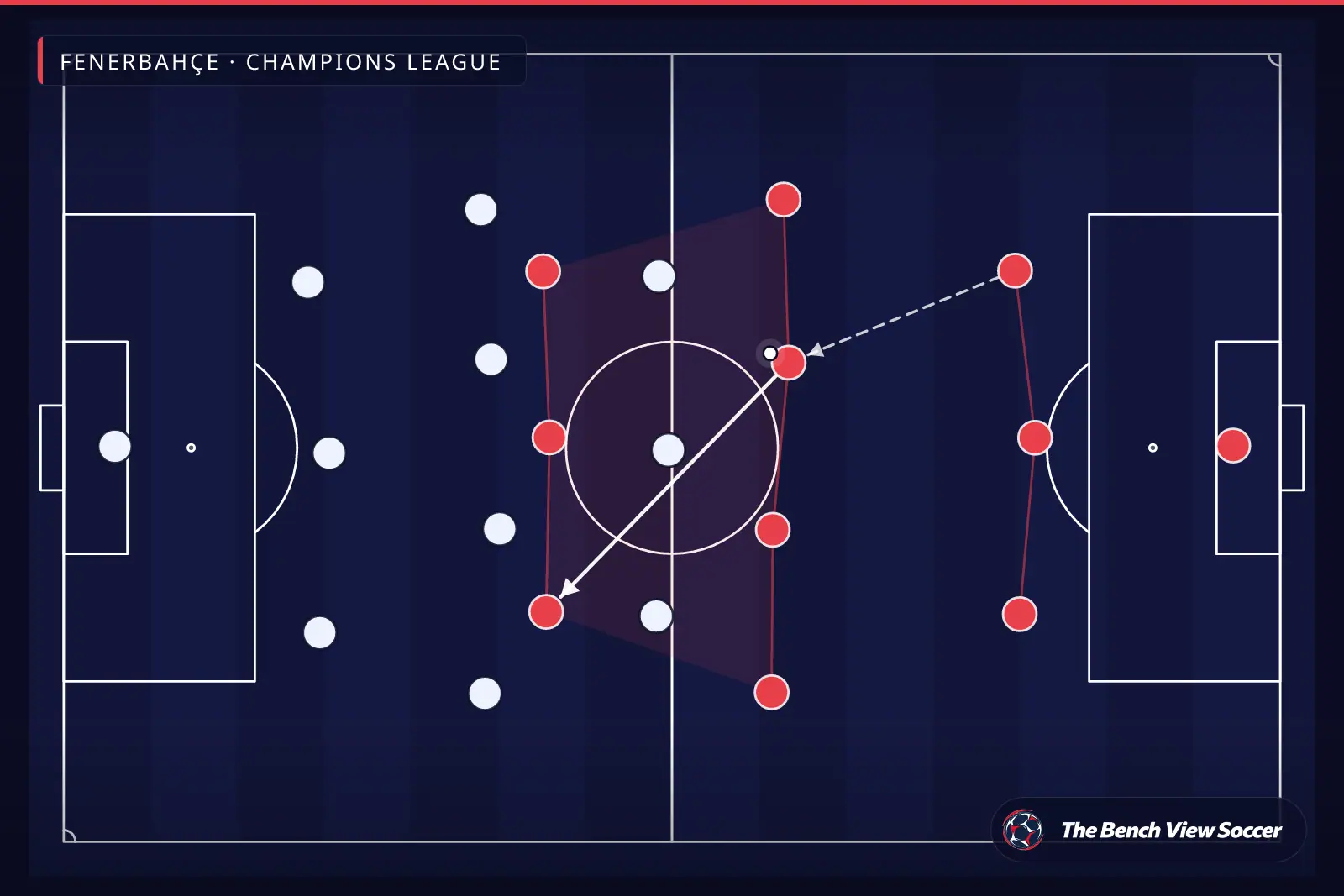
Kuyt’s interim appointment at Fenerbahçe: how one week changes the tactical landscape ahead of Liverpool clash
October 28, 2026
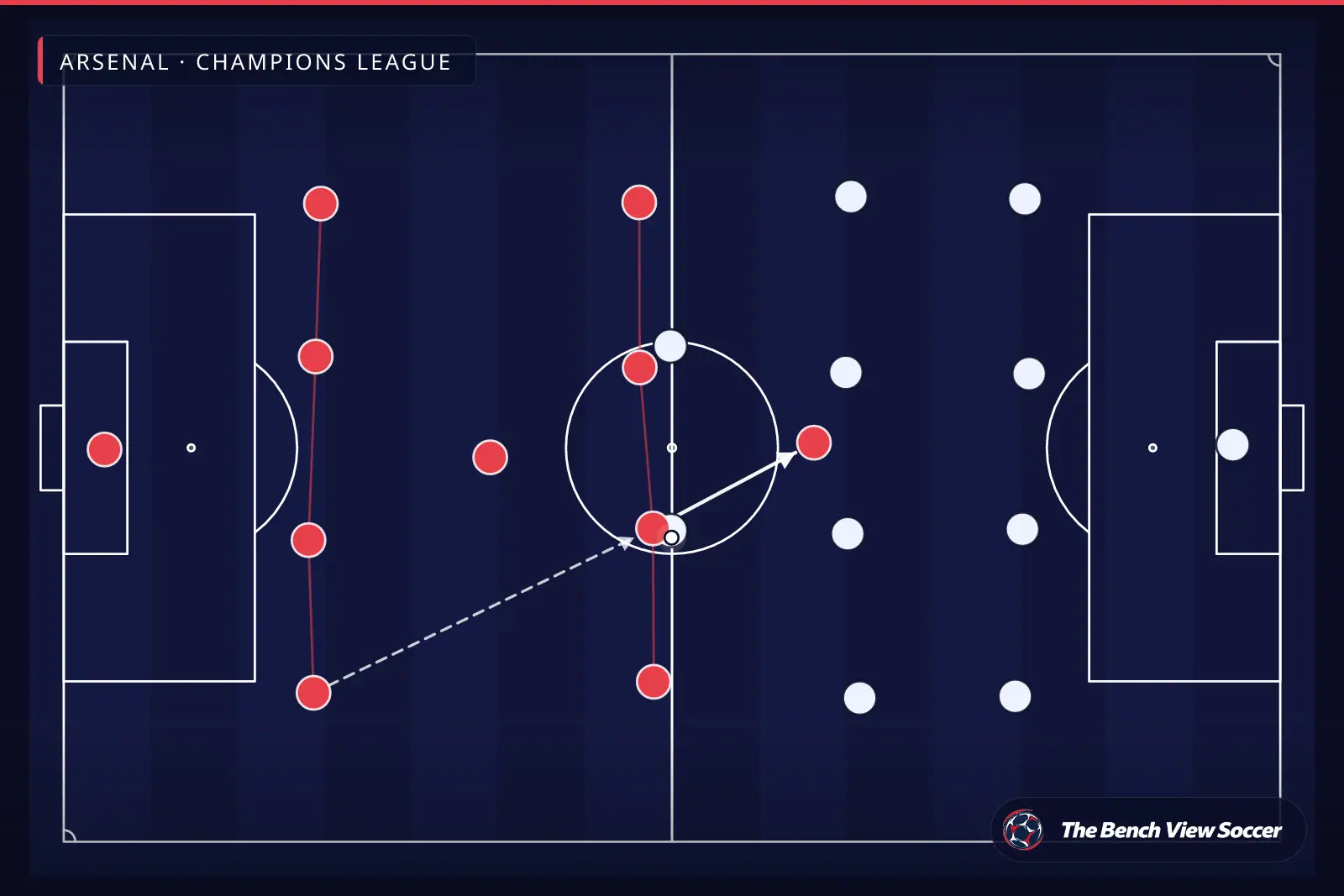
Arteta wary over Bukayo Saka’s durability as forward faces possible six-week lay-off
October 23, 2026
Warnock: 'Simply not good enough' — United criticised after 4-1 loss to Como
October 23, 2026
Bruno Fernandes' Home Burgled While With Manchester United in Italy
October 22, 2026