Introduction
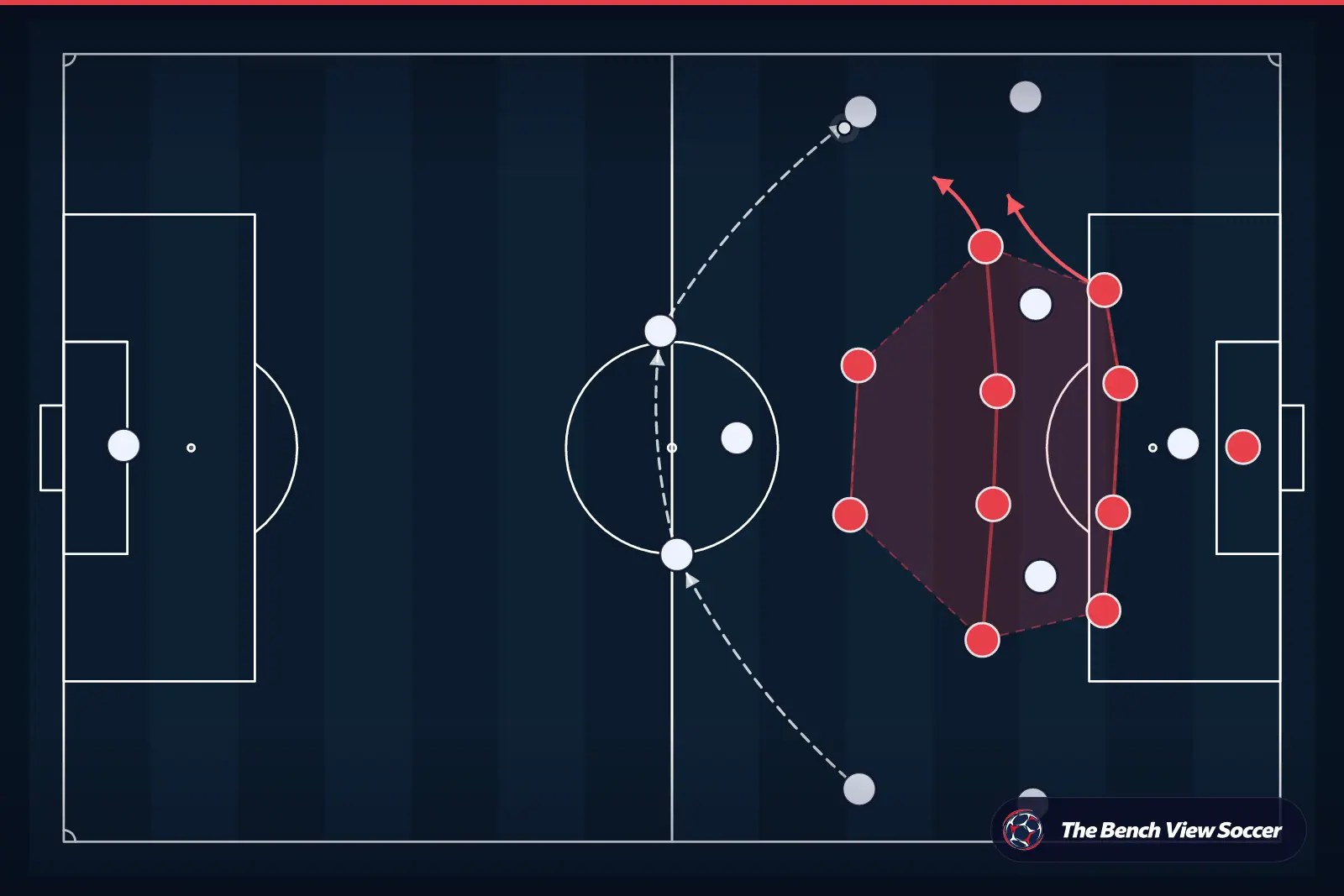
For many fans watching the Premier League or UEFA Champions League, the most confusing moment is when a big team dominates the ball but still cannot score. That usually happens against a low block: a defensive setup where the opponent drops deep, keeps two tight lines (often 4-4-2 or 5-4-1), protects the centre, and dares you to attack the wings. Mikel Arteta’s Arsenal face this weekly, especially at Emirates Stadium, where mid-table and bottom-half teams often defend with ten men behind the ball. Breaking a low block is not about one magical through ball; it is about repeated movement and passing patterns that slowly distort the defensive shape until a gap appears. This article explains how Arsenal create those gaps using rotations, third-man runs, and quick switches of play, and why players like Martin Ødegaard, Bukayo Saka, Declan Rice, Ben White, and Kai Havertz matter so much to the process. The goal is to help you “read” the game: what Arsenal try, why defenders respond the way they do, and what patterns lead to high-quality chances.
How It Works
A low block protects the central corridor, so Arsenal’s first objective is to create an advantage either wide or between the lines. Arsenal do this by building a stable base in possession: William Saliba and Gabriel Magalhães spread, the goalkeeper (David Raya or Aaron Ramsdale depending on the season) offers an extra passing option, and one midfielder positions to connect play. From there, Arsenal try to pin defenders by fixing them to specific threats. On the right, Saka holds width while Ødegaard operates in the right half-space (the channel between the wing and the centre). Ben White often underlaps (runs inside the winger) so the full-back of the defending team faces a dilemma: track White’s inside run or stay wide with Saka. If the full-back follows, Saka receives to attack 1v1; if the full-back stays, White receives in the box or at the edge for a cut-back. Arsenal also use “third-man” combinations: Player A passes to Player B, who immediately sets to Player C running beyond. This is crucial because low blocks want you to take extra touches; Arsenal try to remove time with one- and two-touch sequences. On the left, Arsenal vary more. Gabriel Martinelli can stay wide to stretch the line, or he can make runs in behind when the opponent steps out. The left-sided midfielder—often Rice or formerly Granit Xhaka—supports with forward carries. Carries matter because a dribble forces a defender to leave the line, and the moment one defender breaks shape, passing lanes open. Arsenal also use switches of play: when the opponent overloads the right to stop Saka and Ødegaard, Arsenal recycle through the centre-backs and find the far side quickly. The switch is not just to cross; it is to attack an unbalanced block before it resets. Finally, Arsenal’s striker role is key. Gabriel Jesus (when fit) drops to link and drag centre-backs, while Havertz often pins the last line and attacks the far post. The constant theme is to create decision stress: the low block survives when defenders make simple choices together, and Arsenal’s patterns aim to make those choices messy.
Match Examples
A clear Premier League example comes from Arsenal vs Everton at Emirates Stadium in the 2022-23 season (a match Everton win 1-0). Sean Dyche sets a compact low block after taking the lead, and Arsenal have long spells of possession without clear shots. You can see why: Everton protect the centre, track Ødegaard tightly, and allow crosses from deeper areas because they back their aerial defending. Arsenal’s issue is tempo and timing—passes go side-to-side without enough third-man runs to break the line. It is a useful reference because it shows that “more possession” is not the same as “better chances.” Contrast that with Arsenal vs Nottingham Forest at Emirates in the 2023-24 Premier League (Arsenal win 2-1). Forest defend deep for large phases, but Arsenal’s right-side patterns create repeated entry passes. Ødegaard’s positioning in the half-space attracts midfield pressure, freeing Saka to receive wide. When the full-back steps out, White’s underlap and Saka’s inside dribble generate cut-back zones—exactly the type of chance low blocks hate because defenders face their own goal and cannot step up. Arsenal’s second goal in that match is a good study in how quick combinations near the box force a narrow back line to shift one step too late. In European competition, Arsenal vs Porto in the 2023-24 UEFA Champions League round of 16 (second leg at Emirates, Arsenal win on penalties after a 1-0 win in normal time) highlights another reality: elite low blocks also control rhythm with fouls, delays, and compact distances. Porto’s 4-4-2 stays disciplined, limiting central progress. Arsenal’s breakthrough comes when movement becomes more coordinated—runners occupy the back line while a late arrival attacks the edge of the box. Even when chances are limited, Arsenal’s patience, recycling, and willingness to counter-press (win the ball back quickly) keep Porto pinned and eventually create the decisive moment. These matches together teach a key lesson: the patterns work best when Arsenal combine width, half-space presence, and aggressive rest-defense (players positioned to stop counters).
Related Concepts & Skills
Training Implications
To train low-block breaking in a practical way, build exercises that replicate the opponent’s compactness and force your attacking team to solve it with movement, not hopeful shots. Start with a 8v6 or 10v8 “deep block” game in two-thirds of a pitch: defenders set up in a 4-4-2 or 5-4-1 inside and around the box, attackers keep two wide players on the touchline, and you restrict attackers to a maximum of two touches in central areas. Coaching point: demand that the ball moves from one side to the other within 8–10 seconds at least once per attack, because switches are a reliable way to unbalance compact teams. Add a “third-man rule” in the final third: a goal only counts if the final pass comes after a layoff (A to B, B to C). This pushes players to create the one-touch set that opens the line. For full-back/winger relationships like Arsenal’s Saka–White pairing, run a pattern drill on the right: winger receives wide, midfielder in half-space offers inside, full-back underlaps, and striker pins the near centre-back. Finish with a low cut-back to the penalty spot rather than a high cross. Track outcomes: how many cut-backs reach a teammate, not just how many crosses go in. Finally, train “counter-press after loss” with a 5-second rule: when attackers lose the ball, they must win it back within five seconds or defenders get an immediate point for escaping. This mirrors Arteta’s demand to keep opponents trapped in their low block. Concrete targets for a weekly session: (1) at least 12 successful switches of play in 20 minutes, (2) at least 8 third-man combinations leading to a box entry, and (3) at least 6 cut-back attempts from inside the wide channel. These measurable goals make tactical improvement visible for players and coaches.
The Bench View app
Don’t just read football — train it
Everything you read here, turned into training you can follow step by step.
Physical training at home
AI daily sessions adapted to your level and position. No equipment needed.
Tactical training courses
Step-by-step courses on positioning, pressing, build-up and decision making.
- 7 days free
- No commitment
- Cancel anytime
Free account: 2 physical sessions + the first tactical course. PRO: 7-day free trial — cancel before day 8 and you pay nothing.