Introduction
In modern European football, the “double pivot” is one of the most reliable ways to control games without needing constant heroics from defenders. A double pivot simply means two central midfielders sit in front of the back line and share the job of protecting the team, circulating the ball, and managing space. For Indian fans watching the Premier League, UEFA Champions League, La Liga, or the Bundesliga, you will notice how often top teams use some version of it: Pep Guardiola’s Manchester City often pairs Rodri with a second midfielder; Mikel Arteta’s Arsenal frequently uses Declan Rice with a partner; Carlo Ancelotti’s Real Madrid uses a deeper midfielder plus a second controller depending on the opponent. The beauty of the double pivot is its flexibility: it can become a passing platform in build-up, a screen against counterattacks, and a guide for the team’s pressing. When done well, it turns chaos into structure—especially against fast transitions and aggressive pressing.
How It Works
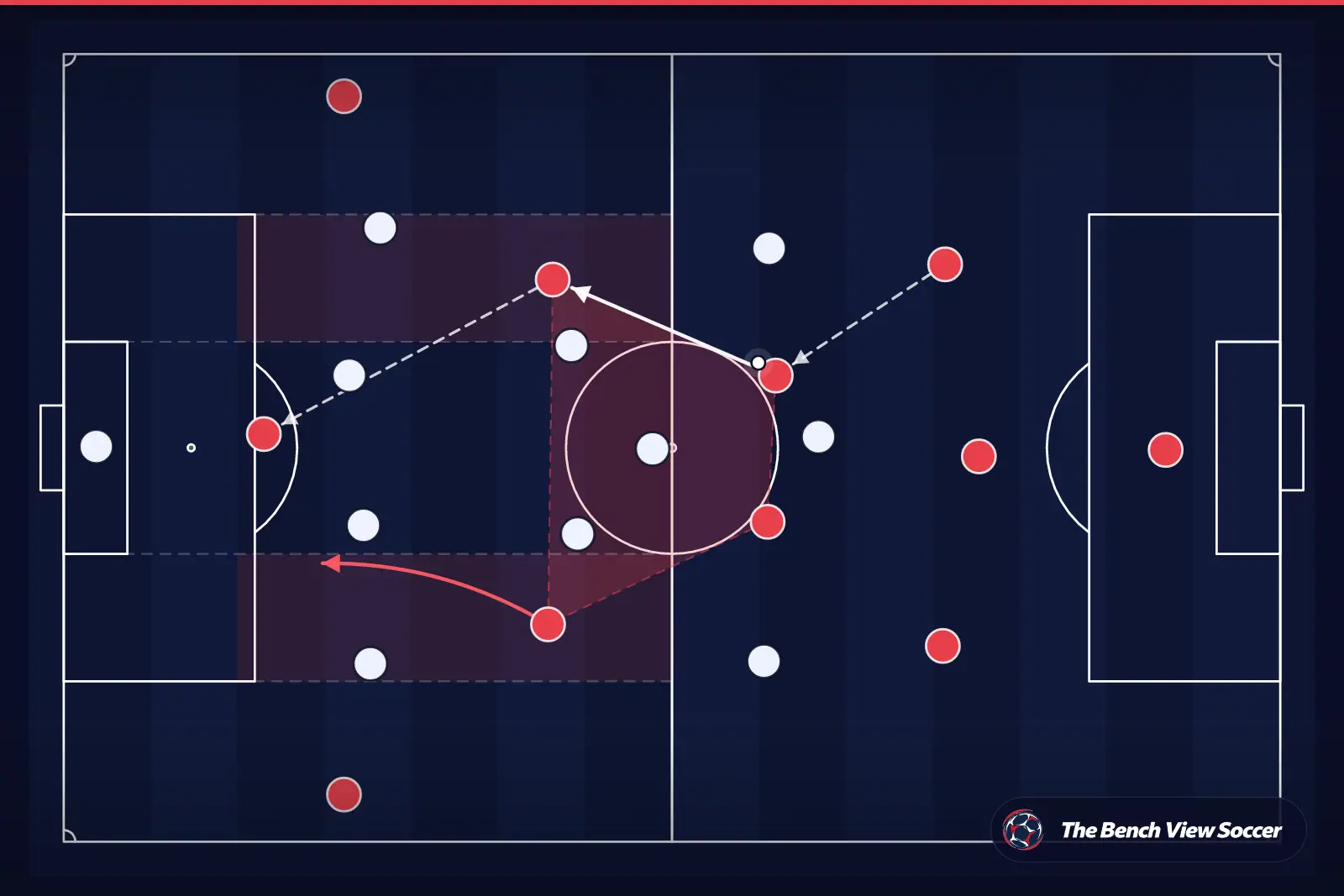
The double pivot controls space through angles, distances, and timing. In build-up, the two midfielders position on different vertical lines—rarely side-by-side for long—so one can receive while the other offers protection. If the opponent blocks central passes, one pivot drops closer to the centre-backs to create a back three shape, while the other stays higher to connect into the attacking midfield line. This creates a “stagger,” meaning the two players stand at different heights to stretch markers and open passing lanes. Out of possession, the double pivot forms the core of the team’s defensive block: they screen passes into the striker or the attacking midfielder, and they shift laterally to close central corridors. The key is not just winning tackles; it is preventing dangerous passes from being played in the first place. When a full-back steps forward to press, one pivot slides across to cover the space behind him; when an attacker drops between the lines, one pivot tracks while the other holds position to stop a third-man run. In transition moments, the pair must instantly decide: one applies pressure to the ball, the other protects the space in front of the centre-backs. This division of labour is what reduces the risk of getting countered after losing possession.
Match Examples
A clear Premier League example comes from Arsenal under Mikel Arteta in the 2022–23 season. Arsenal often uses a two-midfielder base in possession with Thomas Partey and Granit Xhaka (or later Jorginho/Declan Rice variations). Against high presses, one midfielder drops to offer a safe outlet, while the other stays slightly advanced to receive the next pass and keep the move alive. You see the value of this especially in away matches where opponents press harder: the double pivot gives Arsenal a calmer reset option rather than forcing long balls. In the UEFA Champions League, Real Madrid under Carlo Ancelotti in 2021–22 frequently uses Casemiro with Luka Modrić and Toni Kroos rotating responsibilities around him. Even when it is not a textbook double pivot on paper, the game often becomes one in practice: Casemiro anchors, while one of Kroos/Modrić positions deeper to help progression and protect against counters when full-backs push. In the Premier League 2020–21 season, Manchester United under Ole Gunnar Solskjær regularly starts with a double pivot of Fred and Scott McTominay in big matches. The pair focuses on blocking central access into the No.10 zone and covering wide spaces when United’s full-backs jump out to press. These references show three different intentions: Arsenal uses the pivot for controlled build-up, Real Madrid uses it to manage transitions at elite Champions League tempo, and Manchester United uses it to protect space and survive pressure against top opponents.
Related Concepts & Skills
Training Implications
To train a double pivot effectively, build habits that match game demands: scanning, spacing, and decision speed. Start with a 4v2 rondo where the two pivots stand in the middle as a pair, but with a rule: they cannot be on the same horizontal line for more than two seconds. This forces a stagger and teaches them to create different passing angles. Next, run a “build-up to target” drill: set up a back four, two pivots, and two small target goals near the halfway line. The objective is to progress the ball through at least one pivot before scoring in a target goal; if possession is lost, the pivots must execute immediate roles—one presses the ball carrier, the other drops to protect the central lane. Coach the distances: 8–12 metres between pivots is a good starting guideline, adjusting based on pressure. Add a constraint to develop scanning: before receiving, each pivot must call out a colour or number held up by a coach behind them, ensuring they look over their shoulder. For defensive work, practise a 6v6+2 neutrals game where the pivots are “screeners” who win points by intercepting passes into a marked central zone rather than by tackles alone. Finally, video review is actionable even for amateur teams: after training matches, clip three moments where both pivots chase the ball and leave the centre open, and three moments where one presses while the other protects. Use those clips to set one clear rule for the next session, such as “only one pivot jumps beyond the ball at a time.”
The Bench View app
Don’t just read football — train it
Everything you read here, turned into training you can follow step by step.
Physical training at home
AI daily sessions adapted to your level and position. No equipment needed.
Tactical training courses
Step-by-step courses on positioning, pressing, build-up and decision making.
- 7 days free
- No commitment
- Cancel anytime
Free account: 2 physical sessions + the first tactical course. PRO: 7-day free trial — cancel before day 8 and you pay nothing.