

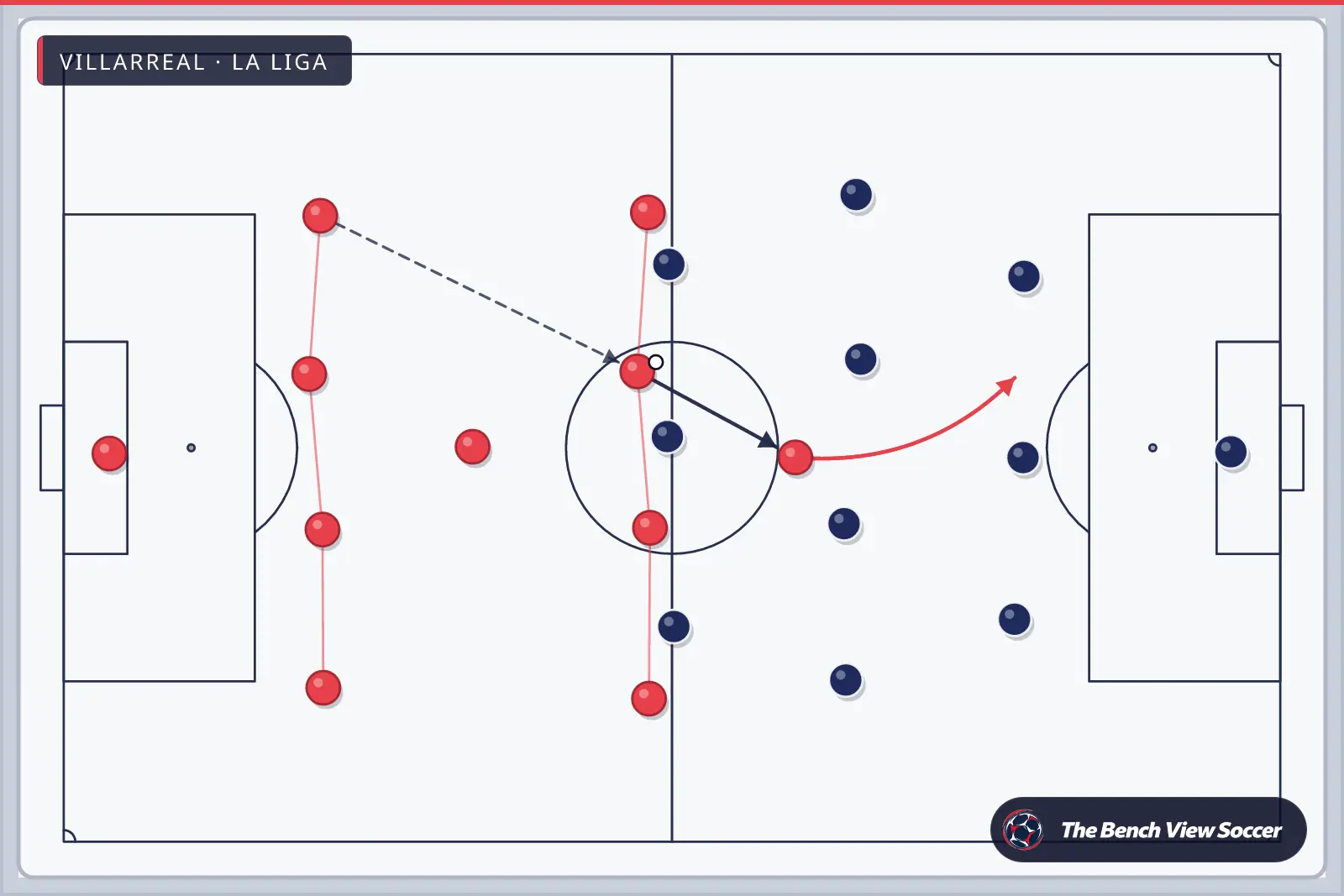
Villarreal’s Alex Freeman scored his first La Liga goal and covered three different positions during a comeback win over Valencia, earning attention amid a high‑profile weekend for Spanish football. The Orlando City academy product’s performance combined a goal with clear positional flexibility, drawing a spotlight while El Clásico dominated headlines.
What happened
Alex Freeman, a USMNT player developed at Orlando City, scored his first goal in La Liga for Villarreal during a match that required a comeback to beat Valencia. In that same game he operated in three different positions on the field, a versatility that prompted wider recognition and description as a 'super player' in reporting on the match. The fixture drew attention in part because it took place on a weekend when the first El Clásico since José Mourinho’s return to Real Madrid was also taking place, yet Freeman’s multi‑role display stood out in coverage.
The tactical reading
Freeman’s use in three distinct positions suggests Villarreal see him as a flexible asset who can be adapted to different tactical phases of a match. When a coach deploys a player across multiple roles in a single game it typically points to a deliberate plan to exploit match dynamics: either to counter specific opposition threats, to change overloads on one flank, or to alter the team’s structural balance without making formal substitutions. That kind of usage implies Freeman offers qualities — technical comfort, spatial awareness and tactical intelligence — that allow him to be trusted in various contexts.
The fact that he combined positional shifts with scoring his first La Liga goal indicates he was not merely moved around defensively but was incorporated into the team’s attacking mechanisms. Versatile players who can both create and finish chances are particularly valuable in transitional moments when a side is chasing a result. A player who can relocate between channels can create mismatches, force markers to make choices, and open lanes for teammates — all useful when mounting a comeback.
Using one player in multiple roles is a double‑edged sword tactically. On the positive side, it increases unpredictability and allows the manager to remodel the team’s structure mid‑game without substitutions. Conversely, it can create moments of structural insecurity if teammates are unsure who is responsible for particular zones or if the opponent exploits the spaces left during the rotation. The success of such a strategy usually depends on clear coaching instructions and players with high game intelligence who can interpret in‑match cues.
Freeman’s trajectory from an MLS academy to a match‑defining role in La Liga highlights another modern tactical trend: coaches increasingly value players who can function across phases rather than as specialists. For a coach, this creates more permutations for pressing triggers, passing triangles and overloads. For existing teammates, it requires communication and readiness to occupy or vacate spaces dynamically. The evidence in this match — a comeback win in which Freeman rotated positions and found the net — points to a club environment willing to exploit those permutations.
Key tactical points
- Positional versatility can be used to alter team structure mid‑game without substitutions, offering tactical flexibility during comebacks.
- A player trusted in multiple roles typically possesses spatial awareness and technical comfort to perform in different phases of play.
- Rotations create unpredictability but demand clear role allocation to avoid defensive gaps when opponents counter‑attack.
- Integrating versatile players into attacking sequences can increase chance creation by generating mismatches and moving defensive markers.
- Coaches using multi‑role players should pair them with teammates who can anticipate and cover vacated zones to maintain structural balance.
What to watch next
Observe how Villarreal continue to use Freeman in future matches: will he be consistently rotated between positions, or was this game a one‑off tactical adjustment? Pay attention to whether his role becomes more defined over time or if the coaching staff deliberately preserves his multifunctional usage as a tactical tool.
Also look at how opponents react to his versatility. Teams that face a player who can seamlessly change channels may either pin him down with specific markers or exploit the space he leaves when he shifts. The responses of both Villarreal and their rivals will reveal whether his multi‑role usage is sustainable across a season.
Train it
To develop the kind of adaptability Freeman displayed, use a positional rondo that requires players to occupy and rotate between three distinct channels while maintaining attacking tempo. The exercise encourages spatial awareness, passing under pressure and coordinated rotation between teammates.
- Set up three horizontal channels and place two defenders in the middle; attackers must rotate through each channel after a set number of passes while keeping possession.
- Coach players to communicate role switches clearly and to use body orientation to signal intended rotations to teammates and to probe defensive reactions.
- Encourage quick transitions: when possession is lost, the nearest player must press immediately while others adjust to cover the vacated channel, reinforcing defensive responsibilities during rotations.
Sources
The Bench View app
Don’t just read football — train it
Everything you read here, turned into training you can follow step by step.
Physical training at home
AI daily sessions adapted to your level and position. No equipment needed.
Tactical training courses
Step-by-step courses on positioning, pressing, build-up and decision making.
- 7 days free
- No commitment
- Cancel anytime
Free account: 2 physical sessions + the first tactical course. PRO: 7-day free trial — cancel before day 8 and you pay nothing.
More Analysis
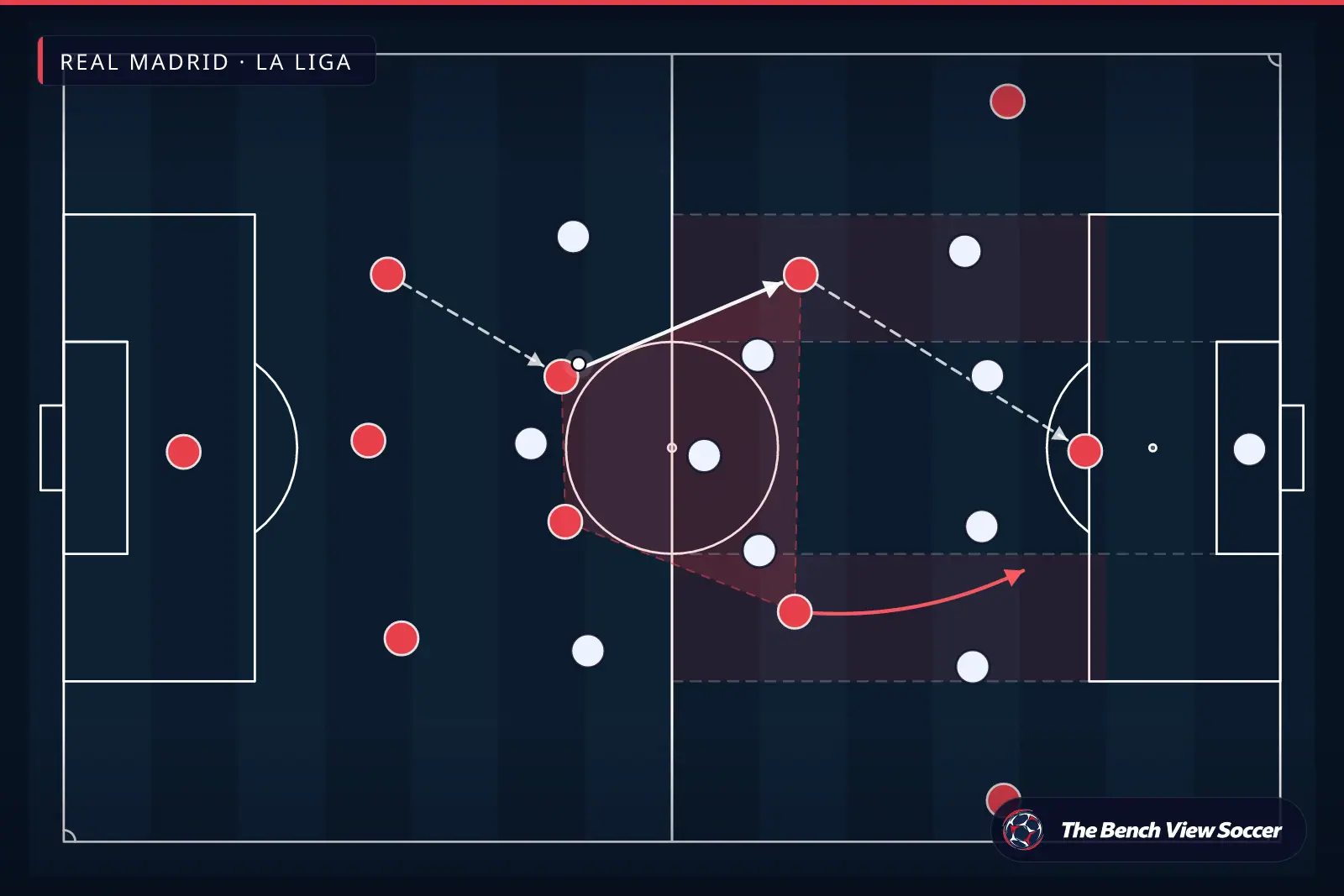
Mbappé double at Camp Nou: late Real Madrid victory that reveals Mourinho’s midfield triggers
October 26, 2026
Mourinho returns to Camp Nou as Madrid look to halt Barcelona’s run
October 25, 2026
Yamal’s late magic helps Barça see off Betis in Seville
October 19, 2026
Mbappé shines as Real Madrid rout Sevilla in LaLiga
October 19, 2026