Introduction
Arsenal under Mikel Arteta build their team identity around a midfield that can do two jobs at once: dominate the ball and win it back quickly. For many fans watching the Premier League, this “balance” can look like magic—one moment Arsenal circulate possession patiently, the next they trap an opponent near the touchline and steal the ball in three passes or fewer. The key is not just individual talent (Martin Ødegaard’s pressing, Declan Rice’s coverage, Jorginho’s positioning), but the midfield shape: where Arsenal place their midfielders relative to the ball, the centre-backs, and the forwards. This article breaks down how that midfield structure changes between possession and pressing, why it reduces risk during attacks, and how it helps Arsenal compete with Europe’s best in the UEFA Champions League as well as in domestic battles against Manchester City and Liverpool. The goal is to make the patterns easy to spot the next time you watch them.
How It Works
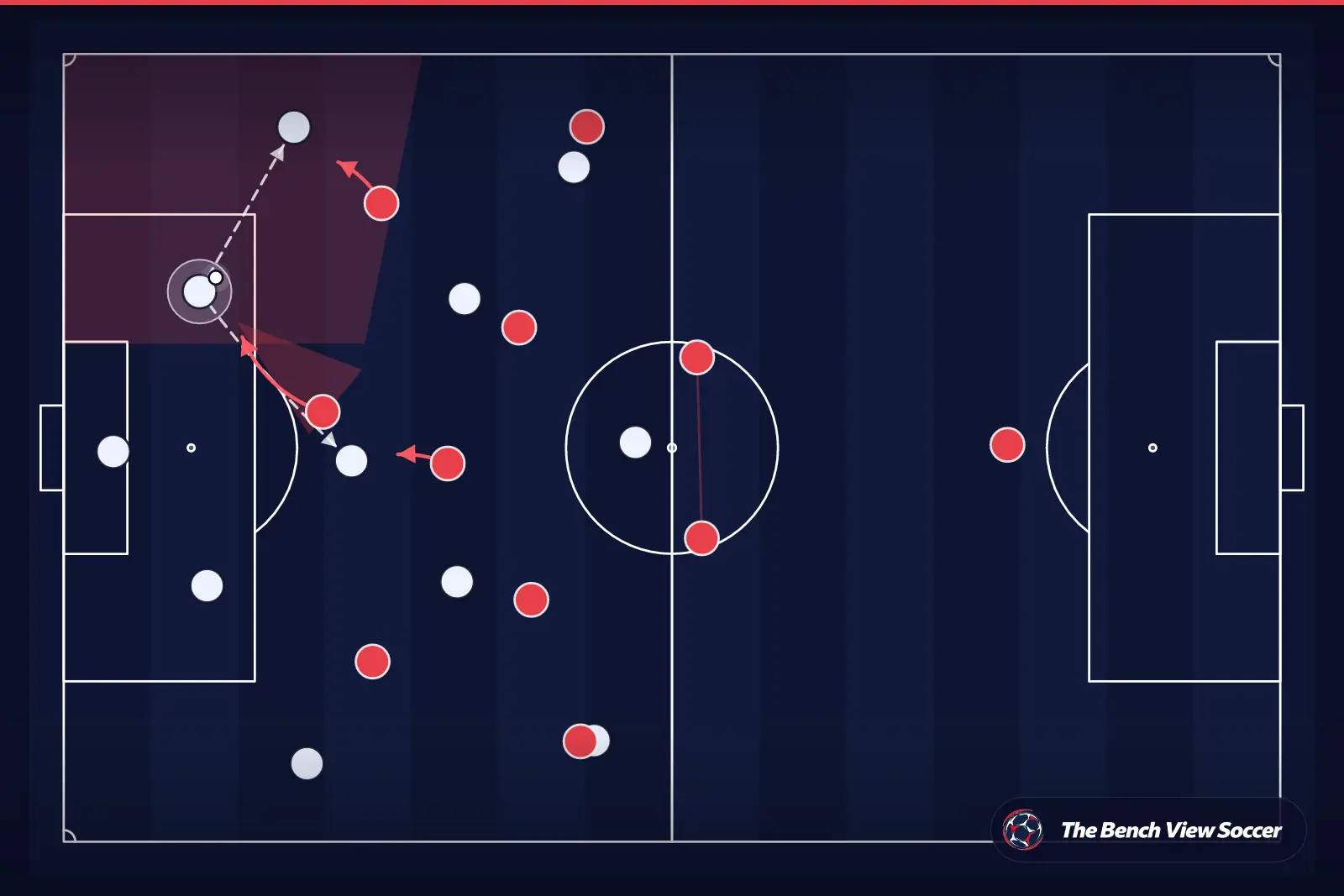
Arsenal’s midfield shape is not a fixed “three in a line.” It behaves like a moving platform that supports both buildup and counter-pressing (winning the ball back immediately after losing it). In possession, Arsenal often create a “rest defense,” meaning they keep enough players behind or near the ball to control transitions. A common pattern is a 2–3 base: two centre-backs (William Saliba and Gabriel) plus three players forming the next line—often a full-back stepping into midfield (Ben White or Oleksandr Zinchenko), a pivot (Jorginho or Rice), and the opposite-sided midfielder or full-back holding a safer position. Ahead of them, Ødegaard and the left-sided No.8 (Kai Havertz or Rice in some games) occupy the half-spaces, the channels between wing and centre. This spacing matters because it offers short passing options while also setting pressing angles if possession is lost. When Arsenal lose the ball, the midfield shape compresses fast toward the ball side. Ødegaard usually leads the “first wave” by sprinting to block the central pass, trying to force play wide. Rice acts like the safety net: he covers the space behind the press, tracks runners, and steps out to tackle when the opponent’s first touch is loose. The key balance is distance control—Arsenal keep their midfielders close enough to press in a pack, but not so close that one simple pass eliminates them. Arteta’s midfield is coached to create traps: invite a pass into a specific zone (often wide or into a marked pivot), then collapse with two or three players, while the back line stays connected to prevent a clean counterattack.
Match Examples
A clear example of Arsenal’s midfield balance appears in the 2023–24 Premier League match Arsenal 3–1 Liverpool at the Emirates. Liverpool under Jürgen Klopp try to bait pressure and then play quickly into Mohamed Salah or Darwin Núñez, but Arsenal’s midfield shape blocks central progression. Ødegaard presses from the front while using his body angle to discourage passes into Alexis Mac Allister. Rice stays slightly deeper than the other midfielders, so when Liverpool go long or play second balls, Arsenal often recover possession through him. In possession phases, Arsenal use a controlled 2–3 structure that keeps them protected: when attacks break down, the midfield is already in place to counter-press, especially around the right half-space where Ødegaard and White combine. In the 2023–24 UEFA Champions League Round of 16, Arsenal vs Porto (both legs) shows the other side: patience and protection against a compact block. Sérgio Conceição’s Porto defend narrow and wait for mistakes. Arsenal’s midfield keeps circulating the ball, but the main tactical lesson is how they avoid “open-field” counters. Rice frequently holds a conservative line, allowing Zinchenko (when used) to step into midfield without leaving Arsenal exposed. Even when Arsenal struggle to create chances, their midfield distances help prevent Porto from transitioning cleanly, forcing Porto to play longer passes that Saliba and Gabriel can attack. A final reference is the 2023–24 Premier League match Manchester City 0–0 Arsenal at the Etihad. Pep Guardiola’s City try to pin Arsenal back, but Arsenal’s midfield stays compact and disciplined. Rice and Jorginho (or a similar pairing) protect central zones, while Ødegaard times his pressure so Arsenal do not get played through. Arsenal accept lower possession but keep the midfield in a tight block, which reduces City’s ability to find runners between the lines. This match demonstrates that Arsenal’s midfield shape is not only for dominant games—it also scales to defensive control against elite opposition.
Related Concepts & Skills
Training Implications
If you are a coach, player, or serious fan trying to apply these ideas, focus on building midfield habits rather than copying exact player roles. First, train spacing with a simple rule: in possession, your midfield triangle should keep “support distances” of roughly 8–12 metres between nearest options, so one pass always has a safe receiver and the team can press immediately after losing it. Use a 6v6+2 possession game (two neutral players) in a 30x25 metre grid. Condition it so that when a team loses the ball, they have five seconds to win it back; if they succeed, they earn an extra point. This teaches counter-pressing urgency and forces midfielders to stay connected. Second, coach pressing angles, not just speed. Set up a 7v7 with two mini-goals on the wings. Reward the defending team if they force the ball wide and win it near the touchline. Teach the nearest midfielder to curve the run to block the central pass while the second midfielder steps in to challenge the receiver’s first touch. Third, build a “rest defense” habit: in an 8v8 half-pitch game, require that at least two players plus one midfielder remain behind the ball during attacks. Freeze the play when the ball is lost and check distances: can the holding midfielder (your Rice/Jorginho role) see both the ball and the most dangerous runner? Finally, for players, review your own matches: count how many times you are close enough to press within two seconds after a turnover. Improving that number is often the difference between looking organised and looking chaotic.
The Bench View app
Don’t just read football — train it
Everything you read here, turned into training you can follow step by step.
Physical training at home
AI daily sessions adapted to your level and position. No equipment needed.
Tactical training courses
Step-by-step courses on positioning, pressing, build-up and decision making.
- 7 days free
- No commitment
- Cancel anytime
Free account: 2 physical sessions + the first tactical course. PRO: 7-day free trial — cancel before day 8 and you pay nothing.