

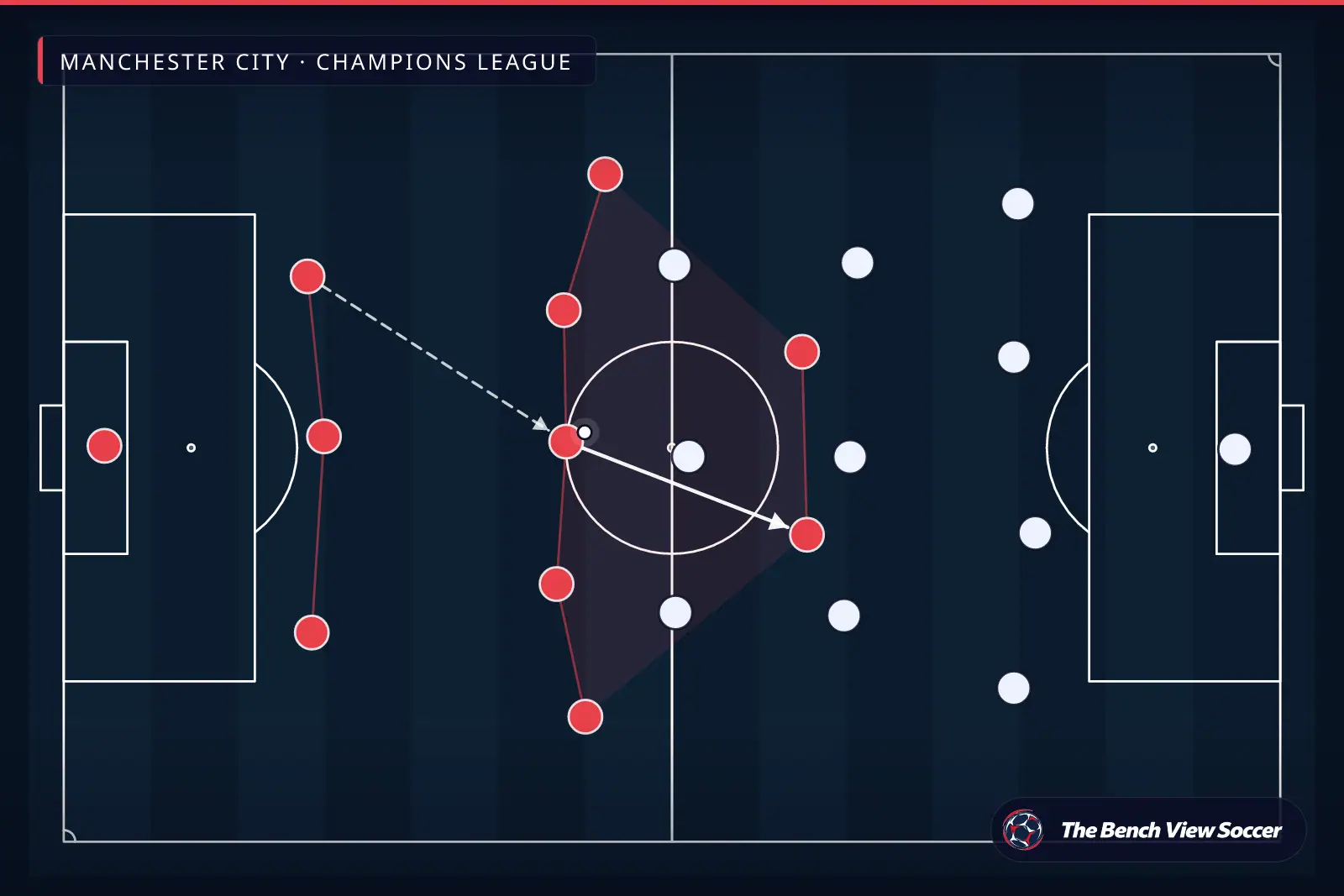
Manchester City overturned an early deficit to beat Inter Milan, securing their first win of the Champions League campaign. Reports describe the victory as a convincing comeback that keeps City's hopes of a top-four finish in the competition alive.
What happened
Manchester City trailed early against Inter Milan but recovered to win the match. The result represented City's first victory in this season's Champions League and has been portrayed as a comprehensive or thrashing win by multiple outlets. The comeback maintained City's prospects of qualifying in the top four of their European group.
The tactical reading
The description of a comeback followed by a convincing or thrashing win points to two broad phases in the match: an initial period where Inter Milan had the upper hand and a sustained second period where Manchester City controlled play and overturned the deficit. Such a swing typically implies that City were able to change momentum through tactical adjustments, improved control of possession, or more effective exploitation of space. When a team described as thrashed manages to be on the wrong side of the scoreboard early on, it usually reflects a successful counter-press or transition attempt from the opponent that was later neutralised.
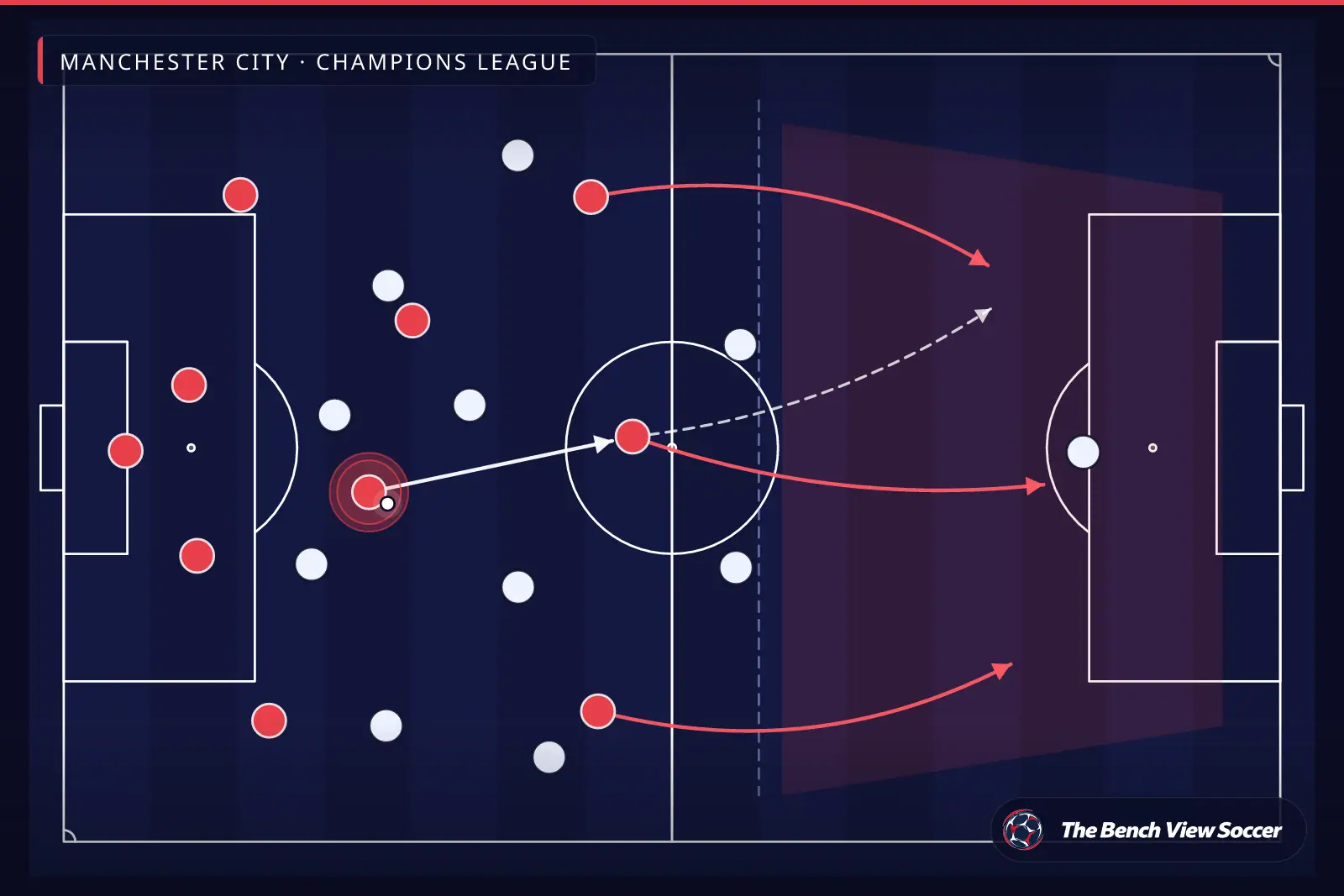
The match narrative suggests that City's structural identity — linked to sustained build-up, positional rotation and high levels of possession — reasserted itself after the early setback. Recovering from behind and delivering a comprehensive win often requires dominating phases of play, recovering loose balls quickly and creating higher-quality chances. That pattern points to City finding better control over the middle third, compressing the pitch at the right moments to limit Inter's transitions and then stretching the opposition to create overloads in attacking areas.
Key roles in this kind of turnaround typically include the deeper playmakers who manage tempo and transitional midfielders who link defence to attack. If the comeback was achieved through sustained pressure and a convincing final scoreline, it suggests the attacking players adapted by exploiting wider channels or running into vacated central spaces. Defenders and full-backs likely needed to maintain concentration and contribute to ball circulation so that City could sustain extended possession and increase their attacking output.
There are trade-offs inherent in shifting from a reactive phase to an aggressive, controlling phase. Increasing forward momentum and pressing higher can expose the back line to counter-attacks, particularly if the full-backs push on. Conversely, sitting too deep to avoid transitions can invite pressure and make it harder to recover territory. The reported progression from being behind to a comprehensive victory indicates City struck the balance: they accepted some risks in order to dominate the ball, create chances and ultimately overturn the scoreline decisively.
Key tactical points
- Recovering from an early deficit usually requires a sustained control of possession to prevent the opponent from reasserting their transition game.
- Midfield management — tempo control and quick vertical link-ups — is crucial when converting a narrow comeback into a convincing win.
- Attacking width and overloads can be decisive after the restart: stretching a defensive block forces gaps to be exploited centrally.
- Risk management is a trade-off: pressing higher and committing players forward creates opportunities but demands defensive resilience to fend off counters.
- Psychological momentum matters; turning a deficit into a dominant victory often reflects both tactical fixes and a collective increase in intensity.
What to watch next
In upcoming fixtures, watch whether City maintain the structural adjustments that produced the comeback. Will they begin future matches with the same control they showed later in this game, reducing the need to overturn early setbacks? Observing their early-game strategies — how they press, how they position in the first 15–20 minutes, and how quickly they reclaim the middle third — will be telling.
Also look for how they manage the balance between aggressiveness and defensive cover. If City continue to convert matches from behind into convincing wins, it suggests their recovery mechanisms (positional rotations, midfield reinforcements, and transitional patterns) are replicable. If not, the early vulnerability that produced the initial deficit could remain a concern against high-quality transitional opponents.
Train it
To build the kind of mid-game control that turns a deficit into a convincing win, use a phased possession drill that forces teams to progress from under-pressure build-up into high-tempo attacking sequences once they win a neutral zone ball.
- Coaching point 1: Emphasise tempo control from the deep playmaker — calm circulation when pressed, then a quick vertical pass to initiate the attacking phase.
- Coaching point 2: Train midfielders to execute quick third-man runs and support rotations to create overloads and exploit central gaps.
- Coaching point 3: Practice coordinated pressing triggers for the attacking unit to recover the ball high while ensuring one defensive player stays ready to cover the channel behind the press.
Sources
The Bench View app
Don’t just read football — train it
Everything you read here, turned into training you can follow step by step.
Physical training at home
AI daily sessions adapted to your level and position. No equipment needed.
Tactical training courses
Step-by-step courses on positioning, pressing, build-up and decision making.
- 7 days free
- No commitment
- Cancel anytime
Free account: 2 physical sessions + the first tactical course. PRO: 7-day free trial — cancel before day 8 and you pay nothing.

More Analysis
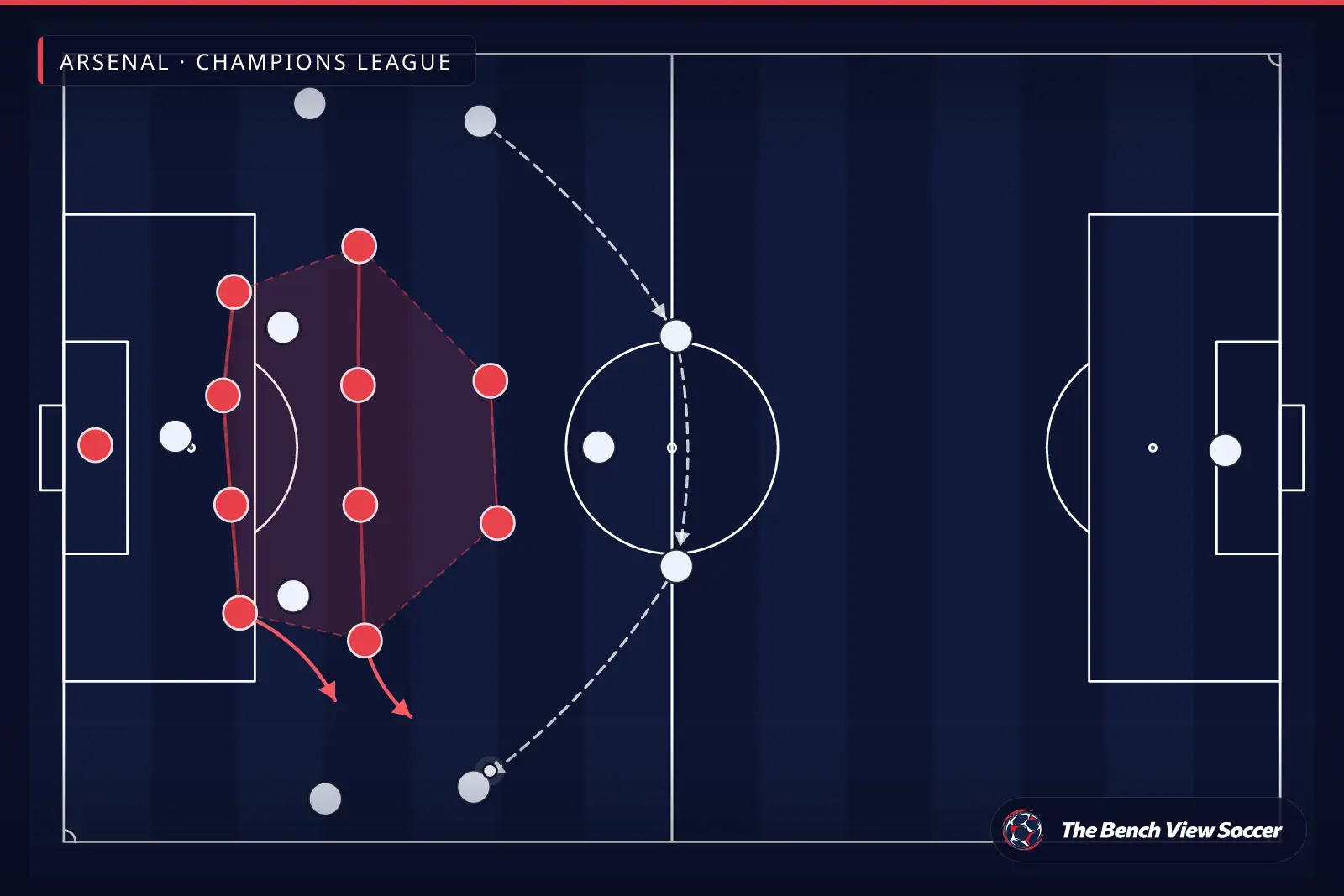
Arsenal’s resolute away point at Barcelona underlines defensive mettle and pragmatic game plan
November 12, 2026
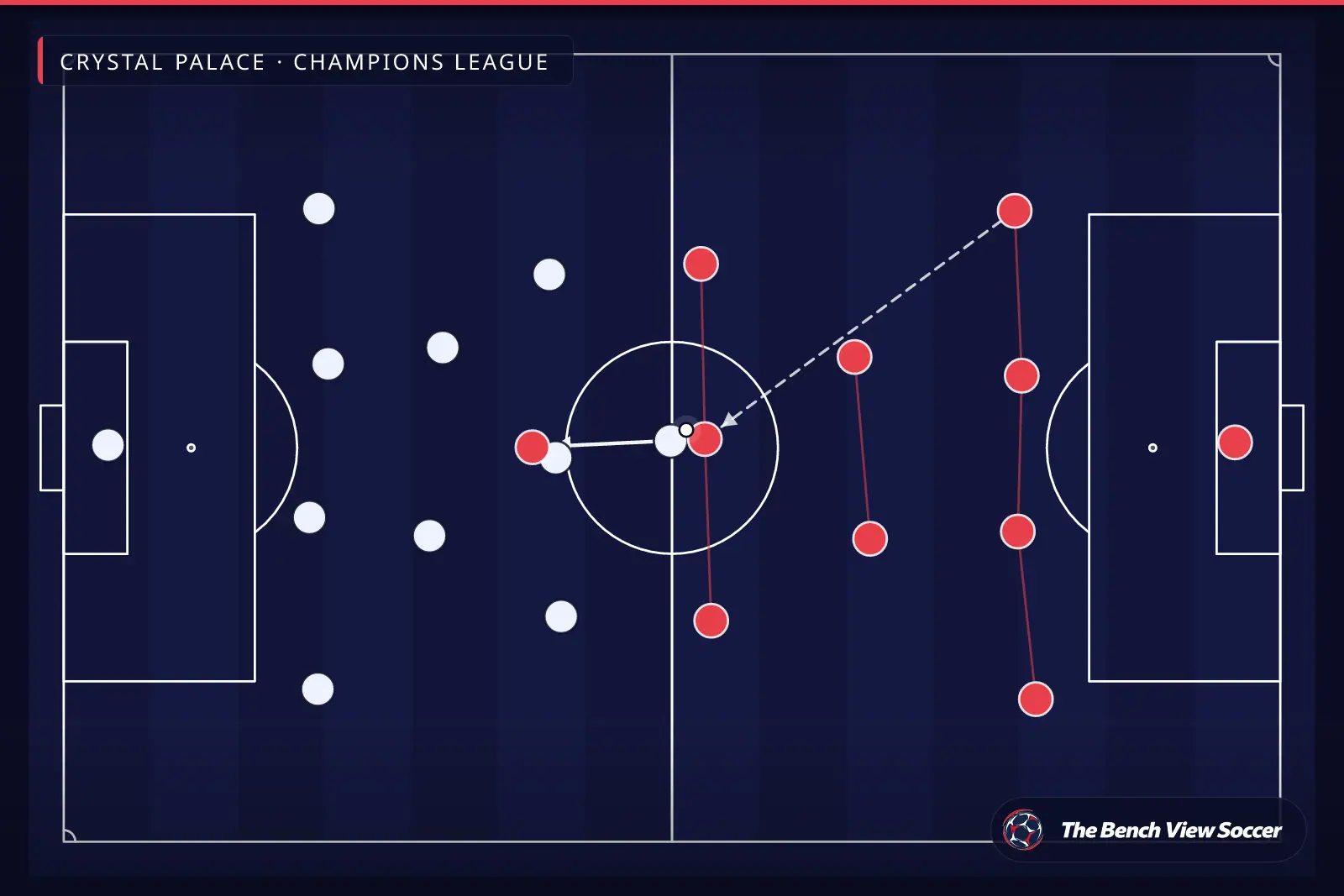
Liverpool’s 3-1 win at Selhurst Park leaves Palace rock-bottom and Sage under intense pressure
November 9, 2026
Haaland winner underlines City's resilience and transition threat vs Leipzig
November 6, 2026
Raya’s save and Arsenal’s response to last season’s final pain: tactical lessons
November 6, 2026