Introduction
Liverpool’s best attacking moments often look chaotic at first—quick passes, wide runners, and defenders getting dragged out of shape. But underneath that speed is a clear idea: create space between the opponent’s midfield and defence so a No.10 (a central attacker who receives behind midfielders) can turn and hurt teams. Under Jürgen Klopp, Liverpool do not always play with a classic No.10 like a 2010s “trequartista”, but the role still exists as a zone and a function. In different phases it is filled by players like Dominik Szoboszlai, Cody Gakpo, Harvey Elliott, Roberto Firmino (earlier Klopp years), or even Mohamed Salah drifting inside as the “receiver between the lines.” For fans learning tactics, “between the lines” is the key phrase: it means the pocket of space behind the opponent’s midfield line but in front of their back line. Liverpool’s structure, movement, and timing are designed to open that pocket for one decisive touch, turn, and final pass or shot.
How It Works
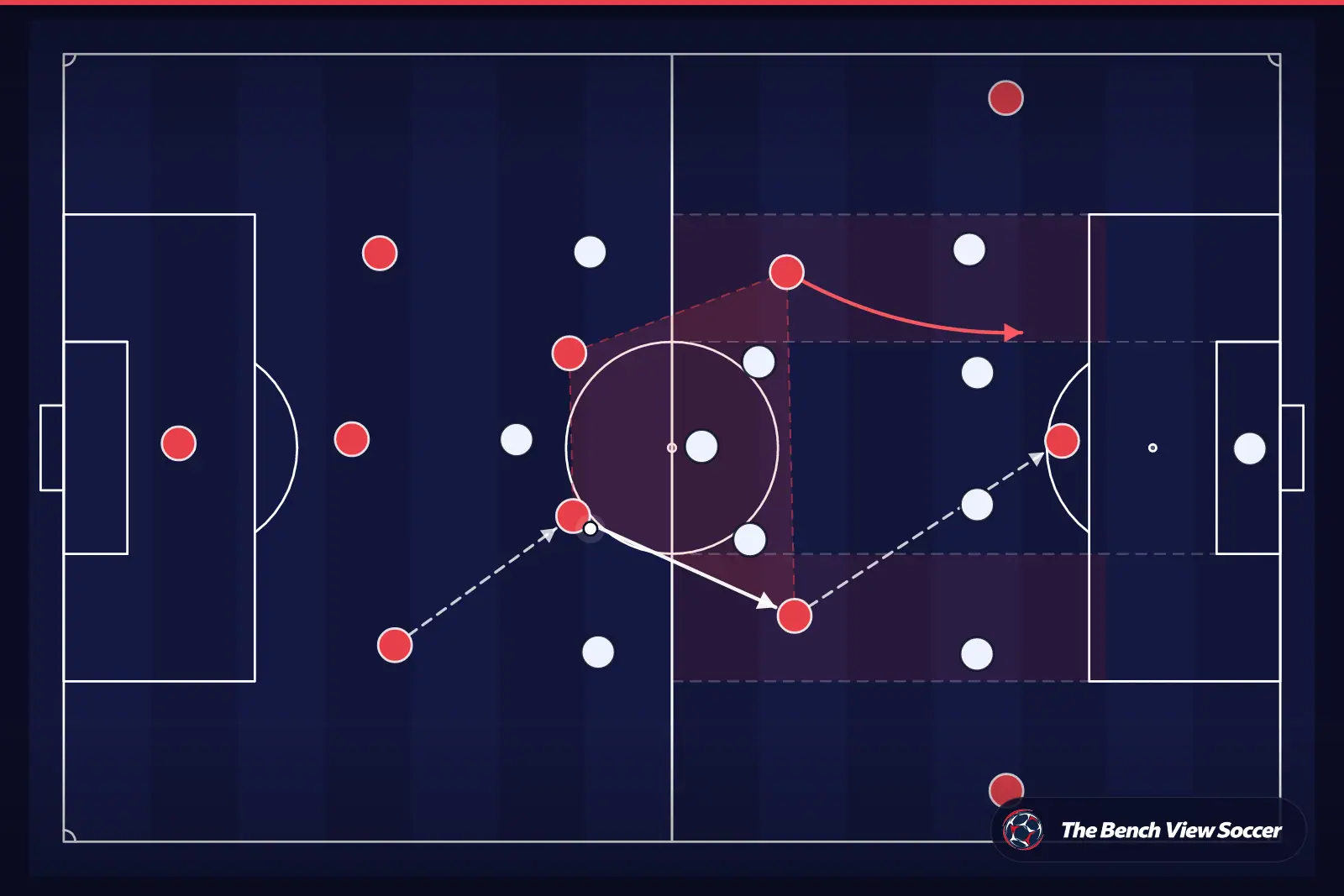
Liverpool create space between the lines through a mix of positioning and intentional disruption of the opponent’s shape. First, they stretch the pitch horizontally: the full-backs or wide players hold width so the opposition midfield has to cover more ground. When the midfield spreads, small gaps appear inside. Second, Liverpool use vertical runs to push the defensive line backwards. A striker or winger runs in behind (towards the goal), which forces centre-backs to drop. When defenders drop and midfielders hesitate to follow, a pocket opens in front of the back line—perfect for a No.10 to receive. Third, Liverpool often rotate roles so markers lose reference points. For example, the No.9 drops short while the No.10 or an advanced midfielder runs beyond; or the wide forward comes inside while the full-back overlaps outside. These rotations create a common dilemma for the opponent: does a midfielder track the dropping forward (opening space behind him), or does a centre-back step out (opening space behind the centre-back)? Liverpool also manipulate the press. If an opponent presses high, Liverpool invite pressure on one side and then switch quickly to the far side, where the No.10 arrives in the inside channel (the area just inside the winger) to receive facing forward. The final detail is timing: the No.10 rarely stands in the pocket early. He drifts away, stays “hidden” behind midfielders, and only steps in when the ball is about to travel to him—making interceptions harder.
Match Examples
A clear illustration appears in the Premier League 2023–24 season under Klopp, when Liverpool use Dominik Szoboszlai and later Cody Gakpo in central advanced spaces. In Liverpool 4–1 Chelsea at Anfield (Premier League, 31 January 2024), Liverpool’s midfield and front line constantly pull Chelsea’s double pivot out of their slots. Darwin Núñez and Diogo Jota/others threaten depth, which keeps Chelsea’s centre-backs cautious. That depth threat creates room for central receivers to take a touch between the lines and connect to runners. Another strong example is Liverpool 3–1 Sheffield United (Premier League, 4 April 2024). Sheffield often defend with a compact block, but Liverpool’s wide occupation and quick circulation pull midfielders towards the ball side; then a central player receives in the pocket to play the next pass into the box or wide to cross. To understand the “classic” Klopp version of the No.10 space creation, revisit Liverpool’s Champions League 2018–19 run, where Roberto Firmino repeatedly drops off the front line to receive between the lines and link play. In matches like Liverpool vs Paris Saint-Germain (UCL group stage, 2018–19) and later knockout games, Firmino’s movement either drags a centre-back out or forces a midfielder to follow him, and the moment that happens, Sadio Mané or Salah attacks the space behind. Even when Firmino does not receive, his dropping run still creates the pocket that an onrushing midfielder can exploit. Across these examples, the pattern stays consistent: threaten in behind to pin defenders, stretch the width to widen midfield, then arrive late into the pocket for a forward-facing reception.
Related Concepts & Skills
Training Implications
To train these ideas in an Indian coaching environment (school teams, academies, or local clubs), build exercises that reward timing and scanning rather than just dribbling. 1) “Pocket Receiving” rondo: set up a 5v3 or 6v4 in a rectangle with a marked central pocket zone. The No.10 can enter the pocket only after a teammate takes a first touch (late arrival). Condition: a point counts only if the No.10 receives on the half-turn (body open to play forward) and plays a forward pass within two touches. Coach cues: scan over both shoulders before moving; arrive as the pass is about to be played; do not stand still in the pocket. 2) Pin-and-play pattern: use mannequins or cones as centre-backs. Have two forwards make alternating runs in behind to “pin” the back line while a midfielder (No.10) checks into the pocket. Sequence: centre-back to full-back, into wide player, set back inside, then pass into the No.10 who plays a through ball to the runner. Emphasise the runner’s timing: he goes when the No.10’s receiving foot is about to touch the ball. 3) Small-sided game with zone rules (7v7): mark two half-space channels and one central pocket band. Award double goals if the attack includes a completed pass into the pocket followed by a shot within 8 seconds. This teaches players that the pocket is not a “resting area” but a launchpad for quick end product. 4) Video homework: ask your No.10s to clip 5 moments per match where they could have arrived later into space. In review, focus on “what did you see?” and “when did you move?”—timing is the skill that separates good and great between-the-lines players.
The Bench View app
Don’t just read football — train it
Everything you read here, turned into training you can follow step by step.
Physical training at home
AI daily sessions adapted to your level and position. No equipment needed.
Tactical training courses
Step-by-step courses on positioning, pressing, build-up and decision making.
- 7 days free
- No commitment
- Cancel anytime
Free account: 2 physical sessions + the first tactical course. PRO: 7-day free trial — cancel before day 8 and you pay nothing.