Introduction
Manchester City under Pep Guardiola build their dominance around rotation: players swap lanes, heights, and even positions so the opponent never knows who is “the winger,” “the midfielder,” or “the striker” in the next action. For fans learning European tactics, it helps to think of City as a moving puzzle. When Kevin De Bruyne drifts wide, a winger may come inside; when a full-back steps into midfield, a midfielder may run beyond. These rotations are not random flair—they are planned solutions to common defensive problems. Opponents, however, do not just “sit back and hope.” In the Premier League and UEFA Champions League, elite managers design specific plans to disrupt City’s timing, deny their preferred passing lanes, and force them into less comfortable areas. This article explains practical ways teams try to stop City’s rotation, why those methods sometimes work, and what City do to escape. The goal is to make you see the match like a coach: identify the trap, the counter-trap, and the key individual duels that decide whether rotation becomes control or chaos.
How It Works
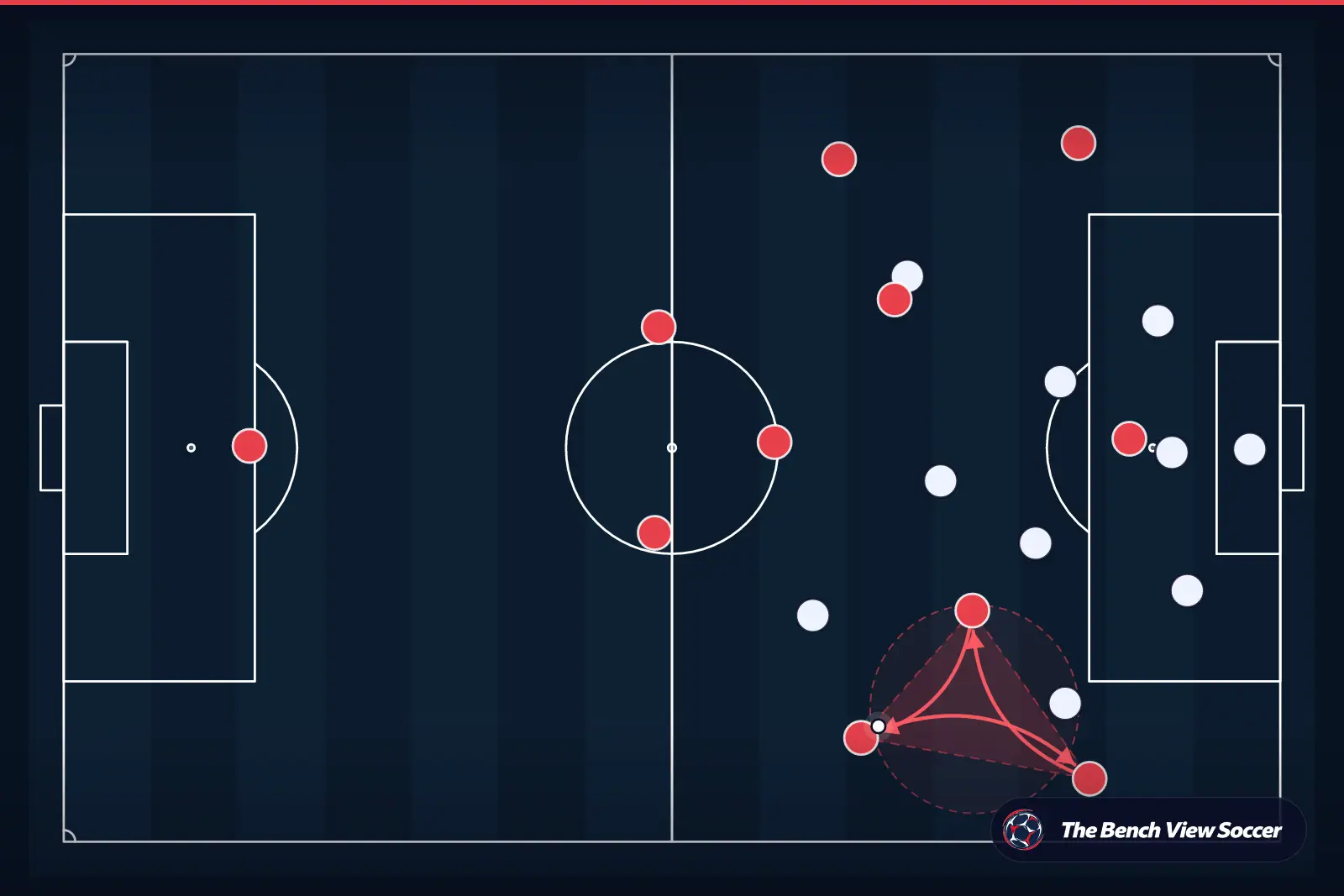
Opponents typically attack City’s rotation by targeting three things: access, space, and rhythm. First, they block access to City’s “connectors”—the players who link defence to attack. In recent seasons that includes Rodri, John Stones stepping into midfield, and Bernardo Silva when he drops to receive. A common plan uses a “shadow cover” approach: a forward presses a centre-back while positioning his body to block the pass into Rodri. It looks like pressing one player, but it secretly marks another. Second, teams protect space by narrowing the pitch. City want to find the half-spaces (channels between full-back and centre-back) and then rotate to overload them. Opponents respond with compact midfield lines and full-backs who tuck in early, accepting that City may pass outside but refusing to open the centre. Third, they disrupt rhythm by choosing when to jump. Instead of pressing constantly, many teams set pressing “triggers” (for example: a backward pass to Ederson, a heavy touch by a full-back, or a pass into a player facing his own goal). The aim is to win the ball at the moment City rotate, when spacing can briefly look messy. Another common anti-rotation tool is man-oriented marking in midfield: one midfielder follows De Bruyne or İlkay Gündoğan (now at Barcelona, previously key) into deeper zones, even if it pulls the marker out of position. The risk is obvious—if the marker gets dragged away, City attack the vacated lane. So the best plans blend man-orientation with a strong covering line behind. Finally, some managers purposely allow one City player time—often a centre-back—and then lock the next pass. It is a bait-and-trap: “We let you have the ball there, because we know where you want to go next.”
Match Examples
A clear example arrives in the 2020-21 UEFA Champions League final: Thomas Tuchel’s Chelsea beat Guardiola’s City 1–0 in Porto. Chelsea defend in a 3-4-2-1 and protect central zones with N’Golo Kanté and Jorginho screening the space in front of the back line. When City try to rotate midfielders into pockets, Chelsea’s two attacking midfielders (Mason Mount and Kai Havertz) position themselves to block easy passes into City’s deeper midfield, while the wing-backs stay narrow enough to discourage the inside ball. The key is not nonstop pressing; it is timing and compactness so City’s rotations do not create the usual free man between lines. In the Premier League 2022-23 at the Etihad, Brentford under Thomas Frank win 2–1 and show another method: they allow City’s defenders possession but stay extremely compact centrally, then spring forward quickly when the ball enters a contested zone. Brentford’s structure denies City clean access into central receivers, and when City rotate, Brentford’s defenders pass runners on (hand them over) instead of following blindly, reducing the value of City’s swaps. A third example comes in the 2023-24 Premier League clash Manchester City 0–0 Arsenal at the Etihad, with Mikel Arteta—Guardiola’s former assistant—using a disciplined mid-block. Arsenal keep the centre crowded with Declan Rice and Jorginho, while the back line stays connected so City’s rotating forwards cannot separate defenders easily. Arsenal do not chase every movement; they protect the “most dangerous” areas and force City to attack wider and slower. Across these matches, the pattern is consistent: stop the first clean connection into midfield, keep distances small, and choose pressing moments rather than pressing constantly.
Related Concepts & Skills
Training Implications
To train an anti-rotation plan (or to understand it as a fan), focus on three practical behaviours: screening, compact shifting, and coordinated pressing. First, run a 7v7+3 possession game where the defending team earns extra points for blocking passes into a designated “pivot zone” (the Rodri area). Coach the nearest forward to press at an angle, showing the ball outside while hiding the central pass. Repeat for 6–8 minutes, then swap roles; players learn body shape, not just effort. Second, build a mid-block shifting drill: set up two defensive lines of four against a back four plus two midfielders. The ball moves side to side, and defenders must slide together, keeping 8–12 metres between lines. Add a rule: full-backs can only step out to press if the near-side midfielder covers the channel behind them. This trains the handover mechanism that stops City’s rotations from creating separation. Third, rehearse pressing triggers with a 10-minute “trigger-only” game: the team is not allowed to press unless a trigger occurs (back pass, square pass across the back line, or receiver facing his own goal). When the trigger happens, the whole unit presses for 5 seconds, then drops if they do not win the ball. This teaches patience and collective timing—exactly what teams like Arsenal under Arteta and Chelsea under Tuchel use. Finally, include transition finishing: after a regain, the team must play forward within two passes and attempt a shot within 8 seconds. Many opponents hurt City not by dominating the ball, but by attacking quickly when rotation opens brief gaps.
The Bench View app
Don’t just read football — train it
Everything you read here, turned into training you can follow step by step.
Physical training at home
AI daily sessions adapted to your level and position. No equipment needed.
Tactical training courses
Step-by-step courses on positioning, pressing, build-up and decision making.
- 7 days free
- No commitment
- Cancel anytime
Free account: 2 physical sessions + the first tactical course. PRO: 7-day free trial — cancel before day 8 and you pay nothing.