Introduction
Man-marking in midfield looks simple on TV: your best creator gets followed everywhere, passing lanes feel “blocked”, and the game turns into duels. For many fans learning European tactics, this is a key moment to understand why elite teams don’t always “solve” pressure with fancy skills—they often do it with small positional tweaks. A “positional tweak” can be as basic as a midfielder starting five metres wider, a full-back stepping into midfield, or a striker dropping at the right time. These small moves change reference points for markers: do they follow and leave space behind, or hold shape and allow a free man? In the Premier League and La Liga, managers like Pep Guardiola, Mikel Arteta, Carlo Ancelotti and Diego Simeone face opponents who use man-oriented pressing (players lock onto opponents in zones) to disrupt rhythm. This article explains how simple adjustments create the free player, improve access to the next line, and turn a man-marked midfield into an advantage rather than a problem.
How It Works
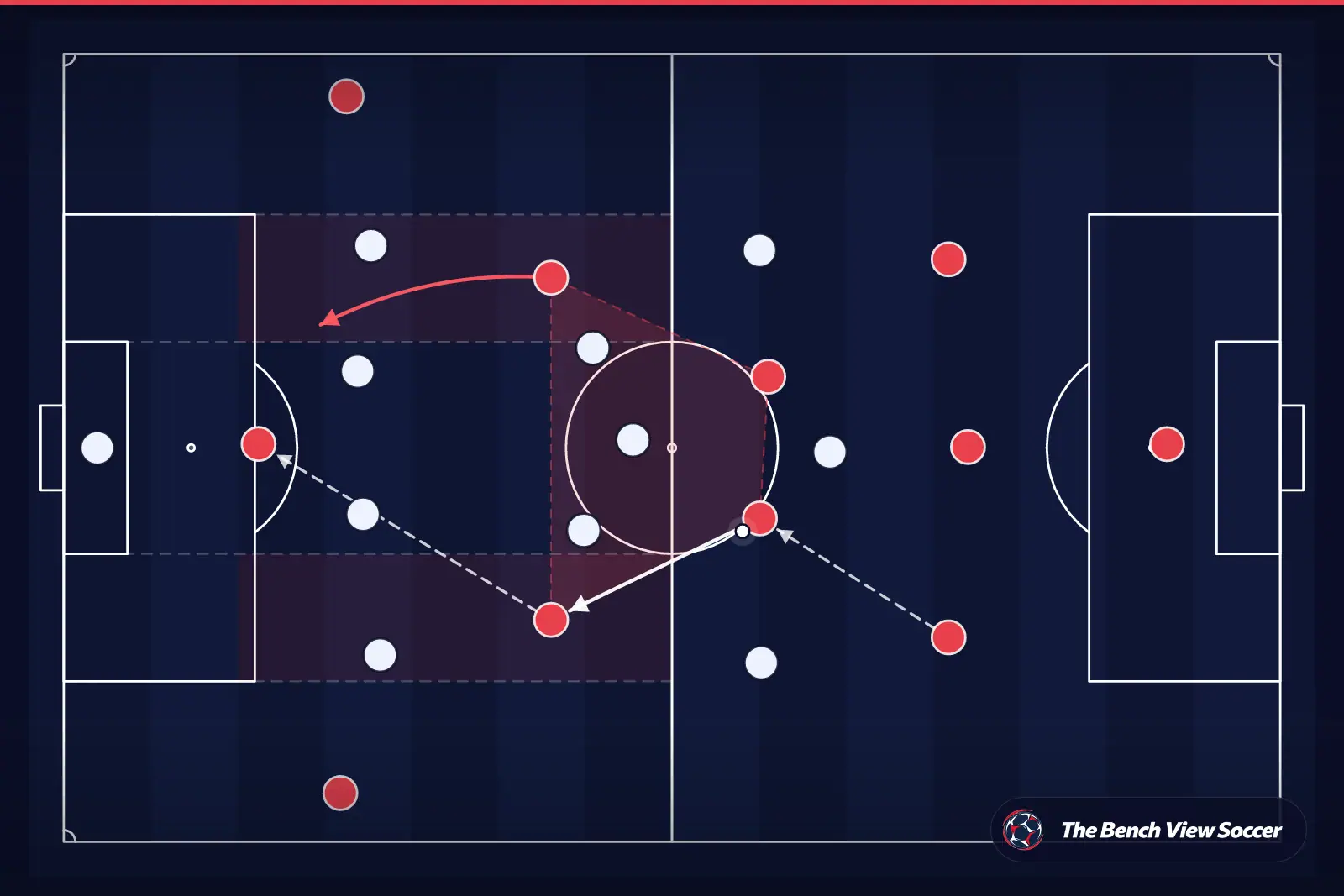
When a midfield is man-marked, the opponent tries to remove your central options by assigning a close “shadow” to each key receiver. The solution is rarely to force passes into marked players; it is to change the map. Teams beat man-marking by creating a spare player (“free man”) and by moving the ball so the marker has to make a decision. One common tweak is to alter the build-up shape: for example, a full-back moves inside next to the holding midfielder, creating an extra central passer. If the marker follows inside, the wing becomes free; if the marker stays wide, the inside player receives with time. Another tweak is a rotation: the No. 8 drops closer to the centre-backs while the No. 6 moves higher, swapping roles to confuse who is supposed to track whom. A third is using “third-man” combinations: Player A passes to a marked Player B, who immediately lays off to Player C (the third man) arriving from a blindside. Because the marker focuses on Player B, the real progression happens through Player C. Finally, width and depth are weapons: wingers stay high and wide to stretch the back line, while a striker drops a few steps to pin a midfielder and open space for a runner. None of this requires magic; it requires timing, spacing, and players understanding that dragging a marker is valuable even without touching the ball.
Match Examples
Premier League example (2022–23): Arsenal under Mikel Arteta often face man-oriented midfield pressure, especially in away games where opponents want to disrupt their central rhythm. In Newcastle United vs Arsenal (Premier League, 2022–23), Newcastle’s midfield pressure and man-focused duels make it hard for Arsenal to find clean entries into Martin Ødegaard and Granit Xhaka. Arsenal’s typical solution in that season is to use Oleksandr Zinchenko stepping into midfield from left-back, forming an extra central option next to Thomas Partey. That positional tweak asks a direct question: does the winger track Zinchenko inside (freeing the flank for Gabriel Martinelli), or does Newcastle allow Zinchenko time to receive and face forward? Even when the game is tight, the idea is clear—create a new passing angle that the man-marking system does not naturally cover. Premier League example (2023–24): Manchester City under Pep Guardiola regularly use “inverted full-backs” and midfielder rotations to escape man-marks. In Manchester City vs Liverpool (Premier League, 2023–24 at the Etihad), Liverpool’s midfield pressure aims to jump onto City’s first receivers and stop Rodri from dictating. City respond by moving a full-back into midfield and by using quick third-man links: a centre-back finds a marked midfielder, who sets the ball back or around the corner to a free attacker arriving between lines. The tweak is not always dramatic; it is often about where the next player stands before the pass is played, so that once a marker commits, the ball goes elsewhere. La Liga example (2023–24): Real Madrid under Carlo Ancelotti frequently face man-oriented pressure against their midfield, especially when Jude Bellingham joins the forward line and leaves fewer classic midfield connections. In Real Madrid vs Barcelona (La Liga, 2023–24 at the Bernabéu), Barcelona’s pressing tries to lock onto central options and force play wide. Madrid’s solution is to vary who receives in the half-spaces: a midfielder drops to pull a marker, while a forward (often Vinícius Júnior drifting inside or Bellingham arriving late) attacks the space vacated. The key positional tweak is the “late arrival”: instead of standing marked, the runner starts away from the duel and enters the space as the marker’s attention is fixed. La Liga example (2022–23): Atlético Madrid under Diego Simeone are comfortable using man-oriented references in midfield to break rhythm. When opponents try to play through Atlético, a common counter is to create a back three in possession (a full-back tucks in or a midfielder drops) to gain an extra passer and shift Atlético’s marking assignments. In matches like Atlético Madrid vs Sevilla (La Liga, 2022–23), the battle often becomes about whether Sevilla can free a central receiver by pulling Atlético’s midfielders out of their line. The broader lesson from these leagues is consistent: one small structural change can force a man-marking scheme to either lose compactness or concede a free player.
Related Concepts & Skills
Training Implications
To train solutions against a man-marked midfield, coaches and fan-coaches can use simple, repeatable drills that reward spacing and timing rather than random passing. First, run a 6v6+2 neutral possession game in a 30x25m area. Instruct defenders to man-mark one specific midfielder each (assign bib numbers). The attacking rule: a goal point counts only after a third-man combination (A to marked B, one-touch to C) breaks a line. Rotate roles every 2–3 minutes so players learn both marking and escaping. Second, teach the “inverted full-back” tweak with a pattern drill. Set a back four, a No. 6, two No. 8s, two wingers and a striker. Start with the ball at the goalkeeper, then rehearse: centre-back to full-back, full-back steps inside next to the No. 6, bounce pass, then switch to the far winger. Add passive markers first, then active man-markers whose instruction is: follow your player if they enter your zone. The coaching points are concrete: open body shape (receive side-on), scan before the pass (head up twice), and keep 8–12 metres between central players to avoid being pressed together. Third, add a “drag-and-release” running constraint. Pick one midfielder as the decoy: their job is to move toward the ball to pull a marker, but they are not allowed to receive for the first five seconds of the phase. This forces the team to use the space created, not the marked player. Finally, finish with an 8v7 to goal exercise where the attacking team must create an overload (a spare player) in one zone before they can attack the box. This teaches the main lesson: beating man-marking is a collective behaviour—your movement without the ball is as tactical as your passing with it.
The Bench View app
Don’t just read football — train it
Everything you read here, turned into training you can follow step by step.
Physical training at home
AI daily sessions adapted to your level and position. No equipment needed.
Tactical training courses
Step-by-step courses on positioning, pressing, build-up and decision making.
- 7 days free
- No commitment
- Cancel anytime
Free account: 2 physical sessions + the first tactical course. PRO: 7-day free trial — cancel before day 8 and you pay nothing.