

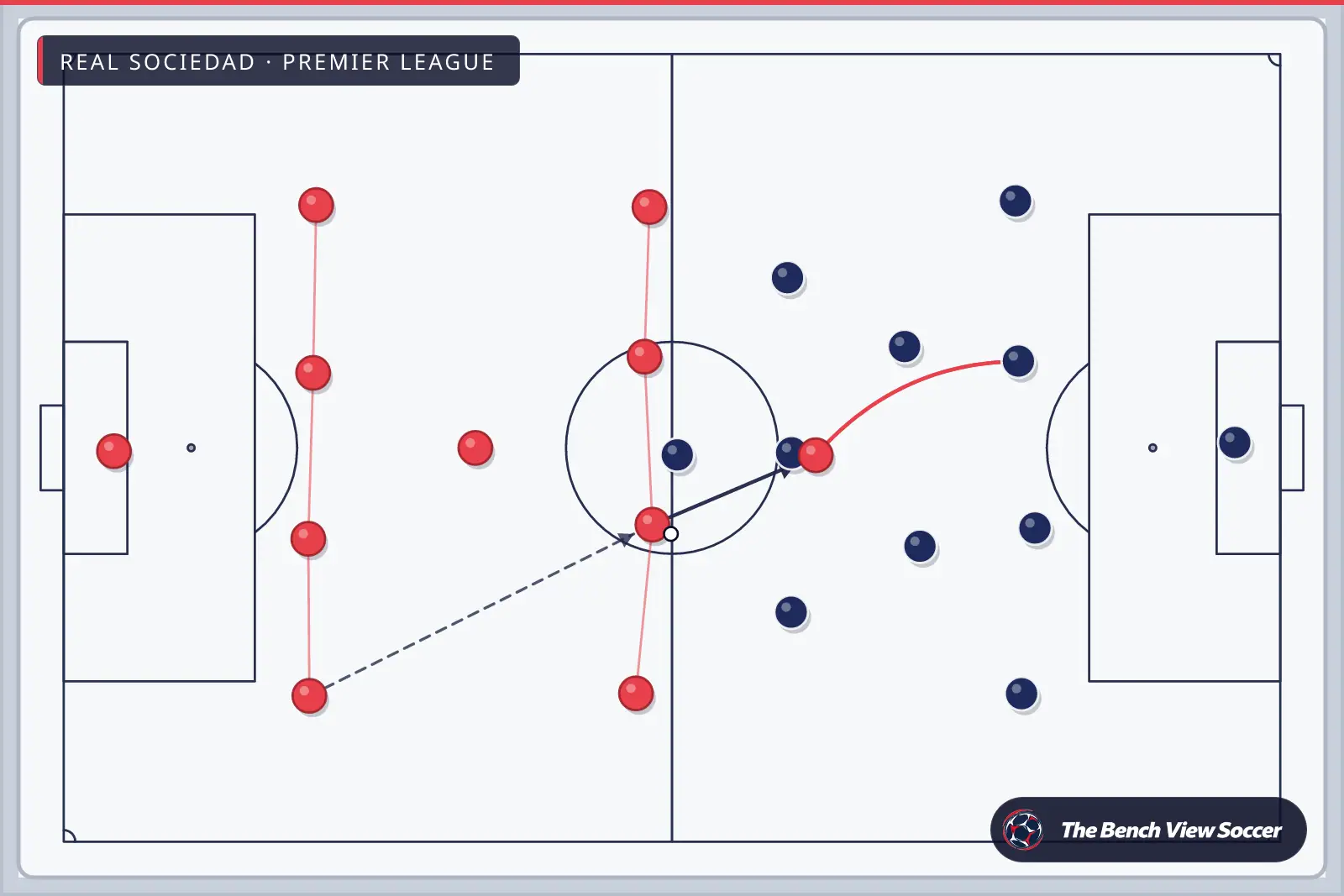
Jon Martin has publicly reiterated his commitment to Real Sociedad, saying "I have always said that this is my home," and making clear that, despite links to several elite clubs, any transfer will not happen right away. At the same time, recent commentary has revisited Jose Mourinho's reputation after Real Madrid's win at Barcelona, asking whether the long‑standing perception of the manager overlooks his work. Those two facts together — a marquee player favouring continuity and a high‑profile manager being reappraised after a prominent victory — point to themes coaches and players can learn from about team construction, pragmatism and the management of big occasions.
What happened
Jon Martin, a Spain international who has attracted interest from top clubs including sides in La Liga and the Premier League, told reporters that Real Sociedad is his home and indicated that a move will not take place imminently. Separately, media analysis has focused on Jose Mourinho’s standing as a manager over the past decade, noting that he has watched other managers gain acclaim and asking whether Real Madrid's win at Barcelona suggests Mourinho has been misunderstood.
The tactical reading
Martin's decision to remain at Real Sociedad for now suggests the club retains an identifiable core figure around which sporting planning can proceed. When a high‑profile player opts for stability rather than an immediate transfer, it typically allows coaching staff to design systems that exploit that player's familiarity with teammates, spatial patterns and transitional cues. Continuity reduces the uncertainty coaches need to adjust for and increases the range of nuanced collective movements that can be practiced and perfected.
That continuity also influences recruitment and tactical balance. Keeping a major talent in place usually means the club can prioritise complementary profiles rather than forcing a rapid tactical overhaul to accommodate a sudden departure or an incoming marquee signing. It points to a structure where accompanying roles — pressing triggers, passing lanes, and set‑piece routines — are tailored around someone already embedded in the club’s habits and culture, instead of reworking them around a newcomer.
The discussion around Mourinho indicates another axis coaches should study: the difference between reputational narratives and tactical reality. When a high‑profile manager is described as "misunderstood" following a notable victory, it typically means his approach combined elements that are not immediately visible in headline summaries — for instance, in‑match adjustments, disciplined defensive organisation or tactical targeting of opposition weaknesses. Analysing such matches usually reveals layered planning: workmanlike structure paired with specific moments engineered to exploit the opponent.
Bringing those two threads together — a player committing to continuity and a manager reappraised after a big result — highlights the trade‑offs between stylistic identity and pragmatic match management. Stability around a core player permits more elaborate team patterns, while pragmatic coaching in high‑stakes games often demands compactness, controlled transitions and set‑piece preparation. Good teams blend both: a clear identity enabled by core players, with flexibility on matchday to deploy focused, sometimes conservative, strategies when the situation requires.
Key tactical points
- Retaining a central figure short‑term allows tactical complexity: rehearsed movements, combined runs and positional rotations become more reliable when personnel are stable.
- Design complementary recruitment to reinforce existing patterns rather than forcing immediate tactical reinvention after transfer speculation.
- High‑profile victories often mask detailed, pragmatic planning — defenders’ positioning, pressing triggers and targeted exploitation of opponent weaknesses matter more than headline style.
- Balancing club identity with match‑specific pragmatism is crucial; an ironed‑out system benefits from having the latitude to switch to compact, risk‑averse structures in key moments.
- Communication and cultural fit (player declaring a club as "home") can be as tactically valuable as physical attributes, because they facilitate cohesion and shared understanding on the pitch.
What to watch next
Watch how Real Sociedad uses Martin in the next matches: does his continued presence lead to more complex, rehearsed attacking patterns and positional rotations, or do coaches alter roles around him to exploit specific opponents? Observe whether the team expands its tactical palette — incorporating both expansive identity‑based play and compact, situation‑driven setups.
Also look at how Mourinho‑led teams apply pragmatic elements after big wins. Does the match planning show recurring features — disciplined defensive blocks, clear pressing triggers, or set‑piece emphasis — that can be linked to the manager’s methodology rather than transient form? Monitoring whether these elements are repeated will indicate if the victory was an example of systematic preparation or an isolated tactical success.
Train it
Exercise: "Core‑Player Possession and Transition Rondo" — a possession rondo that prioritises using a fixed core player to anchor ball circulation, then immediately practising compact defensive transition when possession is lost. This trains the team to both build around a stable fulcrum and switch into disciplined, pragmatic work when required.
- Set up a 7v3 rondo (or 8v3) with a designated "core" player who must receive and distribute at least twice before the next teammate can touch the ball; encourage patterned movements and rotated positions around that player.
- On loss of possession, the three defenders release a fixed counter‑press cue; the nearest two attackers must sprint to block passing lanes while the designated core drops to cover a central zone forming a compact shape for 6–8 seconds.
- Coaching focus: tempo of passing through the core, quality of support angles, speed of transition into the defensive block, and communication to maintain compactness without sacrificing quick recovery for the next possession phase.
Sources
The Bench View app
Don’t just read football — train it
Everything you read here, turned into training you can follow step by step.
Physical training at home
AI daily sessions adapted to your level and position. No equipment needed.
Tactical training courses
Step-by-step courses on positioning, pressing, build-up and decision making.
- 7 days free
- No commitment
- Cancel anytime
Free account: 2 physical sessions + the first tactical course. PRO: 7-day free trial — cancel before day 8 and you pay nothing.
More Analysis
Carrick keeps Fernandes as captain after talks — what it means tactically for United at Stamford Bridge
October 30, 2026
Noise, pressure and young sides: tactical lessons from Villa’s atmosphere and the EFL Trophy results
October 28, 2026
Liverpool end Brighton run at Anfield as Isak, Wirtz and Barcola click under Iraola
October 26, 2026
Palmer sent off for second yellow in Chelsea v Tottenham Premier League clash
October 25, 2026