

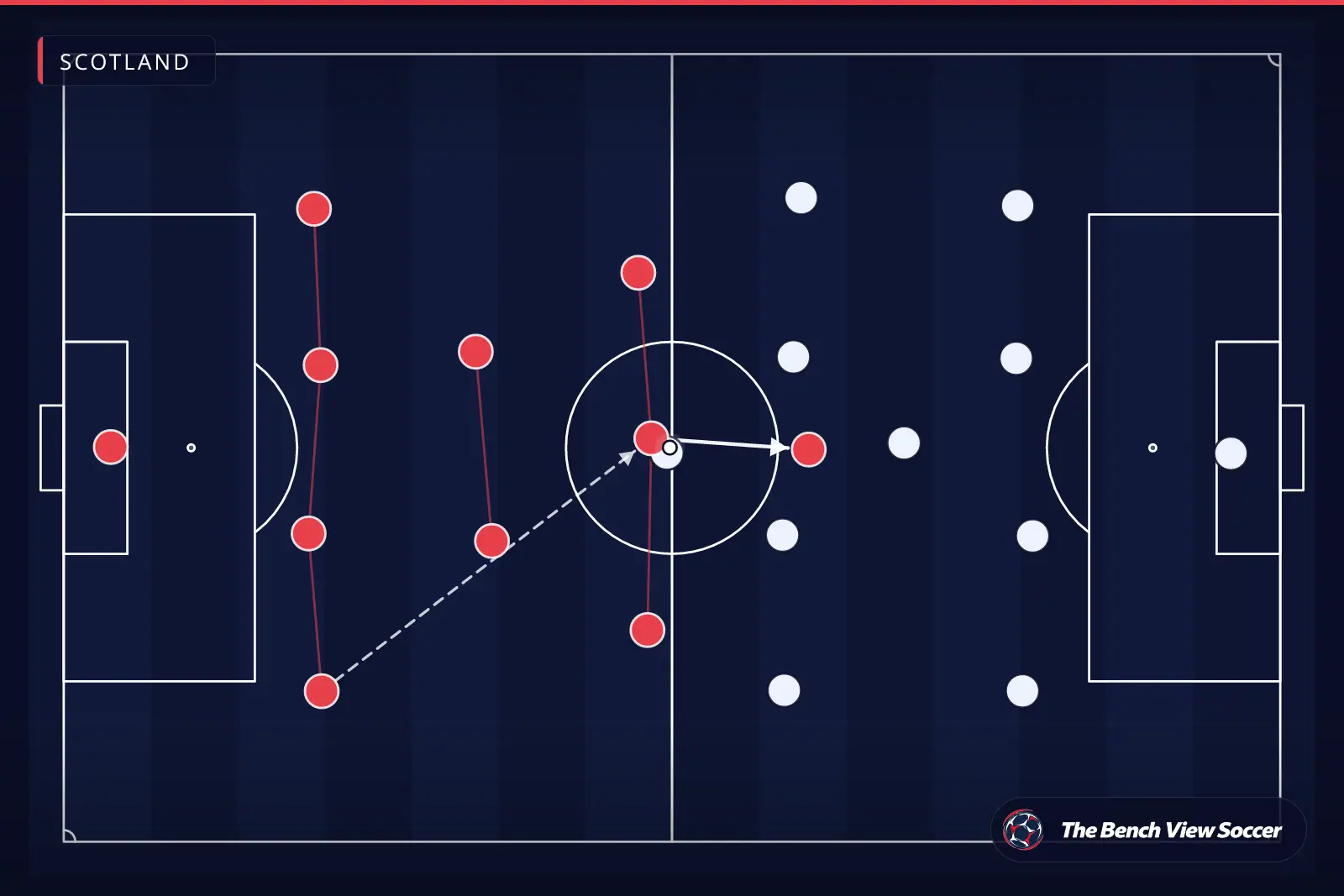
Scotland have recalled Scott McTominay, Kieran Tierney and Che Adams to their squad, and handed a first call-up to James Penrice for the remaining Nations League matches against North Macedonia and Switzerland. Northern Ireland meanwhile have given first international call-ups to Dermot Mee and Eoin Kenny ahead of their Nations League games with Ukraine and Hungary.
What happened
Scotland's squad for the remaining Nations League fixtures includes the returns of Scott McTominay, Kieran Tierney and Che Adams, plus a maiden call-up for James Penrice. The two fixtures named for Scotland are against North Macedonia and Switzerland. Separately, Northern Ireland have added Manchester United goalkeeper Dermot Mee and Portsmouth's Eoin Kenny to their squad for November Nations League matches against Ukraine and Hungary.
The tactical reading
On the surface, the recall of familiar faces alongside a first-time call-up points to a manager balancing continuity and fresh options. Bringing players back into the squad typically indicates a desire to reintroduce known quantities and their habitual influence on how the team functions; when that sits alongside an uncapped player it often suggests the coaching staff are looking to widen their tactical toolset without fully abandoning established structures.
For Scotland, restoring several previously selected players implies a tilt toward experience and tested chemistry in the squad environment. That tends to favour a game plan where the coaching staff expect key individuals to execute set patterns — whether that is control of certain phases, pressing triggers, or transitional moments. Integrating a first-time call-up in such a group suggests the staff are seeking a specific attribute or role to complement that base rather than a wholesale tactical overhaul.
The presence of two named opponents — North Macedonia and Switzerland — creates different tactical puzzles and trade-offs. Facing differing styles in short succession often forces teams to prepare adaptable frameworks: a base structure that can be tweaked in personnel or orientation depending on the opponent's strengths. This dynamic explains why managers commonly mix recalls (for stability) with experimental inclusions (to address particular match-up problems).
The Northern Ireland selections for their Nations League fixtures — introducing both a goalkeeper and an outfield player to the international scene — suggest a similar dual focus on immediate needs and long-term squad development. When a coaching staff brings new faces into competitive windows, it usually reflects an interest in evaluating how they fit into existing tactical plans and whether they can be relied upon to carry out specific in-game responsibilities under pressure.
Key tactical points
- Recall of familiar players typically prioritises stability in core tactical patterns and in-game responsibilities.
- Introducing a first-time call-up amid experienced returns is a pragmatic way to test a specific function without disrupting overall structure.
- Back-to-back different opponents encourage selection choices that favour adaptable personnel who can execute multiple game plans.
- Bringing new players into Nations League windows allows coaches to assess temperament and tactical compliance under competitive conditions.
- Goalkeeper and outfield first caps in another squad highlight a parallel approach of blending immediate competition needs with future depth building.
What to watch next
Watch how the manager deploys the recalled players alongside the newcomer: does the tactical framework shift to accommodate the fresh inclusion, or is the new player slotted into an established system? The extent to which selection changes are accompanied by visible tactical tweaks will reveal whether the coaching staff are testing a specific solution or reinforcing a trusted plan.
For the two national setups, the key question is adaptability across different opponents. Will personnel choices reflect situational adjustments for North Macedonia versus Switzerland, and Ukraine versus Hungary, or will the teams prioritise a single coherent approach across both fixtures? Observing substitutions and role assignments during the matches will show which tactical priorities the coaches chose to emphasise.
Train it
Exercise: Controlled integration rondo — simulate integrating a new player into an existing shape by running a possession rondo with role-specific constraints that mirror match responsibilities.
- Set up a 6v3 possession rondo with an outer ring of neutral players; designate one neutral as the "newcomer" who must receive and release under an extra constraint (e.g., one-touch or directional pass only).
- Rotate the newcomer through different positions in the outer ring so they experience varied pressures and positional responsibilities while the core group maintains their usual constraints.
- Coach focuses on communication, quick scanning, and the newcomer's ability to execute the required constraint while the core group maintains shape and transitions to press if possession is lost.
Sources
The Bench View app
Don’t just read football — train it
Everything you read here, turned into training you can follow step by step.
Physical training at home
AI daily sessions adapted to your level and position. No equipment needed.
Tactical training courses
Step-by-step courses on positioning, pressing, build-up and decision making.
- 7 days free
- No commitment
- Cancel anytime
Free account: 2 physical sessions + the first tactical course. PRO: 7-day free trial — cancel before day 8 and you pay nothing.
More Analysis
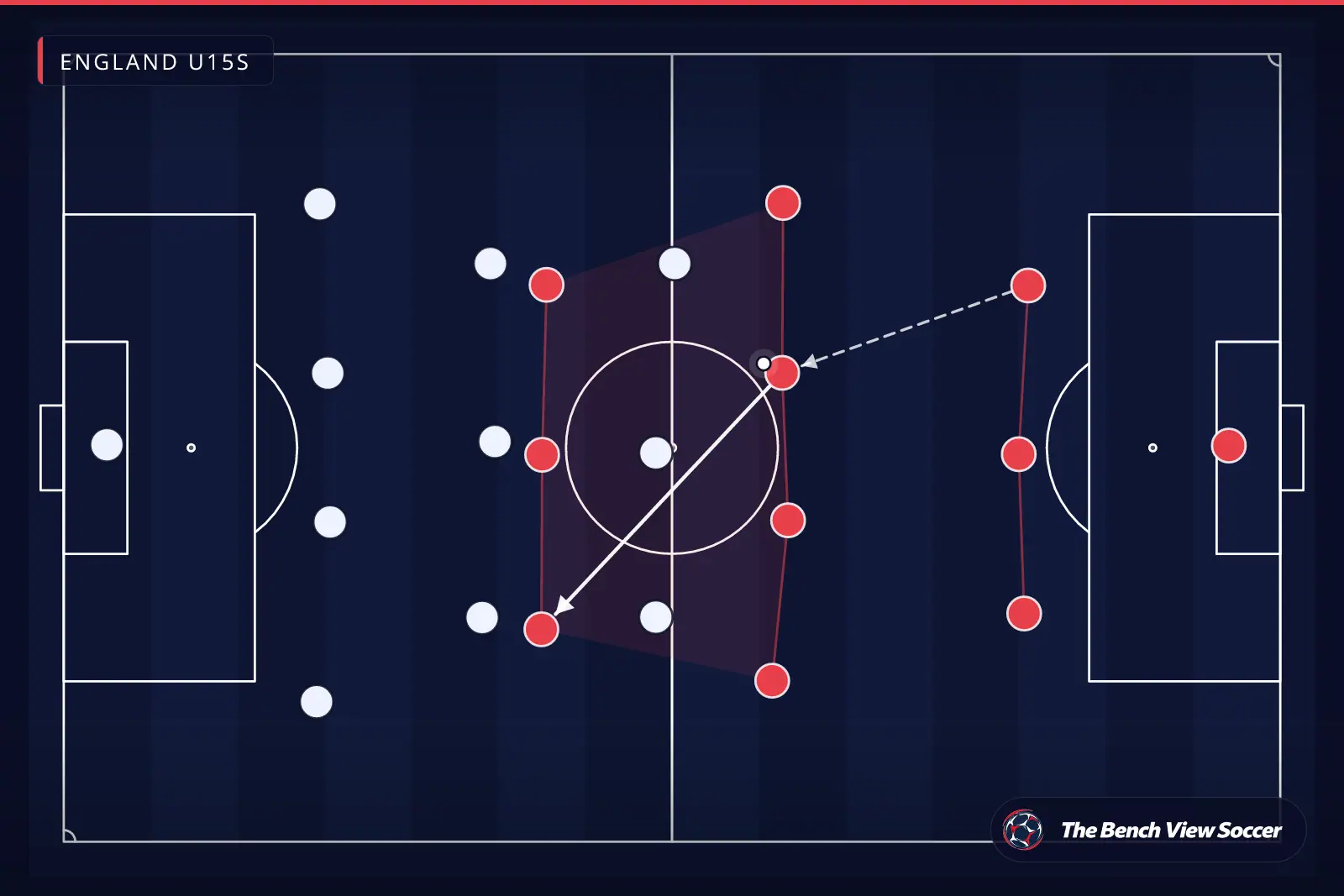
England U15s walk off in Baku: how off-field incidents reshape on-pitch management
October 27, 2026
Infantino dismisses resignation talk, says he has backing of 'vast majority'
October 25, 2026
England claim first Cerebral Palsy World Cup after final win over USA
October 25, 2026
FIFA doubles Women’s World Cup preparation funds to equal men’s
October 23, 2026