Introduction
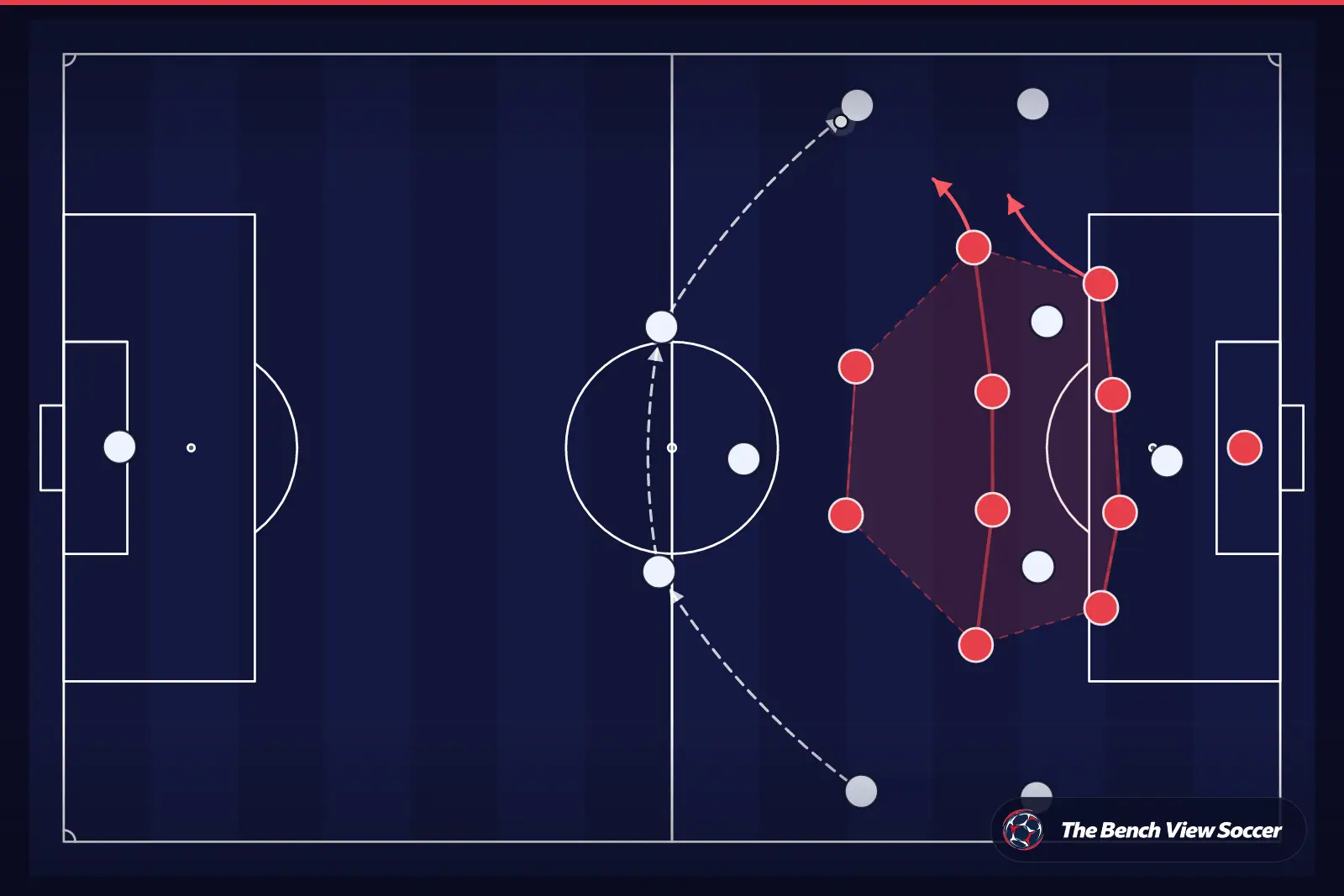
A “low block” is when a team defends deep, close to its own penalty box, usually with many players behind the ball. For fans watching the Premier League or Champions League, this is the pattern you often see when a smaller side visits a giant like Manchester City: the defending team prioritises compactness over possession, hoping to survive pressure and counter-attack. Breaking a low block is not about one magic through ball; it is about patiently moving the defence, creating small advantages, and then attacking the right space at the right moment. Pep Guardiola’s Manchester City, Carlo Ancelotti’s Real Madrid, and Mikel Arteta’s Arsenal all face low blocks weekly—especially in domestic leagues where they dominate the ball. The best teams treat the low block like a puzzle: stretch it wide, pin it with runners, manipulate it with passing angles, and punish the one second of hesitation. This article explains how that puzzle is solved, step by step, in a way you can recognise the next time you watch a top side dominate possession but struggle to score.
How It Works
Top teams break a low block by controlling three things at once: space, timing, and the opponent’s attention. First, they create width to stretch the back line. Manchester City under Pep Guardiola often keeps wingers high and wide so the full-backs of the defending team cannot tuck inside comfortably. When the defence spreads, gaps appear between centre-back and full-back (the “channel”) or between midfielders. Second, they attack the half-spaces (the lanes between the centre and the wing). Players like Kevin De Bruyne or Bernardo Silva position in these pockets, receiving passes that face goal and force defenders to step out. When a defender steps out, the line loses compactness and passing lanes open. Third, they use positional rotations to confuse marking: a full-back steps into midfield, a midfielder drifts wide, or a winger moves inside as an extra striker. This movement is not random; it is designed to overload one side (create a 3v2 or 4v3), then switch play quickly to the far side where the low block is still sliding across. The “switch” can be a long diagonal pass or a quick sequence through the centre. Finally, they combine patience with sharp penetration: many passes to move the block, then one decisive action—an underlapping run, a cutback from the byline, a third-man run (pass to one player who sets for another runner), or a shot created by a late arrival at the edge of the box. The low block survives if the attack is slow and predictable; it breaks when the attack changes rhythm and forces repeated defensive decisions.
Match Examples
Manchester City vs Aston Villa, Premier League 2021–22 (final day): Villa often defends in a low-to-mid block once they lead 2–0, protecting the centre and forcing City wide. City’s comeback shows a classic solution: fast tempo changes and aggressive occupation of the box. Ilkay Gündogan’s equaliser comes from City sustaining pressure, keeping bodies high, and attacking the six-yard area at the right moment rather than settling for hopeful crosses. The winning goal arrives after Villa’s defensive line is pulled around by City’s constant repositioning and quick combinations in the inside channels. Manchester City vs Inter, UEFA Champions League Final 2022–23: Inter defend in a disciplined low block with a back five, staying compact and inviting City to play around them. City keep patient circulation, but the key moment comes when City find a pocket between Inter’s midfield and defensive line and then attack the space behind the midfield screen. Rodri’s winning goal comes from a sequence where City pull Inter’s block side-to-side, then exploit the small gap created by a defender stepping out to engage. The finish is not a perfect “through ball” moment; it is the reward for sustained positional pressure and second-ball readiness. Arsenal vs Everton, Premier League 2023–24 (at the Emirates): Everton under Sean Dyche sit deep, block central access, and dare Arsenal to break them down. Arsenal try to use wide players to stretch the block and look for cutbacks, but the match underlines an important lesson: when your passing tempo drops or your box occupation is weak, the low block becomes comfortable. This is a useful example because it shows that breaking a low block is not guaranteed by possession alone; it demands coordinated runs, repeated threats in behind, and shots or cutbacks that force the defenders to turn toward their own goal.
Related Concepts & Skills
Training Implications
If you coach or play in India—whether at school, college, or a local club—you can train low-block solutions with simple, repeatable practices. First, run a “7v7 + 2 wide neutrals” game in a narrow-to-medium pitch where the defending team must keep six players inside a marked zone near the box (their low block). The attacking rule: a goal only counts if the final pass is a cutback or a pass into the half-space. This forces attackers to stop spamming crosses and instead learn to reach the byline and find the right passing angle. Second, train switches of play: set up two wide channels and require at least one switch (left to right or right to left) before shooting. Coach the body shape of the passer (open hips), the first touch of the receiver (forward if possible), and the timing of the winger/full-back run so the defence is still shifting when the ball arrives. Third, rehearse third-man patterns: create a triangle in the half-space with a “wall pass” player, a runner beyond the line, and a midfielder arriving late at the edge of the box. Demand that the runner goes as the pass is played into the wall player—timing is everything. Finally, add a transition rule: if defenders win the ball, they have 6 seconds to counter into two mini-goals. This teaches the attacking team counter-pressing habits so you can keep the opponent trapped, just like Manchester City do in the Premier League and Champions League.
The Bench View app
Don’t just read football — train it
Everything you read here, turned into training you can follow step by step.
Physical training at home
AI daily sessions adapted to your level and position. No equipment needed.
Tactical training courses
Step-by-step courses on positioning, pressing, build-up and decision making.
- 7 days free
- No commitment
- Cancel anytime
Free account: 2 physical sessions + the first tactical course. PRO: 7-day free trial — cancel before day 8 and you pay nothing.