Introduction
Manchester City under Pep Guardiola regularly uses full-backs in ways that surprise fans who grew up watching “overlapping” defenders hug the touchline and cross. In City’s best phases, the full-backs do not simply defend wide areas and attack down the wing; they often push high, step into midfield, or even appear as extra central players. This is not a stylistic quirk. It is a deliberate method to control games in the Premier League and UEFA Champions League by keeping the ball, pinning opponents back, and surrounding the zone where the ball is lost so City can win it back quickly. But every advantage has a cost. When full-backs push high, space opens behind and beside them, and smarter opponents try to break into that space with direct passes, quick switches, and targeted counter-attacks. This guide explains why City does it, how it works in real matches, and how rivals—from Real Madrid to Liverpool—try to punish it.
How It Works
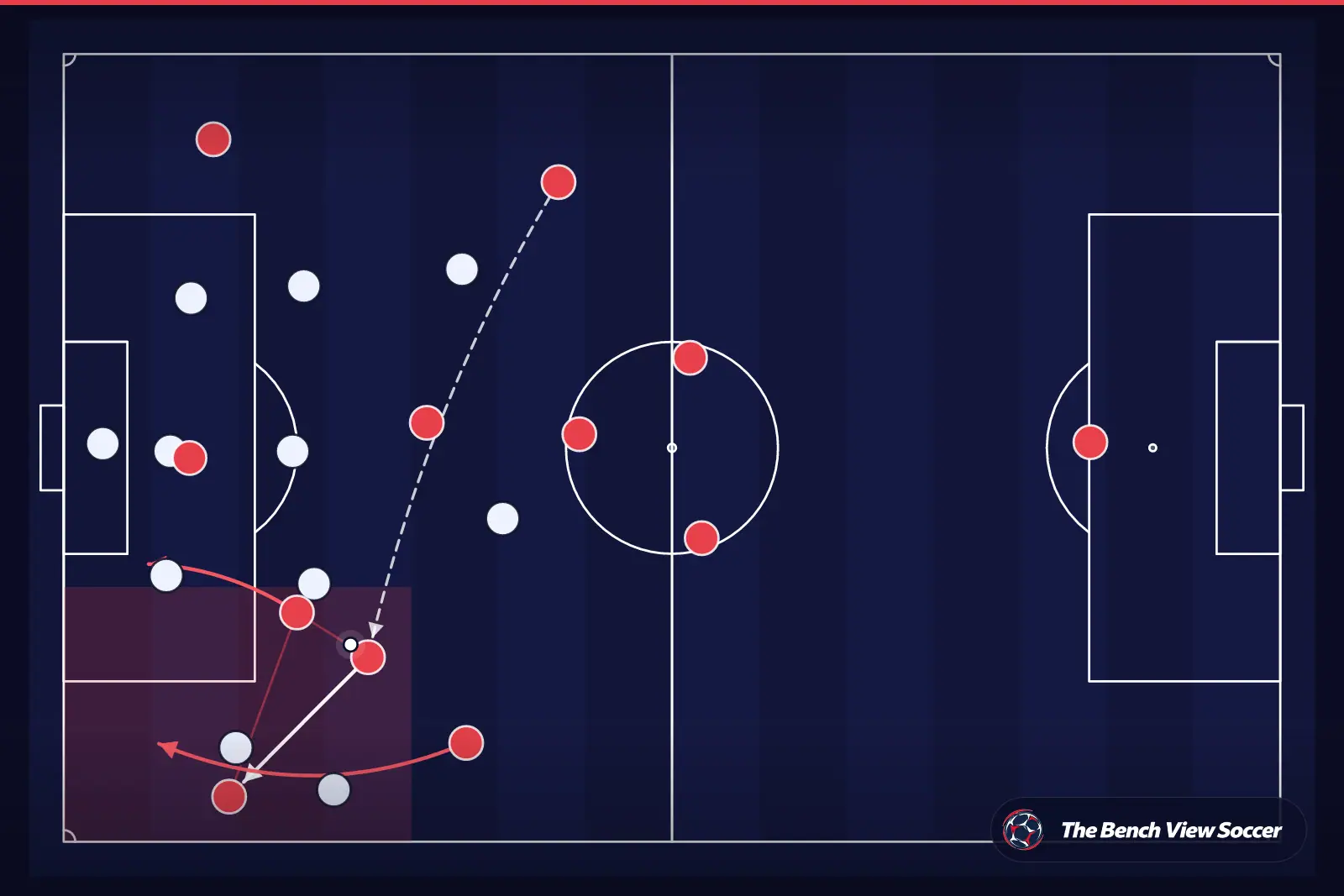
City’s high full-backs serve three connected goals: create an extra midfielder, secure rest-defense, and stretch the opponent’s defensive line. First, when a full-back like John Stones (used as an “inverted” full-back) steps into midfield, City often builds with a 3-2 shape: three defenders hold the first line while two midfielders sit ahead to receive and circulate. This gives Guardiola’s team clean passing angles through the centre, so Rodri or Stones can play forward to Kevin De Bruyne, Bernardo Silva, or a wide forward. Second, pushing full-backs high helps City’s counter-press: because more players stand close to the ball, City immediately attacks the receiver after losing possession, trying to win it back within seconds. This is why City often looks like it is “trapping” opponents in their own half. Third, high full-backs pin the opponent’s wingers deep, forcing them to defend and reducing their counter-attacking threat. The trade-off is obvious: if the counter-press fails, the space behind the advanced full-back becomes a runway. Opponents target that channel with early balls into the winger, diagonal switches, or runs from midfielders into the outside lane. City’s centre-backs then face difficult choices: step wide and leave the middle open, or stay central and allow a dangerous 1v1 near the box.
Match Examples
A clear example arrives in the 2021-22 UEFA Champions League semi-final between Manchester City and Real Madrid. City’s full-backs and midfield often hold aggressive positions to keep Madrid pinned, but Madrid targets the space behind City’s wide defenders with quick transitions. Vinícius Júnior attacks the left channel, and Karim Benzema plus Luka Modrić exploit moments when City’s counter-press breaks. Another useful reference comes from Liverpool under Jürgen Klopp against City in the 2021-22 Premier League and cup meetings, where Liverpool repeatedly looks for the first pass into Mohamed Salah or Sadio Mané (at the time) immediately after regaining the ball. City’s full-backs push up to support midfield control, and Liverpool uses direct outlets and third-man runs (a runner beyond the first receiver) to escape pressure. In the 2022-23 Champions League semi-final, City’s use of John Stones stepping into midfield helps them dominate Real Madrid at the Etihad in the second leg, but it also shows the risk: Madrid’s best moments come when they bypass the first press and find wide space early, before City resets its defensive shape. Across these ties, the pattern stays consistent: City’s full-back height improves control, while opponents hunt the exact seconds after City loses the ball.
Related Concepts & Skills
Training Implications
For coaches and players who want to learn from City’s approach (or learn to beat it), train the moments immediately after possession changes. First, build a “high full-back” possession drill: set up an 8v8 in two-thirds of a pitch, and require one full-back on each team to step into midfield during build-up. Coach the full-back’s body shape: receive side-on, scan before the pass arrives, and keep one touch available to play forward. Add a rule that goals count double if they come within 8 seconds of winning the ball—this teaches counter-press urgency and transition awareness. Second, train the opponent’s solution with a “counter into the channel” drill: when the defending team wins the ball, they must play the first pass into a wide target zone behind the advanced full-back, then attack with 3 runners. Coach the timing: the pass must release early, and the wide runner must drive diagonally toward the box to force centre-backs to choose. Third, create a rest-defense habit: in your attacking team, demand that two players always hold central cover when the full-back goes high (one centre-back and one midfielder), and stop play if both get pulled toward the ball. Finally, use video: clip 3 sequences from a City match and label “full-back high,” “counter-press wins,” and “counter-press breaks,” then ask players to identify the key positioning mistake in each clip and propose a fix.
The Bench View app
Don’t just read football — train it
Everything you read here, turned into training you can follow step by step.
Physical training at home
AI daily sessions adapted to your level and position. No equipment needed.
Tactical training courses
Step-by-step courses on positioning, pressing, build-up and decision making.
- 7 days free
- No commitment
- Cancel anytime
Free account: 2 physical sessions + the first tactical course. PRO: 7-day free trial — cancel before day 8 and you pay nothing.