Introduction
If you watch top European teams closely, one role quietly connects everything: the pivot midfielder. Fans often notice the flashy No.10 or the box-to-box runner, but modern football increasingly builds around a “pivot” because elite matches are decided by control of space, not just possession. Casemiro is a perfect lens for this idea. At Real Madrid under Carlo Ancelotti and earlier under Zinedine Zidane, he anchors midfields that win the UEFA Champions League by protecting transitions and letting creators play higher. At Manchester United, especially in the 2022–23 season under Erik ten Hag, he changes the team’s ability to defend counter-attacks and sustain pressure in the opponent’s half. The pivot is not simply a defensive midfielder who tackles; he is a problem-solver who compresses the pitch, manages risk, and gives structure to both pressing and build-up. This article explains why modern midfields use a pivot, how it works tactically, and how you can spot it on TV.
How It Works
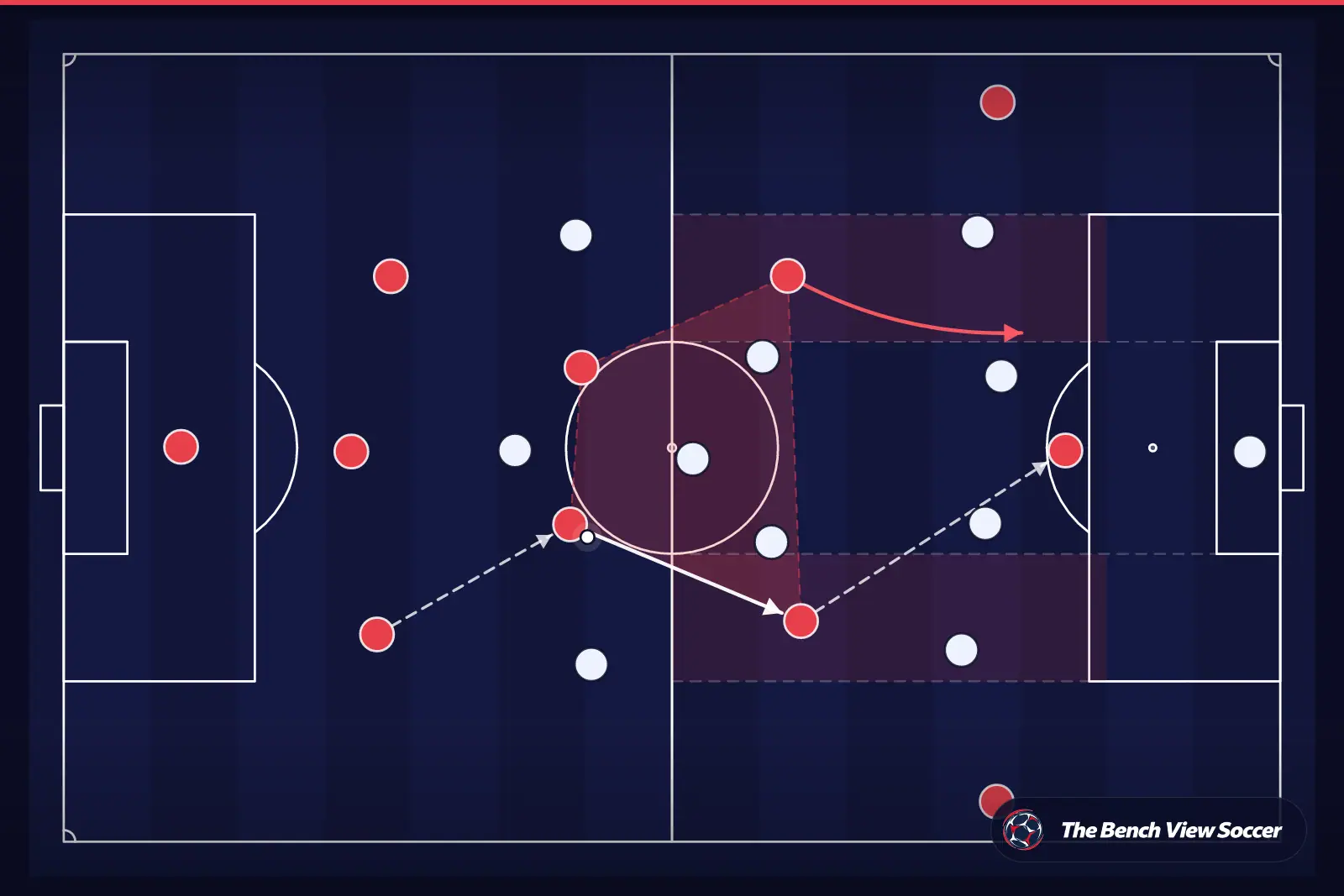
A pivot is the central reference point in midfield, usually sitting in front of the centre-backs. Teams use either a single pivot (one player) or a double pivot (two players). The key function is “control and compression.” Control means the pivot gives the team a safe passing option and decides when to speed up or slow down play. Compression means the pivot helps the team keep the game in a smaller area by supporting pressing, stopping counters, and recycling the ball to attack again. In possession, a pivot often drops to create a 3v2 in first build-up: he positions to receive from the centre-backs, attracts a press, and plays through it. If the opposition marks him, he acts as a decoy that opens a lane for a centre-back to carry the ball. Out of possession, he protects the most dangerous zone: the area in front of the centre-backs (often called “Zone 14,” the central space just outside the penalty box). Casemiro’s value is that he reads the next pass early, blocks vertical lanes, and times his stepping out—he presses forward when a bad touch or sideways pass invites it, but he drops when the opponent can play behind him. The pivot also coordinates spacing: full-backs can push higher because the pivot covers the inside channel; centre-backs can defend more aggressively because the pivot screens direct passes into a striker. That is why modern teams prioritise a pivot even when they have star attackers: without one, the match becomes stretched, and European competitions like the Champions League punish stretched teams brutally.
Match Examples
Real Madrid’s 2021–22 Champions League run shows the pivot’s “damage control” in high-stress games. In the semi-final second leg vs Manchester City at the Santiago Bernabéu (May 2022), Madrid spends long phases defending deep. Casemiro returns from injury and immediately reduces the chaos in the centre: he positions between City’s midfielders and the penalty area, blocks passing lanes into Kevin De Bruyne, and helps Madrid survive until their late goals. It is not only about tackles—his presence changes where City can play. Another clear example is Manchester United’s 2022–23 EFL Cup final vs Newcastle United at Wembley (February 2023). Ten Hag uses Casemiro as the single pivot in United’s 4-2-3-1 shape when they have the ball, with Fred/Eriksen offering support. United’s pressing looks more confident because Casemiro sits close enough to the forwards to win second balls, so Newcastle’s clearances come straight back. He also arrives late into the box to score, which shows a modern pivot is not glued to the centre circle; he chooses moments to join the attack when the team’s rest-defence (the players left behind the ball) is stable. Finally, look at Premier League games where United struggle without him through suspension in 2022–23: the midfield spacing becomes stretched, opponents attack the centre faster, and United’s defenders are forced into more last-ditch duels. These matches underline why top managers build their structure around the pivot rather than treating it as an optional position.
Related Concepts & Skills
Training Implications
To train a pivot, you build three habits: scanning, spacing, and decision-making under pressure. Start with a “scan rule” in rondos (keep-away games): in a 5v2 or 6v3, the pivot must look over each shoulder at least twice before receiving. Coaches can count scans aloud to make it measurable. Next, add a positional rondo that mimics match geometry: set up a 20x15 metre rectangle with two mini-goals on the ends; place the pivot in the centre zone and require that every attack goes through him at least once before scoring. This teaches angles and patience. For defensive compression, run a transition game: 7v7 with two neutral players, where any time possession changes the pivot’s job is to sprint to the “screen line” (a marked strip 10–12 metres in front of the defenders) and block the first forward pass. Reward interceptions and “delays” (forcing the opponent sideways) with points, not only tackles. For passing range, do a simple three-lane drill: centre-back to pivot to full-back/No.8, then switch sides; make the pivot play one-touch when possible, two-touch when necessary, and demand a clear body shape (open hips) to play forward. Finally, teach “risk management”: in small-sided games, give the pivot a rule that he cannot attempt a risky vertical pass if both full-backs are high and the nearest No.8 is not in support. This connects tactical understanding to real match scenarios and makes the pivot a leader rather than just a ball-winner.
The Bench View app
Don’t just read football — train it
Everything you read here, turned into training you can follow step by step.
Physical training at home
AI daily sessions adapted to your level and position. No equipment needed.
Tactical training courses
Step-by-step courses on positioning, pressing, build-up and decision making.
- 7 days free
- No commitment
- Cancel anytime
Free account: 2 physical sessions + the first tactical course. PRO: 7-day free trial — cancel before day 8 and you pay nothing.