Introduction
Press resistance is a team’s ability to keep the ball and progress up the pitch when the opponent presses aggressively. For fans watching the UEFA Champions League or Premier League, it often looks like “calm under pressure,” but tactically it is a system: spacing, angles, passing patterns, and decision-making that help players escape traps. Modern coaches like Pep Guardiola, Mikel Arteta, Roberto De Zerbi, and Xabi Alonso treat the press as an opportunity—if you beat the first wave, you usually attack a disorganised defence. Press resistance matters because many top European sides now press high for long spells, especially in big games. The goal is not to pass beautifully for its own sake; it is to create a free player (a teammate with time and space) and then accelerate forward. In this article, we break down how teams build out under intense pressing, what cues players read, and why certain structures—like a goalkeeper acting as an extra outfield player—change everything.
How It Works
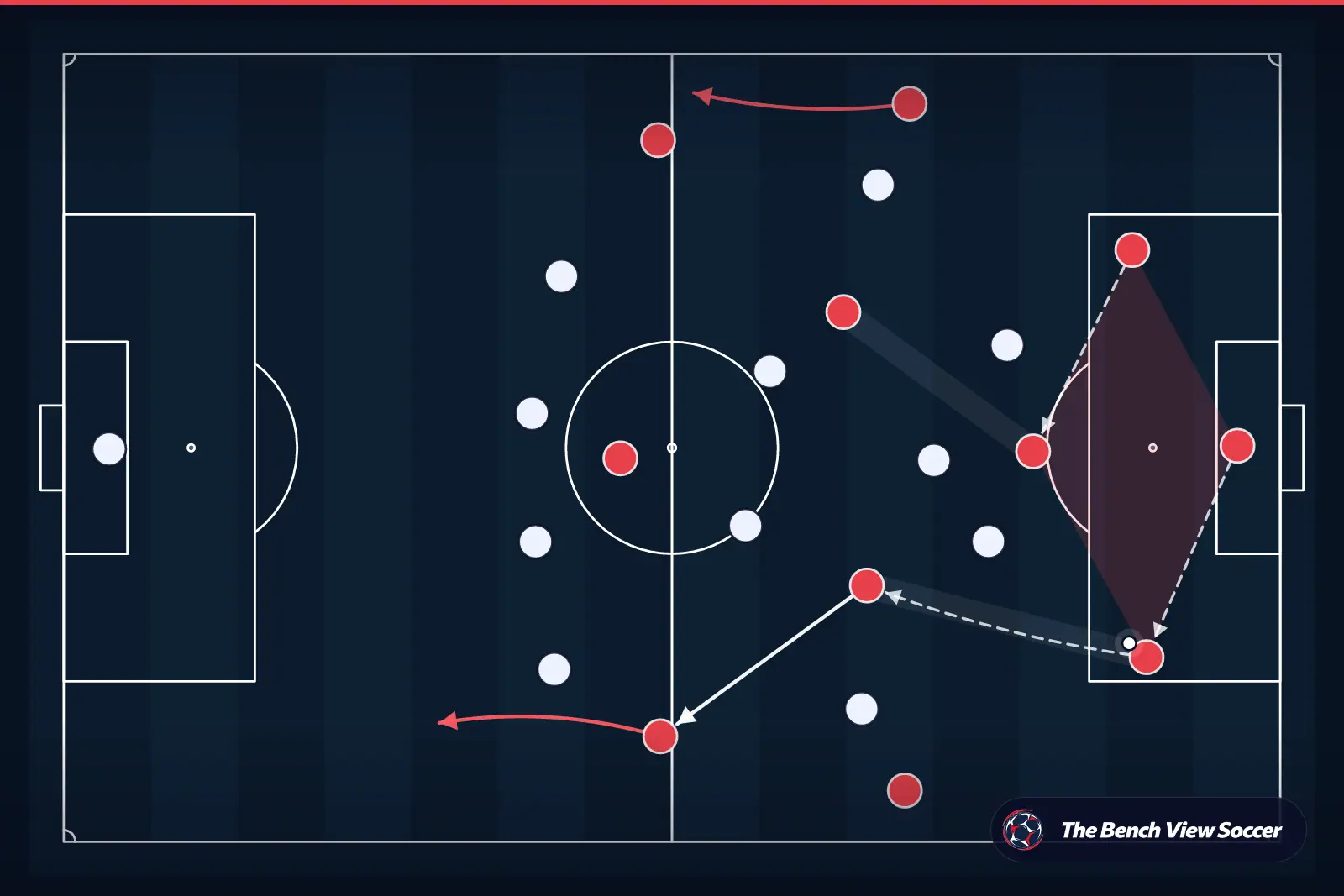
Press resistance starts with structure before the ball even moves. When building from the back, a team usually creates a “rest shape” of safe passing options behind the ball and a “progression line” ahead of it. Many elite sides form a 3+2 base in the first phase: three players to circulate (often two centre-backs plus a dropping midfielder, or a full-back tucking inside) and two central midfielders as the next platform. This shape gives multiple passing angles so the ball carrier is not forced into one obvious lane. The goalkeeper is crucial: teams like Manchester City under Pep Guardiola use the keeper to make a 11v10 situation against a front press, pulling one presser out and opening a pass elsewhere. Another key is baiting pressure: the ball is played into a player who appears “marked,” but that player has a prepared exit—one-touch bounce pass, a third-man run (pass to A, layoff to B, then into C), or a disguised turn. Wide players also matter. If wingers stay high and wide, they stretch the press horizontally; if full-backs invert into midfield, they offer a central outlet that is harder to press without leaving gaps. Finally, press resistance is also about risk management: teams choose when to play short and when to go long, but even long balls are often planned—aimed at a specific duel with midfielders positioned for second balls. The best press-resistant teams combine patience (to move the press) with sudden verticality (to exploit the moment the press is broken).
Match Examples
A clear example comes from the UEFA Champions League 2022–23: Manchester City vs Bayern Munich (quarter-final, first leg at the Etihad). Thomas Tuchel’s Bayern presses with intensity, often stepping up with a forward and midfield line to block central lanes. City respond by using Ederson as an extra passer and manipulating Bayern’s first line: the centre-backs split, Rodri shows as the safe pivot, and John Stones often steps into midfield to create an extra central option. When Bayern jump to press, City play quick “third-man” combinations to release Kevin De Bruyne or Ilkay Gundogan between the lines, turning pressure into forward momentum. In the Premier League 2023–24, Arsenal under Mikel Arteta show another pattern, especially in big away games where opponents press their buildup. Arsenal often create a back three in possession, with one full-back stepping inside and Declan Rice or Jorginho positioning to receive on the half-turn. When the press comes, Arsenal use short, sharp passes to invite the opponent forward, then punch a vertical pass into Martin Odegaard or a wide switch to Bukayo Saka once the far side opens. For a different philosophy, Brighton under Roberto De Zerbi in the Premier League 2022–23 and 2023–24 deliberately tempt pressure. Brighton build with a very brave first phase, sometimes leaving only one clear “free” man and trusting their keeper and centre-backs to play through. The goal is to draw multiple pressers, then find a midfielder in a tight pocket who can turn and attack open grass. It looks risky, but it is structured: nearby players position for immediate support and the next pass is already planned. These matches show that press resistance is not one style—it is a set of principles applied to different team identities.
Related Concepts & Skills
Training Implications
To train press resistance, coaches and players should work on habits that hold up under real pressure, not just unopposed passing. Start with a 4v2 or 5v3 rondo (keep-away) but add rules that force match-like decisions: limit touches (two-touch maximum), award extra points for a split pass through the defenders, and rotate defenders quickly so intensity stays high. Next, run a “build-out under press” drill: set up a back line plus one pivot and goalkeeper (6 players) against three or four pressers. The goal is to play into two target midfielders positioned beyond the press. Coach the details: body shape open to the field, first touch away from pressure, and scanning (look over the shoulder) before receiving. Add a third-man pattern exercise: centre-back plays into pivot, pivot sets it to full-back stepping inside, then full-back plays forward into a winger or attacking midfielder. Emphasise timing: the third man moves as the first pass travels, not after. For game realism, finish with an 8v8+GK on a reduced pitch with zones: reward teams for breaking the first press and entering the next zone in three passes or fewer. Finally, teach a clear decision tree: (1) Can I play forward safely? (2) If not, can I switch sides quickly? (3) If the press is locked, can we go long with structure—two players ready for the duel and two for the second ball? These steps turn “staying calm” into a repeatable tactical skill.
The Bench View app
Don’t just read football — train it
Everything you read here, turned into training you can follow step by step.
Physical training at home
AI daily sessions adapted to your level and position. No equipment needed.
Tactical training courses
Step-by-step courses on positioning, pressing, build-up and decision making.
- 7 days free
- No commitment
- Cancel anytime
Free account: 2 physical sessions + the first tactical course. PRO: 7-day free trial — cancel before day 8 and you pay nothing.