Introduction
Set pieces look like “chance moments,” but the best European teams treat them like repeatable patterns: rehearsed movement, clear roles, and smart use of space. For fans learning tactics, corners and free kicks are a great entry point because you can pause the game and see the structure. This article breaks down how Real Madrid and Manchester City under Carlo Ancelotti and Pep Guardiola build advantage from dead-ball situations in competitions like the UEFA Champions League and Premier League. Real Madrid often lean on timing, power, and elite aerial profiles (think Antonio Rüdiger, Nacho in recent seasons, and Jude Bellingham arriving late), while City tend to engineer “free headers” through blocking, decoy runs, and second-ball control. Neither approach is “better” in isolation; it depends on the squad and match context. The key idea: a set piece is a mini-attack with a scripted start. When the script creates the right matchup or the right space, conversion rates climb.
How It Works
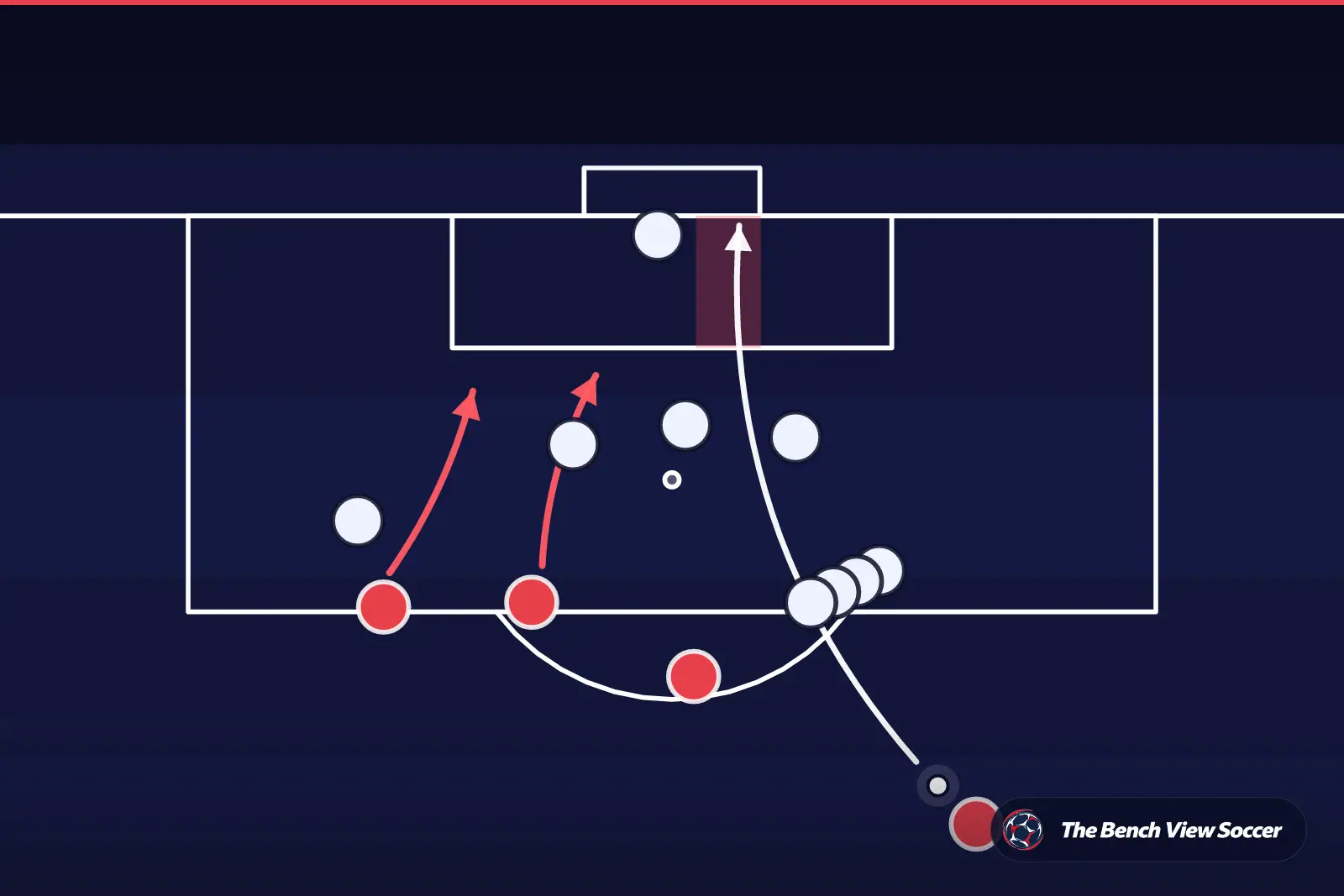
Real Madrid’s set-piece threat usually starts with delivery quality and layered runs. On corners, they often place two strong aerial targets in the central corridor (between penalty spot and six-yard box) and add a late runner from the edge. The movement is staggered: one player attacks the near zone to occupy markers and goalkeeper attention, while another attacks the deeper central zone for a cleaner header. Madrid’s deliveries frequently aim for the “six-to-penalty” channel rather than the extreme near post, because it balances power and safety—if cleared, they can still contest the second ball. On wide free kicks, Madrid often use outswingers to pull the goalkeeper away from the line and invite a curved run across the defender’s blind side (the side he cannot see). They also keep a couple of players outside the box to stop counters and recycle possession for a second cross. Manchester City’s routines usually prioritise manipulation over pure aerial dominance. City commonly stack two or three players together (a “cluster”) and then burst in different directions at the last moment. This creates traffic, forcing defenders into split-second decisions: follow their man, hold the line, or protect the goalkeeper. City also use blockers—players who do not attack the ball but occupy a defender’s path legally by holding position. The goal is to free a preferred finisher for a header, often at the near-central zone, or to win the second ball at the top of the box where City can shoot through a screen. On free kicks, City often disguise intent: a short pass changes the crossing angle, forcing the defending line to step out and then reset. That half-second of reorganisation is where City create a clean delivery lane.
Match Examples
Real Madrid, UEFA Champions League 2023-24: against Manchester City at the Santiago Bernabéu (first leg, April 2024), Madrid score through a corner routine that highlights their focus on central zones and second phases. Even when the initial delivery does not produce a direct header, Madrid keep numbers in good rebounding positions, so the ball stays “alive.” The attacking line does not all rush the same space; one runner attacks the ball, another attacks the space the ball might drop into, and a third holds for a cut-back or loose clearance. This sequencing is important because City defend with strong organisation, so pure chaos is less likely to work than timed movement. Manchester City, Premier League 2023-24: in the title run-in, City repeatedly show their preference for near-post and near-central routines, using a mix of short corners and whipped deliveries. A common pattern is a short corner to shift the defensive block, then a re-cross to the penalty-spot lane while runners arrive late. The “late arrival” matters because defenders naturally face the ball; if a runner starts behind them and accelerates as the ball is struck, the defender loses visual contact for a moment. Manchester City, UEFA Champions League 2022-23: across the campaign under Guardiola, City’s set pieces become more deliberate in how they keep control after the first contact. Instead of treating a corner as one cross and done, City set up to win the second ball with players positioned at the edge and inside the box for immediate counter-pressing (pressing right after losing the ball). This is visible in many knockout matches where opponents struggle to clear cleanly, allowing City to attack again within seconds. The takeaway from these seasons is not a single “magic routine,” but consistent principles: create a free runner, attack a high-value zone, and prepare to regain possession if the first ball is cleared.
Related Concepts & Skills
Training Implications
For Indian coaches, academies, and even amateur teams, the big lesson is to build repeatable routines with clear roles rather than hoping for a perfect cross. Start with three simple corner scripts and master them. Routine A (Near-post flick): one strong jumper attacks the near zone; one runner starts centrally and attacks the far-central zone for a second header; one player waits at the top of the box for a clearance. Deliver an inswinger if your taker can hit pace. Routine B (Crowd the keeper): place two players on the goalkeeper’s line but instruct them to hold position and avoid fouls; the main header attacks the penalty spot. This is useful if opponents rely on the keeper to claim crosses. Routine C (Short corner for angle): play short to create a better crossing lane, then cross with the second touch; teach the cross to target the space between six-yard box and penalty spot. Run training in blocks: (1) Delivery block—20 repetitions each side focusing on height, pace, and landing zone. (2) Timing block—no defenders, then passive defenders, then live defending; the key metric is whether the runner meets the ball at full speed. (3) Second-ball block—after every delivery, play continues for 8 seconds; attackers must counter-press immediately if they lose it, mirroring Manchester City’s habit of sustaining pressure. Use simple cues: “Go on strike” (runner accelerates as the ball is struck) and “Three zones” (near, central, edge) so players remember spacing. Finally, assign one analyst-player to track outcomes: how many corners produce a shot, how many force a save, and how many are cleared cleanly. Improvement becomes measurable, not emotional.
The Bench View app
Don’t just read football — train it
Everything you read here, turned into training you can follow step by step.
Physical training at home
AI daily sessions adapted to your level and position. No equipment needed.
Tactical training courses
Step-by-step courses on positioning, pressing, build-up and decision making.
- 7 days free
- No commitment
- Cancel anytime
Free account: 2 physical sessions + the first tactical course. PRO: 7-day free trial — cancel before day 8 and you pay nothing.