

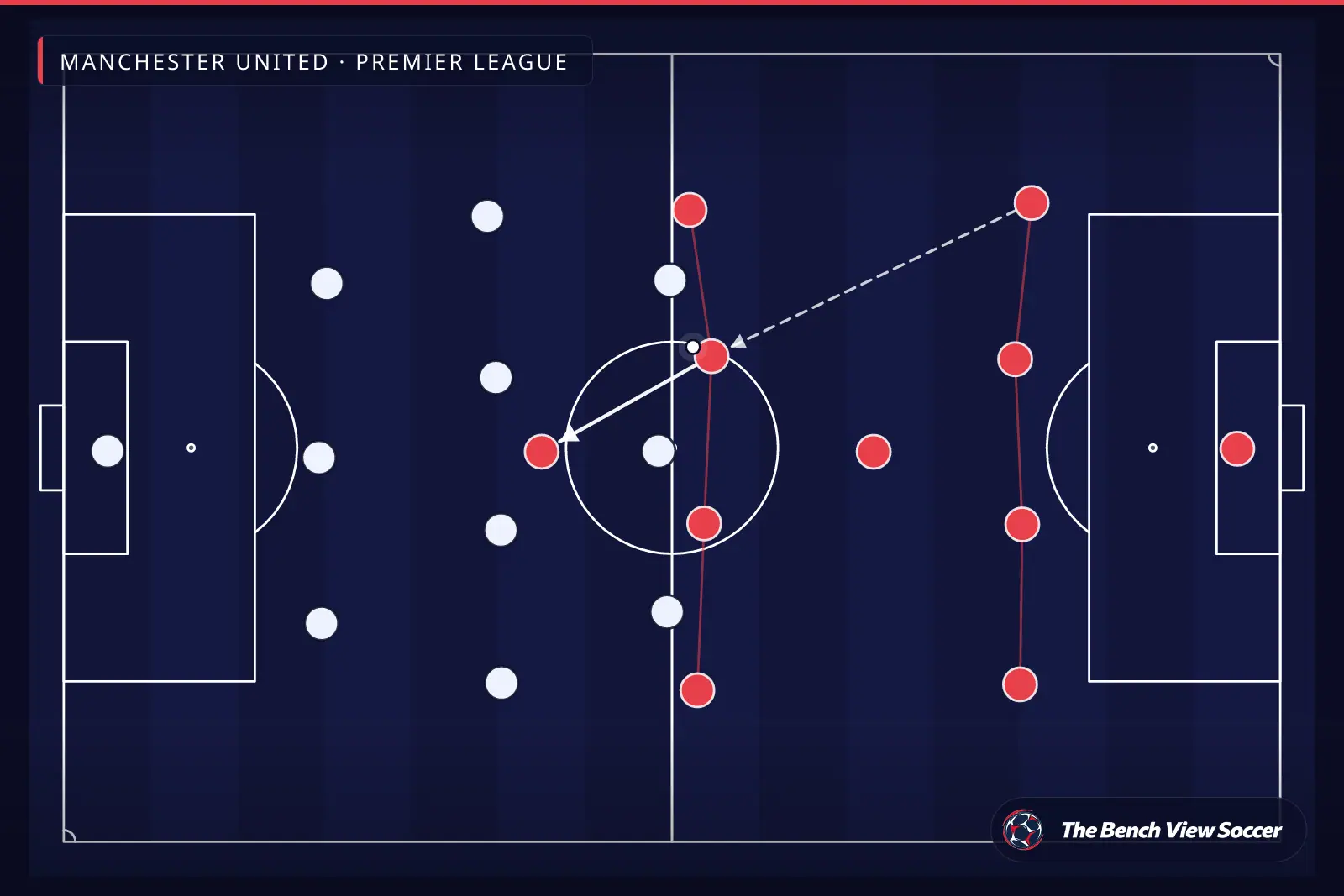
Chelsea recorded a 2-0 home win over Manchester United in a Premier League match in which Morgan Rogers and Cole Palmer scored in the second half, and United were reduced to 10 men after Lisandro Martínez received a red card. The result and the dismissal intensified scrutiny on United's manager Michael Carrick, while Chelsea manager Xabi Alonso highlighted the performance of winger Estevão after a period of limited gametime.
What happened
Chelsea secured victory at Stamford Bridge by two second-half goals from Morgan Rogers and Cole Palmer. Manchester United defender Lisandro Martínez was sent off, a dismissal which commentators and reports describe as costly and inexplicable and which left United a player down. The defeat amplified pressure on Manchester United's manager Michael Carrick; coverage emphasised the growing questioning of his position and the club's wider dysfunction. Carrick himself criticised aspects of his team's defending, with particular reference to the first goal conceded. Chelsea's manager Xabi Alonso singled out Estevão for praise following the match. Match reports described United as having missed opportunities when the game was goalless and then collapsing after the red card.
The tactical reading
The sequence of events points to a game that pivoted on two major moments: United failing to convert chances in a scoreless phase, and then a red card that shifted the contest decisively. When a team misses clear opportunities to go ahead while at full strength, it typically faces increased pressure because conceding a numerical disadvantage afterwards forces immediate tactical recalibration. The reports that United had chances at 0-0 suggest they were at least intermittently capable of creating openings; the subsequent dismissal removed the option to continue an attacking posture without major structural compromises.
The red card likely forced Manchester United into a more conservative shape. Playing with 10 men typically entails compressing lines, sacrificing a forward or an advanced midfielder, and inviting the opposition to control more of the ball. That inviting of control would have allowed Chelsea to manoeuvre players like Morgan Rogers and Cole Palmer into more favourable positions in the second half. When a team is reduced, the duties of midfielders and full-backs alter: midfielders must cover more ground to plug gaps, and full-backs are frequently exposed to overloads on their flank. Carrick's public focus on defending, especially the first goal, suggests structural vulnerabilities were exploited during these phases of the match.
Chelsea's approach, given the praise for Estevão and the timing of the goals, points to a game plan that used width and rotated attacking options once they sensed the numerical advantage. When the opposing side drops deeper, effective attacking teams widen play to create fissures and then exploit them with vertical arrivals or cutbacks; the second-half goals by Rogers and Palmer indicate Chelsea were able to find the right finishing outlets after the balance shifted. The managerial praise for a player returning from limited minutes implies the team also benefited from fresh legs and tactical flexibility off the bench or through rotation.
The trade-offs are clear for both sides. For United, choosing to remain compact after losing a player risks ceding initiative and territory, but pushing players forward risks being exposed to counter-attacks in transition. For Chelsea, committing bodies forward to press the advantage can open space behind for counters; success depends on disciplined covering by midfielders and full-backs. The match narrative—missed chances, a sending-off, then second-half goals—typifies how fine margins and timing can determine tactical outcomes.
Key tactical points
- Failing to convert chances at 0-0 increases the cost of any subsequent disruption (such as a red card) because the margin for error disappears.
- A sending-off forces immediate structural choices: which position to sacrifice, how to maintain midfield balance, and how to protect full-backs from wide overloads.
- Teams that win a numerical advantage often widen play and use arrivals from deeper or wider positions to create higher-percentage finishing opportunities.
- The effectiveness of substitutes or returning players can be decisive when a match opens up after a sending-off—freshness and role clarity matter.
- Defensive organisation for the team reduced to 10 must prioritise compactness and coordinated pressing triggers to avoid isolated 1v1s for defenders.
What to watch next
Observers should watch how Manchester United respond in their next games in terms of tactical rigidity versus flexibility. Will the manager keep the same ideas and personnel, or make structural changes to avoid repeating scenarios where missed chances and a later dismissal combine to lose a match? The handling of full-backs and central midfield balance under pressure will be a key indicator of any adjustment.
For Chelsea, the next tests will show whether the team can reproduce the combination of effective rotation and in-game tactical shifts that produced goals after the sending-off. Specifically, look for how coaches deploy players returning from limited minutes and whether they persist with the same methods of widening play and using late arrivals to finish moves.
Train it
Exercise: 8v8 transitional rondo with a red-card simulation. Split players into two teams of eight (including two neutral attackers for the team in possession). Play on a 60x40m grid with two small goals at either end. After a coach's signal, defenders must concede one player (simulate a red card) for a 2-minute phase; the team reduced to seven must reorganise to protect their goal while attempting to transition quickly when winning the ball.
- Coaching point 1: Emphasise immediate role reassignment—who drops, who covers the wide lane, and which player presses the ball-carrier.
- Coaching point 2: Drill quick switches of play and arrivals from the half-space for the team with numerical advantage to exploit vacated channels.
- Coaching point 3: Reward compact defensive thirds for the team with fewer players; practise denying vertical passes and forcing outside play.
Sources
- BBC Sport: Rogers shines, 3/10 for sent-off Martinez - player ratings for Chelsea v Man Utd
- The Guardian: Manchester United crisis deepens with Chelsea defeat and Martínez red card
- BBC Sport: Martinez's 'inexplicable' 83 seconds cost Man Utd and Carrick
- The Guardian: Manchester United’s capitulation at Chelsea paints picture of a club that barely exists | Barney Ronay
- BBC Sport: Carrick bemoans Man Utd defending in Chelsea loss
- BBC Sport: Alonso praises Estevao response to lack of gametime
- Sky Sports: Chelsea capitalise on second-half implosion to defeat 10-man Man Utd
- Sky Sports: Martinez sent off as Man Utd implode against Chelsea
The Bench View app
Don’t just read football — train it
Everything you read here, turned into training you can follow step by step.
Physical training at home
AI daily sessions adapted to your level and position. No equipment needed.
Tactical training courses
Step-by-step courses on positioning, pressing, build-up and decision making.
- 7 days free
- No commitment
- Cancel anytime
Free account: 2 physical sessions + the first tactical course. PRO: 7-day free trial — cancel before day 8 and you pay nothing.

More Analysis
Martin's commitment to Real Sociedad and what Mourinho's 'misunderstood' tag reveals about big‑game coaching
October 31, 2026
Carrick keeps Fernandes as captain after talks — what it means tactically for United at Stamford Bridge
October 30, 2026
Noise, pressure and young sides: tactical lessons from Villa’s atmosphere and the EFL Trophy results
October 28, 2026
Liverpool end Brighton run at Anfield as Isak, Wirtz and Barcola click under Iraola
October 26, 2026