

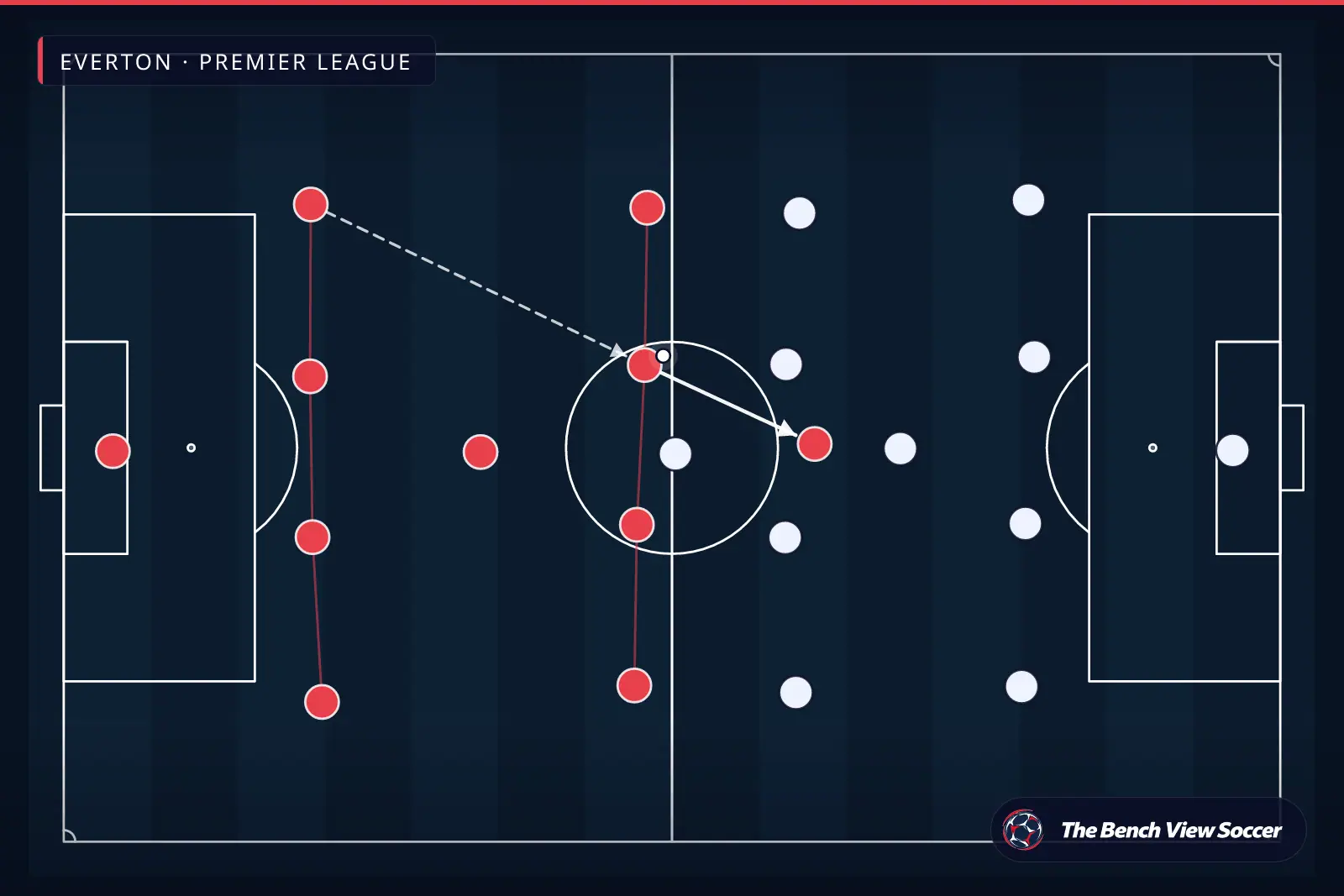
Everton left St James' Park with a narrow 1-0 victory over Newcastle United after Thierno Barry scored for the second time in five days against his opponents. Post-match attention focused on the goal's build-up, with Newcastle head coach Matthias Jaissle describing a pre-goal incident involving Fabian Schar as a "clear foul" that went unpunished by referee John Brooks. Everton manager David Moyes was non-committal on the availability of Jack Grealish following disciplinary action, saying "He's unavailable."
What happened
Everton beat Newcastle United 1-0 at St James' Park in a Premier League match. Thierno Barry scored the decisive goal; it was reported as his second goal against Newcastle in five days. Newcastle head coach Matthias Jaissle publicly expressed his displeasure with the referee's decision not to call a foul on Fabian Schar in the lead-up to Barry's goal, calling it a "clear foul." Referee John Brooks did not award a foul in that situation. After the match Everton manager David Moyes addressed squad availability and declined to confirm Jack Grealish's return after disciplinary action, stating, "He's unavailable." Player ratings from the fixture were published following the game.
The tactical reading
The narrow 1-0 scoreline and the post-match focus on a single decisive moment suggest the match hinged on fine margins rather than a prolonged domination by either side. When a single goal decides a game and debate surrounds the pre-goal sequence, it typically points to compact defensive periods punctuated by a key attacking action — a through ball, a set-piece, or a breakdown in defensive balance that the attacker exploits. In such matches, the transition moments and individual duels become disproportionately important.
Jaissle's complaint about a "clear foul" on Fabian Schar in the build-up highlights how critical defensive concentration is inside and around the penalty area. If a coach characterises an incident leading to the goal in those terms, it often indicates the defending team felt they were short-changed during a contested sequence, where the defensive role required either tighter marking, clearer physicality control, or better communication to prevent the decisive touch or run.
Moyes' refusal to confirm Jack Grealish's availability after disciplinary action points to squad management choices that intersect with tactical planning. When a manager names a player as unavailable for reasons beyond injury, it frequently forces adjustments to personnel and possibly the game plan — prioritising reliability, defensive solidity, or team discipline over the individual spark that a different player might offer. That trade-off can influence pressing triggers, personnel used in wide areas, and the routes to goal a team chooses.
Finally, Thierno Barry scoring twice in close succession against the same opponent hints at effective repetition by the striker or the team in exploiting a specific weakness. Whether through positioning, timing of runs, or anticipating set-piece targets, such recurrence usually reflects a deliberate tactical approach that creates recurring opportunities. Opponents then face a dilemma: alter their shape to neutralise that recurring threat (and risk opening other channels) or double down on their existing structure and accept the potential for repetition to yield further returns.
Key tactical points
- Single incidents can decide tightly contested matches — coaches must drill defensive reactions to contested sequences around the box.
- Clear communication and physical control in the penalty area are essential; perceived fouls in build-ups expose defensive organisation weaknesses.
- Managerial squad decisions that remove available skill-sets for disciplinary reasons force tactical simplification or role redistribution.
- When a player repeatedly hurts the same opponent, it often signals a replicable attacking template (positioning, delivery, or run timing) that should be specifically prepared against.
- Refereeing decisions on marginal incidents magnify the importance of risk management and minimising situations that invite subjective calls.
What to watch next
Watch whether Everton continue to target the same attacking patterns that produced Thierno Barry's goal, and if opponents begin to change their marking or shape specifically to deny that route. If Barry's method of scoring was replicable, subsequent opponents' adjustments will reveal how flexible Everton's plan is and whether they can find alternative ways to create openings.
On Newcastle's side, observe how Jaissle responds to the contested build-up: will defensive drills focus more on physicality and set-piece duels, or will he rework the organisation around the box to prevent similar incidents? Also monitor squad announcements to see how Moyes balances discipline and tactical needs when selecting his team going forward.
Train it
Exercise: Box-Scenario Compact Defending Drill — a small-sided defensive sequence practice that trains decision-making, communication, and physical control in the penalty area after transitional moments.
- Coaching point 1: Drill concentration on contested ball moments — defenders must call and claim, making ownership of runners and second balls explicit.
- Coaching point 2: Emphasise compactness and staggered marking — teach defenders to cover depths so a single missed duel doesn't expose the whole channel.
- Coaching point 3: Practice controlled physical contact and body positioning — defenders should legally delay or shepherd attackers away from scoring zones while avoiding situations that invite subjective fouls.
Sources
The Bench View app
Don’t just read football — train it
Everything you read here, turned into training you can follow step by step.
Physical training at home
AI daily sessions adapted to your level and position. No equipment needed.
Tactical training courses
Step-by-step courses on positioning, pressing, build-up and decision making.
- 7 days free
- No commitment
- Cancel anytime
Free account: 2 physical sessions + the first tactical course. PRO: 7-day free trial — cancel before day 8 and you pay nothing.
More Analysis
Arsenal’s Anfield win: champions’ composure, a non-penalty and tactical lessons
November 2, 2026
Arsenal’s heavy control undone by late Russo strike; Chelsea’s dominant win marred by James injury
November 2, 2026
How Arsenal’s champion know‑how and defensive discipline ended Anfield’s hoodoo
November 2, 2026
Suzuki error denies Villa as Jackson’s strike frustrated by own goal in 1-1 draw with Fulham
November 1, 2026