

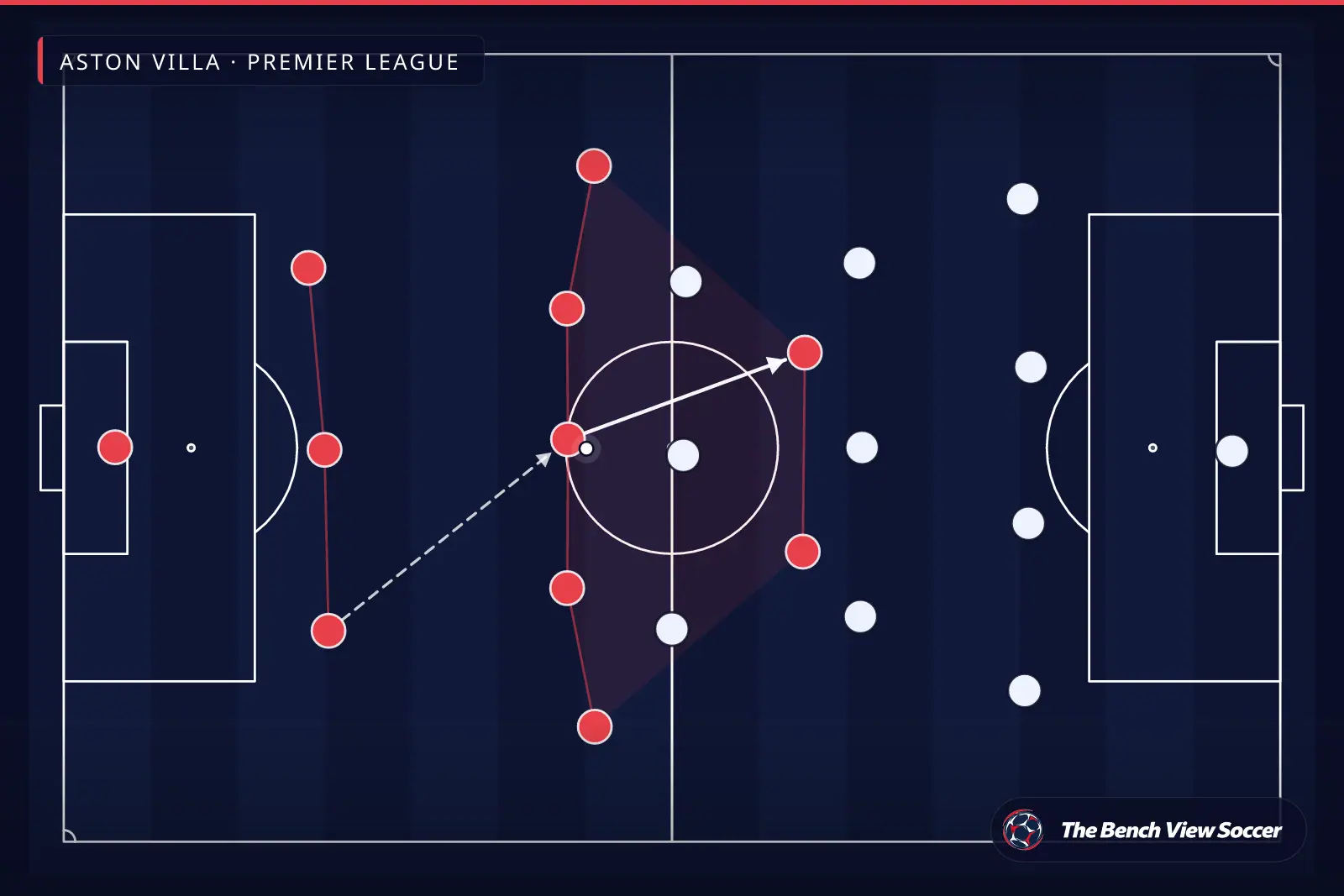
Aston Villa were held to a 1-1 draw at Villa Park after Nicolas Jackson put the hosts ahead but goalkeeper Zion Suzuki dropped a corner over his own goal line to hand Fulham a point. The result halted Villa’s momentum as a possible fifth win in six games slipped away, while Fulham leave with a share of the spoils and the confidence to travel to Barcelona on Tuesday.
What happened
Nicolas Jackson scored to give Aston Villa the lead. In the second half, Fulham earned a corner from which Alex Iwobi’s delivery was handled by Villa goalkeeper Zion Suzuki, who dropped the ball over his own goal line, resulting in an own goal and a 1-1 final score. Reports note Suzuki had also made a number of saves during the match. The draw denied Villa a fifth win in six games.
The tactical reading
The sequence of events points to a match in which Villa were able to generate a clear attacking moment that produced a goal through Nicolas Jackson. Jackson’s scoring contribution suggests Villa were finding ways to create and finish chances, with an attacking focal point capable of converting opportunities when they arrived.
Fulham’s equaliser coming from a corner highlights the value of set-piece situations and how they can alter the game state even when one team has been stronger in open play. The fact that the corner delivery came from Alex Iwobi and ended up as an own goal through a goalkeeper handling error underlines pressure in the box and the importance of reactions around second balls and crowded penalty-area scenarios.
Zion Suzuki’s involvement in both shot-stopping and the late mistake suggests his role had two contrasting demands: to be a last line of defence during sustained Fulham attacks and to safely deal with aerial and cross-ball situations. When a keeper is involved in frantic box moments, the margin for error shrinks; a spilled or misjudged collection becomes as consequential as a high-quality save earlier in the game.
Tactically, the match appears to encapsulate a trade-off common in high-tempo fixtures: a side that constructs and finishes chances in open play still must remain structurally disciplined to defend set plays and transitions. Creating enough to score still leaves a team vulnerable to moments where concentration and coordination on routine phases—corners, crosses, goalkeeper-footwork—determine the final outcome.
Key tactical points
- Set pieces can neutralise superiority in open play; conceding from a corner erased Villa’s attacking advantage.
- The goalkeeper’s role in dealing with crosses and corners is decisive—not just for shot-stopping but for body positioning and secure handling under pressure.
- An attacking focal point who can finish chances (Jackson in this match) is valuable, but teams must balance attacking intent with defensive cover for set-piece moments.
- Repeated involvement—making saves then committing an error—shows how psychological momentum swings affect individual decision-making in key positions.
- Managing the crowded penalty area and second-ball reactions is a team responsibility; defenders and goalkeeper must occupy complementary roles during aerial duels.
What to watch next
Look for how Aston Villa adjust their set-piece and goalkeeper-coaching routines after this result. Will there be an emphasis on clearer defensive assignments on corners or altered goalkeeper positioning and communication? Observing Villa’s handling of aerial situations in the following matches will show whether the coaching staff prioritise structural tweaks or individual technical work.
For Fulham, the manner of the equaliser suggests monitoring their approach to conceding territory in open play but remaining dangerous from set pieces and crosses. Their ability to secure points through dead-ball scenarios and to carry confidence into other fixtures—particularly away matches—will be an interesting development to follow.
Train it
Practical drill: a progressive corner-defence and goalkeeper-handling session that combines crowd pressure, second-ball clearing, and goalkeeper secure catches under simulated match noise and proximity.
- Start with organised corners: deliver 8–10 corners alternating in-swingers and out-swingers; defenders and goalkeeper practice zonal/near-post roles and secure clearance techniques.
- Add a ‘mop-up’ phase: after the initial clearance, attackers immediately recycle the ball back into a crowded box to force defenders and keeper to deal with second balls under fatigue.
- Finish with goalkeeper-specific handling: short sequence of high balls from varying angles while coach simulates pressure by having a shadowing attacker close down the keeper’s landing and decision-making.
Sources
- The Guardian: Zion Suzuki horror own goal haunts Aston Villa to hand Fulham a point
- BBC Sport: Carragher apologises to Villa for 'wrong' language
- BBC Sport: Suzuki mistake gifts Fulham point at Villa
- Sky Sports: Suzuki makes string of saves before conceding own goal in draw with Fulham
- BBC Sport: Man Utd enquire about Toney - Sunday's gossip
- The Guardian: Jamie Carragher apologises to Aston Villa for ‘clumsy and wrong’ comments
- Sky Sports: Goretzka starts for Aston Villa vs Fulham LIVE!
- The Guardian: Tottenham 2-0 Crystal Palace: Premier League – live reaction
- BBC Sport: Man Utd target Barcelona's Lopez - Saturday's gossip
The Bench View app
Don’t just read football — train it
Everything you read here, turned into training you can follow step by step.
Physical training at home
AI daily sessions adapted to your level and position. No equipment needed.
Tactical training courses
Step-by-step courses on positioning, pressing, build-up and decision making.
- 7 days free
- No commitment
- Cancel anytime
Free account: 2 physical sessions + the first tactical course. PRO: 7-day free trial — cancel before day 8 and you pay nothing.
More Analysis
Chelsea exploit numerical advantage as Martinez red card deepens Manchester United crisis
October 31, 2026
Martin's commitment to Real Sociedad and what Mourinho's 'misunderstood' tag reveals about big‑game coaching
October 31, 2026
Carrick keeps Fernandes as captain after talks — what it means tactically for United at Stamford Bridge
October 30, 2026
Noise, pressure and young sides: tactical lessons from Villa’s atmosphere and the EFL Trophy results
October 28, 2026