

Introduction
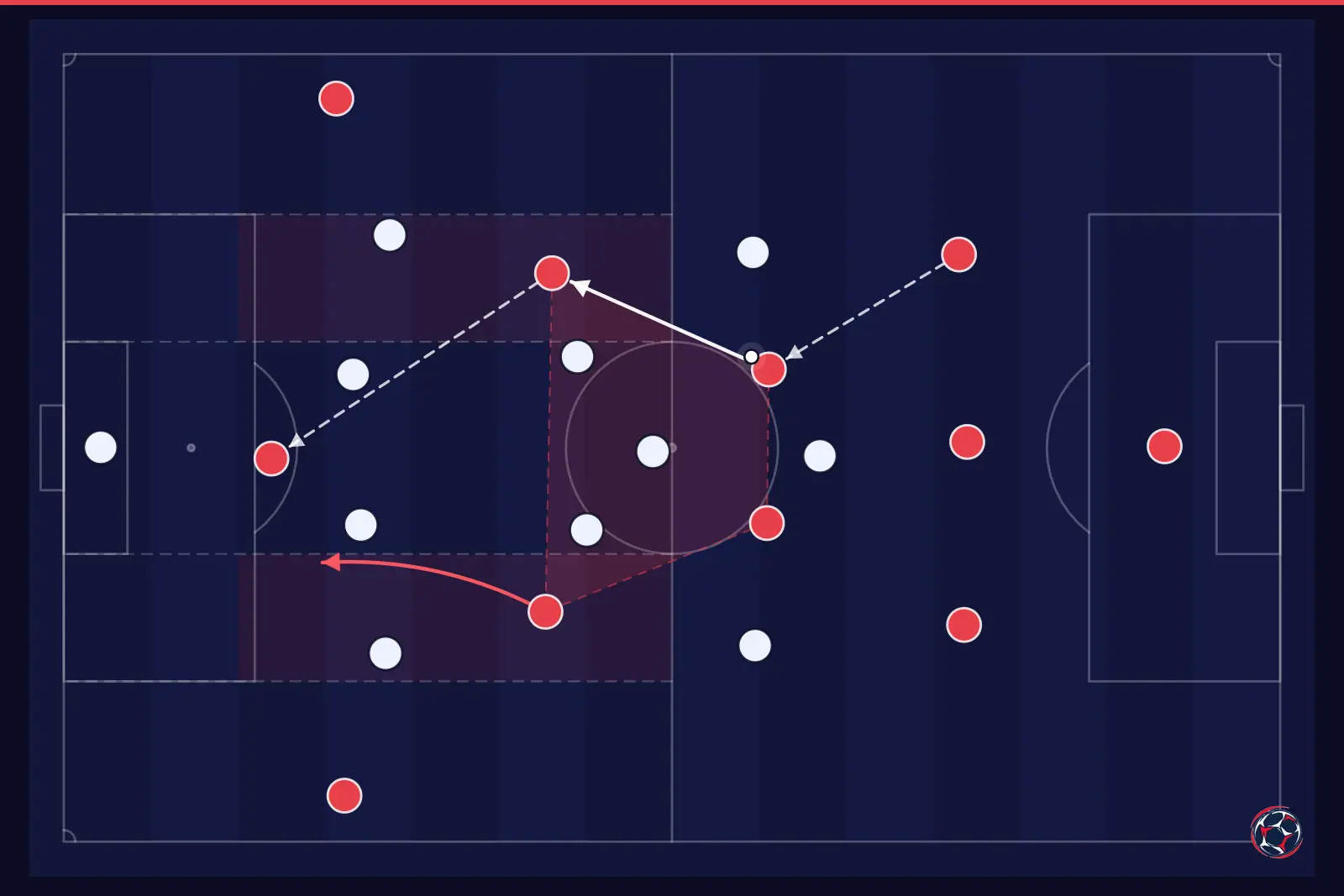
For Indian fans learning European-style tactics, the “half-spaces” are one of the quickest ideas that makes match patterns suddenly make sense. The half-spaces are the vertical lanes between the central corridor and the wide touchline channels—danger zones because they give attackers angles to play forward while staying close enough to goal to shoot, combine, or slip runners in behind. Australia’s men’s national team, especially under Graham Arnold, uses half-spaces as a practical solution to a familiar problem: how do you progress the ball and create chances when opponents sit deep, crowd the middle, and dare you to cross? Australia often blends two identities: a direct, duel-heavy style that suits their physical profile and a structured positional approach influenced by European club football (think of players coming from Celtic, Hearts, Middlesbrough, or Serie A). The result is a team that often attacks through the wings but tries to “enter” the half-spaces before delivering the final pass or cross. Understanding where Australia places their attacking midfielders, full-backs, and wingers in relation to these lanes explains many of their best attacking moments—and also some recurring limits when those lanes are blocked.
How It Works
Australia’s half-space usage usually starts from their base structure with two centre-backs and a holding midfielder forming the first build-up platform. From there, Australia aims to create a clear triangle into a half-space: a wide player holds width, a central midfielder supports underneath, and an attacking midfielder/forward occupies the half-space between the opponent’s full-back and centre-back. This is valuable because it forces a defender into a decision: if the opposing full-back steps inside to track the half-space receiver, the flank opens for an overlapping full-back; if the centre-back steps out, the space behind him appears for a runner. When Australia attacks, they often want the ball to arrive to a half-space player on the “blind side” (behind the opponent’s midfielder’s shoulder), because that first touch faces goal and invites a quick third-man combination. You frequently see a pattern where the winger pins the full-back wide, the striker pins the centre-backs, and a midfielder (often someone like Jackson Irvine) arrives in the right or left half-space to connect play. Australia also uses the half-space as a crossing platform: instead of crossing from the touchline (easier to defend), they try to cross or cut back from the inside channel, where the angle is sharper and the goalkeeper’s positioning becomes harder. In transition moments, half-space occupation is even more direct: a ball into the inside lane immediately threatens a through pass and reduces the number of defenders who can recover across the pitch.
Match Examples
At the FIFA World Cup Qatar 2022, Australia’s knockout-stage run provides clean examples of half-space thinking. In the group match against Denmark (2022 World Cup group stage, 30 November 2022), Australia often defends compact and then breaks with one of the first forward options aimed into the inside lane rather than straight down the touchline. The winning goal comes from a transition where Mathew Leckie carries the ball from a wide starting point toward the right half-space, drawing defenders inward before finishing—an action that shows how entering the half-space changes defensive spacing and creates a shooting lane. Against Argentina (Round of 16, 3 December 2022), Australia’s chances come largely from moments where they find an interior receiver and then play quickly into the box, rather than slowly circulating outside. Even when Australia is under pressure, they still try to connect into an inside pocket so they can attack the space behind Argentina’s midfield line before Argentina can reset their press. In AFC Asian Cup 2023 (played in early 2024), Australia’s matches against teams defending deep also highlight the half-space as a tool to improve crossing quality. When opponents protect the centre and allow wide progression, Australia’s best deliveries tend to come after an inside touch—either a pass into a half-space midfielder who then slips the ball wide for a better crossing angle, or a quick combination that frees a cutback from the inside channel. These are the moments when Australia looks most “European” in their chance creation: not just crossing early, but using the half-space to tilt the defence and then attack the box with runners arriving on different lines.
Related Concepts & Skills
Training Implications
To train half-space usage in a way that matches Australia’s practical style, coaches and players should use drills that force interior receiving, quick combinations, and crossing from better angles. First, set up a 6v6+2 neutral possession game in three vertical lanes (left, half-space, centre, half-space, right). Rule: a team can only score by completing a pass into a half-space player who then finds a forward pass within two touches. This teaches scanning and receiving on the half-turn (body open to goal). Second, run a pattern play that mirrors common Australia actions: centre-back to pivot, pivot to full-back, full-back into half-space midfielder, one-touch set to winger, then either (a) underlap into the box for a cutback or (b) early low cross from the half-space. Rotate roles so midfielders learn timing and wingers learn how to pin the full-back before the inside pass. Third, add a finishing constraint: goals count double if the assist is a cutback from the half-space or byline, encouraging players to seek higher-quality chances instead of hopeful high crosses. Fourth, coach specific cues: when the winger receives wide and the opponent’s full-back steps out, the nearest midfielder immediately occupies the half-space behind him; when the ball enters the half-space, the striker stays on the far centre-back to open a near-post lane for a runner. Finally, include a simple video routine: clip 6–8 attacks from Australia in World Cup 2022 or Asian Cup 2023, freeze at the moment before the half-space pass, and ask players to name the next two options. This turns “half-space” from a buzzword into a decision-making habit.
Apply This in Your Game
Reading about tactics is one thing. Our training units teach you to execute these concepts in real match situations.