Introduction
Positional rotations sound complicated, but they are simply planned “swaps” of zones between teammates to create better passing angles, drag markers away, and open space for a teammate to attack. If you watch Mikel Arteta’s Arsenal or Pep Guardiola’s Manchester City in the Premier League, you see these rotations constantly: a full-back steps into midfield, a winger moves inside, a midfielder runs beyond the striker, and suddenly the opposition’s defensive shape has to make quick decisions. For fans new to European tactics, the key is learning what to look for: who leaves a zone, who fills it, and what the team gains in the next two passes. This guide explains rotations in beginner-friendly terms using Arsenal and City as your reference points, focusing on visible cues you can spot on TV—body shape, spacing, and how defenders react. Once you can read rotations, matches become less random and more like chess with patterns.
How It Works
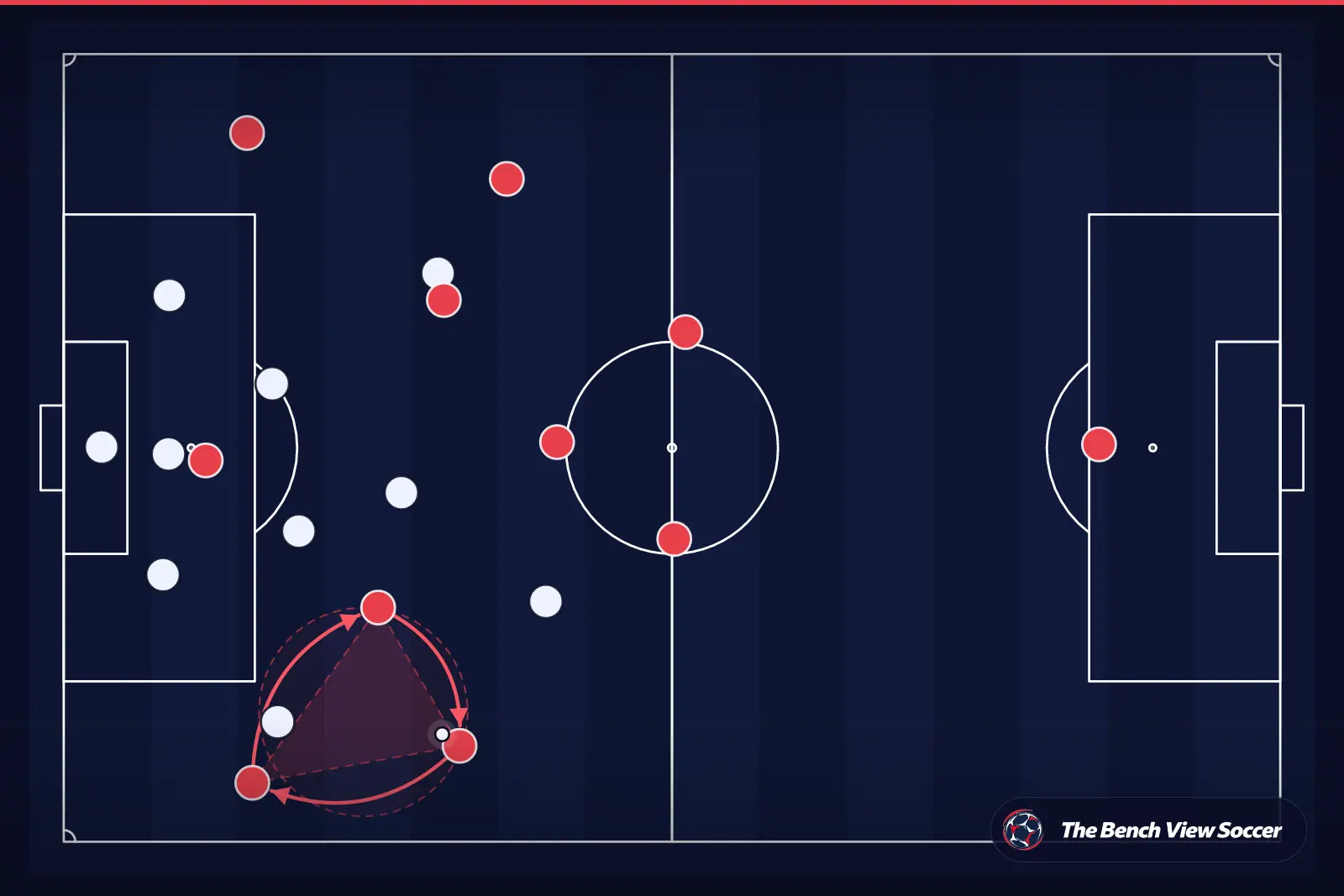
To “read” a positional rotation, start with the idea of zones. Most teams organise players so that each zone—wide, central, and the channels between them—has an occupant for short passing support. A rotation happens when two or more players exchange responsibilities across these zones without the team losing structure. Arsenal under Arteta often builds with one full-back moving inside (an “inverted full-back”). When Oleksandr Zinchenko or Ben White steps into midfield, Arsenal gains an extra passer next to Declan Rice or Jorginho, while a winger like Gabriel Martinelli or Bukayo Saka stays wide to stretch the line. City under Guardiola does similar things, but with more frequent “3-2” build-up shapes: three players hold the first line, two sit behind the opposition’s first press, and then the front five rotate. The beginner cue is this: rotations are not random runs; they happen to solve a problem. If the opponent blocks central passes, the midfielder drifts wide and the winger comes inside to receive between lines. If the opponent presses man-to-man, a player “vacates” his marker and another player attacks the space created. Watch the next pass after a rotation: it often becomes forward, because the rotation has created a free man or a cleaner angle.
Match Examples
A clear Arsenal reference is the 2022–23 Premier League season, especially the period when Zinchenko regularly steps into midfield during the first phase of build-up. In matches like Arsenal vs Liverpool (Premier League, 9 October 2022), Arsenal often uses Zinchenko’s inside movement to create a midfield overload so that Martinelli can stay high and wide on the left, receiving earlier and closer to goal. The rotation is easy to spot: left-back moves inside, left midfielder shifts slightly higher, and the left winger holds width—opponents must choose whether to follow inside (opening the wing) or stay wide (opening central passing lanes). For Manchester City, the 2023–24 Premier League title run provides multiple examples of flexible rotations with John Stones stepping into midfield when fit, and later with different solutions when personnel changes. A match like Manchester City vs Arsenal (Premier League, 31 March 2024) shows how Guardiola uses controlled rotations to manage risk: City’s back line and midfield constantly swap positions to escape Arsenal’s press, with a full-back or central defender stepping into the middle while a midfielder drops to maintain stability. Another useful example is Manchester City vs Inter (UEFA Champions League Final, 10 June 2023): City’s rotations in midfield and the half-spaces aim to pull Inter’s compact block apart, creating moments for runners from deep and cutbacks from the byline. When you rewatch these games, pause at the moment the ball goes wide—rotations often trigger right before the switch of play or the vertical pass into the attacker’s feet.
Related Concepts & Skills
Training Implications
If you coach, play, or even organise five-a-side in India, you can train rotational understanding with simple, repeatable exercises. (1) Zone + swap drill: mark three vertical lanes (left, centre, right). Start with a back four, two midfielders, and three attackers. The rule is: when the ball goes to a full-back, the nearest winger must decide within two seconds—stay wide or come inside—while the full-back either overlaps or inverts. Coach the “replacement”: every time someone leaves a lane, someone must fill it. (2) 4v4+3 neutral rondo with a rule: a goal counts only if the receiving player is in a different lane from where the passer started. This forces players to rotate to open new lanes instead of standing still. (3) Pattern play for beginners: rehearse one Arsenal-like pattern—centre-back to full-back, full-back inside to midfielder, bounce to winger, then through ball to the striker. Run it unopposed first, then add two passive defenders, then active defenders. (4) Video homework: pick one Arsenal or City match and track one player for 10 minutes (for example, Zinchenko or Stones). Write down each time he changes zone and what pass follows within the next two actions. (5) Coaching points you can use immediately: scan before receiving, open your body to face the next pass, talk early (“switch”, “hold width”, “inside”), and rotate only when there is cover behind you so your team is not vulnerable on the counter.
The Bench View app
Don’t just read football — train it
Everything you read here, turned into training you can follow step by step.
Physical training at home
AI daily sessions adapted to your level and position. No equipment needed.
Tactical training courses
Step-by-step courses on positioning, pressing, build-up and decision making.
- 7 days free
- No commitment
- Cancel anytime
Free account: 2 physical sessions + the first tactical course. PRO: 7-day free trial — cancel before day 8 and you pay nothing.