

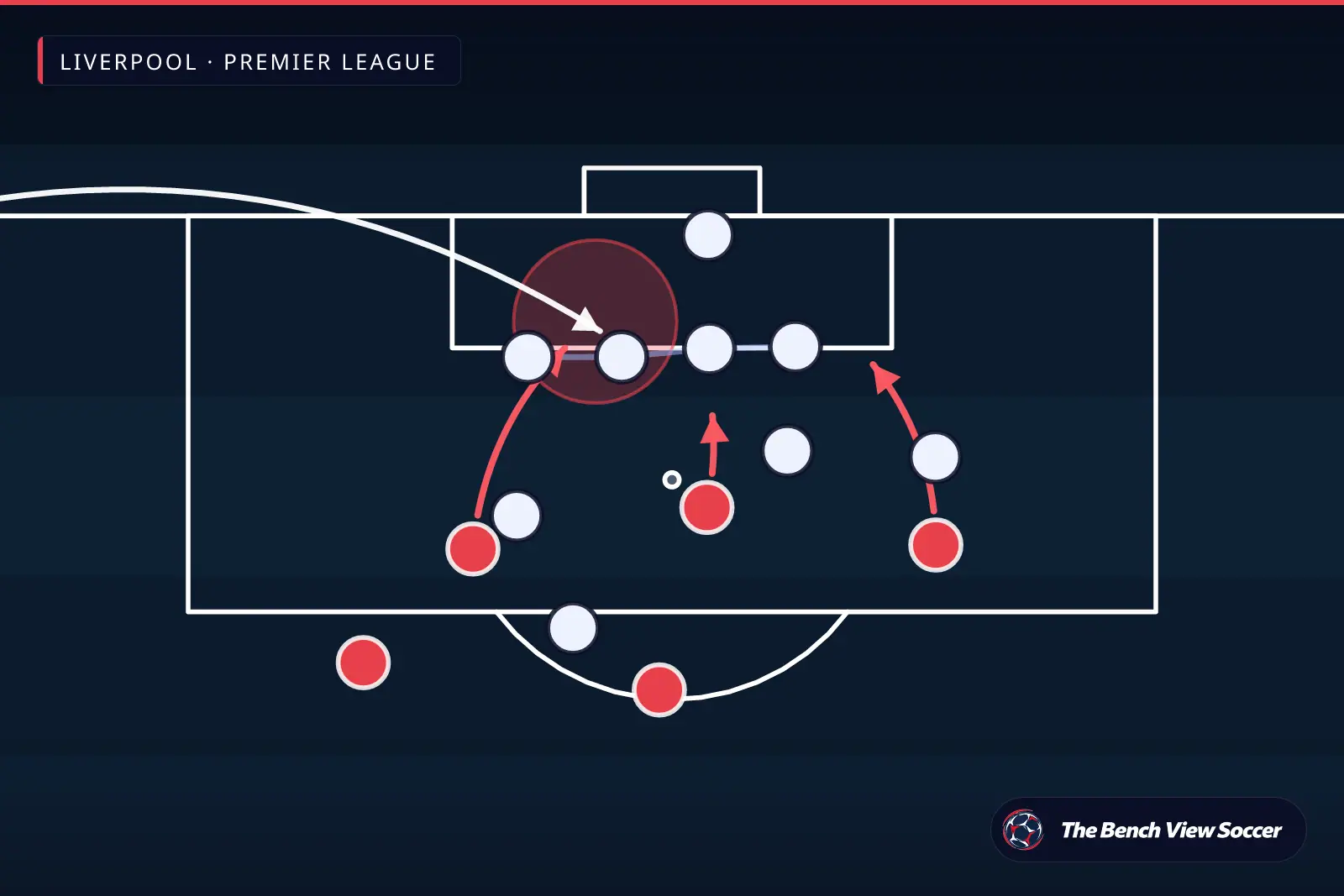
An independent panel has concluded that Jurrien Timber's shirt pull on Alexander Isak in Arsenal's victory at Anfield should have been awarded as a penalty to Liverpool. The Premier League panel (reported by BBC Sport) and an independent review (reported by Sky Sports) both state that the contact warranted a spot-kick. Elsewhere in the market, Arsenal have scouted Real Madrid forward Endrick, Jeremie Frimpong is not considered to be leaving Liverpool, and clubs including Newcastle and Sunderland have shown interest in Croatian striker Dion Beljo.
What happened
Two independent panels reviewed an incident from Arsenal's victory at Anfield in which Jurrien Timber pulled Alexander Isak's shirt. Both bodies concluded that the contact should have resulted in a penalty being awarded to Liverpool. The ruling was highlighted by BBC Sport and Sky Sports reporting on the panels' findings. In transfer-related developments noted in the same reporting cycle, Arsenal are linked with Real Madrid forward Endrick, Jeremie Frimpong is reported not to be leaving Liverpool, and Newcastle and Sunderland are among clubs interested in Dion Beljo.
The tactical reading
The panels' determination that the shirt pull warranted a penalty points to a recurring tactical and disciplinary issue: how teams manage close, high-intensity duels in the penalty area. Shirt grabs are typically a defensive reflex when a marker is beaten or anticipates a loss of position. When such fouls occur in dangerous zones, they not only concede a penalty but also reveal a team's reliance on last-ditch physical interventions rather than positional or anticipatory defending.
For attacking teams, the incident underlines the value of movement patterns that create enough separation to produce those marginal contacts. A forward who can manipulate a defender's body and balance forces defenders into uncomfortable decisions — either win the duel cleanly, lose their marker, or commit a foul. The panel's ruling suggests refereeing standards and retrospective reviews are prepared to call these marginal defensive acts as punishable, which changes the risk-reward calculus for defenders operating in and around the box.
Coaches should also read this as an indictment of situational discipline at critical moments. Defenders who resort to shirt-pulls are often failing to control angles, timing, or cover responsibilities. Training and match preparation that emphasize defensive coordination, communication between nearest defenders and cover players, and anticipation of forward runs reduce reliance on illegal interventions. Conversely, attackers and coaches can work to force such errors by designing runs and bodywork that pull markers out of optimal positions, inviting those reactions.
Finally, the incident has broader implications for game management and officiating interaction. If panels are increasingly willing to retroactively identify and label contact as a penalty, teams must adapt both tactically and mentally. Defenders need clearer rules-of-thumb about what constitutes acceptable contact in the area; attackers must be coached to exploit, but not rely solely on, that scrutiny. Managers will also need to consider how to balance robustness with discipline when instructing players to defend high-risk moments.
Key tactical points
- Shirt-pulls inside the penalty area are high-cost defensive reactions; training should prioritize positional solutions to reduce such reliance.
- Attackers benefit from movement and bodywork that forces defenders into awkward balances, increasing the chance of fouls being committed or reviewed.
- Clear communication and structured cover between nearest defender and second man lowers the need for illegal interventions.
- Coaches must prepare players for tighter retrospective scrutiny of marginal contacts and adjust instructions for defending in the box accordingly.
- Transfer planning (e.g., Arsenal eyeing Endrick; interest in Dion Beljo) shows clubs balancing immediate tactical needs with long-term recruitment, while Liverpool keeping Frimpong suggests valuing continuity in certain positions.
What to watch next
Watch how teams alter defensive teaching and matchday instructions after the panel's ruling: will coaches penalize shirt-grabs more strictly at club level to avoid conceding penalties? Also observe whether attacking coaches design more patterns explicitly to create marginal contacts in the box, knowing refereeing bodies may back them retrospectively.
On the transfer front, keep an eye on whether clubs actively pursuing forwards change their scouting briefs to prioritize players who can produce the kinds of close-range movement and bodywork that force defensive errors, and whether teams with established young full-backs maintain continuity or open the door to new arrivals.
Train it
Session idea: a 12v12 half-pitch drill focused on defending and attacking penalty-area contacts under pressure. The exercise emphasizes defensive positioning, cover, and attackers' bodywork to force defensive mistakes while training refereeing awareness.
- Coaching point 1: Reward defenders who use body positioning and angles to shepherd runners away from danger instead of reaching or grabbing; drill reps should prioritize first-touch positioning and cutting off the attacker’s preferred line.
- Coaching point 2: Train attackers to use shoulder and hip movement to create separation and unbalance markers without relying on theatrical contact; clean bodywork increases the chance of drawing legitimate fouls.
- Coaching point 3: Recreate high-pressure scenarios late in the drill where second defenders must communicate and cover—punish late interventions and reinforce timing to reduce the instinct to grab.
Sources
The Bench View app
Don’t just read football — train it
Everything you read here, turned into training you can follow step by step.
Physical training at home
AI daily sessions adapted to your level and position. No equipment needed.
Tactical training courses
Step-by-step courses on positioning, pressing, build-up and decision making.
- 7 days free
- No commitment
- Cancel anytime
Free account: 2 physical sessions + the first tactical course. PRO: 7-day free trial — cancel before day 8 and you pay nothing.
More Analysis
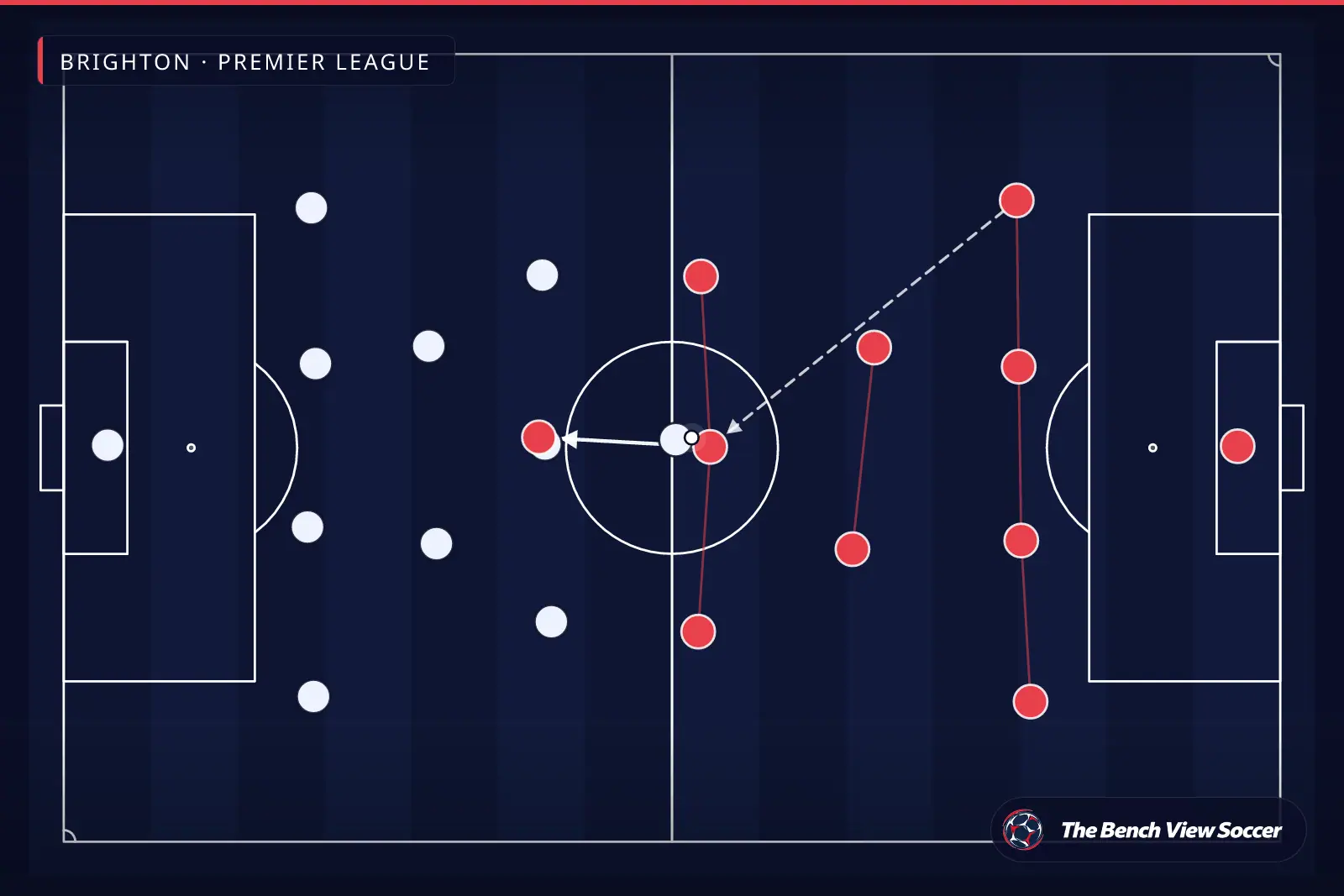
Brighton’s 2-0 win over 10-man Brentford: control, moments and lessons for challengers
November 9, 2026
Chaos at Old Trafford: what Man United’s 4-4 draw with Villa exposes tactically
November 9, 2026
Breathless at Old Trafford: How Man United's 4-4 draw with Villa exposed structure and spirit
November 8, 2026
Delap double ends Forest’s home drought and hands Man City third straight league defeat
November 7, 2026