Introduction
Press resistance is the ability to keep possession, progress the ball, or at least avoid danger when the opponent closes you down aggressively. For fans watching the UEFA Champions League or the Premier League, this often looks like “calm under pressure,” but it is actually a set of repeatable team behaviours. Midfields like Pep Guardiola’s Manchester City and Carlo Ancelotti’s Real Madrid build systems that help players receive with support, protect the ball with body shape, and play out through tight spaces. The key idea is that press resistance is not only about dribbling; it is about preparation before the ball arrives: scanning for options, creating passing angles, and moving teammates to open a safe exit. When done well, press resistance turns the opponent’s press into an advantage: once they jump forward, space appears behind them. This article breaks down how elite midfields create that advantage and why these details matter when you watch European football.
How It Works
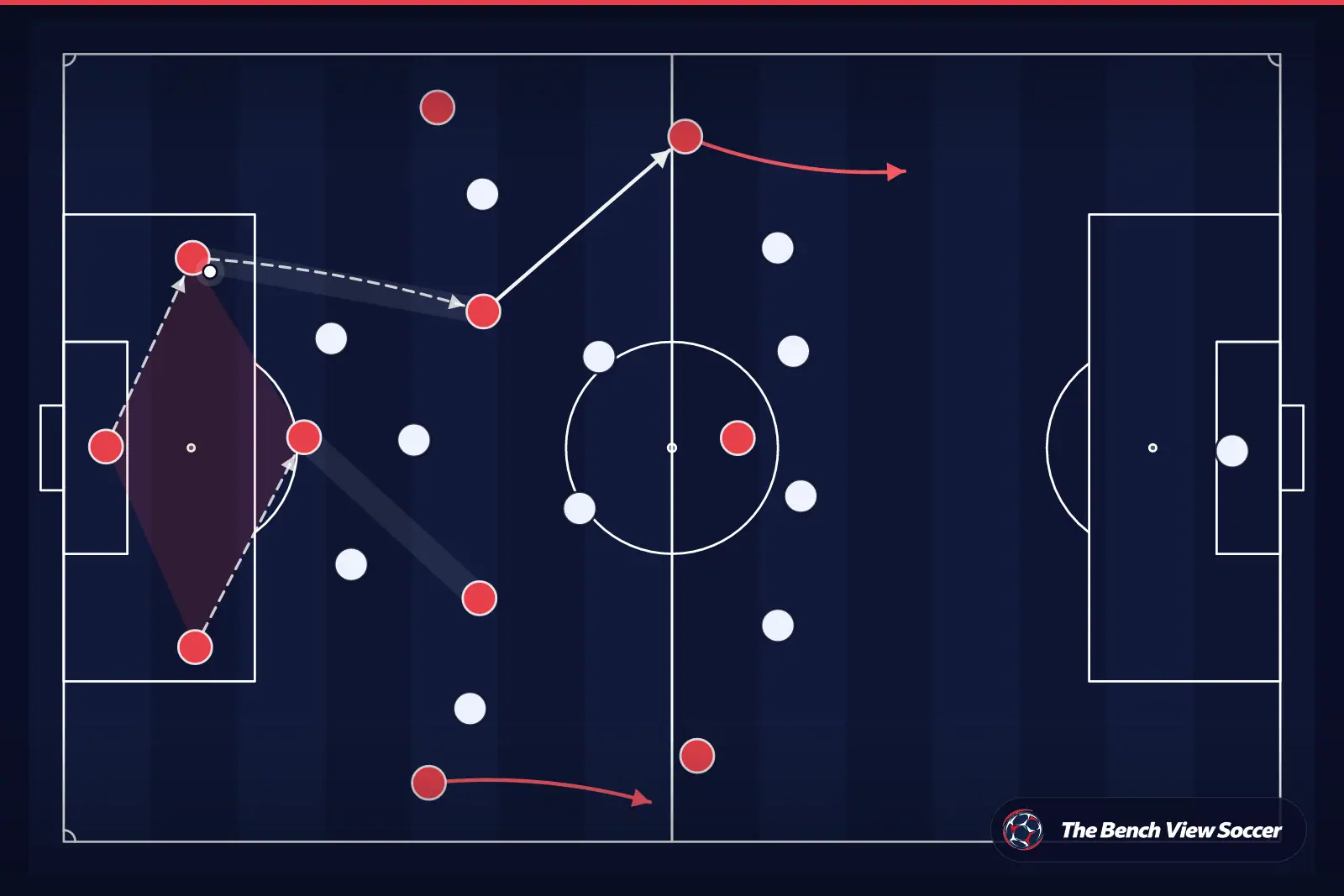
Press resistance starts with how a team positions itself before receiving. Manchester City under Guardiola often creates a “resting” shape that gives the ball-carrier at least two short options plus one longer option. The nearest midfielder (often Rodri) offers a stable passing lane, while a full-back or centre-back stays close enough to play a bounce pass. A bounce pass (also called a wall pass) is when you pass to a teammate and immediately receive it back to escape pressure. City also uses body orientation: players receive side-on, not square, so they can play forward with their first or second touch. Real Madrid under Ancelotti uses a slightly different rhythm: they welcome pressure to then break it with quick combinations or a direct carry. Midfielders like Toni Kroos (when he plays) or Federico Valverde protect the ball by using their body between the opponent and the ball, and by drawing a presser before releasing to the free man. Jude Bellingham often receives in crowded zones but uses a half-turn to face goal, then either connects a third-man run (pass to a teammate who then passes forward to a third player) or drives into space. In both teams, the principle is the same: create triangles around the ball, keep distances short enough for quick support, and use the opponent’s pressing momentum against them with one-touch releases, pivots, and well-timed carries.
Match Examples
A clear Manchester City reference is the 2022–23 UEFA Champions League semi-final second leg: Manchester City vs Real Madrid at the Etihad. City’s midfield, with Rodri and John Stones stepping into midfield, resists Madrid’s first line by constantly offering a free player behind the first presser. When Madrid tries to press high with Vinícius Júnior and Karim Benzema, City plays short to invite pressure and then finds Kevin De Bruyne or Bernardo Silva between lines, turning a risky zone into an attacking platform. Another strong example is the 2023–24 Premier League match Manchester City vs Liverpool at Anfield, where City often uses Rico Lewis and Stones-style midfield support (even when personnel changes) to create an extra passing lane, allowing them to escape Liverpool’s press and keep control in central areas. For Real Madrid, the 2023–24 UEFA Champions League quarter-final second leg: Manchester City vs Real Madrid at the Etihad is a press-resistance masterclass in a different way. Madrid spends long periods defending deep, but when they do win the ball, they resist City’s counter-press (the immediate press after losing the ball) through Kroos’s calm first touch, Valverde’s ability to carry under contact, and Bellingham’s protected receptions that allow Madrid to breathe. A domestic example is Real Madrid vs Barcelona in La Liga 2023–24 (the Bernabéu meeting), where Madrid’s midfield often absorbs Barça’s pressure and then uses quick switches and forward carries to break out, showing that press resistance is as much about escaping as it is about dominating possession.
Related Concepts & Skills
Training Implications
If you want to build press resistance in coaching or personal training, start with habits before technique. (1) Scanning rule: in every receiving drill, players must scan at least twice—once when the passer is preparing, once as the ball travels. Coaches can score this by asking the receiver to call out a number held up behind them before the pass. (2) Body shape practice: set up 8–12 metre passing lines and demand side-on receptions, with the first touch moving away from pressure. Add a passive defender who stands on one side so the receiver learns to open their hips to the far side. (3) Rondo progression: begin with 4v2 rondos for quick support angles, then move to 5v3 where the “escape” is a pass through a gate to simulate playing out of pressure. Set constraints like “two-touch maximum” for the outside players, but allow one player (the ‘pivot’) three touches to mimic Rodri-style control. (4) Third-man drill: create a triangle with A-B-C. A passes to B, B one-touches to C, C plays forward to A running into space. Add a defender pressing B so B learns to set the ball under pressure. (5) Pressure-carry lane: mark a narrow corridor and have a player receive with a defender tight behind; the goal is two controlled touches forward, then a pass to a target. This teaches shielding, balance, and when to release. Finally, measure outcomes: track how many times the team escapes pressure without losing the ball in central zones, because losing it centrally is the most dangerous mistake in modern football.
The Bench View app
Don’t just read football — train it
Everything you read here, turned into training you can follow step by step.
Physical training at home
AI daily sessions adapted to your level and position. No equipment needed.
Tactical training courses
Step-by-step courses on positioning, pressing, build-up and decision making.
- 7 days free
- No commitment
- Cancel anytime
Free account: 2 physical sessions + the first tactical course. PRO: 7-day free trial — cancel before day 8 and you pay nothing.