Introduction
Manchester City under Pep Guardiola build their dominance in Europe not just through possession, but through constant, intelligent movement in the final third. One of the clearest tools is “rotations” — coordinated position swaps between nearby players that change the picture for defenders every few seconds. For fans who watch the Premier League or UEFA Champions League, this is why City attacks can feel like a puzzle: you mark one player, and another appears in the same space; you step out to press, and the pass goes behind you. Rotations are not random dribbling or fancy interchanging. They are planned patterns that protect City’s structure while still creating chaos for the opposition back line. They also help City feed their best finishers in stable shooting zones, especially around the penalty spot and the cut-back area. This article breaks down how these rotations work, why they confuse defences, and what coaches and players can learn from them.
How It Works
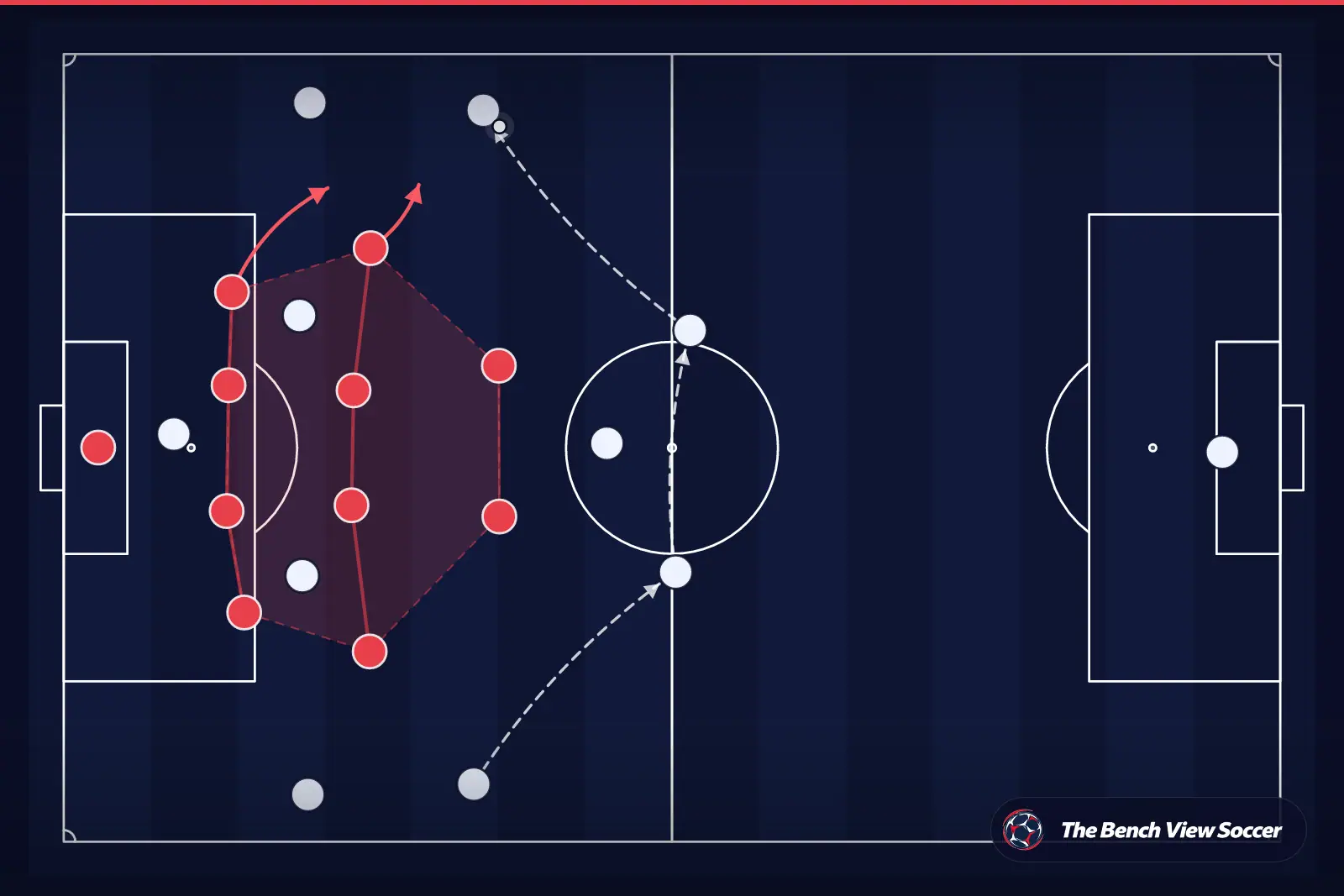
City’s rotations in the final third usually begin from a stable “positional play” base: the pitch is divided into lanes, and City occupy key zones to stretch the defence. Then they rotate within a small cluster — typically the right winger (often Bernardo Silva), the right-sided midfielder/No.8 (often Kevin De Bruyne), and the right-back (Kyle Walker previously, now often a full-back who can invert like Rico Lewis). A common pattern is: the winger comes inside, the midfielder runs beyond, and the full-back stays wide or steps into midfield. Each swap forces a defender to make a decision: follow your man (risk leaving your zone) or stay in your zone (risk giving the receiver time). That hesitation is the real target. The key is timing and angles. When the winger drifts into the half-space (the channel between full-back and centre-back), he often receives on the “blindside” of a marker — meaning the defender cannot see both ball and man comfortably. Meanwhile, De Bruyne (or another runner) attacks the space behind the full-back, dragging the back line deeper. As the defence drops, City use the cut-back: instead of crossing high, the ball is played low to the edge of the six-yard box or penalty spot where a late-arriving midfielder finishes. Rotations also allow City’s striker (Erling Haaland in recent seasons) to pin centre-backs. If both centre-backs focus on Haaland, the rotated receiver in the half-space becomes free; if a centre-back steps out to stop the half-space receiver, Haaland’s run behind becomes lethal. The entire mechanism is about repeatedly creating a free man, then delivering into a high-value finishing zone before the defence can reset.
Match Examples
In the 2022–23 UEFA Champions League semi-final second leg, Manchester City vs Real Madrid at the Etihad, Guardiola’s rotations on the right side repeatedly pull Madrid’s left side out of shape. Bernardo Silva moves inside to receive between lines, while Kevin De Bruyne and John Stones (stepping into midfield) occupy different heights. The effect is that Eduardo Camavinga and David Alaba face constant dilemmas: if Camavinga follows Bernardo inward, City’s wide option opens; if he stays wide, Bernardo turns in the half-space and threatens the cut-back or a through pass. City’s second goal in that match comes from sustained pressure and positional dominance, but the wider theme is how Madrid’s defensive references keep changing until they lose track. In the 2023–24 Premier League, Manchester City vs Tottenham Hotspur at the Etihad (a match where Spurs often defend in a compact 4-2-3-1/5-4-1 shape depending on the phase), City’s wide rotations aim to isolate the far-side full-back and create a lane for low crosses. When City’s winger comes inside, Spurs’ wide midfielder must decide whether to track the full-back outside or help the central midfield. Those moments of indecision open short passing triangles that let City enter the box through the byline rather than through crowded central lanes. In the 2021–22 Premier League, Manchester City vs Liverpool at the Etihad, the rotations are more cautious because Liverpool under Jürgen Klopp press aggressively and punish turnovers. City still rotate, but they do it with a safety valve: the “third man” option (a teammate who is not the immediate receiver) stays ready for a bounce pass. When Liverpool’s full-back steps out to engage, City quickly find the free man inside, then switch the point of attack. Across these examples, the consistent takeaway is that rotations are not decorative. They are a method to manipulate markers, create a free player, and reach cut-back zones with control.
Related Concepts & Skills
Training Implications
To train rotations effectively, coaches and players need repeatable patterns with clear rules, not free-form interchanging. Start with a 3v2 or 4v3 “final-third box” on one side of the pitch (for example, a 20x25 metre area near the corner of the penalty box). Assign roles: winger, No.8, full-back, and optionally a striker. The coaching rule is: only one player goes wide, one stays in the half-space, and one threatens depth (a run behind). Rotate these roles every 30–45 seconds so players learn the timing of swapping without crowding the same lane. Add an end product: every attack must finish with either (1) a low cut-back to the penalty spot zone, or (2) a slip pass behind the full-back. This forces players to connect rotations to outcomes. Use simple cues: if the defender follows the winger inside, the full-back receives outside; if the defender stays wide, the winger turns in the half-space. For decision-making, coach the “two-touch rule” for the receiver in the half-space: first touch sets the angle, second touch passes or shoots. Finally, train rest defence alongside the rotation: leave two players (a centre-back and a midfielder) outside the box as counter-pressers. If the move breaks down, the immediate goal is to win the ball back within five seconds. This mirrors City’s reality in the Premier League and Champions League, where rotations only work consistently when the team can prevent counters after losing possession.
The Bench View app
Don’t just read football — train it
Everything you read here, turned into training you can follow step by step.
Physical training at home
AI daily sessions adapted to your level and position. No equipment needed.
Tactical training courses
Step-by-step courses on positioning, pressing, build-up and decision making.
- 7 days free
- No commitment
- Cancel anytime
Free account: 2 physical sessions + the first tactical course. PRO: 7-day free trial — cancel before day 8 and you pay nothing.