

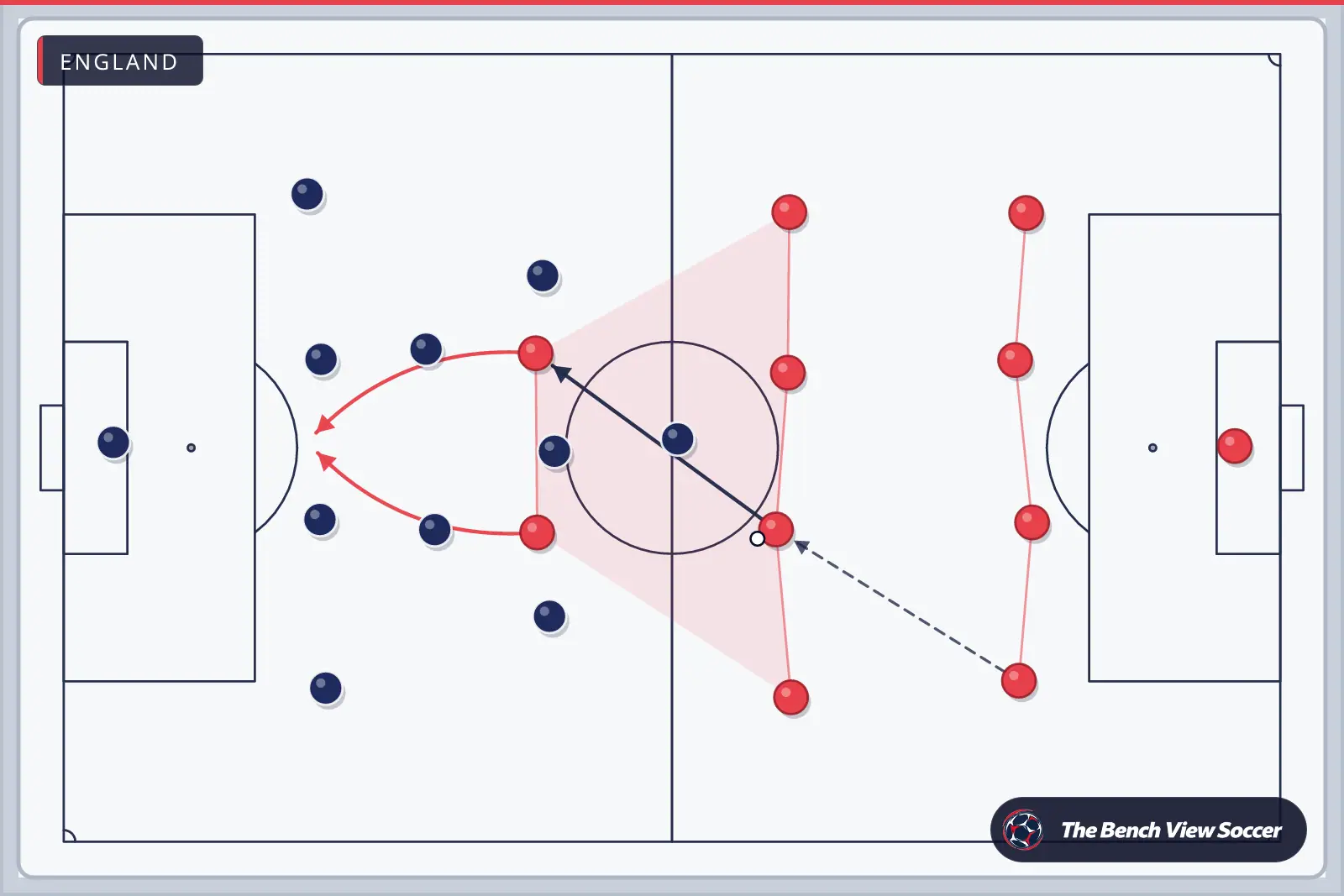
Thomas Tuchel has intentionally limited escape routes from his role with England by not inserting a release clause when he extended his contract this year. He has also said he is “open to everything” regarding his future, including staying beyond the upcoming Euros, and commentators report he will not be leaving before Euro 2028. These developments land amid a busy managerial market in which Mauricio Pochettino is expected to leave his USA post to take over at Manchester United and Manchester United have reached a framework agreement with Pochettino should Michael Carrick be dismissed on recommendation of senior staff. In the women’s game, FIFA confirmed a change to the 2027 Women’s World Cup draw that will keep the four top-ranked teams apart until the semi-finals, provided those teams win their groups — Spain, the USA, Germany and England occupy the top four spots in the rankings, though the USA and England still need to qualify.
What happened
Thomas Tuchel extended his contract as England manager this year and chose not to include a release clause. He has publicly said he is “open to everything”, including the possibility of remaining beyond the next Euros, and media coverage states he will not leave before Euro 2028. Meanwhile, Manchester United have a framework agreement in place with Mauricio Pochettino to replace Michael Carrick, and Pochettino is reportedly keen to leave the USA men’s national team role to take the United job. Carrick’s position is said to be at risk following a recommendation from the club’s director of football and chief executive. Separately, FIFA confirmed that at the 2027 Women’s World Cup the top four ranked teams — Spain, USA, Germany and England — will be separated in the early rounds and only able to meet from the semi-finals onward, provided each of those teams wins its group; the seedings will be based on a December ranking list and the USA and England must still complete qualification.
The tactical reading
Tuchel’s decision to refuse a release clause and his stated openness about his future points to an emphasis on managerial continuity and control. From a coaching perspective that choice signals a desire to protect a project’s tactical trajectory: when a manager removes easy exit routes it typically allows them to implement longer-term structural changes without the constant pressure of an imminent mid-term move. For a national team, continuity often translates into clearer identity work — consistent pressing triggers, patterns from build-up, and more coherent transitional behaviour across camps.
The current wider context in which elite coaches move between high-profile jobs — exemplified by Pochettino’s reported opening for Manchester United — increases the value of stability. National-team coaching cycles are constrained by intermittent camps and tournaments, so maintaining the same coach and his staff can make the difference between a team that arrives at a tournament rehearsed in a few core patterns versus one that relies on last-minute tactical tweaks. Tuchel’s stance suggests an attempt to lock in a repeatable framework of principles rather than short-term solutions.
For England specifically, managerial continuity typically allows more nuanced work on transitional phases and stylistic identity. Coaches working with small windows tend to prioritise compactness, set-piece routines and clearly defined roles for key players to reduce cognitive load. The trade-off is that longer-term projects often require sacrificing immediate flexibility: a manager who cements a system may be less able to pivot to radically different shapes in response to sudden player availability or an opponent’s specific strengths.
FIFA’s decision to separate the top four ranked women’s teams until the semi-finals, conditional on group wins, illustrates another tactical consideration: tournament pathway engineering. For teams like England — who are among the top ranks but still must qualify — the seeding rule increases the premium on winning the group. Coaches may therefore prioritise match management and selection in group-stage fixtures differently, leaning towards safer control measures (defensive solidity, limiting variance) to secure top spot and thereby a more favourable, less congested knockout route. The rule indirectly rewards consistent, low-variance performance in early matches rather than experimental rotations.
Key tactical points
- Managerial continuity enables deeper work on identity: repeated sessions with the same staff allow rehearsing nuanced transitional patterns that substitute for minute-by-minute in-season feedback.
- National-team windows favour low-variance, high-repeatability tactics — clear pressing triggers, defined build-up roles, and set-piece routines reduce reliance on player invention.
- Tournament draw rules that protect top seeds increase the incentive to prioritise group-stage certainty over experimentation.
- High-profile coaching turnover at club level raises opportunity cost for national managers; securing staff and project duration becomes a defensive tactical choice.
- Choosing to limit mobility (no release clause) is itself a tactical commitment: it trades short-term freedom for the ability to deliver a cohesive long-term playing plan.
What to watch next
Will Tuchel translate his contractual commitment into measurable tactical continuity with England? Watch squad lists and starting XIs across upcoming camps for evidence of recurring core principles — the same defensive block, build-up patterns and set-piece personnel are signs of an entrenched approach. Conversely, frequent wholesale changes would suggest either ongoing experimentation or an inability to assert a single identity.
Keep an eye on how England’s qualification status develops and whether strategic choices in group fixtures reflect a bias towards securing top-seed protections highlighted by FIFA’s Women’s World Cup rule change. For club football, monitor how Pochettino’s reported move and Carrick’s future at Manchester United might reshape coaching pipelines — such moves often ripple into tactical trends across leagues and national setups.
Train it
To build the kind of low-variance, repeatable transitional patterns national teams need, use a sequence-based rondo that links build-up, progressive passing and pressing triggers into one continuous rehearsal.
- Set-up: 6v4 rondo in a 30x25m grid with two neutral wide outlets; progress after three consecutive passes to a central target zone.
- Coaching points: emphasise first-touch direction to receive into the progress lane; insist on scanning before receiving to anticipate outlet options; reward immediate pressing triggers for defenders when possession is lost to simulate tournament-intensity transitions.
- Progression: add a finishing target (mini-goal or pass to coach) after successful progression to link the rondo to end-product under pressure.
Sources
The Bench View app
Don’t just read football — train it
Everything you read here, turned into training you can follow step by step.
Physical training at home
AI daily sessions adapted to your level and position. No equipment needed.
Tactical training courses
Step-by-step courses on positioning, pressing, build-up and decision making.
- 7 days free
- No commitment
- Cancel anytime
Free account: 2 physical sessions + the first tactical course. PRO: 7-day free trial — cancel before day 8 and you pay nothing.
More Analysis
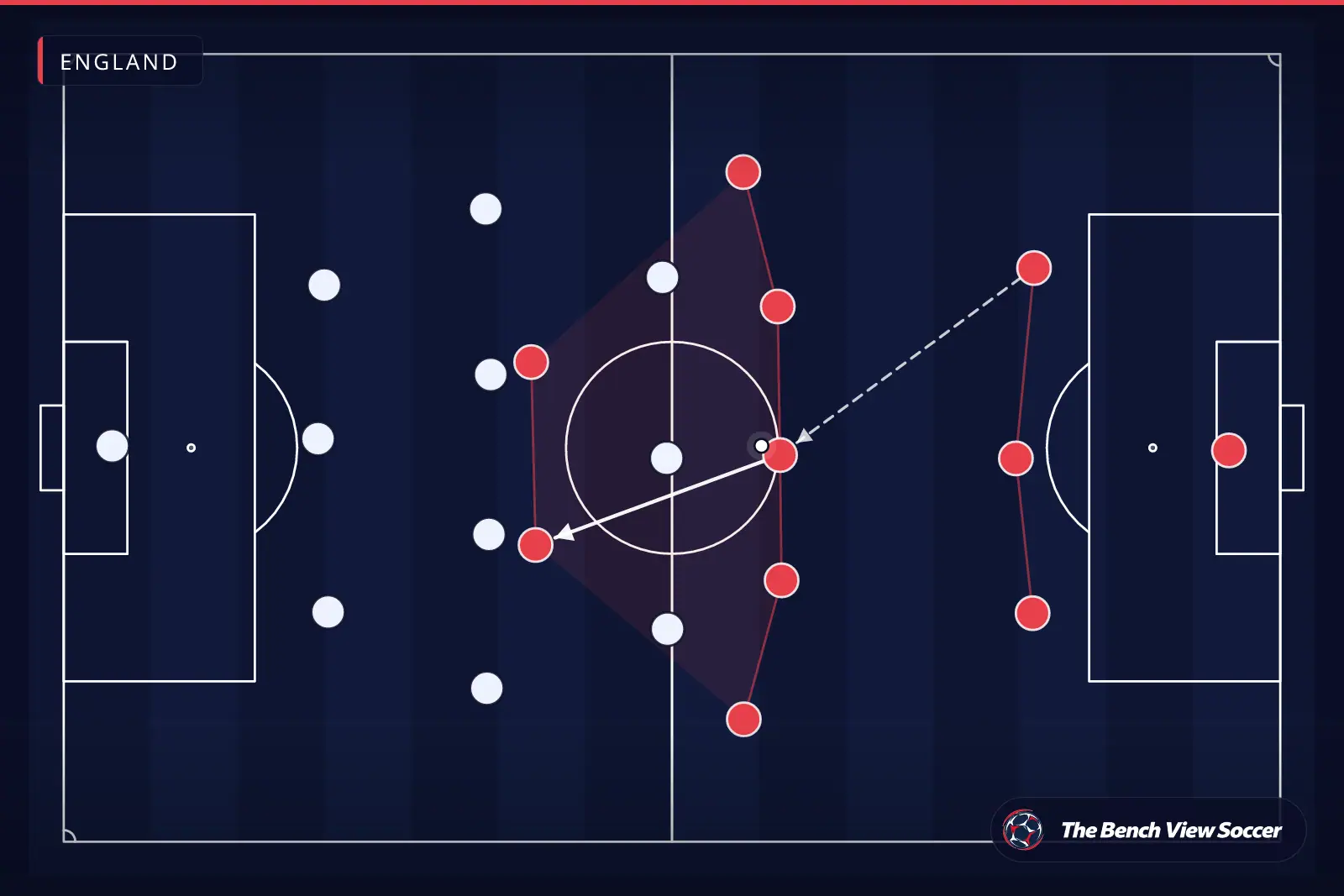
Harry Kane’s milestone and what it says about England’s tactical identity
November 12, 2026
McTominay's pre-tournament heart treatment and Scotland's leadership spine: tactical lessons
November 11, 2026
England reshapes defensive options as King earns Nations League call-up
November 10, 2026
Ben White on England exile: facts, fan reaction and what coaches should learn
November 10, 2026