

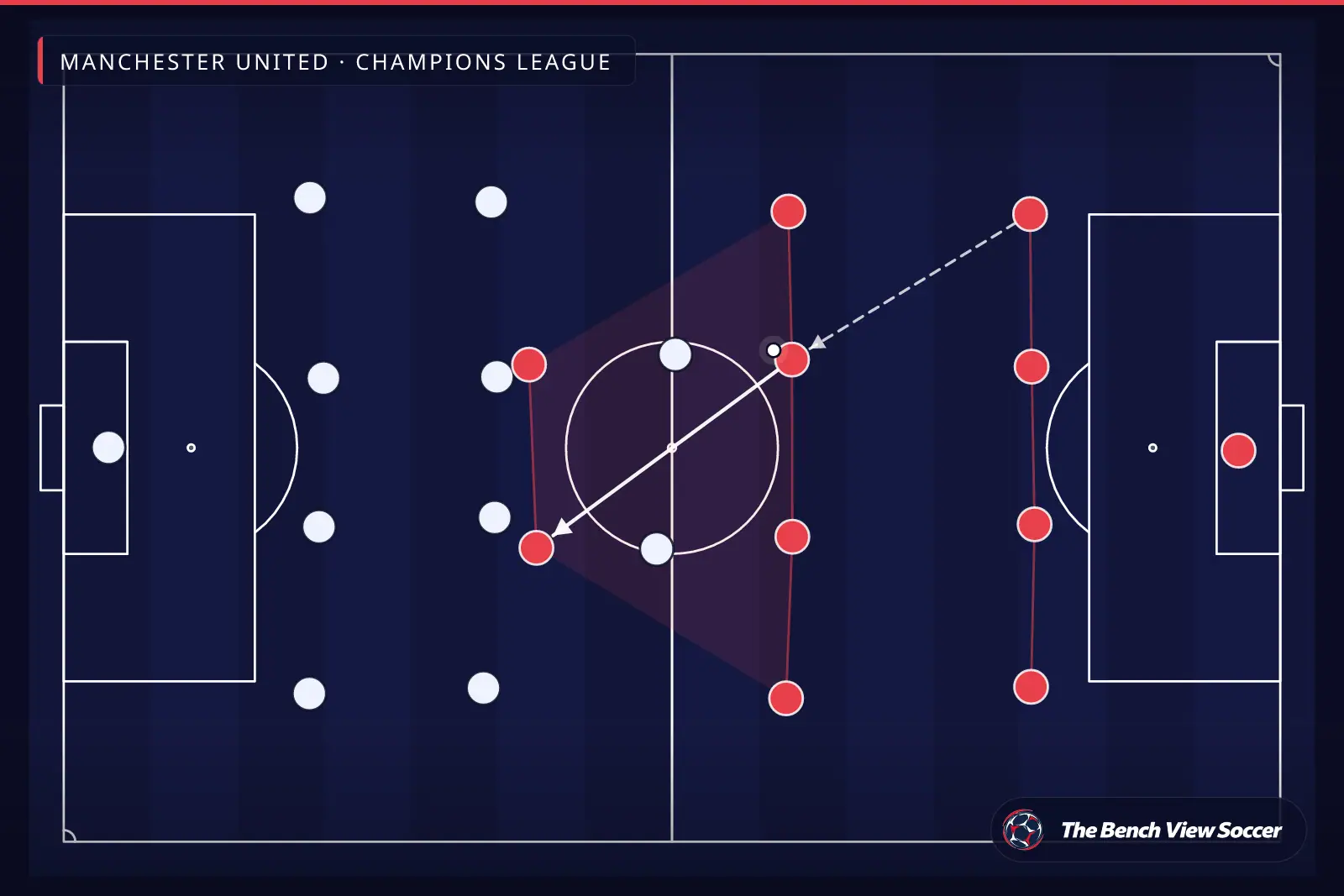
Manchester United overturned a two-goal deficit to record a 3-2 victory over Roma at Old Trafford in a Champions League fixture. The comeback prompted an evocative image of manager Michael Carrick shaking hands with Gian Piero Gasperini at full-time while club figures including the director of football, Jason Wilcox, and the club’s chief executive were also in view. Commentators after the match underlined two talking points: Paul Merson argued Carrick needs Bruno Fernandes in his side, and he urged Matheus Cunha to find greater consistency in his performances. The result arrives as the international break nears, a period that recent commentary describes as one where managerial security can increasingly be under scrutiny.
What happened
Manchester United fell two goals behind to Roma during their Champions League meeting at Old Trafford before recovering to win 3-2. The match ended with visible interactions between managers: Michael Carrick shook hands with Gian Piero Gasperini. Media reaction included Paul Merson’s view that Carrick requires Bruno Fernandes in his team and his challenge to Matheus Cunha to improve consistency following the dramatic victory. The game and the surrounding commentary come as clubs prepare to enter the international break, a juncture described by some as a test of managerial stability.
The tactical reading
The comeback from two goals down points to a team capable of switching momentum under pressure. Coming back in the same match suggests Manchester United were able to change something in possession or structure that undermined Roma’s control. That kind of reversal typically indicates either an increase in tempo from the trailing side, better control of central zones, or an exploitation of spaces left by the leading team as they try to manage the game.
Paul Merson’s specific emphasis on Bruno Fernandes highlights what many coaches would call a ‘‘linchpin’’ role: a creative, forward-driving midfielder whose presence alters how the team constructs attacks. When a team’s success is publicly linked to a single creative figure, it suggests the side relies on that player for link play between midfield and attack, for midfield progression, or for late runs and finishing in the box. A manager in Carrick’s position therefore faces the trade-off between concentrating creative responsibility through a standout player and building alternative channels so the team is not crippled if that player is unavailable or closely marked.
Merson’s call for greater consistency from Matheus Cunha, mentioned in post-match coverage, points towards another recurring tactical theme: the need for reliable output from wide or secondary attacking players. If a manager leans on a central creative figure like Bruno, the onus falls on wide attackers or second strikers to deliver end-product and to occupy defenders. Inconsistency from those players forces a manager either to find tactical substitutes who can supply the missing contributions or to alter shape so the burden on creative players is reduced.
The presence of high-level club officials in the post-match frames and the broader commentary about managerial insecurity around international breaks underline a tactical reality off the ball: coaching decisions are made within a context of short-term performance imperatives. This can push managers to favour immediate results—such as reverting to trusted personnel or conservative setups—over longer-term experimentation. For teams recovering from deficits, that often means pragmatism: changing personnel, increasing directness, or narrowing structure to bring players into central positions where they can influence the game quickly.
Key tactical points
- Reliance on a creative fulcrum: when a side is publicly said to need one player, opponents can plan to neutralise that player to disrupt the team’s rhythm.
- Wide players’ consistency matters: secondary attackers must provide reliable runs and end-product to complement central creators.
- In-game tactical shifts matter: coming from two goals down often requires tactical tweaks — increased tempo, altered pressing triggers, or personnel changes to regain control.
- Managerial context affects tactics: pressure around international breaks encourages short-termism, which can limit experimental tactical solutions.
- Psychology and leadership on the touchline are tangible: visible interactions between managers and club hierarchy reflect external pressures that shape coaching decisions.
What to watch next
With the international break approaching, watch whether Carrick leans more heavily on his identified creative figure in upcoming matches or whether he seeks to build more balanced attacking patterns that reduce dependency. Observe how the team performs when that central creative presence is absent or neutralised: do wide players step up in terms of end-product, or does the team struggle to create clear chances?
Also keep an eye on selection and in-game adjustments. If the comeback required obvious tactical changes, the next matches will show whether those were temporary fixes or the start of a more permanent tactical evolution. Finally, monitor how the manager handles pressure moments and substitution choices; they often reveal whether a side is becoming more adaptable or reverting to predictable remedies under scrutiny.
Train it
To practice the kind of comeback resilience and reduced dependency on a single creative player, use a 6v6+2 possession transition rondo that forces midfielders and wide attackers to create and exploit multiple channels under time pressure.
- Set-up: 6 players in a central grid, 2 neutral wide players who can play for the team in possession; keep possession with a 5-second rule to encourage speed of play.
- Coaching point 1: Encourage midfielders to scan and shift the ball quickly to the wide neutrals to force defensive rotations and open central lanes.
- Coaching point 2: Ask the neutral wide players to combine with near-side attackers and immediately play a vertical pass into a forward inside the grid — practice finishing from second-phase situations.
- Coaching point 3: Rotate who acts as the primary creator to build comfort in different players producing forward passes and late runs, reducing over-reliance on a single individual.
Sources
The Bench View app
Don’t just read football — train it
Everything you read here, turned into training you can follow step by step.
Physical training at home
AI daily sessions adapted to your level and position. No equipment needed.
Tactical training courses
Step-by-step courses on positioning, pressing, build-up and decision making.
- 7 days free
- No commitment
- Cancel anytime
Free account: 2 physical sessions + the first tactical course. PRO: 7-day free trial — cancel before day 8 and you pay nothing.
More Analysis
Porto pull away late to thump Napoli — tactical breakdown
November 5, 2026
Kane extends stay as Bayern edge Atlético — tactical lessons from a key European night
November 5, 2026
How Liverpool’s defensive lapses handed Fenerbahce a famous Istanbul comeback
November 5, 2026
How United’s Roma comeback speaks to resilience — and what coaches should learn
November 4, 2026