Introduction
Liverpool’s best teams under Jürgen Klopp build a reputation on pressing, but the press is not just “running a lot.” It works because it is organised around two ideas fans can picture easily: vertical runs (sprints that go straight toward goal or straight toward the ball) and coordinated triggers (clear moments when several players jump together). When the press is connected to forward runs, Liverpool do not only win the ball; they win it in places that immediately create chances. This is why their press often feels like an attacking pattern rather than a defensive action. In the Premier League and UEFA Champions League, Klopp’s Liverpool regularly turn opposition build-up into uncomfortable, rushed decisions. The key is that they press with a plan: they block certain passes, invite others, and then accelerate. For new tactics learners, think of it like a trap in kabaddi—pressure, boundaries, and timing. Liverpool’s press is about timing and coordination, not individual chasing.
How It Works
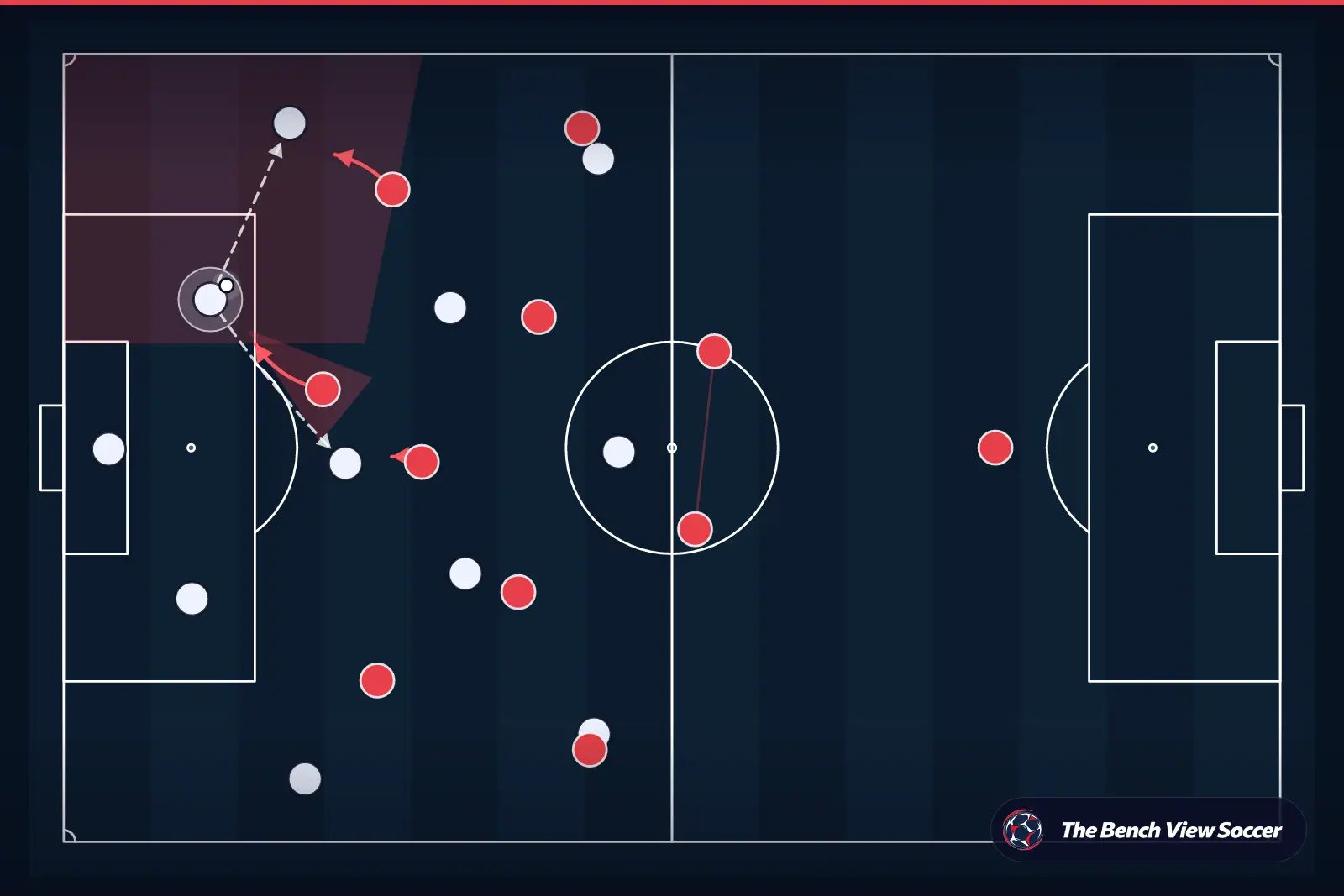
Liverpool’s pressing structure usually begins with the front three and the midfield triangle working as one unit. The first tactical pillar is the “pressing lane”: Liverpool want the opponent to play into predictable areas, often toward a full-back or into a central midfielder facing his own goal. The second pillar is the vertical run. When a trigger appears, the nearest forward sprints forward, not sideways, to close distance fast and force a rushed touch. Behind him, a second player makes a supporting vertical run to block the obvious escape pass. This is what makes the press feel “coordinated”: one player attacks the ball, the next player attacks the passing lane. Liverpool also use touchline pressure—once the ball is near the sideline, the touchline acts like an extra defender, shrinking space. In midfield, a player like Fabinho (in earlier Klopp years) or a replacement holding midfielder steps up aggressively when the receiver has a closed body shape (meaning he cannot see forward). At the back, Liverpool’s centre-backs hold a high line to keep the team compact; compactness simply means small gaps between lines, so the press does not get played through. The press works because the vertical runs are synchronized: one run pressures the ball, one run cuts the exit, one run prepares the counter-attack run into space once possession is regained.
Match Examples
A clear reference point is Liverpool vs Manchester City in the 2017–18 UEFA Champions League quarter-final (first leg at Anfield). Pep Guardiola’s City try to build through midfield, but Liverpool’s triggers appear when City play into a wide full-back or when a midfielder receives with his back to goal. Mohamed Salah, Roberto Firmino, and Sadio Mané press with vertical runs that arrive quickly, and Liverpool immediately turn regains into direct attacks. Another useful example is Liverpool vs Tottenham Hotspur in the 2018–19 UEFA Champions League final. The match is tense, but Liverpool’s pressing moments still show coordinated jumping: when Spurs try to build through Moussa Sissoko or Harry Winks, Liverpool’s forwards close straight down the line of the ball while midfielders step up to block the next pass. In the Premier League, Liverpool vs Manchester United at Anfield in 2019–20 (a title-winning season for Klopp) shows a more controlled version of the press. Liverpool do not press every second, but they press on triggers: a heavy touch, a pass into the full-back under pressure, or a backward pass that invites the next jump. In each of these matches, the common pattern is the same: Liverpool’s first presser runs vertically to compress time, the second presser blocks the escape route, and the rest of the team squeezes up so the opponent cannot simply play long with comfort.
Related Concepts & Skills
Training Implications
For coaches and players trying to learn Liverpool-style pressing principles, start with timing and roles, not intensity. First, build a simple trigger list your team understands: (1) bad touch, (2) pass into a wide full-back near the touchline, (3) midfielder receives with back to goal, (4) slow square pass across the back line. In training, run a 6v6+2 possession game where a goal counts only if the ball is won within five seconds of a trigger—this teaches recognition and coordinated jumping. Second, coach the “first presser” and “cover presser” roles. The first presser sprints vertically to the ball; the cover presser runs to block the most obvious forward pass, not to chase the ball. Freeze the drill to show players the blocked lane. Third, coach body shape: defenders and midfielders should approach at an angle that shows the opponent away from the centre, guiding play toward the sideline. Fourth, add the counter-attack: after a win, the nearest runner immediately makes a vertical run beyond the ball while one player secures a short pass. This links the press to chance creation. Finally, manage effort: pressing works in waves. Train 10–15 second high-intensity pressing bursts followed by controlled positioning, so your team stays organised rather than chaotic.
The Bench View app
Don’t just read football — train it
Everything you read here, turned into training you can follow step by step.
Physical training at home
AI daily sessions adapted to your level and position. No equipment needed.
Tactical training courses
Step-by-step courses on positioning, pressing, build-up and decision making.
- 7 days free
- No commitment
- Cancel anytime
Free account: 2 physical sessions + the first tactical course. PRO: 7-day free trial — cancel before day 8 and you pay nothing.