Introduction
For years, full-backs are taught one primary job: defend wide areas and overlap to cross. Modern elite football flips that idea. Today, the most influential full-backs often step inside, standing next to midfielders rather than hugging the touchline. Fans watching the UEFA Champions League or Premier League regularly see Manchester City’s full-back drifting into central midfield, or Real Madrid’s full-back tucking in to help control transitions. This is not fashion; it solves real problems. When a full-back moves into midfield, the team gains an extra central passing option, stronger protection against counter-attacks, and better access to the spaces that actually decide games. Coaches like Pep Guardiola at Manchester City and Carlo Ancelotti at Real Madrid use these movements differently, but the logic connects: dominate the centre, secure the ball, and arrive in the box with more players—without losing defensive stability. This article breaks down why this happens and what it teaches you about reading modern tactics.
How It Works
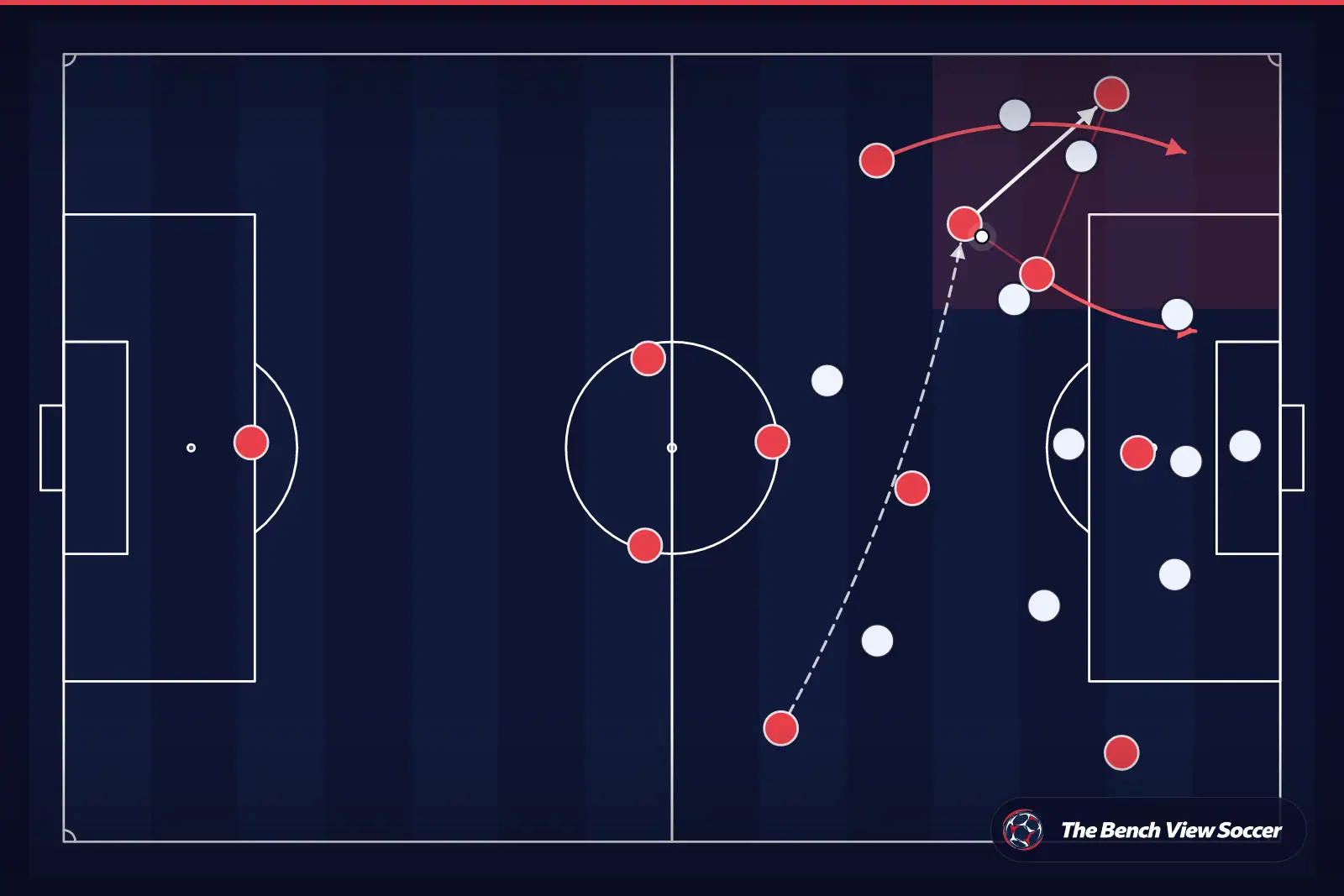
A full-back pushing into midfield usually happens in possession, when the team builds attacks from the back. Instead of staying wide, the full-back steps inside to create an extra midfielder. This does three big things. First, it creates numerical superiority centrally: if the opponent presses with two or three midfielders, the inverted full-back makes it 3v2 or 4v3, letting the team play through pressure. Second, it stabilises the defence against counter-attacks. When a team attacks with full-backs high and wide, losing the ball leaves space behind them. But if the full-back is already inside, the team immediately has more players around the ball to win it back or delay the break. Third, it improves access to the ‘half-spaces’ (the channels between centre and wing), where through passes, cut-backs, and shots are more dangerous than wide crosses. The wide role is then often taken by wingers or advanced midfielders who hold the touchline. Manchester City use this to control matches. Under Guardiola, a full-back often moves next to Rodri so City can play short passes, recycle possession, and keep opponents pinned. The central presence also lets City’s attacking midfielders (like Kevin De Bruyne or Bernardo Silva) stay higher between lines. Real Madrid under Ancelotti use it more situationally: the full-back can tuck in to help build and protect against counters, but Madrid also keep the option of explosive wide attacks, especially when Vinícius Júnior stretches the pitch. In both cases, the full-back becomes a hybrid: part defender, part midfielder, responsible for tempo, spacing, and preventing transitions.
Match Examples
Manchester City vs Inter Milan, UEFA Champions League final 2022-23: City’s structure often resembles a back three in buildup, with one full-back stepping into midfield to support Rodri and create a stable base for circulating possession. This helps City resist Inter’s pressing and keep attacks alive long enough to find openings. The match is tight, but City’s ability to keep central access and protect against counters is crucial; when possession turns over, City have bodies close to the ball instead of two full-backs stranded high. Manchester City vs Arsenal, Premier League 2022-23 (run-in, including the decisive meeting at the Etihad): City’s in-possession shape regularly pulls a full-back inside, creating extra central passing lanes and letting the wingers stay wide. Arsenal’s midfield press has to decide: follow the inverted full-back and open space elsewhere, or stay compact and allow City to progress through the centre. City’s control of central zones limits Arsenal’s counter-attacking rhythm. Real Madrid vs Liverpool, UEFA Champions League 2021-22 final: Madrid do not monopolise the ball like City, but their full-back positioning still supports their plan. When Madrid build, a full-back can narrow to support midfield circulation and protect against Liverpool’s counter-press (the immediate press after losing the ball). When Madrid defend transitions, the tucked-in full-back helps form a compact block closer to Casemiro and the centre-backs, reducing the space for Liverpool’s runners. Real Madrid vs Manchester City, UEFA Champions League semi-final 2021-22 (second leg at the Bernabéu): Madrid spend long stretches without the ball, but the moments they regain it are the story. Their full-backs choose when to step inside to secure the first pass and when to stay wider to release Vinícius or set up switches. The key lesson is that ‘full-back into midfield’ is not always constant; it can be a situational tool to survive pressure, connect counters, and keep the team compact during chaotic phases.
Related Concepts & Skills
Training Implications
If you coach or play in India—school teams, academies, or amateur leagues—you can train the ‘full-back into midfield’ idea without copying Manchester City exactly. Start with roles and triggers. Actionable rule 1: when the ball is with your centre-back and the opposition has two forwards pressing, the near full-back steps inside to stand roughly 8–12 metres from the defensive midfielder, offering a simple passing angle. Actionable rule 2: if your winger stays wide, the full-back does not overlap automatically; instead, the winger provides width and the full-back provides an extra central option. Drill 1 (Build-up + decision): set up a 6v4 in a half-pitch. Six attackers: goalkeeper, two centre-backs, two full-backs, one defensive midfielder. Four defenders press. Condition: one full-back must move into the central channel in possession. Coaching points: body shape open to play forward, first touch away from pressure, and pass speed (firm ground passes). Rotate which full-back inverts so both learn it. Drill 2 (Transition protection): 7v7 with two mini-goals at halfway for the defending team to counter into. When the attacking team loses the ball, they have 6 seconds to win it back. This teaches why the inverted full-back matters: if the full-back is inside, they help the counter-press and block central breaks. Coach the nearest three players to close the ball, while the remaining players protect central lanes. Drill 3 (Wide winger, inside full-back patterns): create a pattern where the centre-back passes to inverted full-back, who bounces to midfielder, then switches to the far winger. Add a rule: the inverted full-back must scan twice (before receiving and as the ball travels). This builds the habit of playing like a midfielder. Finally, video feedback is key: record 5-minute clips and check spacing—full-back too wide defeats the purpose; too close to the midfielder crowds the zone and kills passing lanes.
The Bench View app
Don’t just read football — train it
Everything you read here, turned into training you can follow step by step.
Physical training at home
AI daily sessions adapted to your level and position. No equipment needed.
Tactical training courses
Step-by-step courses on positioning, pressing, build-up and decision making.
- 7 days free
- No commitment
- Cancel anytime
Free account: 2 physical sessions + the first tactical course. PRO: 7-day free trial — cancel before day 8 and you pay nothing.