Introduction
The old image of a winger is simple: hug the touchline, beat the full-back, and cross. Modern European football still uses that, but many elite teams now prefer wingers who start wide and then cut inside toward goal. Fans watching the UEFA Champions League or the Premier League notice it every weekend: Real Madrid’s wide forwards drift into central lanes to shoot or combine, while Arsenal’s wide players move inside to create overloads and open passing angles. This isn’t a “trend” for style points; it is a response to how defenses protect the box, how teams build attacks, and how managers want to create high-quality shots. Cutting inside also changes the opponent’s decisions: a full-back must choose between following the winger into the middle (opening the wing) or holding the line (allowing a dangerous central dribble). In this guide, we break down why it works, how top coaches use it, and what it teaches you when you watch games.
How It Works
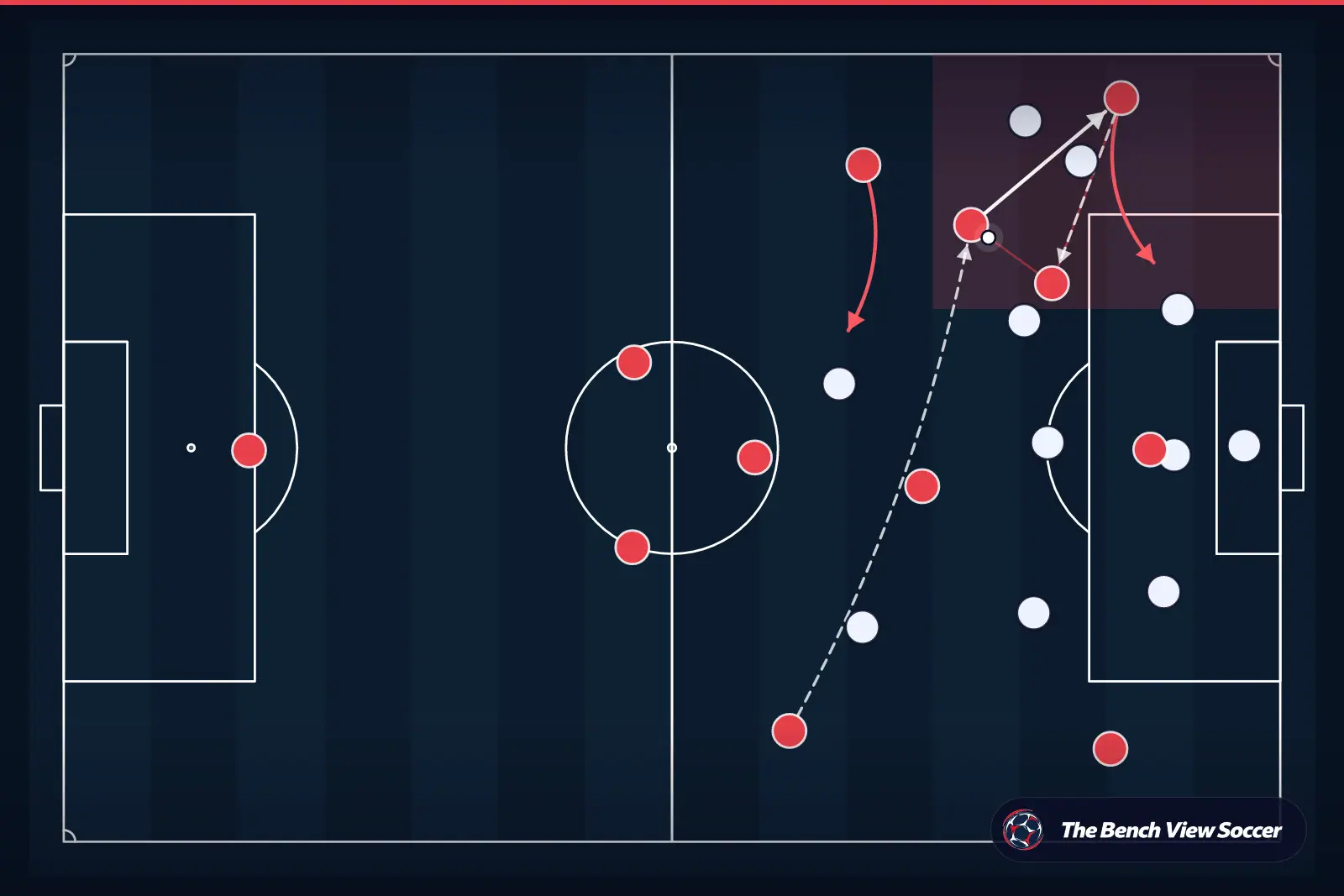
Modern wingers cut inside mainly to increase threat and improve team structure. First, the most valuable shots often come from central areas, especially the “zone 14” space just outside the penalty area and the inside channels near the edge of the box. When a right-footed player starts on the left (or a left-footed player starts on the right), cutting inside naturally lines up the body for shots to the far corner and quick through passes. Second, cutting inside helps create a numerical advantage. If the winger dribbles inside, they attract the opponent’s full-back plus a central midfielder or center-back stepping out. That moment creates a free teammate: either an overlapping full-back outside, a striker in the box, or a midfielder arriving late. Third, it helps teams control transitions (counterattacks). Coaches like Carlo Ancelotti and Mikel Arteta want good “rest defense,” meaning the team keeps enough players positioned to stop counters. If the winger comes inside closer to the ball, the team is compact and can press immediately after losing possession (often called counter-pressing). Finally, cutting inside fits modern build-up patterns: the full-back or wing-back provides width, while the winger occupies the half-space (the channel between the wing and the center). This spacing makes it harder for defenses to mark everyone without leaving gaps.
Match Examples
Real Madrid under Carlo Ancelotti provides clear lessons in the UEFA Champions League. In the 2023-24 Champions League knockouts, Vinícius Júnior often starts wide on the left but then drives diagonally inside once he fixes the right-back. When he carries the ball into the left half-space, Madrid’s left-back (Ferland Mendy) stays ready to overlap or provide a safe pass, and Jude Bellingham or a forward makes a run to occupy defenders. The inside dribble forces central defenders to step out, and that opens lanes for cut-backs or shots. Another reference point is the 2021-22 Champions League run, where Madrid’s wide players repeatedly move inside to combine quickly around the box, creating high-value chances even when opponents sit deep. Arsenal under Mikel Arteta in the Premier League 2022-23 and 2023-24 shows a more structured version. Bukayo Saka on the right regularly receives wide, then turns into the right half-space to threaten a left-footed shot or a pass into the striker. When Saka comes inside, Ben White often overlaps outside to pin the opposing full-back, and Martin Ødegaard positions himself nearby to create triangles (three-player passing options). A specific match to study is Arsenal vs Liverpool at the Emirates in the 2023-24 Premier League season, where Arsenal’s right-side combinations frequently pull Liverpool’s midfield across, then exploit the space created. Another is Arsenal vs Manchester City in the 2023-24 Premier League, where Arsenal uses controlled wing-to-inside movements to avoid losing the ball cheaply and to keep a compact shape for counter-pressing. Across these examples, the key idea stays consistent: the winger’s inside movement is not random dribbling; it connects to overlaps, midfield support, and the team’s defensive safety after possession loss.
Related Concepts & Skills
Training Implications
If you coach or play, you can train the “cut inside” role with simple, actionable sessions. Start with a 1v1 + end product drill: place a winger on the flank with a defender, and set two scoring options—(a) cut inside to shoot into mini-goals placed centrally, or (b) go outside and cross into a target zone. Rotate sides so players learn both “inverted” and traditional roles, and coach the key detail: first touch sets the angle inside, head up before the defender commits, and accelerate through the gap. Add an overlap/underlap pattern: winger starts wide, full-back begins deeper. On the coach’s call, the full-back overlaps outside or underlaps inside; the winger must cut inside at the same time and choose the pass (slip pass to runner, bounce pass to midfielder, or shot). Make decision-making the focus by limiting touches (e.g., winger has 3 touches after entering the half-space). Next, include a transition rule: if the attacking team loses the ball, they have 5 seconds to win it back (counter-press). This teaches why inside positioning matters—players are closer together and can hunt in a small area. Finally, use video feedback: record from behind the goal and review whether the winger attracts two defenders before releasing the ball. The measurable targets are clear: create a shot from a central lane, create an overlapping run with a pass, or win the ball back quickly after losing it.
The Bench View app
Don’t just read football — train it
Everything you read here, turned into training you can follow step by step.
Physical training at home
AI daily sessions adapted to your level and position. No equipment needed.
Tactical training courses
Step-by-step courses on positioning, pressing, build-up and decision making.
- 7 days free
- No commitment
- Cancel anytime
Free account: 2 physical sessions + the first tactical course. PRO: 7-day free trial — cancel before day 8 and you pay nothing.