Introduction
Real Madrid’s fullbacks often look like they are “breaking the rule” that wide defenders should stay near the touchline. Under Carlo Ancelotti, you regularly see Dani Carvajal or Ferland Mendy step inside next to Aurélien Tchouaméni, Luka Modrić, or Toni Kroos to form a more secure midfield platform. For fans new to tactics, this inside movement is not random—it is a possession solution. European elite games are decided by how teams manage pressure after winning the ball and how they protect themselves against counter-attacks (quick attacks immediately after losing the ball). When Madrid’s fullbacks come inside, they create extra passing lanes, reduce risky “straight-line” passes, and keep more players behind the ball if possession breaks down. It also helps the team play through opponents who press aggressively in competitions like La Liga and the UEFA Champions League. This article explains why the move matters, what it changes in Madrid’s build-up, and how you can spot it on TV.
How It Works
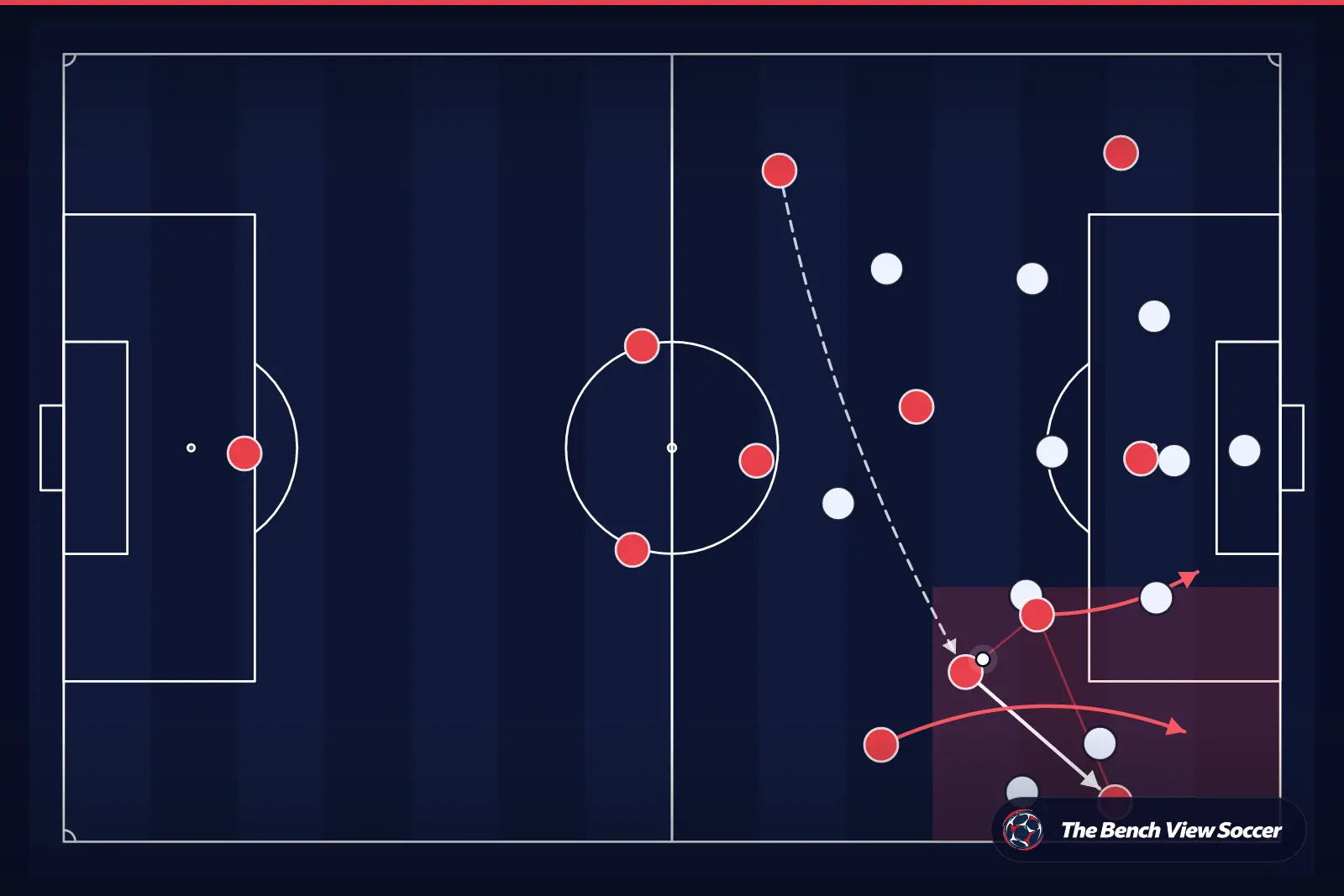
When Real Madrid builds from the back, opponents often try to isolate Madrid’s midfield by blocking passes into the central areas. If the opponent’s wingers press Madrid’s centre-backs and their midfielders mark Kroos/Modrić tightly, Madrid needs a new “free man” to keep the ball moving. Ancelotti’s solution is frequently an inverted fullback: the fullback steps inside, closer to the central midfield, rather than overlapping outside. This creates a temporary midfield box or diamond, giving the ball-carrier short options on both sides. In simple terms, it increases “numbers” around the ball and makes it harder for the opponent to win it cleanly. The inside fullback stabilizes possession in three ways. First, it improves angles. A pass from centre-back to a wide fullback is often pressed toward the touchline, where the defender has fewer escape routes. But a fullback receiving inside has multiple exits: back to the centre-back, forward to a midfielder, or out to a winger. Second, it protects the centre. If Madrid lose the ball, an inside fullback is already positioned to block counter-attacks through the middle, which is usually the most dangerous route. Third, it supports Madrid’s stars. When Jude Bellingham or Vinícius Júnior makes aggressive forward runs, the team needs a stable “rest defense” (the players who stay positioned to defend if the attack fails). The inverted fullback becomes part of that safety net, allowing the attackers to take risks while the structure stays balanced.
Match Examples
A clear reference point is the 2023–24 UEFA Champions League run under Carlo Ancelotti, especially against Manchester City and Bayern Munich, where Madrid faces long spells without the ball and then needs calm possession to relieve pressure. In the 2023–24 quarter-final ties against Manchester City, City’s press tries to pin Madrid’s build-up and force rushed clearances. Madrid frequently uses Carvajal’s inside positioning to offer an extra central outlet when the ball moves from Antonio Rüdiger or Nacho into midfield zones. Even if Madrid does not dominate possession, the ability to keep a few stable passes under pressure becomes crucial to reset and prepare transitions. In La Liga 2023–24, Madrid’s more flexible midfield—often featuring Tchouaméni as a single pivot or as a drop-in centre-back—encourages fullbacks to come inside depending on who is on the pitch. When Kroos plays deeper, the inverted fullback can operate near him to create a safer passing network and prevent opponents from jumping on Kroos as soon as he receives. In matches where Madrid protects a lead late on, you also see the inside fullback help create an extra midfielder for circulation, which slows the game down and reduces the number of open-field counters. Across these examples, the pattern is consistent: the fullback’s inside movement is less about being “clever” and more about giving Madrid a repeatable structure to survive pressure, keep possession in central areas, and defend transitions with better positioning.
Related Concepts & Skills
Training Implications
For coaches and players learning from Real Madrid, the key is to train the movement with clear rules, not as free improvisation. Start with a simple 6v4 build-up rondo in a half-pitch: back four plus two midfielders keep the ball against four pressers. Give the fullbacks a rule: when the ball is with a centre-back, the far-side fullback holds width, but the near-side fullback steps inside into a midfield pocket. Coach the receiving shape: body open to see both the centre-back and the winger, first touch away from pressure, and a quick scan before the pass arrives. Add a transition constraint to teach why the inside position stabilizes possession. If the pressers win the ball, they have five seconds to score in two mini-goals placed centrally. This forces the possession team to value central protection and shows the players that losing the ball with both fullbacks wide is dangerous. Progress to an 8v8 game with zones: wide zones for wingers and an inner corridor for midfield. Award an extra point if a goal starts from a pass by an inverted fullback into a central midfielder or a “third-man” pass into the forward line. Finally, set decision rules: invert only when your winger stays high and wide (to keep width), and revert to the outside overlap when the opponent’s winger tucks inside and leaves the flank open. This makes the tactic practical, repeatable, and easier for amateur teams to execute.
The Bench View app
Don’t just read football — train it
Everything you read here, turned into training you can follow step by step.
Physical training at home
AI daily sessions adapted to your level and position. No equipment needed.
Tactical training courses
Step-by-step courses on positioning, pressing, build-up and decision making.
- 7 days free
- No commitment
- Cancel anytime
Free account: 2 physical sessions + the first tactical course. PRO: 7-day free trial — cancel before day 8 and you pay nothing.