

Introduction
Set pieces look like “chaos moments” to many fans, but top European teams treat them like repeatable patterns. For Indian viewers following European football, understanding zonal marking at corners and wide free-kicks is one of the quickest ways to read a team’s defensive IQ. This matters for Australia too: the Socceroos often face physically strong opponents in AFC matches, and Australia’s A-League clubs regularly meet teams with well-drilled dead-ball routines. Zonal marking is not simply “stand in a zone and hope.” It is a system that tries to protect dangerous spaces—especially the six-yard box and the central corridor—using coordinated starting positions, timing, and clear responsibilities. When it works, it reduces free headers and second balls. When it fails, it fails loudly: one missed run, one blocked jumper, one keeper stuck on the line. This article breaks down how set-piece zonal marking functions, why teams choose it, what to watch for in Australian contexts, and how coaches can train it with practical habits rather than complicated speeches.
How It Works
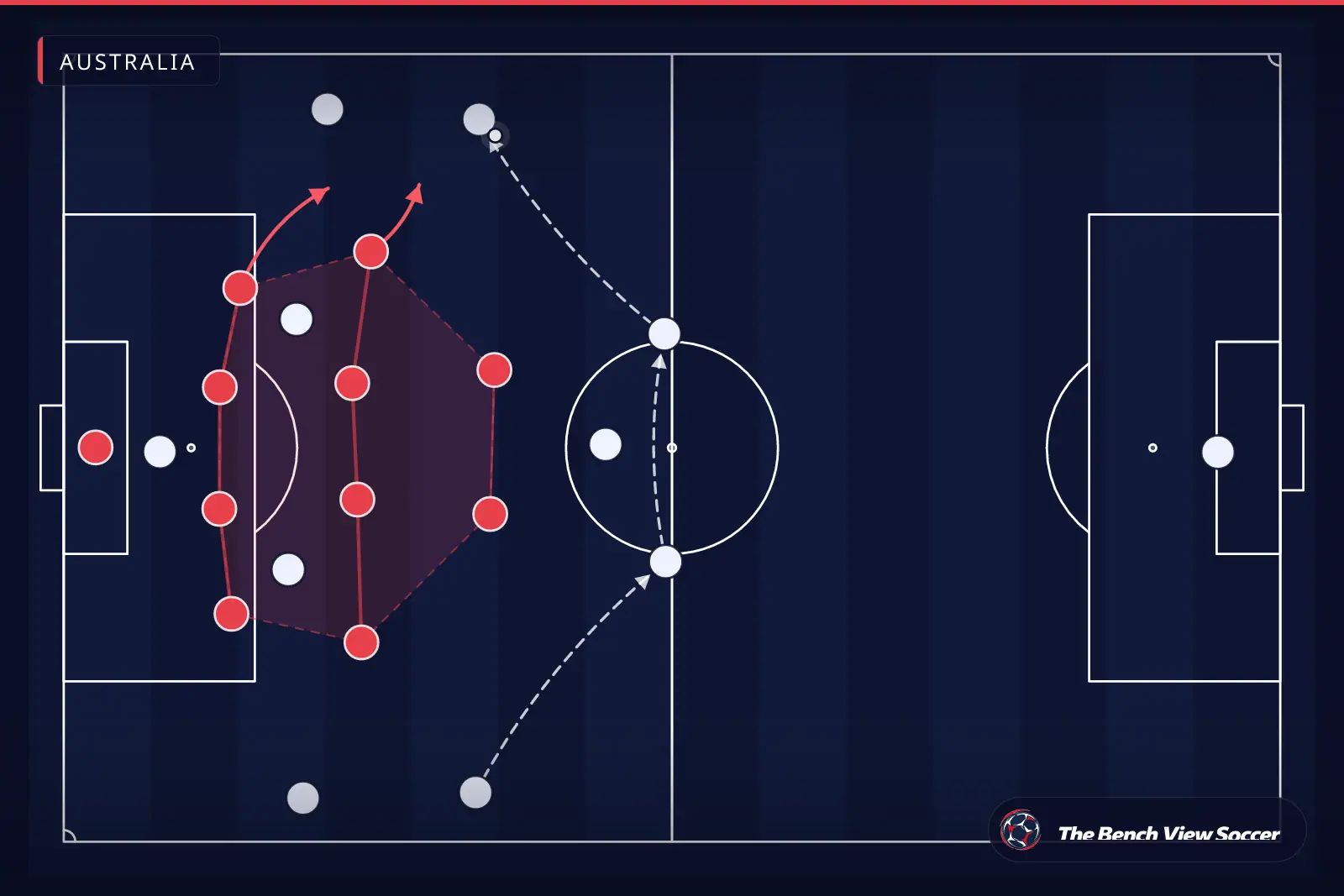
Zonal marking on set pieces means defenders primarily guard spaces, not individual opponents. The usual priority is the “first contact zone” (the space attackers most likely meet the ball) and the “goal zone” (six-yard box, near-post corridor, and central line to goal). A typical setup places three to five players in a horizontal or slightly staggered line across the six-yard box. One player anchors the near-post channel, another protects the center of the six, and one covers the far-post line. Behind them, teams add “screeners” or “blockers” who start a step higher to prevent attackers getting a clean run. Many coaches also combine zonal with man-marking: the strongest aerial defenders hold the central zones, while one or two players track the most dangerous runners. The goalkeeper’s role is active: he commands the space between the penalty spot and the six-yard line, and he decides whether to claim, punch, or hold position based on flight, traffic, and his defenders’ body orientation. The key coaching point is timing. In zonal, defenders do not chase movement early; they hold shape, read the kicker’s body, then attack the ball at its highest-value moment. If the line jumps too early, attackers run across faces and win free headers. If the line stays flat and passive, attackers “pin” the zonal players with blocks, and the ball lands in front of goal for a tap-in. Done well, zonal marking creates clarity: everyone knows which space is “owned,” who attacks the ball, and who cleans up second balls at the edge of the box.
Match Examples
For Indian fans wanting real reference points, the Premier League provides clear case studies. In the 2022–23 season, Arsenal under Mikel Arteta defends many corners with a strong zonal line across the six-yard box, often combining it with selective man-marking on key threats. Watch how Arsenal’s central zonal players attack the delivery rather than backpedal, and how the edge-of-box players position for rebounds to stop second-phase shots. Another instructive example is Liverpool under Jürgen Klopp in the 2018–19 Champions League run: their set-piece defending often uses zonal principles with aggressive first contacts and quick exits to squeeze the box after clearance. You can also learn from the “what goes wrong” side. In multiple Premier League seasons, including 2023–24, teams that rely on passive zonal lines concede when attackers crowd the goalkeeper and prevent him from stepping forward—this is common against Brentford under Thomas Frank, who frequently loads the six-yard area and targets flick-ons and knockdowns. Translate this to Australia: in AFC Asian Cup 2015, Australia under Ange Postecoglou faces repeated aerial tests; the lesson is how important the first header is and how quickly the team must squeeze out to stop recycled crosses. In A-League Men, clubs like Melbourne City and Sydney FC regularly face packed-box corners; the best sides look organized not just on the first ball but on the “second corner” that immediately follows a clearance.
Related Concepts & Skills
Training Implications
For coaches working with Australian squads (or Indian teams learning these habits), train zonal marking as a repeatable choreography with simple cues. Start with a consistent base: pick a three- or four-man zonal line across the six-yard box, and define each player’s “ownership” in one sentence (example: “You own the near-post corridor from post to penalty spot line”). Run a 10-minute micro-drill where the server delivers 12 corners: six inswingers and six outswingers. The defenders focus on two non-negotiables—(1) hold your line until the ball is struck, then attack it; (2) jump forward, not backward. Add a second phase immediately: after every clearance, the coach plays a quick recycled cross to force the unit to reset, push out, and re-mark. Use video or a phone recording to check spacing: the zonal line should be staggered enough that one block does not disable two defenders. Train goalkeeper communication with fixed vocabulary: “Away” (punch), “Keeper” (claim), “Hold” (stay). Give the keeper three reps where the box is crowded so he learns when not to force a claim. Finally, assign two “edge guards” at the top of the box in every repetition; their job is to win loose balls and stop shots—this is where many teams concede even after a good first header. Measure progress with simple stats over a month: first-contact win rate, shots conceded on second phase, and how often the line steps out together after a clearance.
طبق هذا في لعبتك
قراءة التكتيكات شيء واحد. وحداتنا التدريبية تعلمك كيف تنفذ هذه المفاهيم في مواقف مباريات حقيقية.