

Introduction
Australia’s modern wide play is less about classic “chalk-on-the-boots” wingers and more about producing inverted wingers: wide attackers who start near the touchline but drive inside onto their stronger foot (often left-footed on the right, or right-footed on the left). This matters for Indian fans watching European football because the same idea appears every weekend in the Premier League and UEFA Champions League, from Arsenal under Mikel Arteta to Manchester City under Pep Guardiola. For Australia, it is a pathway that links youth development, A-League Men patterns, and national team needs. Under managers like Ange Postecoglou (former Socceroos coach, later Celtic and Tottenham Hotspur) and Graham Arnold (Socceroos at the 2022 FIFA World Cup), Australia’s systems ask wingers to become scorers, playmakers, and pressers rather than just crossers. You see this in how Australian wide forwards attack the “inside lane,” combine with an overlapping full-back, and arrive into the box like an extra striker. The result is a more European-style attacking profile: more shots and cut-backs, fewer hopeful crosses, and a clearer link between structure and individual decision-making.
How It Works
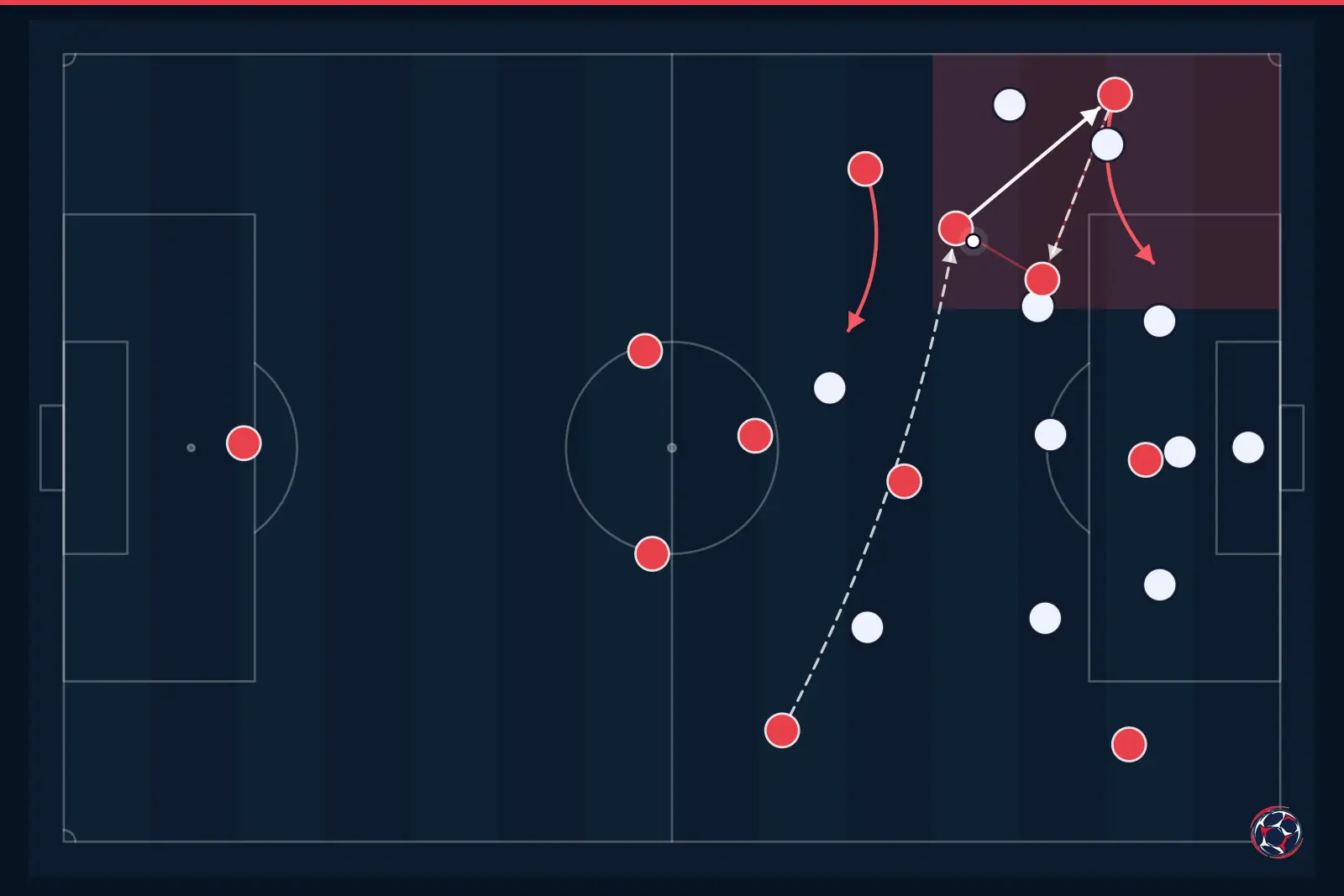
Australia builds inverted wingers through repeatable team structures that encourage inside dribbles, underlapping runs, and central finishing. The first ingredient is the spacing: the winger holds width early to stretch the defensive line, then drifts into the half-space (the channel between full-back and centre-back) as the ball travels. That timing is crucial—arrive inside too early and you clog the midfield; arrive too late and you lose the advantage. The second ingredient is the full-back relationship. In many Australian setups, the full-back provides the outside lane (overlap) so the winger has permission to come inside. When the full-back overlaps, the winger’s inverted movement becomes safer because the team still has width to pin the opposition full-back. The third ingredient is role clarity in the final third: the inverted winger is asked to either (1) shoot across goal, (2) slip a pass into the striker, or (3) play a low cut-back after beating the first defender. Notice how these are high-value actions compared to floated crosses. Finally, Australia emphasises defensive work: inverted wingers must press on the opponent’s build-up, jump to the full-back on pressing triggers (like a slow pass into the wide defender), and track runners when the full-back goes forward. This two-way responsibility is why national team coaches like Arnold value disciplined, repeatable wing behaviours.
Match Examples
A clear Australian reference point is the 2022 FIFA World Cup in Qatar under Graham Arnold. In the group-stage win against Denmark (Australia 1–0 Denmark, 30 November 2022), Australia’s wide attackers do not simply stay wide and cross; they often start wide to stretch Denmark, then attack inside when the moment is right. The winning goal sequence shows how Australia uses a wide-to-inside run to reach the most dangerous zone: Mathew Leckie receives in the right channel and drives diagonally infield, turning a wide situation into a central finishing moment. That is an inverted winger pattern in action—carry inside, commit defenders, then finish. Another useful reference is Australia’s Round of 16 match against Argentina (Australia 1–2 Argentina, 3 December 2022). Australia often defends in a compact shape, then looks for wide outlets who can travel with the ball into central space on the transition. When the winger carries inside, it gives Australia a chance to connect with central runners and win set-pieces higher up the pitch. For club pathway context, look at Australian players in European leagues where inverted winger habits are reinforced: for example, at Celtic under Ange Postecoglou in the 2022–23 Scottish Premiership season, the team’s wide forwards frequently attack inside while full-backs push high, a structure Postecoglou also values in his broader coaching philosophy. These matches and seasons show the same idea: start wide, move inside with intent, and use full-back width to keep the attack balanced.
Related Concepts & Skills
Training Implications
To train inverted wingers in a practical way, start with decision-making, not just dribbling. Session 1: “Wide-to-Inside Gate” drill (15–20 minutes). Set up a wing channel and two gates: one gate inside the half-space and one outside on the touchline. The winger receives wide, takes the first touch forward, and must decide: drive inside through the half-space gate (if the defender shows outside) or play the overlapping full-back through the outside gate (if the defender blocks inside). Coach the cues: defender’s hips, distance to the full-back, and where the nearest central midfielder stands. Session 2: Finishing pattern (20 minutes). Rehearse the classic inverted winger actions: (a) inside carry + shot across goal, (b) inside carry + slip pass to striker, (c) inside carry + cut-back after reaching the byline. Track outcomes: number of shots on target and number of “penalty spot” cut-backs completed. Session 3: 7v7 with lane rules (25 minutes). Mark wide lanes and half-spaces. Rule: goals count double if the attack includes a winger receiving wide and then either (1) entering the half-space on the dribble or (2) combining with an overlapping full-back before a shot. This forces the pattern without over-coaching. Defensive habits matter too: add a pressing rule where the winger must sprint-press the opposition full-back on a back pass, then recover inside to protect the centre if the press is broken. For individual homework, wingers should clip 6–8 examples from matches (World Cup 2022, A-League Men, or European leagues) and write down: starting position, trigger to move inside, final action (shot/pass/cut-back), and whether the full-back overlaps. This builds tactical awareness, not just technique.
Apply This in Your Game
Reading about tactics is one thing. Our training units teach you to execute these concepts in real match situations.