Introduction
Liverpool’s identity in the Jürgen Klopp era is not only about heavy-metal pressing; it is also about how the full-backs create width to stretch opponents until gaps appear. For many fans used to thinking “wingers provide width,” Liverpool is a useful classroom because their wide threat often starts from Trent Alexander-Arnold and Andrew Robertson. When those two hold the touchline, opponents must defend a bigger horizontal space, which makes central defenders and midfielders uncomfortable: do they stay compact to protect the goal, or spread out to stop crosses and switches? That dilemma is the point. Width is not a styling choice; it is a tool to generate better passing angles, more space between defenders, and clearer routes into the penalty area. In the Premier League and UEFA Champions League, where teams often defend in deep, narrow blocks, Liverpool’s full-backs become key “chance creators” rather than just defenders who overlap occasionally.
How It Works
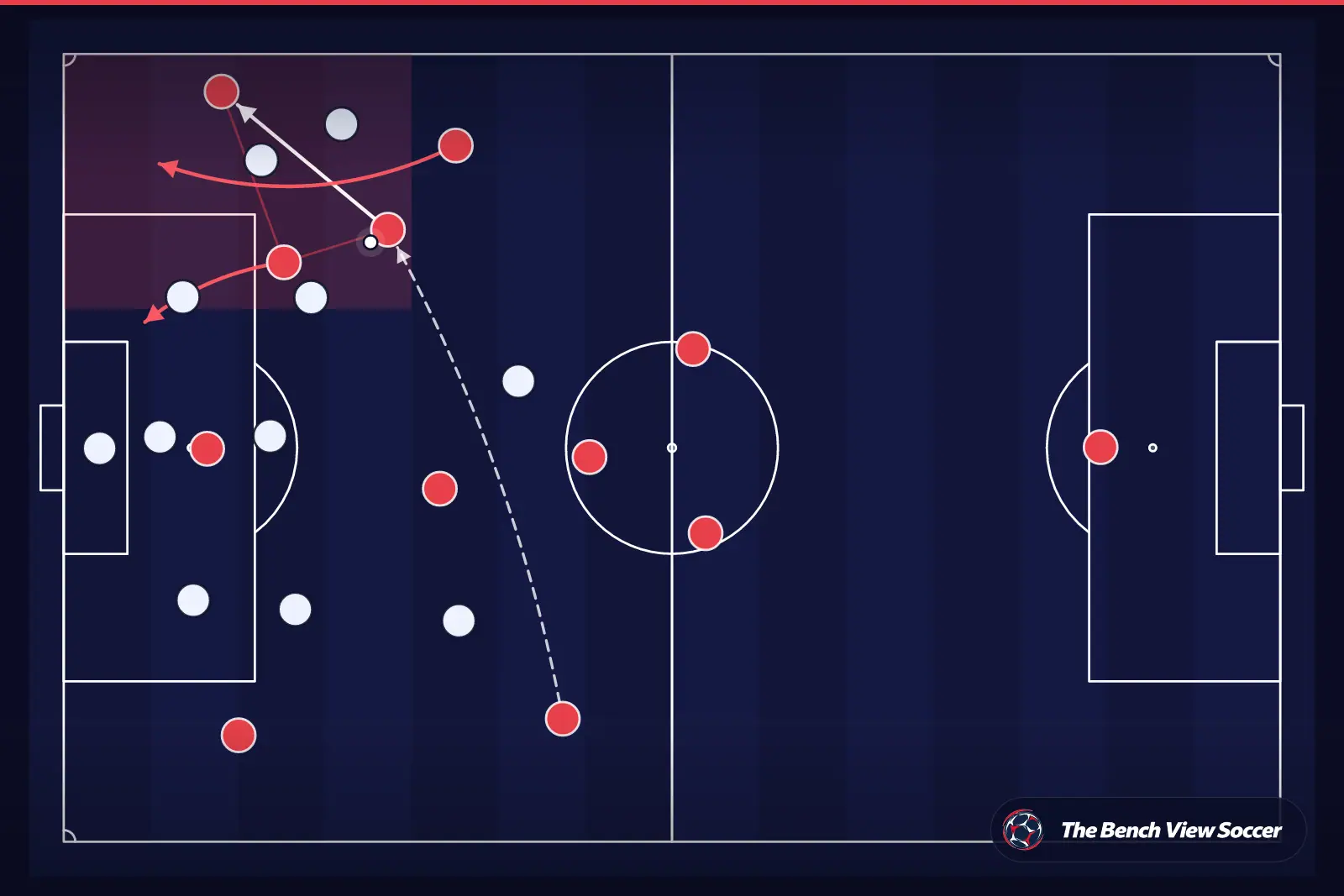
Liverpool’s full-backs create width in two main ways: by positioning high and wide to pin the opposition back line, and by timing their forward runs to arrive when the ball is secured. “Pinning” means forcing the opponent’s wide defender (full-back or wing-back) to stay close to the touchline instead of tucking inside to help centrally. When Robertson and Alexander-Arnold stay outside, the opposition’s defensive line stretches, opening channels between centre-back and full-back—prime space for runs from Mohamed Salah, Sadio Mané (in past seasons), Luis Díaz, Diogo Jota, or a midfielder. Liverpool’s wide build-up often starts with a central circulation: Virgil van Dijk, Ibrahima Konaté, or Joël Matip attracts pressure, then plays a long diagonal or a firm pass into the full-back. The wide receiver then has options: an early cross, a cut-back after reaching the byline, or a “third-man” combination where the full-back plays inside and a forward runs beyond. A key detail is that Liverpool’s wingers frequently move infield, which deliberately vacates the outside lane. When Salah comes inside onto his left foot, Alexander-Arnold is free to occupy the touchline and deliver. On the other side, Díaz or Mané drifts into the left half-space, letting Robertson overlap for width. This structure also helps Liverpool’s counter-press: if the ball is lost wide, the touchline acts like an extra defender because it limits the opponent’s escape routes. Width matters because it improves chance quality. Crosses are not “hopeful” when they come from stable wide positions with runners attacking the box and midfielders arriving at the edge for second balls. Liverpool’s full-backs are essentially high-volume passers in advanced zones, creating repeated delivery situations until the defence cracks.
Match Examples
A classic reference point is Liverpool’s 2018–19 UEFA Champions League run under Jürgen Klopp. In the Round of 16 second leg against Bayern Munich (Allianz Arena, March 2019), Robertson’s high, aggressive width helps Liverpool push Bayern’s back line deeper. Even when the final touch is not a Robertson cross, his positioning forces Bayern’s wide players to defend longer distances, and Liverpool’s front three find more space inside. Another famous case is the 2018–19 Champions League semi-final second leg vs Barcelona at Anfield (May 2019). Alexander-Arnold’s role is not only to cross; it is to constantly threaten from the right to keep Jordi Alba and Barcelona’s left side honest. The quick corner for the winning goal is the headline, but across the match Liverpool’s right-side width repeatedly pulls Barcelona’s shape towards the touchline and creates pockets for runs into the box. In the Premier League, Liverpool’s 2019–20 title-winning season offers many examples of how width wins games against deep blocks. Against Leicester City at the King Power Stadium (December 2019), Liverpool’s wide progression and repeated deliveries are important because Leicester defend narrow for long stretches. Alexander-Arnold and Robertson keep receiving in space, which stretches Leicester’s midfield line and makes it harder to protect the central lane. In the 2021–22 season, Liverpool’s matches against Manchester City (Premier League and cups) show a different angle: width is used to escape City’s press. When City lock central passes, Liverpool’s full-backs provide wide outlets, helping the team play around pressure and launch transitions. These match references underline the same lesson: the full-back’s width is a structural advantage, not a random overlap.
Related Concepts & Skills
Training Implications
If you coach or play in India—school teams, local clubs, or even weekend groups—you can train Liverpool-style width with simple, repeatable habits. First, build a “touchline rule”: when the ball is on your side, your full-back stays wide enough to keep one foot near the line until the winger clearly holds the width. This prevents two players from occupying the same lane and makes the defence choose. Second, rehearse timing, not just running. Use a drill: 7v7 or 8v8 on half pitch, with a rule that goals count double if the attacking move includes a pass to a wide full-back in the final third before the shot. Coach the cue: the full-back starts deeper, then accelerates wide only when a midfielder secures control (a clean first touch and head up). Third, train delivery patterns: (a) early cross to the far post, (b) byline cut-back to the penalty spot, (c) recycle pass back to a midfielder who switches play. Put three targets in the box and score points for hitting the correct zone, not just “crossing.” Fourth, include transition work: after every cross or wide loss, demand a 5-second counter-press where the nearest three players close the ball and block inside passes; this teaches why wide structure also protects you. Finally, rotate roles in training so your full-backs learn decision-making like a creator—scanning before receiving, choosing between crossing, combining inside, or resetting possession.
The Bench View app
Don’t just read football — train it
Everything you read here, turned into training you can follow step by step.
Physical training at home
AI daily sessions adapted to your level and position. No equipment needed.
Tactical training courses
Step-by-step courses on positioning, pressing, build-up and decision making.
- 7 days free
- No commitment
- Cancel anytime
Free account: 2 physical sessions + the first tactical course. PRO: 7-day free trial — cancel before day 8 and you pay nothing.