Introduction
Midfield pressing is no longer “extra effort”; it is the engine of modern European football. When you watch Arsenal under Mikel Arteta or Liverpool under Jürgen Klopp (and now Arne Slot), the key idea is simple: the midfield does not only create chances, it controls where the match is played. Pressing from midfield helps a team win the ball closer to the opponent’s goal, protect the defence by reducing the number of attacks they face, and keep sustained pressure through repeat attacks. For fans used to thinking of midfielders as “passers” or “box-to-box runners,” the modern role is more strategic: they decide when the team jumps forward, when it blocks central spaces, and when it traps the opponent near the touchline. In the Premier League and the UEFA Champions League, games are too fast to defend deep for long spells; teams that press well often look “fitter,” but the real advantage is tactical coordination, not just stamina. Arsenal and Liverpool are strong case studies because their work-rate is tied to structure: their midfielders press in patterns that match their attacking shape, so effort becomes repeatable and effective.
How It Works
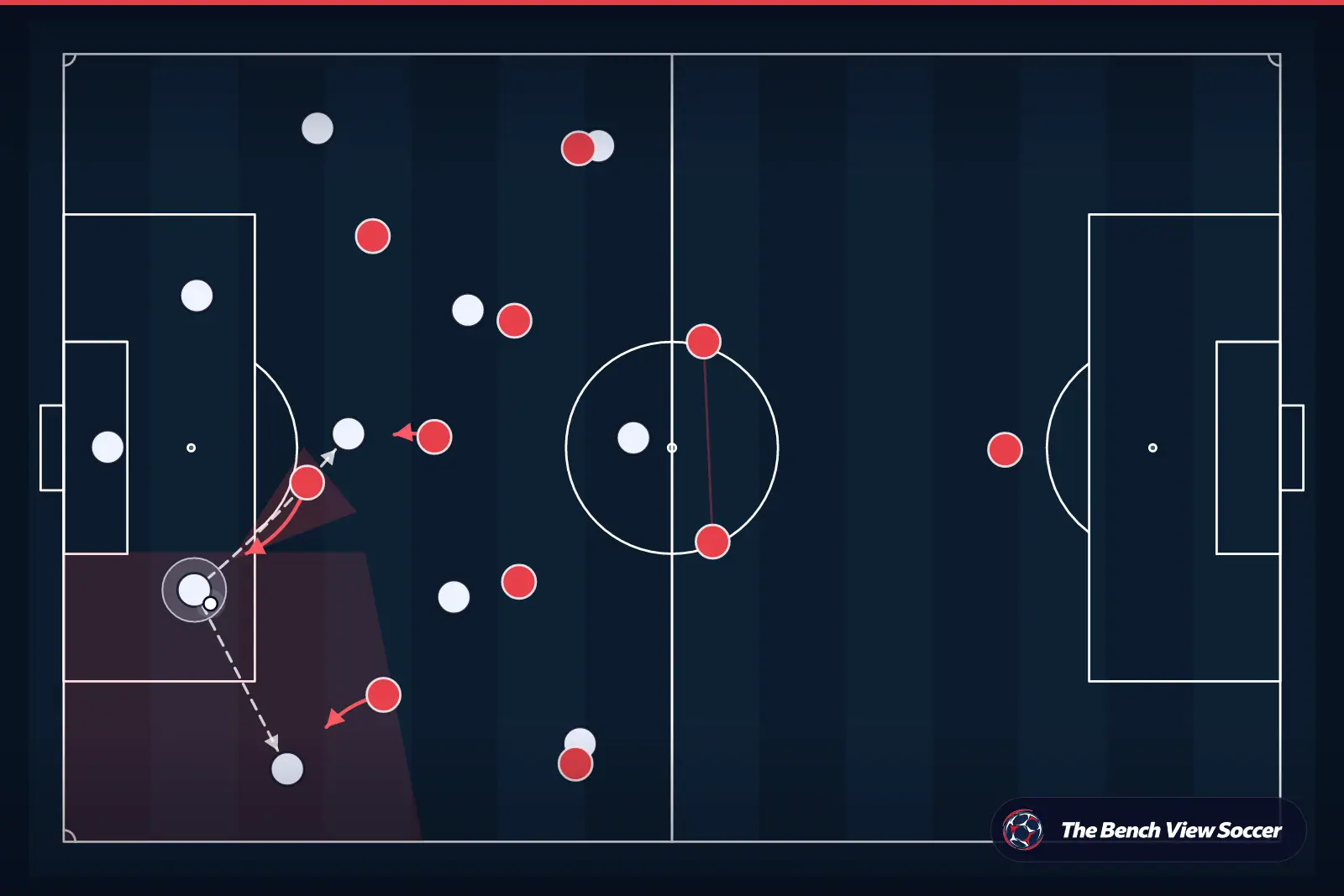
Modern midfields press because it is the quickest path to control. Instead of waiting for opponents to build attacks, the midfield unit steps up to deny progression through the centre, force predictable passes, and create turnovers (ball wins) in dangerous zones. Arsenal usually build in a 3-2 or 2-3 shape in possession, and when they lose the ball, the nearest midfielders and full-backs immediately squeeze space to stop counters; this is often called “counter-pressing,” meaning pressing right after losing possession. Liverpool’s identity under Klopp is famously high-energy, but the logic is still positional: the midfield and forwards angle their runs to block passes into the middle and encourage passes to the wings, where the touchline becomes an extra defender. The midfield press also protects the “rest defence,” the players who stay behind the ball to prevent counter-attacks; if the midfield fails to press, the rest defence faces direct runs and open spaces. Another key reason is the modern use of inverted full-backs and high “No.8” midfielders. When a team attacks with many players, losing the ball becomes dangerous, so the midfield must press to “buy time” for teammates to recover shape. Pressing is also a chance-creation tool: winning the ball high often produces short, messy transitions where defences are not set, which suits teams like Arsenal and Liverpool who attack quickly after regains. Crucially, pressing is not constant sprinting. It is selective: midfielders step forward when the opponent’s body shape is closed (facing their own goal), when a pass is slow or bouncing, or when the receiver is isolated. Done well, pressing reduces the opponent’s options rather than chasing the ball randomly.
Match Examples
A clear Arsenal example comes from the 2022–23 Premier League season, especially Arsenal vs Manchester United at the Emirates (3-2, January 2023). Arsenal’s midfield line, led by Thomas Partey and Granit Xhaka, presses to stop United playing through Casemiro and Christian Eriksen. When Arsenal lose the ball in advanced areas, they immediately squeeze the space around Bruno Fernandes, forcing United to go longer or wider. The repeated high regains keep Arsenal attacking in waves, which is why the game feels like it is played mostly in United’s half. For Liverpool, the 2019–20 Premier League season shows the “why” of midfield pressing in a title-winning context. In Liverpool vs Manchester City at Anfield (3-1, November 2019), Liverpool’s midfield and forwards press not by chasing every pass, but by closing central passing lanes into City’s midfield and forcing play into areas where traps are ready. When City try to build, Liverpool step forward together: the nearest midfielder jumps to the ball while teammates cover behind, which prevents easy combination play. Another strong reference point is Liverpool vs Barcelona in the UEFA Champions League semi-final second leg (4-0, May 2019). Liverpool’s pressing intensity, especially after second balls and loose touches, keeps Barcelona from settling into controlled possession. The midfield supports the press by staying compact and winning duels quickly, allowing Liverpool to sustain pressure and create repeat attacks. These matches underline the logic: midfield pressing is about controlling the opponent’s build-up routes. Arsenal’s press often looks like a clamp around the centre, while Liverpool’s often looks like a wave that pushes the opponent toward the flank and then attacks the ball with speed.
Related Concepts & Skills
Training Implications
For coaches and players (including Indian grassroots teams) who want to copy Arsenal or Liverpool’s midfield pressing, the focus should be on coordination and cues, not endless running. Start with a simple rule: press in groups of three, not alone. In a 6v6 or 7v7 small-sided game, assign a “first presser” (the nearest player), a “cover” player (blocks the most dangerous forward pass), and a “balance” player (protects the space behind). Rotate roles so midfielders learn different responsibilities. Use a drill called “3-second counter-press”: after losing the ball, the team has exactly three seconds to try to win it back; if they fail, they must drop into a compact shape behind an agreed line (for example, the halfway line). This trains the decision of when to hunt and when to reset. Add clear pressing triggers: coach calls out “back pass,” “bad touch,” or “square pass,” and the nearest midfielder must jump while teammates squeeze inward to close central lanes. Work on body shape and approach angle. Teach midfielders to press diagonally, showing the opponent toward the touchline rather than straight-on, because straight pressing opens an easy pass inside. Include scanning habits: every midfielder checks shoulders before pressing so they know what space they leave behind. Finally, measure success properly: praise “forced long ball,” “blocked central pass,” and “delay for 2 seconds” as wins, not only tackles. This builds the tactical discipline that makes elite pressing effective and repeatable.
The Bench View app
Don’t just read football — train it
Everything you read here, turned into training you can follow step by step.
Physical training at home
AI daily sessions adapted to your level and position. No equipment needed.
Tactical training courses
Step-by-step courses on positioning, pressing, build-up and decision making.
- 7 days free
- No commitment
- Cancel anytime
Free account: 2 physical sessions + the first tactical course. PRO: 7-day free trial — cancel before day 8 and you pay nothing.