

Argentina's trending moment, and the bolder truth behind it
Transfer chatter ignites around Cristian Romero and an emotional press room moment for Lionel Scaloni becomes a headline. Such noise usually drags the conversation toward boardrooms and soundbites. But on the pitch, the real story is simpler and more urgent for Argentina as World Cup 2026 sharpens into focus: Romero’s front-foot defending is the keystone that lets Argentina play like a champion while conserving Lionel Messi’s energy.
That’s the football truth we’re willing to stake a position on. Tactically speaking, take Romero out of Argentina’s right-sided triangle and the team’s entire pressing edifice creaks: the rest-defense loses its bite, the midfield’s distances stretch, and the Messi economy-of-effort model becomes harder to fund. Keep him in form and correctly synced, and Argentina reproduces the suffocating control that defined their run through 2022.
Analytically, Romero is the single most irreplaceable non-Messi component in Scaloni’s pressing architecture — the on-ball aggressor who makes Argentina’s five-second chaos period a weapon instead of a weakness.
The engine room nobody sees: how Romero powers Argentina’s press
Argentina’s off-ball identity under Scaloni balances two imperatives that rarely coexist: front-half pressure and Messi’s selective engagement. The mechanism begins up front — Julián Álvarez or Lautaro Martínez angle the first press, Messi shades the passing lane rather than sprinting — but it only works if the backline can jump cleanly through the lines behind them. That is Romero’s job definition in a sentence.
On the right side, Romero’s starting position tends to be a half-step higher than his partner. He’s not recklessly high — he’s connection-high: close enough to Rodrigo De Paul and Nahuel Molina to seal triangles the moment Argentina trigger pressure. His body orientation is open to the touchline, front foot primed to step through. When the ball travels from opposition left center-back to left fullback — a classic pressing trigger in this team — De Paul jumps outward, Álvarez/Haaland-level sprints aren’t required from Messi, and Romero closes the inside angle like a slamming door. It’s a synchronized squeeze: one strides, two glide, and Romero bites.
Pressing triggers and the Romero step
Argentina’s repeatable triggers are well-scouted, but the efficiency of the responses is what kills counters. Three stand out on the right:
- Backward pass to the goalkeeper after a lateral switch: Messi stays central, Álvarez curves to screen the left center-back, De Paul holds the passing lane to the fullback, and Romero steps into the corridor to pounce on the receiver’s first touch. If the ball is launched long, his anticipation and timing in aerial duels ensure first or second contact remains Argentine.
- Square touch by the left-sided 8 in build: As that midfielder opens body to the sideline, De Paul clamps down and Romero jumps past the striker into the half-space, targeting the square pass receiver. This is where he draws fouls high or wins toe-poke steals that fuel Argentina’s most dangerous transitional 10-second windows.
- Telegraphed diagonal into the channel: Romero’s read here is pure front-foot defending. He either steps in early to intercept, or rides contact while shaping the opponent inside — toward Enzo Fernández/Mac Allister — not outside, where a chase becomes a sprint duel.
These are small, violent advantages repeated ad nauseam. They are also systemic necessities when one forward — Messi — contributes with angle-setting rather than sprints. Without Romero’s aggressive timing, those angles are mere suggestions. With him, they are traps.
Rest-defense math: the 3+2 that funds freedom
In possession, Argentina often morph into a 2-3 or 3-2 rest-defense shell depending on fullback height. On the right, Molina’s runs can be aggressive, leaving Romero to toggle between center-back and temporary right-back — the hinge in a 3+2. The left side is typically more conservative: Tagliafico or Acuña stay connected. That imbalance is by design. It prioritizes right-sided overloads with De Paul and Di María (or a modern-day runner like Garnacho pinning fullback lines). The cost is exposing the right channel in transition. The payback is territorial control. The insurance policy is Romero.
It shows in the micro-plays. When Argentina lose the ball in the right half-space, Romero’s first two steps are forward, not back. He wants contact at the moment the opponent tries to exit — a nudge, a chest-to-shoulder, anything to slow the counter and let De Paul or Enzo complete the trap. He’s not merely clearing fires; he’s smothering sparks. And because he trusts Emiliano “Dibu” Martínez in behind — an elite sweeper with impeccable 1v1 timing — he can gamble a half-yard more than a conservative defender might. That is the heart of Scaloni’s model: the closer you play to the opponent’s throat, the less oxygen they get in midfield, and the more you multiply Messi’s on-ball touches in the zones that matter.
Case studies: the minutes that defined a method
France, World Cup 2022 Final — control until the dam breaks (80')
The tactical blueprint was never clearer than in Lusail. By the 23rd minute, Messi’s penalty was the reward for an Argentinian sandpaper press that had already made France look like they were running uphill. The second, Di María’s sweeping finish on 36', came at the end of a right-to-left pattern born from right-sided counterpressure — a recovery, two wall passes, switch, kill. The underlying fact is as stark as it gets: France did not register a shot until roughly the 80th minute.
How was such suffocation possible against a team with Mbappé’s verticality? Look at the scaffold. Every time France tried to release down their left, De Paul delayed, Molina matched the run, and Romero decided whether to step through the inside lane or funnel the ball-carrier into midfield pressure. Until fatigue and game-state chaos set in late, that triangle starved France’s left side. The late Mbappé hurricane came from penalty-box moments and the singular brilliance of one player, not from any systemic route through Argentina’s right flank. For 80 minutes, Romero’s front-foot work allowed Argentina to carry a high line and maintain staggering territorial control.
Netherlands, World Cup 2022 QF — what happens when the hinge disappears
Contrast that with the quarter-final. Argentina managed the Dutch threat for long stretches, but as the game turned late — substitutions, fatigue, direct play — the geometry changed. The Netherlands loaded the box with Weghorst, shifted to relentless diagonals, and the Argentine back line dropped meters toward Dibu. Significantly, Romero left the pitch late on, and what followed was the kind of aerial siege where his specific skill set is most valuable.
We won’t litigate individual fouls; the historical note matters: the Dutch fashioned a stoppage-time equaliser from a set-piece routine at 90+11'. The broader take is cleaner: without Romero as the step-in aggressor and traffic warden on second balls, Argentina could not hold height or tempo, and the game drifted into a mode — aerial chaos — that neutralised their press. It is the clearest negative mirror of his role you’ll find.
Copa America patterns — the triangle that ages well
The subsequent cycle reinforced the pattern. On good days, the right-side triangle of Romero–De Paul–Molina is the metronome of Argentina’s control. It’s not about flashy recoveries; it’s about strangling exits before the first 10 yards. That’s how Argentina turn midfield into a smaller room without sprinting extra miles. If the left often carries the finishing threat — Messi drifting left, an overlapping fullback, a left 8 joining — the right manufactures the turnovers that enable those switches. The model is durable because the responsibilities are transferable: swap Di María for a younger runner, keep the hinge, and the core function remains.
Why this is happening now: the systemic roots of a national-team superpower
National teams have limited training time. That forces clarity. Scaloni’s Argentina is built on teachable, repeatable actions that solve for two constraints: Messi’s selective pressing and the variability of tournament opponents. You cannot prepare for every pattern, but you can design for the first three passes after possession changes. That is exactly where Romero lives.
His club evolution sharpened these instincts. In league play, Romero has been schooled in high-line, high-duel environments. That environment rarely produces perfect-timing defenders; it produces decision-makers. The choice to step in front or to hold, to foul or to ride contact, to open your hips toward the touchline or towards the 6 — these are micro-decisions you can’t solve by pure athleticism. They require a defender who wants problems, not space. Romero wants problems.
Now place that personality inside a national team that understands problem allocation. Messi handles creation; De Paul handles the glue; Dibu handles the last duel; Romero handles the first duel after the loss. It’s a triangle of trust. That is why, as transfer talk bubbles, the national-team discussion shouldn’t be about who buys whom. It should be about how Argentina preserves the right-sided chain of command through a month-long tournament when legs get heavy and game states turn weird.
Messi’s economy, explained by geometry
There is a persistent misunderstanding about Messi’s current off-ball game. He is not a passenger; he is an angle. In Argentina’s mid-to-high press, Messi’s primary value is to deny the opponent their preferred out-ball with minimal sprint expenditure. He stands to block a square pass, shapes his shoulders to encourage a ball wide, and trusts the sprint-work of Álvarez and the step-work of Romero to close the trap. If the trap fails, the distances can look scary; if it succeeds, Messi is instantly 20 meters from the zone of maximum influence.
To make that math humane for a 30-something forward in tournament heat, someone else must burn the high-intensity tickets. That someone, repeatedly, is Romero. He’s not only a defender; he’s the enforcer of Messi’s conservation plan. That is why we say — tactically speaking — he’s the real reason Messi can “walk” more and still dictate games.
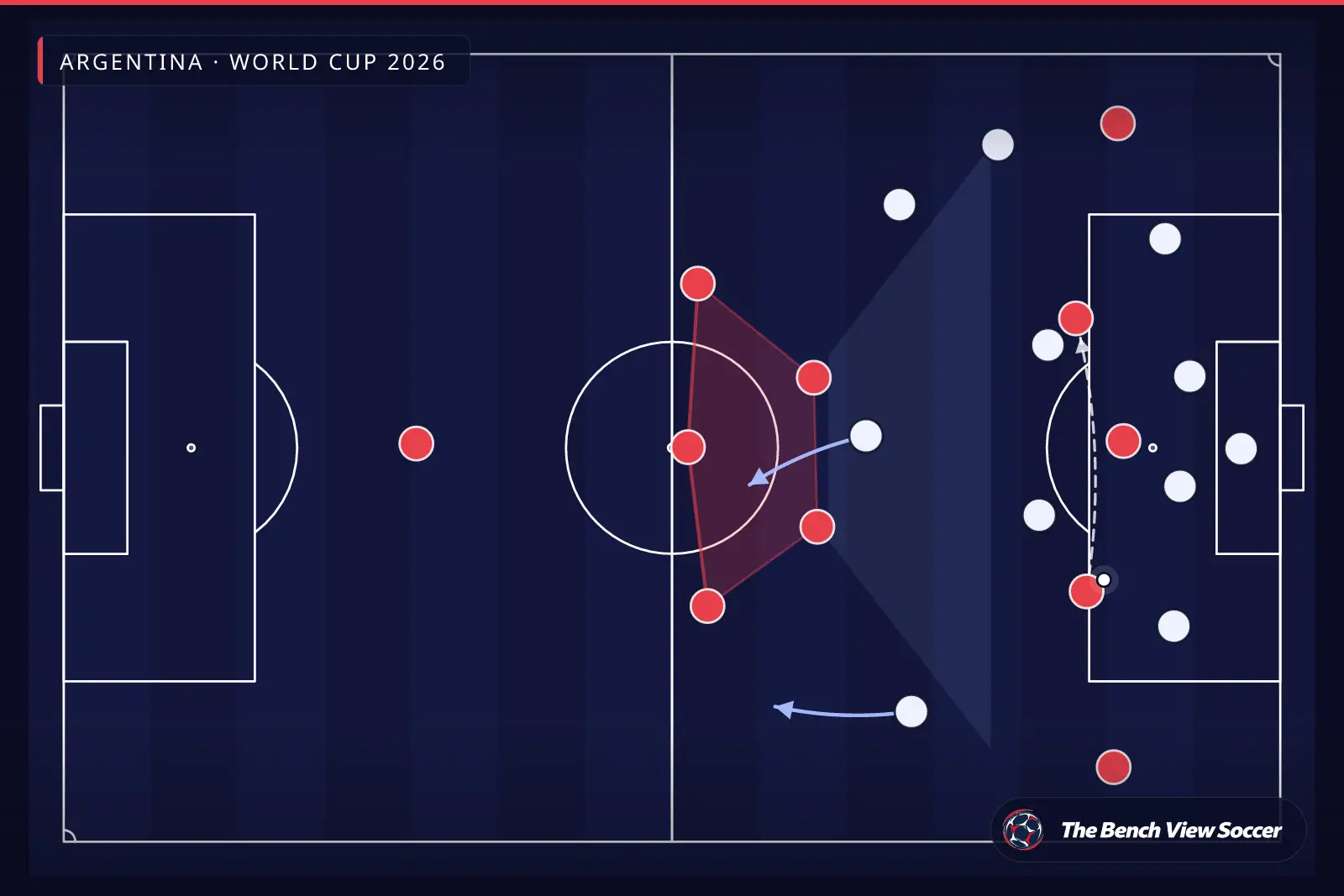
What the tactical diagram would show
Picture a simple right-sided chalkboard:
- Opposition left center-back to left-back pass: the ball is shown moving wide.
- Messi sits central-left, shading the lane to the near 6.
- Álvarez curves his run to block the bounce pass inside.
- De Paul jumps out, body-to-touchline, sealing the sideline.
- Romero steps into the right half-space, a meter inside his line, intercept path highlighted.
That’s the diagram that’s decided tournament matches for Argentina: five intelligent movements, one aggressive step, a turnover 40 meters from goal. You don’t need fireworks when you steal the ball where the air is thin.
Historical echoes: every dynasty has a stopper
Great international sides have always hidden their genius behind a stopper with timing. Italy 2006 had Cannavaro’s spring-loaded steps. Spain 2008–12 disguised Puyol’s one-man counter-stopping behind Busquets’ positioning. Germany 2014 turned Hummels’ front-foot interventions into launchpads for transitional control. Argentina’s modern version is Romero — not a sweeper in the old sense, but a stepper who lets them be brave two lines ahead of the usual national-team comfort zone.
Of course, Argentina’s talent pool now furnishes alternatives — Lisandro Martínez offers a left-footed controller, Nicolás Otamendi provided experience through a previous cycle, and younger center-backs are emerging. But the profile is the point. A defender who loves stepping into the half-space, can survive true 1v1s, and is willing to foul high when the odds demand it — that is the ingredient modern international champions cannot fake.
Cause and effect: club noise, national-team clarity
So what happens if Romero’s club environment changes? Tactically, moving into a back three versus a back four changes his daily pictures, not his national-team value. In a three, he may defend wider, engage wingbacks’ zones more, and attack diagonals with more freedom. That can sharpen his timing on wide isolation plays — good news for international football, where tournaments routinely turn into lane battles decided by wing duels. In a four, he hones the pure center-back craft: line leadership, cover angles, aggressive but contained stepping. Argentina need both. The national setup is a hybrid: a nominal back four that can look like a three in rest-defense. Romero’s comfort living between those two identities is part of his edge.
The other effect is psychological and systemic. Transfer sagas tilt headspace. But the national team does not need month-to-month training. It needs role familiarity, not club continuity. That is why Scaloni’s staff value role literacy over novelty. Whether Romero faces Serie A’s compact blocks or a Premier League track meet, the pictures that matter for Argentina — the first five seconds after loss; the press-jump on a back-pass — do not change.
Where Scaloni’s emotion meets structure
Scaloni’s tearful press moment, tactically interpreted, is not about fragility. It’s about stewardship. He has held together a delicate equilibrium through cycles, blending generational handovers on the wings with non-negotiables at the core. The non-negotiables are clear: a competitive center-back who steps forward; a goalkeeper who deters the long ball; midfielders who close doors not with sprints but with angles; a forward line that trades volume of press for quality of traps. That equilibrium produces control without chronic fatigue — the Holy Grail of tournament football.
The coach’s job on the pitch is to keep that equilibrium reproducible for seven matches in 30 days. Emotions spike because the tactical project is precise; one piece out of rhythm and the rest tilt. Romero is not a luxury in this mosaic; he’s a load-bearing beam. Scaloni knows it.
What it means for 2026: scenarios and solutions
If Romero is fit and flying
- Expect Argentina to maintain a mid-to-high block with selective sprints. Messi’s conservation model remains viable. The right-sided triangle will be the control center; turnovers in the right half-space will feed quick switches to the left where finishers await.
- Set-piece insurance improves. Romero’s aerial aggression and body positioning on second phases turn chaotic moments into throw-ins, not shots.
- Transition defense buys bolder fullback roles. Molina can underlap and overlap; the left-back can choose moments to join because the 3+2 hinge is trustworthy.
If Romero is absent or managing fitness
- Shape toggles: Scaloni could lean into a 3-5-2 out of possession to distribute stepping duties across two stoppers, mitigating the need for one hyper-aggressive center-back to do it all. Lisandro Martínez’s distribution and cover speed then become more central, while a right-sided stopper mimics Romero’s stepping in bursts rather than across 90 minutes.
- Role redistribution: De Paul’s workload increases — more emergency covers, fewer third-man runs. The right-back plays a touch more conservatively. Argentina cede 5–10 meters of territorial height to keep distances sane.
- Personnel pivot: If a young right-sided center-back emerges with the appetite to defend on the front foot, Scaloni will accelerate his minutes, but he will not ask him to be Romero. He will ask him to execute the cues: step on back-passes, foul smart at halfway, body shape to the sideline, trust Dibu.
Fine detail: the micro-skills that make it sing
Two technical habits separate Romero’s game in this context:
- First-touch steal, not block tackle: On 70-30 balls in the channel, he aims to toe the ball inside toward Enzo or De Paul, not smash through the man. It keeps the ball in play, in a zone where Argentina own bodies.
- Hip-angle shepherding: When isolated, he leans his torso inward, steering dribblers toward the covering 6 rather than the touchline. It looks like giving up the outside, but the invitation is a funnel — a higher percentage trap trigger than a foot race down the wing.
Combine those with a relentless appetite for first contact and a willingness to foul at 55 meters rather than 25, and you have the exact defensive profile a Messi-led team requires in 2026.
Counterargument: Is Argentina too dependent on one defender?
The fair critique is that no international champion should hinge on a single outfield defender. The system should be resilient enough that a next-man-up can execute the plan. After all, Dibu’s sweeping erases many sins; De Paul’s engine room covers gaps; Lisandro’s anticipation and left foot can control entire flanks; and Argentina have repeatedly won matches with varied backline pairs.
We accept the premise and still hold the conclusion. Yes, the collective can absorb absences, and Argentina’s culture of compactness will endure. But Romero’s combination of timing, temperament, and tackling angle is not replicated one-for-one elsewhere in the pool. When the margins shrink — quarter-finals, semi-finals, final — the team that controls the first five seconds after loss controls the match. That is Romero’s office. Others can share the shift; few redefine it.
The analytical bottom line
In our view, the tactical headlines around Argentina in this World Cup cycle should be laser-focused on how they preserve the right-sided chain of command that underwrites their control game. Whether club noise escalates or subsides, whether Scaloni is stoic or emotional at the mic, the football remains the same: generate turnovers high on the right, switch quickly to finish left, manage transitions through a 3+2 rest-defense, and let Messi spend his energy where it buys goals.
Romero is the hinge on which that door swings. If he is healthy and in rhythm, Argentina can press with brain and bite, sustain a higher line without panic, and keep their best player fresh for the moments that end tournaments. If he’s managed or missing, Scaloni will adapt — he has before — but the model’s elegance loses a shade of its sheen.
We can argue about transfer fees or post-match tears. The football case is cleaner.
Tactically speaking, Romero’s front-foot defending is Argentina’s competitive advantage — the invisible subsidy that funds Messi’s economy and Scaloni’s control.
That’s the verdict to carry forward. In a World Cup fought across vast distances and wild tempos, the teams that master the first five seconds after loss will write the final lines. Argentina already wrote that script once. Keeping Romero at the heart of it is how they turn a masterpiece into a trilogy.
The Bench View app
Don’t just read football — train it
Everything you read here, turned into training you can follow step by step.
Physical training at home
AI daily sessions adapted to your level and position. No equipment needed.
Tactical training courses
Step-by-step courses on positioning, pressing, build-up and decision making.
- 7 days free
- No commitment
- Cancel anytime
Free account: 2 physical sessions + the first tactical course. PRO: 7-day free trial — cancel before day 8 and you pay nothing.

More Analysis
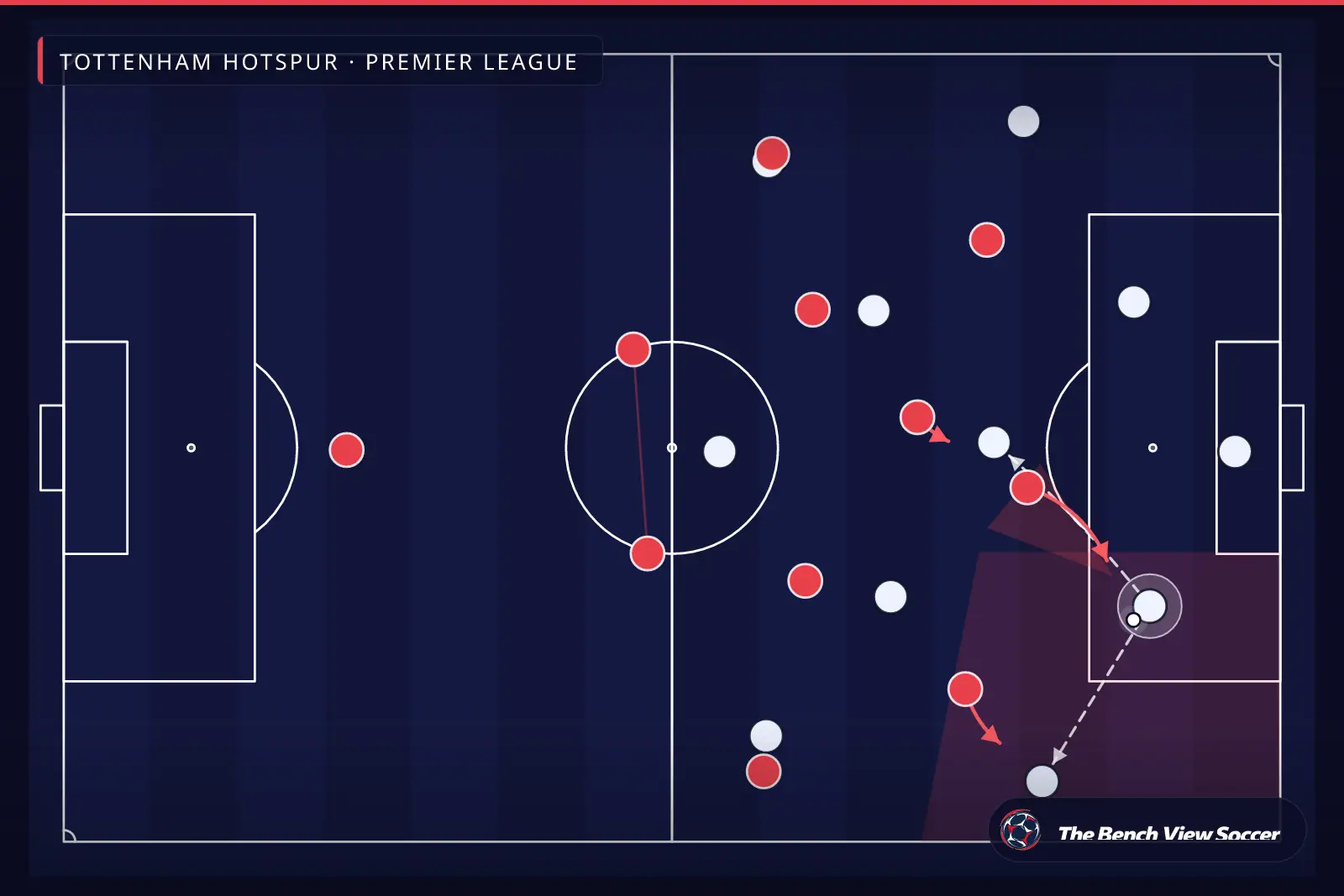
Tottenham Hotspur: How World Cup 2026 Is Warping Their Press
August 27, 2026
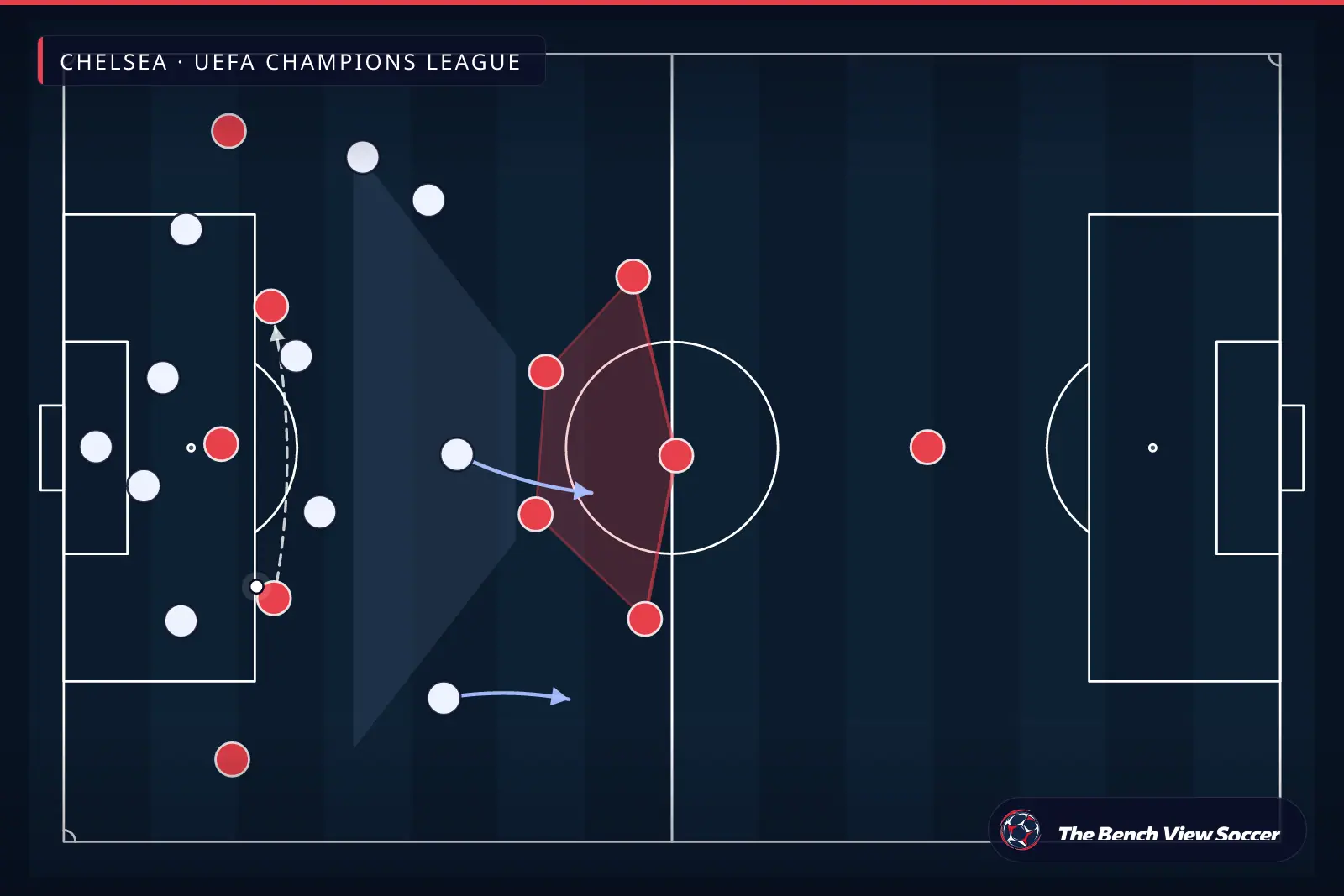
Chelsea's 3-2-5 Rest-Defense Is the Real Champions League Edge
August 27, 2026
Aston Villa's Box Midfield Is the Premier League's Real Edge
August 26, 2026
Chelsea's Box Midfield Is Fueling Chaos at the Cottage — Why
August 24, 2026