

Chelsea’s derby chaos has a blueprint — and it starts in the box
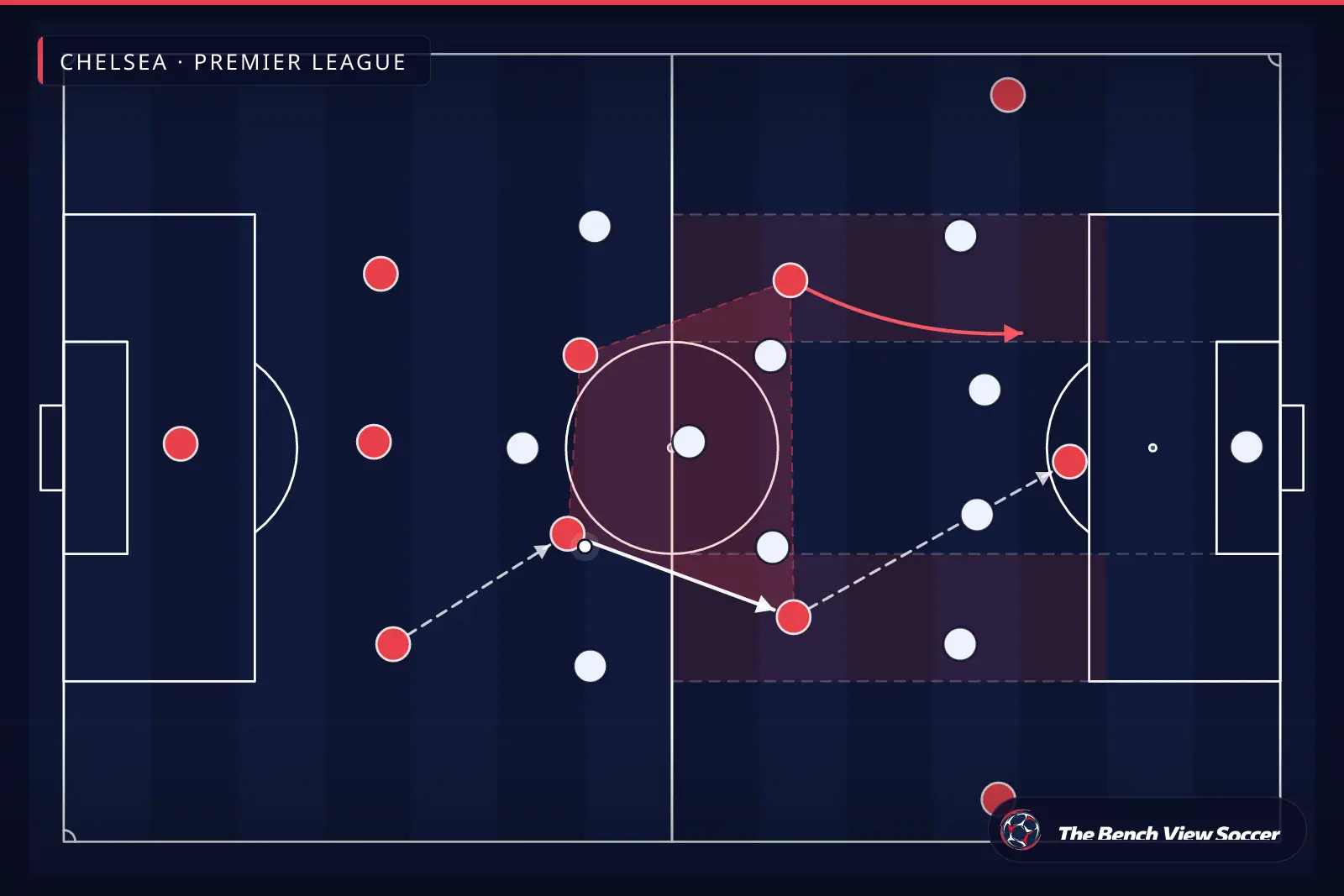
Craven Cottage erupted when the hosts halved the deficit against Chelsea — a derby swing that felt inevitable long before the ball hit the net. That moment didn’t come out of nowhere. Tactically speaking, it flowed from Chelsea’s defining feature this season: a box midfield that manufactures positional superiority in possession but leaves a fragile rest-defense skeleton the moment the first pass is lost. The volatility isn’t an accident — it’s baked into the geometry.
Here’s the thesis, up front: Chelsea’s box midfield is excellent at snapping pressure and accelerating into the final third, but the team’s default 2+3 rest-defense (two center-backs shielded by three central players) is misaligned with how they attack. That mismatch between how many players commit ahead of the ball and who stays behind it is the real reason derby matches like this one swing into end-to-end mayhem.
Tactically speaking, Chelsea’s box delivers positional superiority on the ball — but their rest-defense distances invite the very chaos they are trying to dominate.
The structure: how Chelsea build the box, and why it works
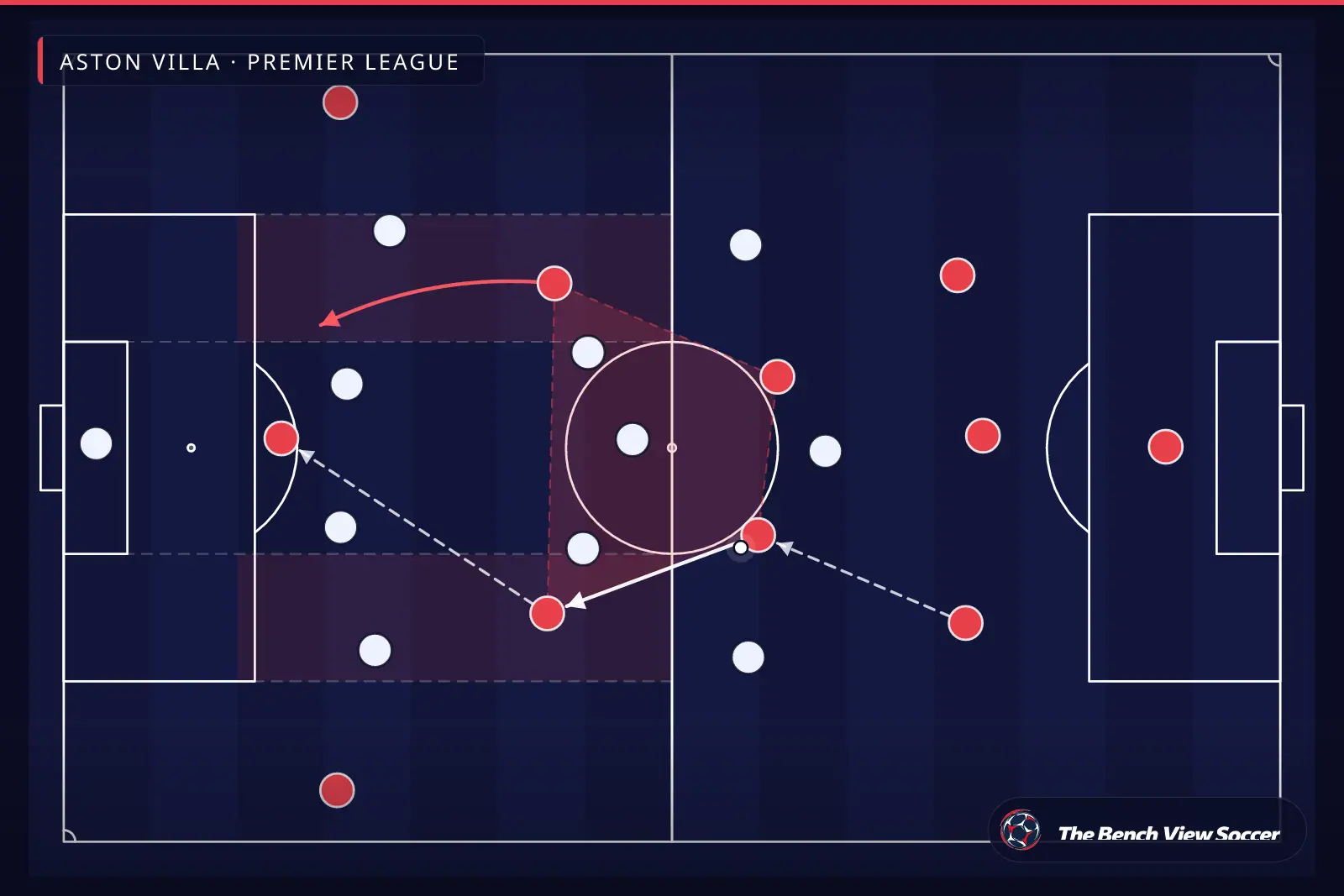
Most fans see the front five, but this is a ten-man shape. In possession, Chelsea push full-backs high and/or inside, step a No. 8 up alongside the No. 10, and form a classic 3-2-5 or 2-3-5 platform that morphs into a box midfield. The cues:
- One full-back underlaps into midfield, the other holds width or flips the pattern game-to-game.
- The double pivot staggers: one sits as the “lock” screen, the other takes higher positions between opposition lines, often in the right half-space.
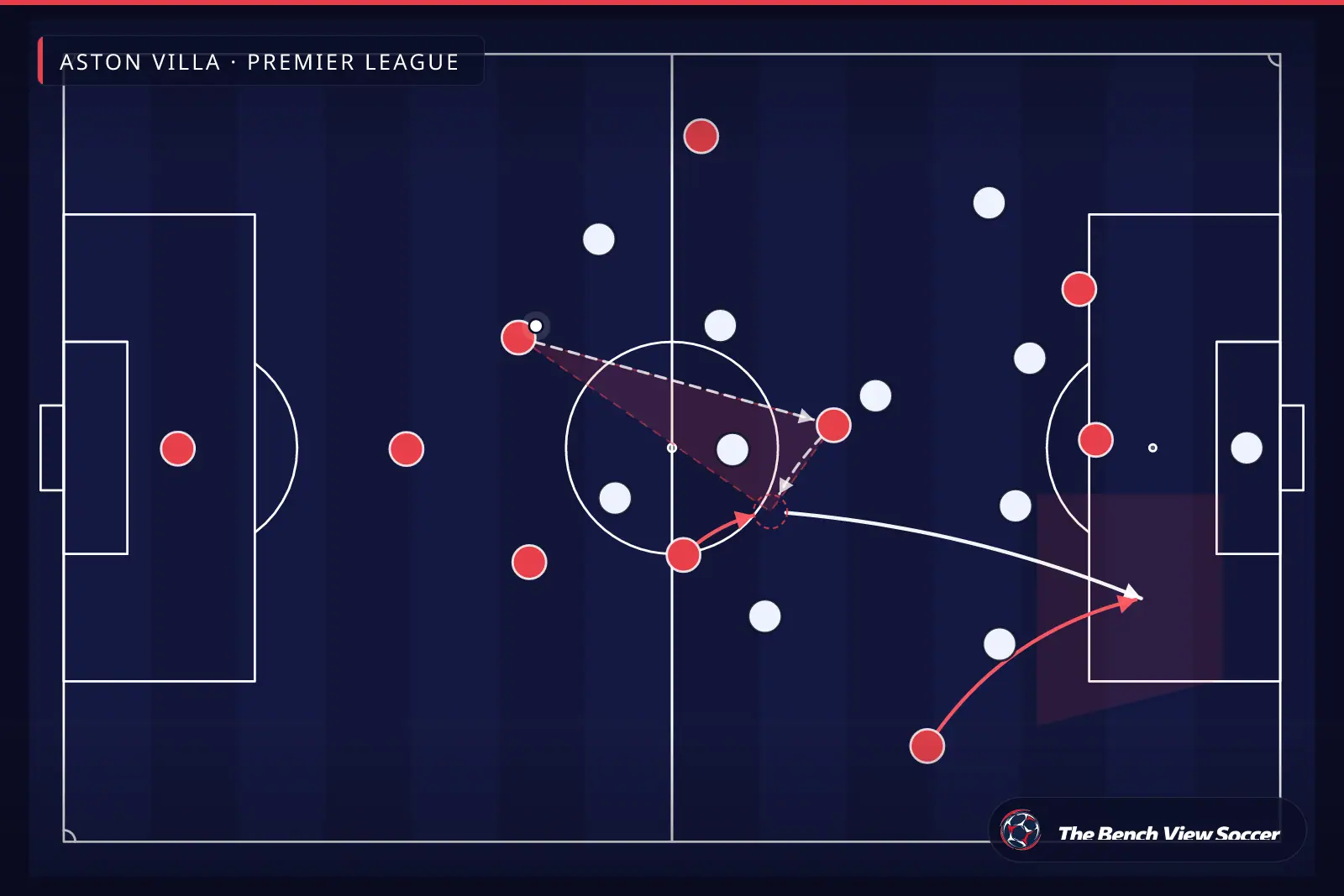
- The No. 10 plays on the blind side of the opponent’s nearest midfielder, and the near-side winger pins the full-back to open the lane for third-man runs.
Against Fulham’s typical 4-4-2/4-2-3-1 mid-block, this box does two things beautifully:
1) It forces horizontal decisions. When the near striker jumps to a center-back and the near midfielder shades the pivot, Chelsea access the vertical: a bounce pass from full-back into No. 10, then spun out to the winger for an underlapping run into the channel.
2) It shifts the pressing trigger. When opponents set traps on the touchline, Chelsea often invert the full-back and verticalize via the interior, using the No. 8 to engage the press before finding the third man. This “press then play” rhythm breaks lines and opens the right half-space for wall passes into the box.
In short: the structure generates the brave passes that turn sterile possession into incision. This is why Chelsea frequently look irresistible for 10–15 minute bursts — they create numerical superiority in the lane they want, bait the press, and accelerate.
The cost: the rest-defense gaps that make every turnover feel terminal
Here’s the trade-off. The moment Chelsea enter their box patterns higher up, their rest-defense stabilizers are stretched. The back line often remains a pair (two center-backs) with one pivot close, while the second pivot and an inverted full-back have already pushed beyond the ball to secure the interior lanes. When possession flips unexpectedly, the team are stuck in a 2+1 or 2+2 shell, not the safer 3+2 many elite possession teams prefer.
That’s where the derby chaos comes from. The distances between the nearest counterpressers and the deepest protectors are too big in transition. By the time the first wave arrives, the opponent has already hit the diagonal switch that Chelsea’s shape begs them to attempt.
Key fault lines in those moments:
- Right half-space turnover. Because Chelsea like to create triangles here — full-back inside, No. 10 receiving on the half-turn, and the 9 making a run across the front — a dispossession leaves their left side high and empty. The recovery run for the far-side winger is 40+ meters; the back two are defending in the width of the pitch.
- Pivot pinning. The screening midfielder often starts the move by stepping a line higher. If the ball is then lost beyond him, he’s bypassed, leaving a straight lane to the center-backs who are already spreading to receive.
- Goalkeeper participation. The keeper is tasked to act as an auxiliary center-back in the first phase but becomes a spectator in the second phase if the turnover happens mid-third. That adds another 10–15 meters the backline must defend alone before help arrives.
In derby rhythm — noise, tempo, duels — those distances expand. That’s why the hosts’ route back into the match felt less like an upset punch and more like the latest chapter in a structural pattern.
Pressing triggers that invite risk
If the attack-side virtues are clear, so are the triggers that flip them into danger:
- Backward pass from the right half-space to a center-back. Opponents sprint to lock the receiver’s inside shoulder, forcing play outside, exactly into the trap Chelsea initially bypassed. Now the touchline is a defender and second balls are live.
- Vertical feed into the No. 10 with closed body shape. If the 10 has to receive back-to-goal, the near midfielder can crash through. A single poor first touch becomes a fast-break with Chelsea’s highest interior already beyond the ball.
- Underlap denied, overlap sprung. When the underlapping full-back is tracked, Chelsea rotate to an overlap — but that requires a heavier, longer pass that carries interception risk. Lose it there, and you’ve vacated your central cover for the sake of wide width.
Why the Cottage amplified all of this
Craven Cottage — tight touchlines, supportive noise, a home side that are drilled to trap wide — exaggerates the risk-reward of Chelsea’s box. Three reasons:
1) The pitch corridors punish poor spacing. Because the stands sit tight, the visual cue for players is deceptive; the touchline gets reached faster than at many modern bowls. When Chelsea roll the ball sideways to bait pressure, the angle for the escape pass narrows quicker, demanding cleaner support distances than they sometimes hold.
2) Fulham’s winger-full-back tandem defends outward. Rather than pinching in, the wide pair often funnels play to the flank, assuming their central midfielders can recover inside. That’s catnip to a team that loves to break through the middle — until it isn’t. When Chelsea’s initial penetration is blocked, the out-ball is suddenly a 50/50.
3) The crowd accelerates the tempo of decisions. The home support roars at every contact; both teams attack second balls with more emotion than control. Chelsea’s plan relies on patient spacing after a regain. In this environment, they sometimes chase the first forward pass rather than re-form their box, and the structure frays.
What the striker question has to do with all of this
There’s another subplot rippling through Chelsea’s tactical picture: the profile of their No. 9. With talk swirling around a potential move for a young striker elsewhere, the coaching staff’s choice at center-forward matters less in name and more in function.
A pressing 9 who likes to run across the line complements the box. He pins center-backs, opens the far channel for the underlap, and is a live reference for third-man combinations. But if the 9 also drops deep to help form the box, one attacker less is threatening the last line. Chelsea then need their wingers to be both pinning and finishing threats, which is difficult if they’re also asked to provide immediate counterpress cover after a turnover.
Conversely, a pure penalty-box forward solves finishing but can be a passenger in the press and in link play. That pulls one of the interiors forward to compensate, weakening the protective 2+3. In that sense, the striker decision is not only about goals — it’s about how many bodies Chelsea can afford to commit ahead of the ball without shredding their rest-defense.
The learning curve: controlling chaos without losing incision
The good news: this is solvable with tweaks, not a teardown. Three interventions — all coachable — can lower volatility while preserving the attacking upside.
1) Tilt the rest-defense to a 3+2 earlier
Elite box-midfield teams “arrive” in a 3+2 before they risk the penetrative pass. That can come from:
- The ball-far full-back staying a line deeper as a third center-back until the attack-side underlap is completed.
- The ball-far winger narrowing by five yards to protect the half-space lane, ready to counterpress inside first, wide second.
- The nearest pivot delaying his line-breaking movement by one tempo, so the shape holds a five-man umbrella behind the ball.
It looks minor. It is not. Those five yards and one tempo beat change who arrives first to the second ball — often the difference between a counterpress and a footrace towards your own area.
2) Body-shape discipline for the advanced pair
The top of the box (No. 10 plus the advanced No. 8) must receive on the half-turn or not at all. Tactically speaking, Chelsea can implement a non-negotiable: if the receiver can’t see the far post on receipt, the pass is recycled. This prevents the high-value but high-risk vertical into a closed body that triggers counterattacks right down the team’s weakest seam.
3) Codify pressing triggers off their own turnovers
Chaos spreads quickest when roles are unclear. After losing the ball, Chelsea need crisp rules:
- The passer becomes the presser. Sprint at the ball-carrier’s near shoulder to block the forward lane.
- The nearest interior collapses diagonally onto the receiver’s square option, not straight ahead.
- The ball-far winger’s first three steps are inside to kill the switch, even if that concedes a retreat pass. Only then widen to re-engage the full-back.
Codifying those first actions buys two seconds — enough time for the rest-defense to re-form behind the press.
Historical echoes: Chelsea have lived this trade-off before
None of this is entirely new to Stamford Bridge. Chelsea’s modern history is a pendulum between control and punch.
- Under Antonio Conte, the 3-4-3 achieved security with a natural 3+2 base. Victor Moses and Marcos Alonso bombed on, but the outside center-backs covered channels, while N’Golo Kanté swept the red zone in front of the defense. Fewer spectacular turnovers; fewer rollercoasters; ruthless transitions.
- Maurizio Sarri offered a different kind of control through possession, with Jorginho as the metronome and a high, consistent rest-defense line. His 4-3-3 relied on positional play to avoid turnovers altogether — but when they came, the wingers’ narrow starting positions arrested counters early.
- Thomas Tuchel’s 3-4-2-1 held five lanes in possession while keeping three behind the ball by default. Even as the inside 10s slotted into half-spaces, the structure rarely devolved into a pure 2+3. The price was sometimes a lack of central presence in the last line, but the trade-off prevented derby bedlam.
Across the league, Manchester City and Arsenal have showcased the mature version of this box concept: staggered 3+2 rest-defense behind the line-breaking pair and a relentless focus on distances around the ball. Meanwhile, Roberto De Zerbi’s Brighton pressed the model to its limit — baiting pressure into the box on purpose — and lived with a degree of volatility as the cost of progression.
Chelsea now sit somewhere between those poles: embracing the modern box for its progressive power, but still honing the maturity in what happens one second after it goes wrong.
Cause and effect: why today’s pattern keeps recurring
Let’s stitch the sequence together — not as isolated, one-off incidents, but as a system flow that explains the derby’s narrative arc.
1) Build. Chelsea create the right-sided overload: center-back to inverted full-back to No. 10 between lines. The far winger pins the last line. The striker darts across the front post, threatening the gap.
2) Bait. The home side allow the vertical into the 10, shadow-covering the pivot and pouncing with the near midfielder if the receiver’s hips are closed.
3) Flip. On the duel or a loose touch, the ball spills outward. Chelsea’s nearest full-back is now ahead of the ball; the pivot is square and a beat late; the far winger is 40 meters away. The opponents’ first thought is the diagonal into the far channel.
4) Sprint. With only two behind, Chelsea must defend space and a runner at once. The center-back steps; the other covers depth. One miss-timed step, and it’s a footrace into the box.
5) Aftershock. Even when Chelsea snuff out the first wave, they often clear into pressure because structure hasn’t re-formed. The second ball becomes a shot or a foul; the stadium surges; momentum swings.
That’s why the derby felt like a rollercoaster: Chelsea’s attacking rhythm is high-risk, high-reward. When it hums, it overwhelms. When a touch slips, it avalanches the other way.
Personnel fits that could stabilize the model
Coaches can shift the dials without sacrificing identity:
- A left-footed center-back who can fizz the far diagonal to the ball-far winger reduces the need to climb both interiors into the front line. One more build-out solution, one fewer ahead-of-ball commitment.
- A winger comfortable starting narrow and underlapping (not just hugging the chalk) becomes the emergency interior on turnovers to block the central lane. Think inverted winger first, sprinter second.
- A striker who presses on the cue of the backward pass and can also act as a backboard for clearances helps Chelsea win their first post-turnover duel higher, avoiding the “sprint back” phase entirely.
- The pivot pairing needs complementary profiles: one destroyer to shrink space on loss, one director to progress. If both are conductors, the team can look pretty until the fight starts; if both are destroyers, the build loses its hinge.
Set-pieces: the hidden stabilizer
Set-pieces are often the contrarian’s friend in volatile matches. Chelsea can use them to reassert control after a wild stretch:
- Corner routines that target the near-post flick reset territory and energy. Even a defended corner forces the opponent to build from deep and lets Chelsea re-establish their block.
- Defending set-plays with a higher line and an aggressive second-ball squeeze aligns with their counterpressing DNA. If the first header is won, the rebound area becomes Chelsea’s launchpad rather than a pinball zone.
In matches like today’s, two or three well-executed dead-ball sequences could have halved the chaos by changing the geography of the game.
What it means for the season
Zooming out, this derby does not say Chelsea are broken; it says they are at an inflection point. The box midfield is not the culprit — it is the crown jewel. But jewels need settings. Without a sturdier 3+2 base behind it, the team’s best passages will keep being followed by their worst minutes.
In our view, the league season will hinge on three levers:
1) Conversion at the top of the box. If the No. 10 and advanced No. 8 can take cleaner first touches on the half-turn, Chelsea will turn more box entries into shots and fewer into turnovers. That single skill upgrade changes the game-state pattern drastically.
2) The far-side discipline of the winger-full-back duo. The courage to be five yards narrower off the ball during Chelsea’s own attacks will quietly prevent three or four dangerous counters per match.
3) The striker’s two-way clarity. Whether Chelsea commit to a pressing 9 who sacrifices touches for structure, or a penalty-box finisher who stays high and lets others do the knitting, the choice needs to be coherent with the rest-defense trade-offs. The half-measure — asking for both profiles at once — sustains the volatility.
Counterargument: chaos is a feature, not a bug
There’s a fair pushback here: volatility isn’t always bad. In a league where many mid-table sides now defend compact and counter with patterns of their own, creating a game of transitions can favour the superior athletes and technicians. Chelsea can generate more shots and more expected goals in matches that move, not crawl. In a derby especially, drawing the opponent into a punch-up can expose their defensive structure as much as it exposes yours.
Additionally, some of the derby’s swings owe as much to variance — a deflected duel, a borderline offside run not flagged, a ricochet falling perfectly — as to systemic fragility. Over a season, that luck regresses. Ironing out all volatility can inadvertently dull your edge.
This is true, as far as it goes. But it skirts the underlying point: you can choose where the volatility lives. If Chelsea move their risk from “behind the ball” to “in front of it,” they’ll still create chaos — just closer to the opponent’s goal, not their own.
What we’d change tomorrow
Given the evidence of matches like today’s, three immediate, pragmatic adjustments could pay dividends without neutering the box:
- Pre-commit the ball-far full-back to hold the back line until the first line-break. Make the third center-back the default, not the emergency.
- Script the first three passes after every regain: out, in, bounce. That scripted tempo gives the interiors time to re-form the box before the temptation of the early killer ball takes over.
- Swap the starting sides of the interiors for 15-minute blocks to change the angle of the right half-space entry. Sometimes simply receiving onto the dominant foot flips closed-body catches into open-body breaks.
Looking ahead: a different story in the return fixture?
By the time the return derby comes around, expect to see a more conservative far-side: winger narrower, full-back deeper, pivot more patient. You’ll still see the box midfield carving lanes and winning the crowd with one-touch triangles. But you’ll also see the diagonal to the far runner arrive with better cover behind it.
Personnel will evolve, too. The debate over the 9 profile — whether a pressing forward exits or a different finisher arrives — should be read through the lens of rest-defense. If Chelsea recruit or promote for that role, the question isn’t only “Who scores?” It’s “Who shortens the pitch when we lose it?”
In Premier League terms, Chelsea’s ceiling remains high. The tactical backbone is modern, repeatable, and difficult to defend when the distances are right. The floor, however, will stay creaky until those five-yard tweaks become muscle memory.
The final word
Derbies magnify strengths and weaknesses. Today, Chelsea’s box midfield did both — it sliced through pressure and then exposed its own underbelly. That’s not a contradiction; it’s a cue. The model works. The margins don’t — yet.
Stabilize the rest-defense early, demand half-turn receptions at the top of the box, and codify the first steps after giveaways. Keep the ambition, lose the avoidable sprints. Do that, and the next time Craven Cottage erupts, it’ll be for a Chelsea break that stays finished — not for a counter the other way.
Because tactically speaking, this team doesn’t need a new idea. It needs new distances.
The Bench View app
Don’t just read football — train it
Everything you read here, turned into training you can follow step by step.
Physical training at home
AI daily sessions adapted to your level and position. No equipment needed.
Tactical training courses
Step-by-step courses on positioning, pressing, build-up and decision making.
- 7 days free
- No commitment
- Cancel anytime
Free account: 2 physical sessions + the first tactical course. PRO: 7-day free trial — cancel before day 8 and you pay nothing.

More Analysis
Tottenham Hotspur: How World Cup 2026 Is Warping Their Press
August 27, 2026
Chelsea's 3-2-5 Rest-Defense Is the Real Champions League Edge
August 27, 2026
Aston Villa's Box Midfield Is the Premier League's Real Edge
August 26, 2026
Aston Villa's Third-Man Runs Are Shredding Mid-Blocks Right Now
August 23, 2026