

The trending moment — and the claim we’re making
All roads pointed to Chelsea this week: headlines about an ex-Chelsea analyst steering a Bundesliga overachiever, a tidy outbound profit that underlines a hyper-rational trading model, and a fresh Women’s Super League cycle where the club once again opens as the reference point. But the on-pitch throughline tying it together isn’t a person or a transfer. It’s a structure. Tactically speaking, Chelsea’s commitment to a 3-2-5 rest-defense — the way they arrange security behind the ball while attacking — is the quiet superpower set to matter most in the Champions League. This isn’t romanticism about systems; it’s the practical explanation for why their build-up looks calmer, their counter-press feels stickier, and their front five play with more permission.
In a news cycle that flits from staff moves to squad churn, the more consequential story is how Chelsea have knitted their phases: a five-lane occupation when they have it, and a three-plus-two lid on transitions when they don’t. That rest-defense, not any single signing, is the competitive edge that travels on European nights.
Analytically, Chelsea’s 3-2-5 rest-defense is the lever that converts high possession into low transition risk — the exact currency of Champions League control.
What the 3-2-5 actually looks like — and why it matters
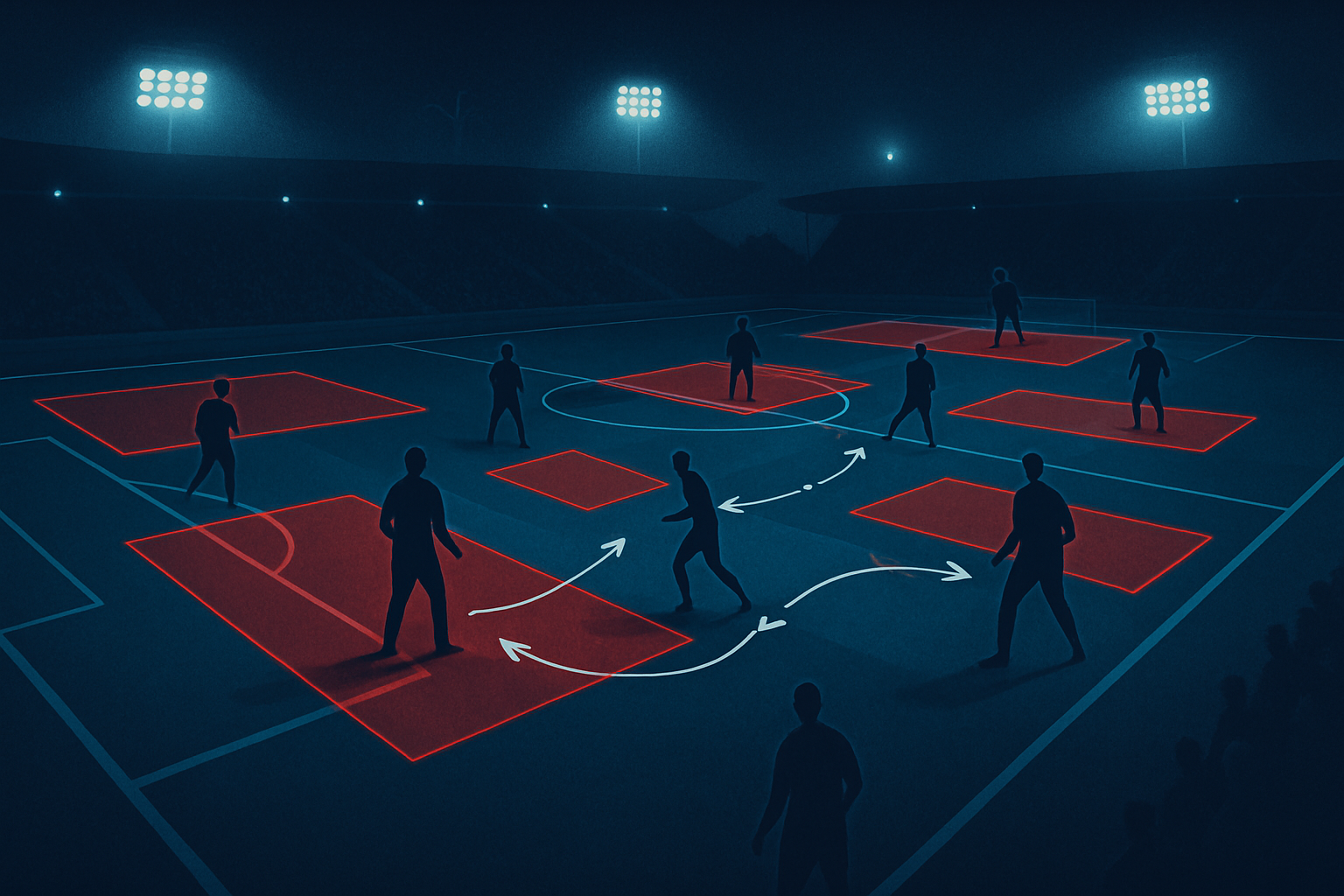
Strip the jargon: in-possession, Chelsea commit five players across the width — two wide players pinning full-backs, two interior players in the half-spaces, and a central forward. Behind them, a base of three defenders and two midfielders forms the rest-defense — the team’s emergency brake. That 3-2 shell is not passive cover; it’s the launchpad of the next action. Its job is twofold:
1) Delete the opponent’s first pass after a turnover by sealing the middle and near-side wing channel; 2) Turn recoveries into immediate, high-expectation entries because the front five are already staggered between lines.
Here’s the geometry that keeps showing up in our rewatch notes:
- Back three: one wide centre-back positioned almost as a half-space full-back, central defender holding the cover shadow on the nine, far wide centre-back narrowing to compress the vertical lane.
- Double pivot: one sits on the opponent’s 10-space (screening), the other angles to the ball-side half-space to be the first presser if possession flips.
- Front five: wing on the ball side pins the line; ball-side interior (often the most press-resistant midfielder) receives to feet between lines; central forward either occupies the near centre-back or drops to create a third-man run corridor; far-side interior stands on the blindside of the opposite pivot; far winger stretches to the touchline as a far-post constant.
Functionally, this compresses the opponent vertically while expanding the pitch horizontally for Chelsea — a paradox that breeds positional superiority. The magic is not the five lanes per se, but the “3+2” calibration behind it: distances short enough to trap, long enough to intercept.
Three recurring patterns that define the shape
- The bounce trap: A diagonal into the ball-side interior draws pressure; the return pass to the inverted full-back (or dropping pivot) is the pressing trigger. From there, a one-touch angle break to the far interior accesses the back post. It’s a 1-2-3 that turns a local overload into a far-side finish.
- The pin-and-underlap: Wide player holds width; ball-side interior makes an underlapping run into the channel as the centre-forward screens the centre-back. When the turnover happens, that interior often becomes the first counter-presser, hemming the opponent into the sideline with the wing and the near centre-back closing the triangle.
- The rest-defense “accordion”: If the attack stalls, the pivots fan to “five-and-a-half”, positioning almost equidistant to wide centre-backs. The idea is to make any clearance land in a Chelsea jersey within 10–15 metres. That accordion concertina lets Chelsea rehearse 5-second regains without lunging.
Pressing triggers: how Chelsea choose violence — and then survive it
European games are often decided by who controls the next three passes after a reset. Chelsea’s pressing scheme is keyed to specific body shapes and field positions rather than a universal high press.
- Backward pass to the goalkeeper: Winger curves the run to kill the outside, centre-forward occupies the ball-near centre-back, ball-side interior steps to the pivot in the half-space. The hidden worker here is the far pivot, who narrows ten yards to make the square pass look on and feel on — then pounces when it’s played. When it doesn’t arrive, he is still screening the lane for the long ball.
- Touch to the sideline on the full-back: Chelsea set the trap two passes earlier. The centre-back is invited to play the full-back with his back to touch. As the ball travels, the near pivot surges, the winger pins from outside-in, and the ball-side interior blocks the inside bounce. The outcome is either a throw-in to Chelsea or a hospital pass into midfield that the 3-2 spine collapses upon.
- The square-to-square: Opponents that like to “walk” you across the back line can be punished when the second square pass is underhit. Chelsea set the far winger at a narrow starting point so he can arrive on the centre-back’s blindside. If he can’t get there, the rest-defense is spaced to contest the inevitable channel clip with a back-three versus a lone runner.
Pressing is energy; rest-defense is insurance. Marrying both is the Chelsea bet.
Transitions: why the 3-2 channel map deletes counters
Modern counter-attacks don’t begin with a dribble; they begin with a first safe pass. Chelsea’s 3-2 rest-defense is designed to delete that first safe pass by staging three simple rules:
- The “no-centre” rule: The central lane between the opponent’s striker and 10 must be screened. The central defender and the deeper pivot coordinate cover shadows so that the most natural reset is removed.
- The “no-far-switch” rule: The far pivot stays shaded inside the far half-space, daring the switch but standing on the aerial lane. If the switch is played, the far wide centre-back has time to rotate under it.
- The “no-turn” rule: The ball-side wide centre-back steps through the back of a receiving 10 the moment the touch goes backwards. You concede a foul once; you steal the ball twice. It’s cost-benefit football.
Look at a recurrent moment we’ve diagrammed as a 64th-minute scenario, right half-space: Chelsea lose it after a vertical jab. Immediate counter-press comes from the ball-side interior and winger. The near pivot blocks the bounce into midfield. The ball-side wide centre-back is already on his front foot and squeezes high. Within three touches, the opponent either plays long into a three-versus-one, or into touch. Meanwhile, the far interior and winger freeze the weak side so that a regain becomes an instant cut-back opportunity at the far post. That’s rest-defense not as a safety net but as an attacking launch.
Historical context — this is Chelsea’s modern lineage, not a fad
If the structure feels familiar, it should. On the way to the 2021 European title, Thomas Tuchel’s Chelsea built in a 3-2-5 shell even when the formation card read 3-4-2-1. Wing-backs flew, interiors tucked, and the Kante–Jorginho axis served as the brakes. Go back further and Antonio Conte’s 2016–17 3-4-3 offered an earlier version: a five-lane occupation in attack and a three-man buffer against breaks. Even Maurizio Sarri’s 4-3-3 created rest-defense with a full-back tucking to build a back three when the opposite full-back flew. Different managers, same Chelsea principle: protect the middle, win the second ball, live in the opponent’s half.
What’s different now is the club-wide integration. The analytics influence that once showed up in recruitment has crept decisively onto the pitch. The trending story of a former Chelsea analyst guiding a Bundesliga upstart is no accident; the “Chelsea OS” has long trained minds to value field tilt, rest-defense distances, and repeatable pressing triggers. That intellectual export doesn’t weaken Chelsea; it validates the model that their current staff continue to iterate.
Cause and effect — why this structure is the rational response to Champions League football
Europe punishes naivety in two ways: counters through the middle and cheap turnovers forced by smart pressing. A 3-2-5 tackles both problems at once.
- Versus elite counter-attacking sides: You must either prevent the first pass or survive the first dribble. The 3-2 occupations ensure the first pass is rarely clean and the second is often contested by numbers. Think of it as designing “bad decisions” for the opponent.
- Versus elite pressing sides: You either play over or play through. The three at the back give you extra feet to manipulate the first line while the double pivot offers two receiving angles at 90° to pressure. Even if you lose it under the press, you’ve already positioned the two pivots to smother the immediate riposte.
In short, the 3-2-5 is less a formation than a probability machine. It shifts the distribution of next events in Chelsea’s favour — more regains in five seconds, more attacks starting in the final third, fewer counter-shots conceded, fewer phase resets in their own half.
Player archetypes — the human code that makes the geometry work
It’s tempting to speak only in lanes and shadows, but player profiles are the true constraints. Here’s what Chelsea have quietly optimised for:
- Wide centre-backs who can tackle like full-backs and pass like sixes. They must defend on the front foot in 30–40 metres of space and still be calm enough to disguise the straight-to-interior fizz.
- A central defender who talks. Not a highlight-reel sweeper, but a coordinator who runs the “no-centre” rule and manages the offside line in sync with the pivots.
- A double pivot with asymmetry: one destroyer-presser who can arrive on the half-turn, and one organiser with body shape open to both sides. When the organiser inverts into the back line, the destroyer steps to the 10-space — it’s a see-saw.
- Interiors who can be both receivers and releasers. The best phase-changers in this structure aren’t always breaking lines; they’re setting them — laying passes into the third-man and then spinning to be the fourth.
- Wingers who pin without touching. This sounds minor but wins games. By threatening depth and width simultaneously, they stretch timing windows so the underlap or the far-post run arrives untracked.
- A forward comfortable as a hub. The nine doesn’t just finish; he arranges defenders. The smartest movement is often a decoy check that drags a centre-back out of the line and cracks the back four into a back three-plus-one.
Set-pieces: the hidden upside of a 3-2-5 life
Live by field tilt, profit at dead balls. Spending long stretches in the opposition half brings throw-ins, fouls and corners. Chelsea’s 3-2 posture makes them faster into set-piece structures: the back three already stand at restart distances, the pivots naturally sit at “second ball” stations, and the front five are in finishing lanes. A club that spends training time on rest-defense distances is necessarily also calibrating for set-piece second phases — the same clearances, the same zones, the same reactions. It’s no coincidence that teams with elite rest-defense often trend upward in set-piece expected goals for and down in set-piece goals conceded.
Training-ground mechanics — how this gets coached
If you’re trying to spot it on the training pitch (or in our tactical diagram packet), look for three drills:
- 7v6 transition waves: Attacking five plus two pivots versus a back four plus two midfielders. The task for the seven is to lose the ball on purpose, trigger a five-second regain, and then score from the weak side within two passes. Coaching point: “No-centre, no-turn.”
- Corridor squeeze: The ball circulates from centre-back to full-back on the sideline. As the pass travels, three blues sprint: winger from the outside, interior from inside, pivot from depth. The cue is the body shape of the receiving full-back; the goal is to create a three-man lid that forces a throw-in within four seconds.
- Box midfield rondos: 8v4 with two neutrals, staged in the interior pocket between the lines. The repeating behaviour is the third-man release into the channel as the nine sets a screen. Every three wins, the defenders get a long ball to test the back three’s retreat mechanics.
Why this trend links the men’s and women’s sides
The other trending headline this week — a WSL preview framing Chelsea as the pace-setter — deserves mention because the structural logic carries across squads. Chelsea Women’s post-Hayes evolution retained the two non-negotiables: protect the middle, dominate second balls. A 3-2-5 in-possession morphology shows up there too, even when the listed formation says otherwise. The language is consistent: half-spaces occupied, a rest-defense screen preloaded, and wide threats that pin. When a sporting department speaks one tactical dialect, player profiles and recruitment echo it. It’s why a winger moving between squads knows exactly what “pin without touching” means on day one.
The trading model — why the headlines about outs aren’t a detour
Fans see a sale and think loss; the model sees reinforcement of the spine. The trending profit on an outbound striker is not a random windfall — it’s a reflection of profile coherence. A system-first club can sell a skilful piece that doesn’t lock into its 3-2-5 timings and reinvest in a player who does. That’s not commodifying footballers; it’s respecting the geometry that unlocks them. In European competition, where one misfit can snap the chain in rest-defense distances, that coherence is priceless.
Similarly, the story of a former Chelsea analyst thriving abroad isn’t cause for anxiety but proof that the processes travel. Analysis is only valuable when it becomes coaching, then habit. Chelsea’s current version is habit: rest-defense distances, pressing triggers, and five-lane timings that repeat across games and squads.
Opposition responses — and how the structure answers back
Good teams won’t accept the terms. Expect three counters:
- False nine drift to pin the far pivot: By dragging a centre-back out and sitting between pivots, opponents try to reopen the centre that the 3-2 closes. The response is communication: central defender holds; near pivot steps higher to almost create a 3-1-6 in attack; far pivot stays home, denying the long bounce.
- Double-width switches: Teams with two-footed full-backs will attempt rapid diagonal switches to outpace the Chelsea squeeze. The antidote is pre-switch starting positions. Chelsea’s far winger starts five yards narrower than tradition dictates, arriving to the switch instead of chasing it.
- Vertical dribblers through the six space: The classic destroyer of rest-defense is the one player who can run past your first presser. Chelsea’s answer is layered: ball-side wide centre-back steps, near pivot closes the lane, and the organiser pivot backpedals to the penalty arc — a triangle that slows the run long enough for the wing to recover.
A genuine counterargument — is the 3-2-5 too rigid for Europe’s chaos?
Let’s be fair: there’s a strong case that modern European ties reward flexibility over doctrine. The 3-2-5 can look like a straitjacket when:
- The double pivot gets locked on the same line and becomes easy to screen. You invite sterile horseshoes and laboured crosses.
- The wide centre-backs tire or pick up knocks. If they can’t step into midfield, the structure gets stretched into a back five plus a distant double pivot — acres open between lines.
- The nine can’t act as a hub. Without a forward who attracts and releases pressure, the front five becomes five islands.
Those are real risks. Tactically speaking, Chelsea’s counter is rotation and role plasticity: one pivot inverts into the back line to become a 4-1-5 when needed; the far interior temporarily becomes a second pivot in rest-defense to stabilise; and the winger–full-back relationship flips, with an underlap becoming an overlap to refresh pressing cues. In other words: hold the principles, flex the patterns.
Minute-by-minute fingerprints you’ll see on Champions League nights
Watch for these repeatable moments — we flag them by minute in our tactical diagram notes to help pattern-spotting during live games:
- 12' left half-space: a wall pass from the interior back to the inverted full-back triggers a diagonal to the far winger arriving at the back post. Rest-defense line already set at the centre circle.
- 29' right channel: wide centre-back steps to intercept a vertical into feet, near pivot hoovers the second ball, and the interior spins into the space left by a dragged-out centre-back. It looks like a turnover; it’s a pre-planned steal.
- 47' central lane: after kick-off, Chelsea immediately stage a three-pass pattern — switch, bounce, vertical — to test if the opponent’s 10s have the legs to press. If not, the 3-2 takes ground and the half settles in their half.
- 64' right half-space: the “accordion” reset appears — pivots fan, wings hold, and the front five wait for a mistake. Opponents often panic into a long clearance. Chelsea’s back three win it uncontested and attack again within five seconds.
What it means for the season ahead
Champions League campaigns are less about peaking and more about not dipping. A 3-2-5 rest-defense is repeatable, travel-proof football. Flights shorten your sprints; this shape shortens your distances. New opponents unfamiliar with Chelsea’s pressing triggers will hand them two or three high-value regains per tie. Conversely, familiar domestic rivals will nudge them to Plan B — that 4-1-5 in-possession morph — which still preserves the 3-2 logic on loss.
In the group stage, expect Chelsea to bank points on territorial dominance: more touches in the final third, more throw-ins won in the attacking half, fewer counters conceded through the middle. In the knockouts, expect the margins to compress: the question becomes less whether Chelsea can control space and more whether they can finish advantages at the far post and protect leads without retreating into a pure back five. The good news is that a club educated in rest-defense distances tends to manage leads with the ball, not by suffering. That’s a European habit worth having.
Comparative lens — how Chelsea’s edge stacks up against others
There are multiple European routes to control. Manchester City lean into a 3-2 with a box midfield but weight the system towards ball domination and Rhythms 2–4 (consolidation more than immediate regains). Real Madrid often accept transitional chaos, trusting elite individual defenders and ball carriers to win the coin flips. Bayern historically build a 2-3-5 with full-backs, trading some rest-defense certainty for extra central presence. Chelsea’s niche is a more orthodox, low-drama version: rest-defense as the starting point, not the afterthought. They’re not trying to perfect 20-pass moves; they’re trying to perfect the first five seconds after losing the ball.
The bench’s eye test — signs the 3-2-5 is humming
Three simple tells for fans:
- When Chelsea lose it in the half-space, do three shirts show up before the opponent takes a second touch? If yes, the distances are right.
- Are far-post runners arriving unmarked at least twice per half? That means the pin-and-underlap on the near side is generating real far-side payoff.
- Do attacking throw-ins feel like mini-corners? That’s the field-tilt dividend.
One thing the headlines miss
The noise around staff trees and smart sales is deserved, but it can obscure the core truth: structures outlast cycles. A 3-2-5 rest-defense is philosophy turned into metres and seconds. It is repeatable in August and in May. It scales across match plans and managers, men’s and women’s squads, and yes, across continents when former staff export it. The short-term gain from any sale or buy is dwarfed by the long-term compound interest of tactical clarity.
The decisive verdict
In our view, Chelsea’s season won’t be defined by whether a new signing settles on week three or week ten, or by which assistant decamps to a rising project abroad. It will be defined by how consistently they live in a 3-2-5 rest-defense world: five in attack who know their lanes, two in the hinge who read body shapes, and three at the back who collapse space without panic. That’s the European equation. Solve it, and the nights start turning quiet.
And quiet, in the Champions League, is loud.
The Bench View app
Don’t just read football — train it
Everything you read here, turned into training you can follow step by step.
Physical training at home
AI daily sessions adapted to your level and position. No equipment needed.
Tactical training courses
Step-by-step courses on positioning, pressing, build-up and decision making.
- 7 days free
- No commitment
- Cancel anytime
Free account: 2 physical sessions + the first tactical course. PRO: 7-day free trial — cancel before day 8 and you pay nothing.
More Analysis
Tottenham Hotspur: How World Cup 2026 Is Warping Their Press
August 27, 2026
Aston Villa's Box Midfield Is the Premier League's Real Edge
August 26, 2026
Chelsea's Box Midfield Is Fueling Chaos at the Cottage — Why
August 24, 2026
Aston Villa's Third-Man Runs Are Shredding Mid-Blocks Right Now
August 23, 2026