

Trending Moment, Immediate Thesis
Arsenal have just executed the kind of summer pivot that tends to look cosmetic in headlines but seismic on the pitch. With Ezri Konsa arriving from Aston Villa for a reported £55m and strong reports linking the club with an Atlético Madrid forward identified as Álvarez, the story isn’t a shopping spree — it’s a structural rewrite. Tactically speaking, Arsenal appear to be moving from a right-back-as-playmaker model to a centre-back-first build-up architecture that stabilises their 3-2 base, unlocks a more ruthless front five, and hardens rest-defense in one sweep.
In our view, Konsa is the hinge. He doesn’t just replace minutes; he changes reference points. If Álvarez follows, the knock-on is a nine-and-a-half who can press like a demon and arrive in the box like a pure nine. It’s the kind of evolution you feel in phases one and two — the quiet places where titles are usually won.
Key take: Konsa’s right-sided centre-back profile lets Arsenal keep the ball one pass longer under pressure — and that extra pass is where the front five find oxygen.
What Konsa Changes: The First Pass, The Second Touch, The Whole Picture
The first phase: a true RCB who behaves like a pressure valve
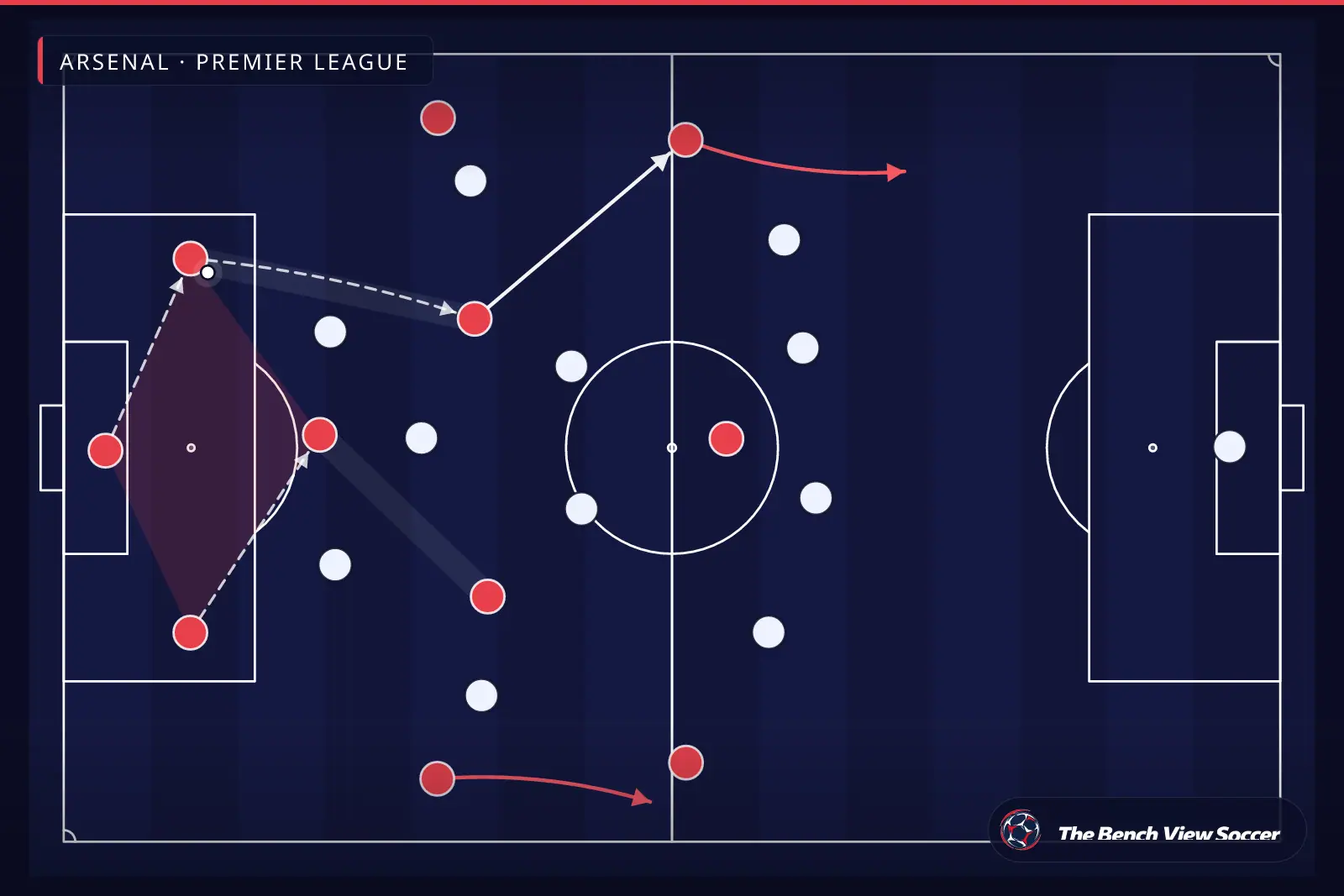
Arsenal’s best football under a positional-play model has used a 3-2-5 in possession, with the right-back stepping into midfield or joining the back three. The magic and the risk have often lived in that right channel: Ben White’s overlaps and underlaps synchronised with Bukayo Saka’s inside-out movements, while William Saliba cleaned up behind. But under intense presses, Arsenal sometimes had to choose between safety and ambition: get White high and risk being pressed into the touchline, or keep him low and sacrifice the cue that frees Saka between full-back and centre-back.
Konsa shifts that calculation. He is a timing defender — less about Hollywood diagonals, more about the micro-decisions that prevent the fire from starting. At Villa, in Unai Emery’s highly demanding structure, he toggled between right centre-back and pseudo-right-back, comfortably forming the outside of a back three in the first phase. He angles his body to show the press into zones Villa could control. For Arsenal, that means the right-sided escape route can start one line deeper and one second later, but with vastly reduced chaos.
The immediate effect is positional superiority by patience: instead of rushing the vertical into a contested right half-space, Konsa will take the extra touch to draw a winger onto his inside shoulder, play into the pivot, or drop a measured ball to the far-side full-back. It’s not conservative; it’s compounding. Each small pause increases the chance that the No. 8 or winger can receive on the half-turn with a forward-facing picture.
Half-spaces and the Saka corridor
Arsenal’s right half-space is the most policed real estate in the Premier League. Because Saka bends runs to arrive between lines and Martin Ødegaard likes to feed the narrow channel, opponents sit a left-sided midfielder on the pivot and spring the left-back at Saka’s first control. Here’s where Konsa’s profile is subtle but decisive. Instead of firing a flat pass into Saka’s feet with a defender tight, he’ll often recycle once to the pivot or reset to Saliba to alter the angle. It sounds pedestrian; it isn’t. The reset forces the opposing block to shift, briefly opening the Ødegaard lane for a third-man run or an underlap by White.
You could see the template in flashes from Villa: in games where the right winger was pinched by the touchline trap, Konsa would retreat two yards, wait for the press trigger, then slip a disguised pass through the inside lane or go long to the weak-side runner. Expect Arsenal to weaponise that same high-value pause, adding disguised in-steps to Saka in stride rather than Saka in contact.
Data shapes the eye test: what to watch
We won’t be seduced by one switch or one carry. The transformation, if it comes, will show up as a bundle of small improvements: fewer panicked clearances under a five-second press; more controlled right-channel exits; a higher share of progressive passes from the right centre-back zone compared to the right-back zone. Look, too, for the cross-field switch that lands on Saka’s run rather than his toes. The detail is the insight: a right-footed centre-back guiding the ball to the winger’s path lets the winger receive running downhill, not flat-footed into contact.
White’s Freedom, Saliba’s Calm, Gabriel’s Insurance
White, unshackled as a front-five connector
White’s best work at Arsenal has been a Goldilocks mix: not too deep, not too wide, often popping up in the right half-space as an underlapping threat. The arrival of Konsa raises an attractive possibility — White can be deployed higher and earlier in possession without breaking the safety net. With Konsa anchoring the outside of the back three, White can time his underlaps to arrive as Ødegaard receives. That gives Saka two teammates ahead of the ball, which forces the opposition full-back to make a losing choice: close Ødegaard and leave the channel, or stand White up and let Saka isolate 1v1.
There’s also the rotation potential. In games where Arsenal want to run a back three in possession with an inverted left-back, White could even start as the nominal right wing-back, stepping infield when Saka pins the left-back. The point is choice: Arsenal can set their right-lane structure to match the opponent’s pressing profile. Konsa makes those tweaks less risky.
Saliba and Gabriel: chain reactions you’ll actually feel
Saliba thrives on stability. Put a player beside him who understands the geometry of pressing triggers, and he becomes the league’s quietest problem-solver. With Konsa shading the touchline and denying the opponent’s first step into the channel, Saliba can remain central to contest first contact on direct balls and sweep second balls in the D. Meanwhile, Gabriel on the left can be a touch more aggressive stepping into passing lanes. That will matter when Arsenal compress space against low blocks and need an extra body to recycle waves of pressure without risking counters.
In short, Konsa improves three players by being himself. That’s premium roster construction: the kind of signing that raises the floor and the ceiling.
Rest-Defense: The Boring Phase That Wins Trophies
From emergency defending to preemption
Arsenal’s title bids have faltered, at times, not because of what they could do with the ball, but because of the 5–10 seconds after losing it. Rest-defense is about where your defenders are standing when you attack — not how fast they can sprint when things go wrong. Konsa’s instincts are preemptive. He will sit three yards deeper than a crowd wills him to, aligning his hips to shepherd the outlet into the touchline trap and buying the midfield two a beat to counterpress.
Think about the wing transitions that punished Arsenal on rare bad days: a direct diagonal into the right-back channel, a first touch inside, and a race into vacant grass. Konsa isn’t simply fast; he angles first — so the foot race never starts clean. He opens his body to show into traffic, leans the dribbler into the sideline, and chooses when to poke. That habit shortens the distance Rice or the rotating No. 8 has to cover to complete the trap. It’s football’s equivalent of a good goalkeeper’s positioning: half the saves are feet, half are anticipation.
Set-pieces: adding a near-post solution
Arsenal’s set-piece program has been a cornerstone of their attacking volume. Adding a right-sided aerial presence who times first contact — both in attack and defense — matters for marginal gains. On attacking corners, look for Konsa to occupy the near-post flash zone, glancing deliveries across the six-yard box. Defensively, his first-contact percentage on near-post corners will be the quiet metric of many one-nil wins. It won’t trend; it will decide points.
If Álvarez Arrives: The Nine-And-A-Half That Completes the Picture
Pressing profiles: why a mobile nine changes everything for the eights
Reports suggest Atlético Madrid are prepared to sell a forward, identified in headlines as Álvarez, to Arsenal. Without wading into the logistics, let’s talk football. Arsenal’s attack hums when the striker is both a wall and a blade — a player who can post up between centre-backs, lay off first-time, then arrive in the area as the ball gets wide. Tactically speaking, an Atleti-hardened forward with restless pressing habits is a perfect overlay with Arsenal’s double-eights.
In the press, the nine’s first job is to curve the run onto the goalkeeper’s blindside, taking away the strong foot and triggering a forced pass into a preloaded trap. Atleti forwards live on that run. Ask any top side: steal two such passes a game and you buy four shots from the chaos of the counterpress. For Arsenal, pair that with Ødegaard’s reading of the second ball and Saka’s first-touch separation, and you have repeatable chances without overcommitting full-backs.
Third-man runs and the two-speed penalty box
Arsenal often structure attacks so that the far-side winger crashes the back post while the near-side eight darts to the penalty spot. A nine-and-a-half with penalty-box timing attacks the leftover space: the zone between the penalty spot and the near post that defenders hate to check because the cutback angle is awkward. If Álvarez is that player — a striker who toggles between wall passes and last-step darts — he creates a two-speed box. Slow to link, then electric to finish. Defenders sit; the finish arrives.
Comparisons and complementarities
The obvious comparison is to Gabriel Jesus’ best Arsenal stretches: elite pressing, slippery movement, flashes of box dominance. But a forward coming from Atleti habits would likely add a slightly more vertical, more crash-and-finish vibe. That suits a team structured to restore territorial dominance after turnovers with a compact 3-2 rest-defense. The nine becomes a rebounding forward — catching the second wave while the defense is still sorting marks.
Historical Parallels: How One Defender Rewires a Superclub
This isn’t the first time a “quiet” defensive signing has quietly redrawn a giant’s map. When Liverpool introduced Ibrahima Konaté into a Trent-Alexander-Arnold inversion, the entire right flank stabilised; Trent’s creative influence rose as opponents found it harder to spring the vacated channel. When Manchester City folded Manuel Akanji into the Stones-in-midfield experiment, the hybrid back line felt preordained rather than improvised. The lesson is not that these players carried their teams; it’s that they made the best version of the system less fragile.
Arsenal have been on this journey for two seasons — flirting with a left-back inversion, then a right-back stepping in, then a centre-back deputising as a full-back. Konsa is the end of the flirtation. He is the specialist that lets you do generalist things with confidence. And if a hard-pressing, box-arriving forward follows, the front-five geometry that sometimes looked beautifully intricate but a little toothless will sharpen by default.
What It Means for Arsenal’s Season Trajectory
Match plans against different blocks
Against low blocks, the main problem is not circulation; it’s disorganisation. You need to open the lock without opening the door behind you. Konsa’s presence allows the right lane to be configured with White and Ødegaard higher, creating a consistent 5v4 in the last line and predictable cutback lanes for the far-side winger. The striker’s movement — especially if it’s that nine-and-a-half with Atleti pressing reflexes — will ensure the penalty spot remains a zone of concern for defenders, diverting eyes from Saka’s isolation duels.
Against aggressive presses, Arsenal will be happy to build with Saliba central and Konsa on the right touchline of the back three, using Rice (or the preferred pivot) to bait the first line before hitting a slap pass to the far-side full-back. The trap comes with the second ball — the instant a diagonal is contested, Arsenal’s front five collapses onto the drop zone, with the nine triggering the counterpress. Expect to see shorter possession chains, more territorial restarts, and more throw-ins earned high up the pitch — all signals of a team that plays with the handbrake off because the spare tyre is bulletproof.
Champions League away nights
European knockouts magnify detail. Away to a top side, you don’t need 20 passes to score; you need to survive one press and run clean for 50 yards once per half. Konsa’s angles — and his comfort carrying into the right half-space before playing vertical — give you the base. A tireless nine who presses in curves gives you the trap. Put them together and you get something Arsenal have chased: disarming intensity without sacrificing craft.
Arsenal Women: The Club-Wide Blueprint
Shared principles, different levers
While the men headline the transfer feeds, the women’s side enters the new WSL season with equally high expectations. The tactical through-line matters: a commitment to occupying all five lanes in possession, creating a box midfield in the middle third, and restoring volume through rest-defense that anticipates, not reacts. The trendline in the women’s game mirrors the men’s: the sides who keep their 3-2 rest-defense intact during attack tend to control games territorially and harvest second balls around the box for repeatable chance creation.
What to watch this season is not just whether Arsenal Women can beat their direct rivals head-to-head; it’s whether their structure withstands the league’s improving mid-blocks. Expect an emphasis on early underlaps from the full-backs to unpin wingers and a return to more regular cutback platforms as the No. 9 pins centre-backs rather than drifting off the front line. The same logic holds: keep possession clean in the first two passes, and the final third stops being a gambling hall.
Rest-defense and the second phase of counters
For Arsenal Women, the quiet upgrades will be in how they defend when they attack. Watch how often the team keeps a defender outside the opposition’s near-side winger during sustained pressure — a small detail that smothers the out-ball and forces clearances through the middle, where the counterpress lives. It’s a club identity play: you don’t just want the ball back fast; you want it back where the next pass is already drawn on the whiteboard.
Cause and Effect: Why This Direction, Why Now?
From artistry to inevitability
Arsenal’s best football has been elegant and choreographed. The evolution now is toward inevitability. The lesson from recent title races is brutal: if your Plan A is excellent but fragile, Plan B can’t be a different plan. It has to be the same plan with different stabilisers. Konsa is a stabiliser who doesn’t reduce ambition. He retains the “free the winger” logic of the right lane while minimising the volatility of how you get the winger the ball.
The Álvarez link fits the same logic upfield. Arsenal have too often had to choose between a striker who presses and a striker who finishes in rhythm. The nine-and-a-half archetype collapses that choice. Press to earn the chaos, then arrive to finish it. That’s not a bet on vibes; it’s a bet on systems producing advantages three passes later.
Micro-Tactics: The Plays You’ll See Again and Again
The walk-out and whip
Picture the right-side walk-out: Konsa receives facing his own goal, opens up, tempts the winger, takes two touches out, and feeds Ødegaard inside the nearest midfielder’s cover shadow. Ødegaard, one touch to White underlapping, who whips first-time into the corridor of uncertainty. It’s a three-pass automaton, built on the confidence that turnover risk on pass one is near zero.
The baited switch
Arsenal invite the pressure to the right, then use one of two exits: the lofted diagonal to the left winger isolated 1v1, or the flat punch through the pivot into the right half-space. Both exits depend on the first receiver remaining composed long enough to move the pressing block. That’s Konsa’s superpower: he delays without dithering.
The near-post double
On set plays, look for a double near-post movement: the nine darts to front post to drag the marker, Konsa arrives a step later to meet the glancing zone. It’s an old trick that never ages — and it’s exactly the kind of 5% edge a contender rides from winter to May.
The Counterargument
There’s a fair challenge lurking: is Arsenal over-investing in the back line at the expense of pure chance creation? After all, possession teams can drift into sterile dominance, and adding a control-first defender might nudge them further that way. There’s also the question of profile overlap: with White, Saliba, and Gabriel already elite, does Konsa create a logjam that unsettles rhythms rather than clarifies them? And if Álvarez arrives, is there enough penalty-box gravity to terrorise deep blocks week after week, or does the attack risk a surfeit of facilitators?
These are legitimate tactical worries. The rejoinder is structural: Konsa doesn’t shackle; he redistributes freedom upward. By turning panicky first passes into stable second passes, he should increase, not reduce, the number of touches your final-third stars receive in advantage. As for the logjam, rotation is a feature, not a bug, in a season chasing domestic and European trophies — and tactical flexibility (back three morphs, defender-in-midfield rotations) is only real if the pieces are all comfortable outside their “primary” boxes. On the nine, a striker with Atleti habits typically marries pressing with direct box arrivals. If the finishing doesn’t pop immediately, the pressing will still generate high-value regains. It’s a floor-raiser with a ceiling worth betting on.
What Success Looks Like By November
Simple signals, not shiny comps
By the first international break and into November, the signs won’t be Instagrammable. They’ll be the quiet numbers: fewer long clearances from the right-back zone; more successful entries into the right half-space after three-pass sequences; an uptick in cutback chances created from the right channel. You’ll know it’s working when Saka starts receiving on the run more often than with a man on his back, when White shows up one rung higher without leaving a siren blaring behind him, and when Saliba looks like he has all day to make simple decisions.
And if Álvarez joins? You’ll see the finishing move we call the two-speed box: striker stationary to link, then a jab-step dart to the penalty spot. Three times a game, minimum. If those end in tap-ins, the title math changes. If they just end in second balls, the title math still changes — because the shot volume rises and the opponent’s clearances get shorter and sloppier.
Why This Will Teach Us Something Bigger About Arsenal
Teams in love with their choreography can become precious. The best evolve toward simplicity without abandoning detail. Arsenal, right now, look like they’re simplifying the hard parts (first-phase exits, rest-defense positioning) to complicate the fun parts for opponents (who picks up the underlap, who tracks the nine, who doubles the winger). That’s not just smart; it’s mature.
The Final Word
Transfers are easy to headline, hard to integrate. Tactically speaking, Konsa is the rare signing who changes the conversation without changing the music. He reframes Arsenal’s right side from a question mark into a platform. If the Álvarez move happens, it adds a top-layer function that this squad has craved: a striker who starts presses and finishes moves with equal conviction.
Put it together and the logic is clean: calmer first passes, braver second touches, more dangerous third actions. That’s how title challenges survive bad days and how European campaigns travel. The details will live in the right half-space and the near-post lane. The verdict, if this clicks, will read like inevitability.
The Bench View app
Don’t just read football — train it
Everything you read here, turned into training you can follow step by step.
Physical training at home
AI daily sessions adapted to your level and position. No equipment needed.
Tactical training courses
Step-by-step courses on positioning, pressing, build-up and decision making.
- 7 days free
- No commitment
- Cancel anytime
Free account: 2 physical sessions + the first tactical course. PRO: 7-day free trial — cancel before day 8 and you pay nothing.
More Analysis
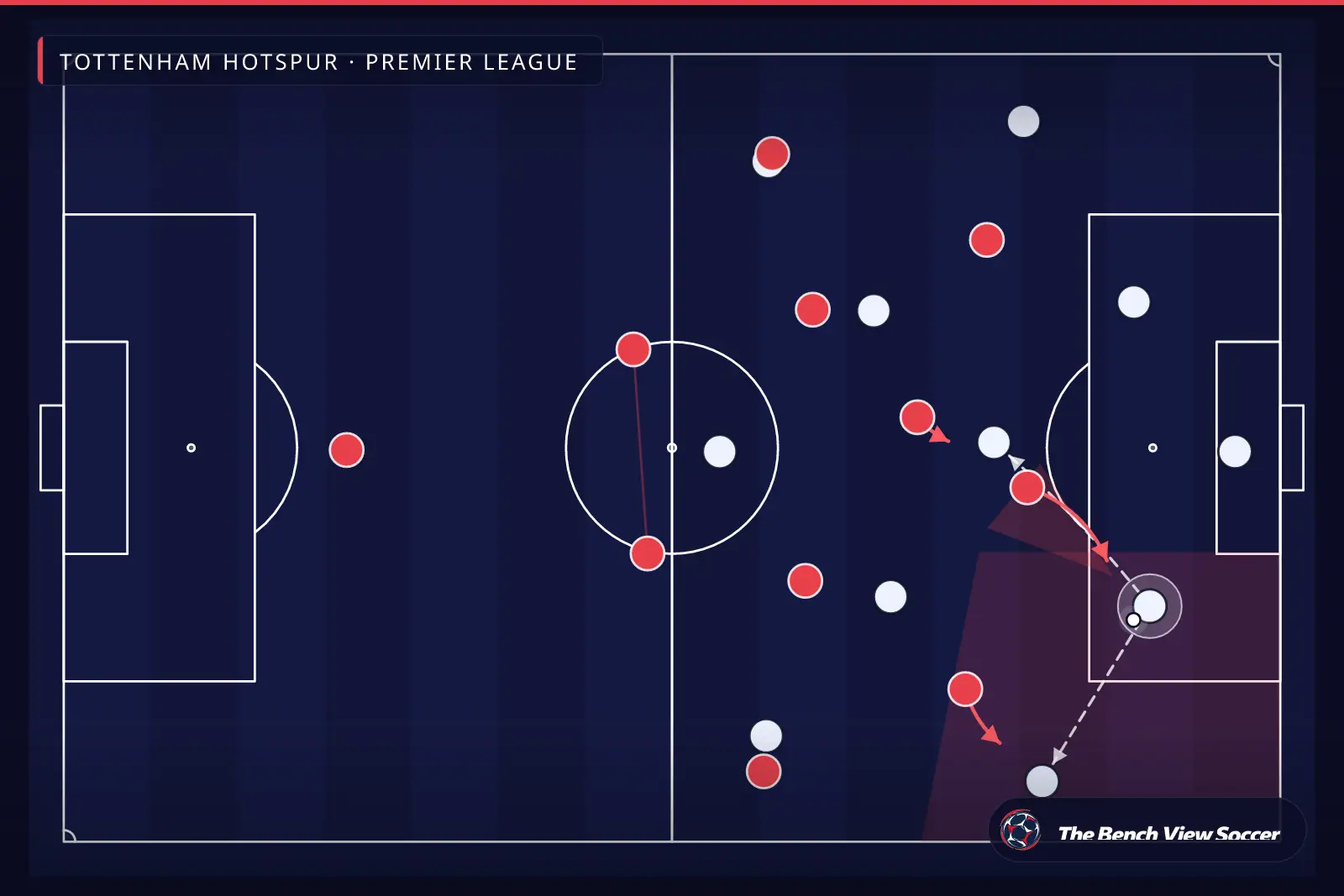
Tottenham Hotspur: How World Cup 2026 Is Warping Their Press
August 27, 2026
Chelsea's 3-2-5 Rest-Defense Is the Real Champions League Edge
August 27, 2026
Aston Villa's Box Midfield Is the Premier League's Real Edge
August 26, 2026
Chelsea's Box Midfield Is Fueling Chaos at the Cottage — Why
August 24, 2026