

The trending moment — and the thesis we’re willing to be judged on
Within hours of the Premier League’s opening headlines — Arsenal unveiling a new midfield maestro, sceptical noise around Liverpool’s back line, Newcastle United bracing for a rebalanced engine room, and the market buzzing about Brazilian talent — the tactical plot for England’s top flight is already clear: the league is pivoting from raw speed to spatial control. The race in 2026, tactically speaking, will be defined not by who runs the fastest in transition, but by who engineers the cleanest access to the ball’s most valuable zones — the half-spaces — and who stabilises behind the ball with an elite rest defence.
That is why, in our view, Arsenal’s midfield upgrade matters beyond North London; why Newcastle’s choices at the base of midfield reverberate through their wide press; and why Liverpool’s familiar issues are not about a high line per se, but about the distances and timings that feed it. The Premier League is being decided one supporting angle at a time.
Tactically speaking, the Premier League’s new competitive edge is the ability to generate repeatable third-man access in the half-spaces while locking a 3+2 rest defence behind the ball — control and protection in the same phase.
Arsenal’s new core and the rewiring of pressing lanes
Let’s start where the trendline points: Arsenal acquiring a press-resistant, tempo-setting hub changes how opponents can even choose to press. Whether you label the role as a deep-lying playmaker, a high-volume shuttle-eight, or a hybrid six-eight, the impact is the same: the Gunners can now create more reliable double pivot structures in build-up without sacrificing verticality between the lines.
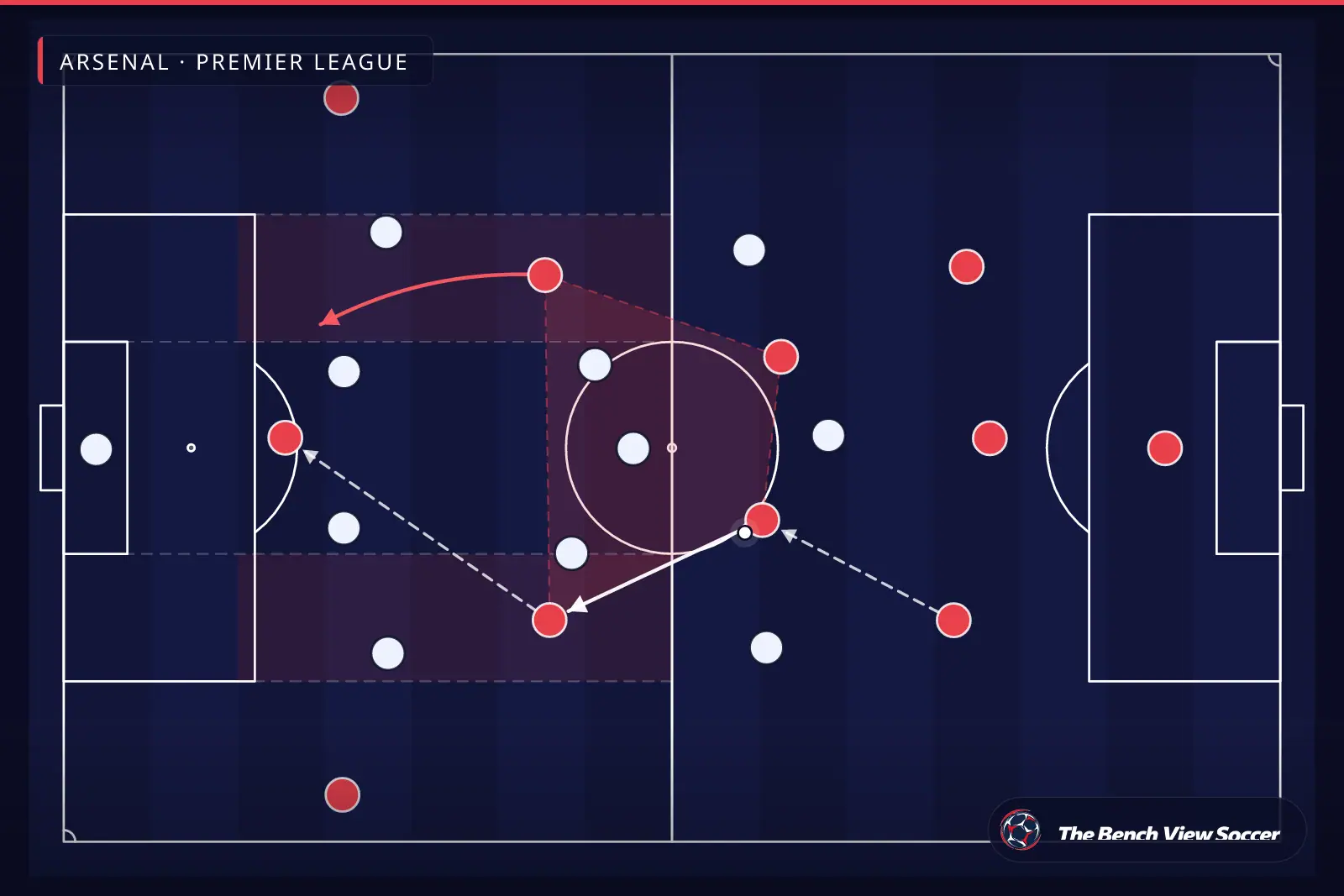
The essential mechanic is simple yet devastating: stagger the six and the near-side eight at different depths, create a releasing angle for the full-back, and manufacture a third-man run through the inside channel. In the 1st phase, the nearest centre-back tempts the first presser. As the opposition nine jumps, Arsenal’s six drifts outside the cover shadow — not to receive on the back foot, but to draw the second presser. The free player is not the six; it is the eight popping into the right half-space as the third man.
We can visualise this with a positional diagram: a 2-3 base (CB–CB, FB–6–FB) invited pressure; then a rotation flips it into a 3-2 (FB tucks in, near CB steps wider), with the eight checking late into the seam. This is the action that “rewires” pressing lanes — it forces opponents to decide which poison they prefer: jump with their winger (opening the switch) or sit and watch the eight receive on the turn.
Micro-patterns that make a macro-trend
Three micro details convert this from a plan on paper to a plan that bites in the Premier League:
1) Timed release from the full-back: The full-back doesn’t invert early. He waits until the winger’s hips are committed to the press, then tucks to form the second pivot. That half-second delay is the difference between a block that shifts as one and a block that splits into two layers. This is the trigger for positional superiority.
2) Body shape of the oncoming eight: The new maestro’s presence allows Arsenal’s right eight to receive with hips open to both the far-side and the inside channel. The ideal first touch is angled forward-and-out rather than flat-and-in; it baits the near six to jump, which frees the striker dropping into the lane — the next third-man — or the underlapping full-back.
3) Underlap vs. overlap as a read, not a preset: When the winger holds the width, the full-back underlaps into the half-space only after the winger’s marker bites. When the wide defender stays narrower, the winger carries inside and waits for the full-back to overlap. This adaptive exchange makes Arsenal’s right flank unpressable when the first pass is clean.
Because the fulcrum can operate under contact — receiving on the turn with a man on his back and popping the next pass off his third touch — Arsenal are suddenly less reliant on perfect rhythm. They can survive “messy” sequences and still emerge through the first two lines. For opponents, that means the classic high press becomes a trade-off loaded with risk: a missed timing no longer yields just a retreat to shape; it yields a running three-on-three against a broken line.
Rest defence: protection that travels with the ball
All of this matters because Arsenal’s attacking structure now bakes in their defensive insurance. Watch the spacing behind the ball: as the eight steps up to receive, the inverted full-back locks in next to the six, creating the 3+2 behind the first wave. The far-side full-back tucks into the last line, the near-side centre-back holds a diagonally staggered position to kill the straight clearance. That is the modern rest defence — a living, moving net that travels upfield with possession.
In practice, look for three cues:
- Ball-side CB not on the touchline but two yards inside it, ready to pounce forward on a clearance into the channel.
- Six and inverted full-back at different heights but on the same vertical lane, closing both the direct bounce pass and the carry route.
- Far CB stepping to the half-space, not simply staying narrow, to pre-empt the diagonal escape switch.
With a pivot who can handle pressure, Arsenal don’t need five in the last line to feel secure; they share the security load across a dynamic three plus two. That is how pressing resistance pays for itself twice: once when you break the press, and again when you stifle the counter within three seconds of losing it.
Newcastle United’s midfield balance and the cost of control
Newcastle’s rise has been powered by physical superiority in duels combined with quick, vertical pass-and-sprint patterns — in effect, controlled chaos. The choice they face, tactically speaking, is whether to tilt toward greater on-ball control at the base or stay wedded to the high-velocity transition game that overwhelmed so many mid-table blocks.
Here’s the rub: a ball-secure anchor enables the Magpies to set their traps higher — to compress the pitch and press on their terms. But it can also slow the tempo their wide attackers thrive on. In recent seasons, Newcastle’s right-sided triangle (right CB–RB–right eight) has been their pressing metronome. The right eight jumps on a sideways touch, the full-back triggers on a poor body shape, the CB steps into midfield on a back pass. It’s a walk-you-to-the-corner routine that culminates in a turnover near the flag.
Shift the balance toward a slower, more patient circulation and that routine changes. The right eight may check to feet more often, the full-back may invert earlier, and the centre-back’s step into midfield becomes a distribution move rather than a pressing lunge. You gain security but risk losing the shock value.
However — and this is crucial — control and aggression are not mutually exclusive. With the right six, Newcastle can improve their rest defence (better spacing behind the ball) and still unleash their ball-winners at the right moments. The key is sequencing: invite the first press, break it with a wall pass, then trigger the wing’s vertical run off the back of that broken structure. A sturdier base buys more aggressive off-ball actions because the distances in the inevitable defensive transition are shorter.
So if Newcastle adjust their midfield profile, look for these knock-on effects:
- The wingers’ starting positions one or two meters wider to pin the full-backs and give the central progressor bigger lanes.
- The right CB stepping into the six space more often to create a brief 3-2 platform, freeing the six to roam into the right half-space and play forward-facing.
- Fewer early crosses, more cut-backs after the underlap — because the team is arriving in the box as a unit rather than in twos and threes.
What this buys, especially in the Premier League’s tempo oscillations, is predictability. You don’t need to be faster than opponents; you need to be first to the second ball. Better spacing makes you first more often.
Liverpool’s defensive story isn’t the high line — it’s the distances
There is a reflex to point at Liverpool’s high line whenever a ball drops over the top. In our view, that’s asking the wrong question. A high back four is only as exposed as the distances in front of it. When the six is late to the first duel, when the near eight is the wrong side of the ball, when the full-back has jumped without the winger covering — the back four are suddenly defending a 30-meter void instead of a 15-meter net. The optics scream “line too high”; the reality whispers “cover shadows and lane ownership misplaced.”
What tends to go wrong looks like this:
- The first pressing trigger (CB’s second touch or full-back set-pass) is read, but the press arrives half a beat late. The opponent plays out, and Liverpool’s near eight is now running toward his own goal. The six must decide: step to the ball-carrier or protect the space. Any indecision, and the through-ball arrives precisely when the centre-back is stepping forward rather than dropping.
- The winger presses inside-to-out but doesn’t tuck in behind the full-back. The opponent’s eight receives on the half-turn. Now the far CB is dragged wider by fear of the diagonal switch, stretching the line horizontally. A ‘high’ line becomes a thin line.
- On turnovers, the nearest player jumps to counterpress but the second man is too far to compress the ball. The first duel is lost cleanly, not messily. When a counterpress stings, it is because the first duel turns a clean attack into a scramble; when it misses, it gifts a runway.
These are solvable with sharper synchronisation, not a philosophical abandonment of the high line. The fix is in the middle: shorter distances between six and eights, clearer assignment of the half-space holder in rest defence, and a keeper-coordinated drop line that bends earlier when the press is late. Expect Liverpool’s training week to be filled with triggers like “if near eight is the wrong side, full-back holds and six screens; if near eight can’t screen, centre-back drops on touch two.” Simple rules, big outcomes.
Why Brazil keeps showing up in Premier League shopping lists
It’s not just fashion. It’s function. The Premier League wants players who can handle chaos without forfeiting control. Brazilian academies, by and large, produce exactly that profile in midfield and attack: carriers who can receive under pressure with a man on their shoulder; defenders who step into midfield with trim touches rather than panic clears; forwards comfortable with inside-lane receiving and underlapping runs.
There’s a technical through-line worth calling out:
- Press resistance learned in tight rondo-like drills where the third man is a habit, not a tactic. You see it when an eight receives side-on, feints to open his hips, then releases the ball at the last micro-angle to the advancing full-back.
- The timing of transition runs — curved sprints that keep the ball in view — rather than head-down straight lines. This matters in the Premier League where carrying speed is punished by well-coached rest defences; curved runs bend around the net rather than into it.
- Centre-backs who are comfortable defending space because they grew up stepping forward aggressively — the DNA of the modern 3+2 rest defence that the top six depend on.
When rumours surface about Brazilian stars moving or being loaned into the league, the tactical why sits underneath the transaction talk: these profiles shorten the build-up, protect the team shape, and create more moments where the final third is attacked with balance. In a season where the margin between a clean exit and a panicked hoof may be the difference between 70 and 85 points, those habits are gold.
Historical context: from gegenpress to game control
We’ve seen tectonic shifts before. The 2016–2019 era was the Premier League’s pressing arms race — a sprint up and down the pitch, with managers teaching their sides to seize the game in eight-second windows. Then came the control counterrevolution — possession with protection — codified by a wider adoption of inverted wingers, deeper full-back roles, and box midfields. By 2023–2024, the 3-2 base in build-up was no longer novel; it was the default among elite clubs.
What makes 2026 different is the refinement: teams are not just forming a 3-2; they’re modulating it on the fly. The premier managers now ask their six to drift into the half-space in possession to form a temporary 2-3; then, when the ball reaches the winger, the near full-back collapses inside to reform the 3-2 behind the ball. Layers, not lines. The goals are smaller but more numerous: not one killer chance from a 40-meter sprint, but six equally good chances created by endlessly winning the right to receive between the lines.
The closest precedent is the late 2000s Spain-Barcelona axis: total command of the ball’s location plus brutal counterpressing. But today’s Premier League adds more vertical bite — the carry-and-release winger is valued as much as the patient circulator. The synthesis is what makes the current wave so hard to stop.
Cause and effect: why this happened now
Three systemic forces push the league toward control-with-protection:
- Congestion and fatigue: With schedules dense and recovery at a premium, teams need the ball to do more of the running. Control football spreads the work across positional play rather than lungs and legs.
- Data feedback loops: Clubs track pressing outcomes at a granular level — not just PPDA, but pass angles, reception body shapes, and pass-out-of-pressure success rates. The findings are blunt: clean exits count double, because you create your attack and shrink the opponent’s when you keep the structure intact.
- Market realities: The scarcest profiles are those that link phases — sixes who can cover ground and pass under pressure, eights who can ride contact and still choose the right angle, full-backs who can invert and defend the channel. When one lands at a title contender, the rest recalibrate.
What it means for the season
For Arsenal: expect more patient kills. The Gunners will draw teams out, especially mid-table sides emboldened to press. The difference from prior seasons, in our view, is resilience. When the rhythm is broken by a spiky away day, the press-resistance at the hub prevents the entire game model from wobbling.
For Newcastle: their ceiling depends on how well they keep their pressing menace while adding security. If the six can toggle the team between 2-3 and 3-2 without losing verticality, Newcastle can live in the opponent’s half and suffocate the middle third. If not, they’ll feel caught between gears: too slow to be chaotic, too loose to be controlled.
For Liverpool: the defensive conversation should be recentered on distances. If they compact the lanes in front of the back four and time their triggers with one beat more discipline, the high line becomes a platform, not a liability. It is not a personnel panic button; it is a spacing problem with a spacing solution.
For the rest: the mid-table disruptors will decide whether to mirror the big clubs’ box midfields or to go asymmetrical — for example, a false full-back on one side and an old-school overlapper on the other. Both can work. The common denominator is rest defence: you cannot survive in this league without a rehearsed 3+2 behind the ball when you attack.
The counterargument — and why it won’t derail the trend
A fair pushback says the Premier League is still a transitions league. Vertical killers win titles: the winger who can run in behind every five minutes; the striker who turns a 40–60 ball into a penalty; the full-back who switches off for a moment and is punished by a 60-meter switch. If you over-index on control, you blunt your best weapon: speed.
We don’t dismiss this. In moments, pace and chaos will still decide big games. But the league’s best are learning to bottle chaos on their own terms — create it after they’ve stacked the deck. Break the first press cleanly and then go vertical; trigger the counterpress only when the second man is in the lane; run when the opponent’s distances are at their longest. That is not the end of transitions; it is the industrialisation of transitions. If your control does not have a switch to “go now,” you’re vulnerable. But the smartest clubs are installing that switch in training every week.
What to watch on the pitch — concrete tells
If you want to spot whether the control era is arriving at your club, look for these repeatable tells, minute-to-minute:
- The six checking wide of the first presser but releasing on the third touch, not the first. That delay drags out a second marker and opens the third man.
- The far full-back holding a diagonal lane, not hugging the far touchline. He’s already part of rest defence before the ball is lost.
- The winger receiving to feet with the near eight underlapping on the blindside. If the pass goes to the winger’s back foot, expect a bounce pass; if to the front foot, expect a carry and a cut-back. Read the foot, read the pattern.
- A centre-back stepping into midfield only after a back pass has been forced by the first press. That means the jump is on a set press, not a punt.
- Substitution patterns that preserve the 3+2 behind the ball. If the coach changes a full-back, he also tweaks the six’s depth. These are small nudges that maintain the platform.
Training ground implications — where the season is won Monday to Friday
All this control is constructed on the training ground. Expect to hear more about:
- “Arrival timings” for the eight — drills where he starts a meter deeper than usual to practice hitting the seam after the first line has been fixed.
- Keeper-led line drops — the keeper calls the drop when the press is late, not the centre-back nearest the ball. This creates earlier, cleaner coordination.
- Directional rondos with a protected pivot — training the six and the inverted full-back to feel pressure and still pop the ball into the interior at the last possible second.
- Second-ball funnels — designed to ensure that if the first duel is lost, the zone around the duel is crowded by two teammates at different heights. You lose the tackle but win the sequence.
Arsenal’s specific upside: triangles that travel
Back to where we started: the “rewiring” isn’t just metaphoric. It shows up in the chalkboard. Arsenal can now build right-to-left triangles that travel up the pitch without breaking shape. Begin on the right touchline (RB–R8–RW), invert the full-back to pair with the six, then bounce through the nine to open the left winger on the far post. Same triangle, different vertices — the picture moves but the relationships remain. This portability of patterns is the mark of an elite possession side in today’s Premier League. It’s not about how many patterns you have; it’s how many zones each pattern can reach.
When that is humming, the knock-on effect is defensive serenity. The near eight finishes actions on the outside of the box, not in it; the far eight turns into a second six in rest defence, not a bystander; the wide centre-back gets to defend forward, not chase backward. Momentum becomes a product, not a feeling.
Newcastle’s hinge moment: keep the edge, find the calm
If Newcastle split the difference flawlessly — retain their right-flank aggression while layering in more assured build-up — they become a nightmare. Opponents won’t know whether to squeeze high (and risk the bait-and-switch into the half-space) or drop off (and endure wave after wave of cut-backs). The hinge is the six’s bravery under pressure and the eights’ timing to arrive, not stand, in the seam. If those pieces click, St James’ Park becomes an altitude test — lungs and brains required.
Liverpool’s path: fix the first five seconds
There is a world in which Liverpool’s high line becomes their advantage again — if the first five seconds after a turnover are owned by red shirts. That requires the six and near eight to share one non-negotiable: the ball-side half-space belongs to whoever can get there first, not to whoever was “supposed to” hold it. Solve that ownership, and the centre-backs stop defending in emergency mode.
Linked to this is the keeper’s aggression as a sweeper and director. A keepers’ early shout of “drop two!” on the opponent’s second touch saves panic drops later. It’s choreography, not heroics.
Season outlook, reduced to a single lever
Strip away the noise, and 2026 in the Premier League looks like a single lever on each touchline:
- Can you create clean third-man access to the half-space at will?
- Can you hold a moving 3+2 behind the ball without calling everyone back?
If yes and yes, you will look composed and cruel. If you can only answer one of those, you’ll play many game states you don’t like. If neither, it’s a long winter.
The decisive, quotable verdict
We opened with a thesis and we’ll end with it sharpened. Arsenal’s midfield evolution matters because it illuminates the league’s broader reality: the Premier League title race will be won by the side that treats pressing as a puzzle of passing angles, not a sprint, and defends transitions as a spacing task, not a last-ditch race. Newcastle’s choices at six, Liverpool’s calibration in front of their high line, and the league’s attraction to Brazilian-bred control all point to the same truth.
In our view, 2026’s Premier League belongs to the teams who can generate third-man superiority on demand and carry their 3+2 insurance policy 60 yards up the pitch — control that creates chaos, and protection that never leaves home.
That’s the blueprint. The rest is repetition.
The Bench View app
Don’t just read football — train it
Everything you read here, turned into training you can follow step by step.
Physical training at home
AI daily sessions adapted to your level and position. No equipment needed.
Tactical training courses
Step-by-step courses on positioning, pressing, build-up and decision making.
- 7 days free
- No commitment
- Cancel anytime
Free account: 2 physical sessions + the first tactical course. PRO: 7-day free trial — cancel before day 8 and you pay nothing.
More Analysis
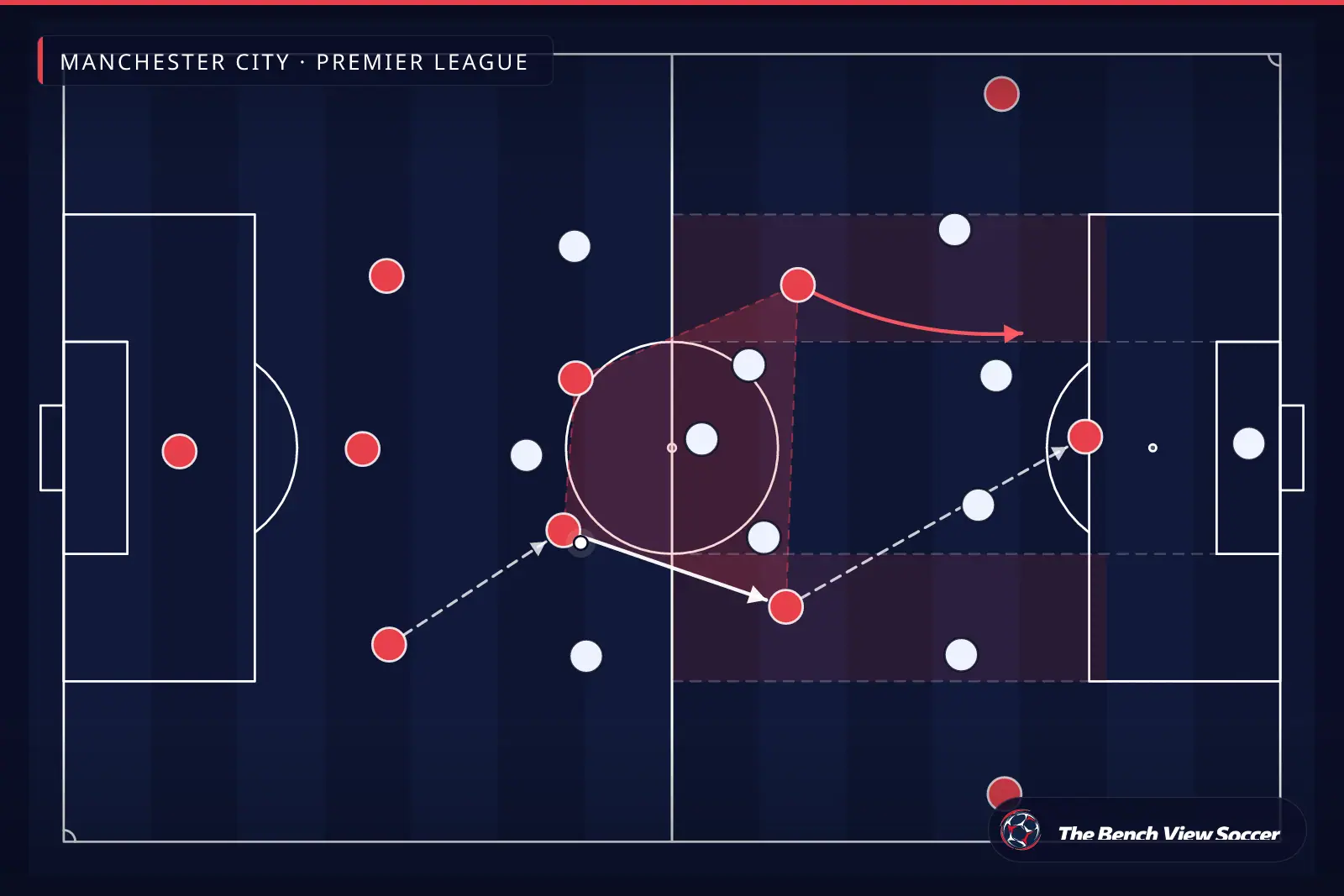
Manchester City: How Gakpo Unlocks Pep’s Left Half-Space Engine
August 25, 2026
Liverpool's Inverted Trent Unlocks Salah vs Newcastle's Press
August 23, 2026
Liverpool's Salah Succession Plan: How Yankuba Minteh Fits Slot
August 21, 2026
Hull City, Fulham and Ipswich: How the Box Midfield Changes Them
August 18, 2026