

The trending moment — and the tactical thesis
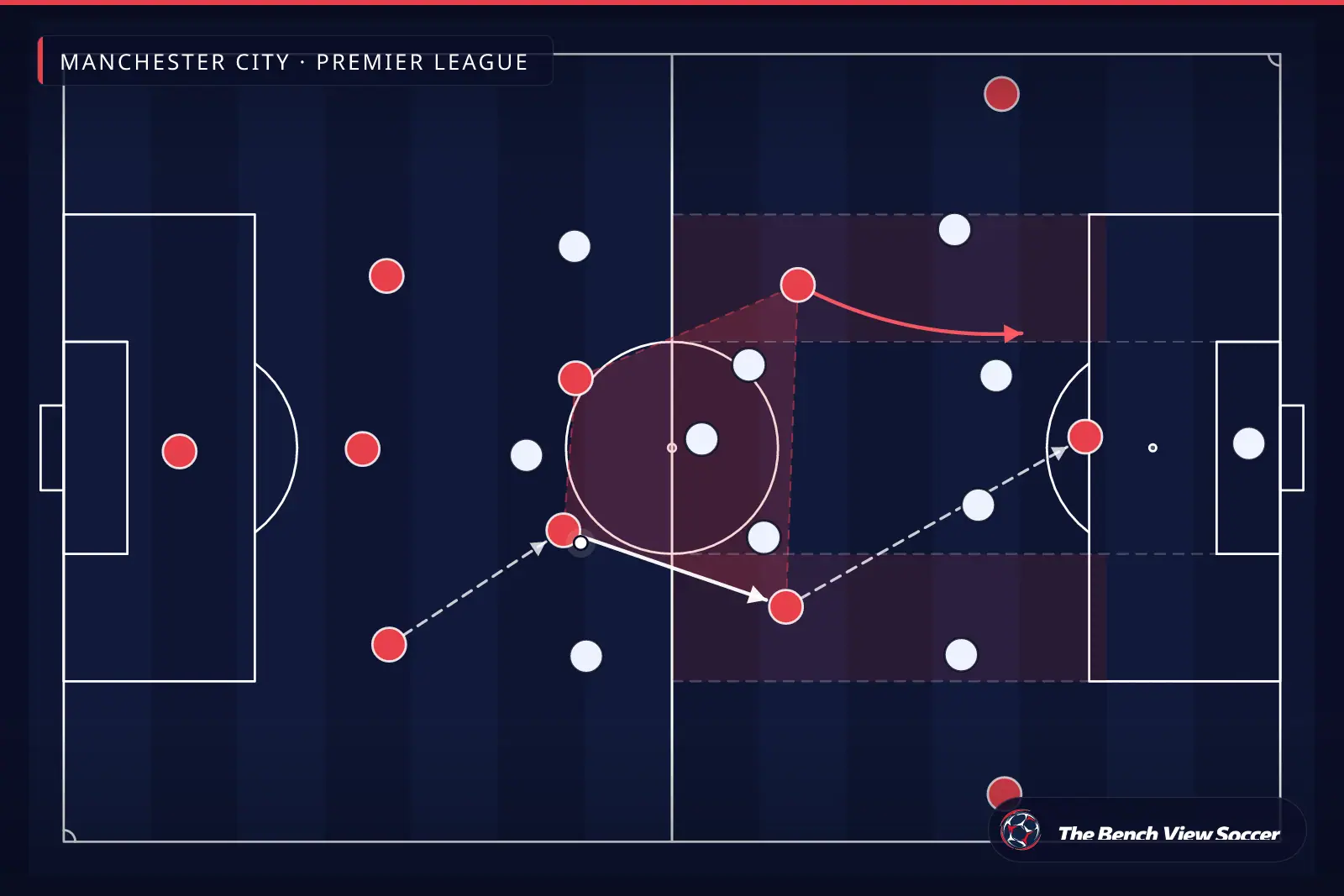
Reports linking Manchester City with Cody Gakpo are everywhere. That noise matters less than what it signals: tactically speaking, City look set to rebuild the engine room of their attack — the left half-space — for the next phase of Pep Guardiola’s 3-2-4-1. In our view, the real story isn’t a name on a rumour round-up. It’s that Pep is targeting a multi-function forward who can be a connector, a second striker, and an out-ball under pressure. That profile doesn’t just add depth; it rewires how City control matches when opponents shut the middle and race them in transition.
Put simply: if City move for Gakpo (or a player like him) and a ball-secure interior, they’re not topping up talent — they’re tuning the system to solve two specific problems that appeared in the last two seasons: how to preserve positional superiority when Rodri is man-marked, and how to create repeatable advantages in the left channel without sacrificing rest-defense.
Tactically speaking, Manchester City’s chase for a left half-space specialist is a system upgrade, not a star signing: it’s about restoring control without losing vertical threat.
The problem Pep is solving
City’s recent dominance has been built on structural control: a back three plus a double pivot (the famous 3-2 rest-defense) behind a box midfield. Yet the margins have narrowed. Elite opponents have learned to muddy City’s rhythm with two recurring schemes:
1) Man-oriented midfield traps: Shadowing Rodri at first pass and over-committing the near-side 8 to deny the turn, forcing City to funnel possession wide to a winger under pressure. This baits a cross or an isolated duel — lower-value actions compared to box combinations.
2) Transition races: When City commit numbers to break a mid-block, their rest-defense must kill counters in two passes. If the left interior is a pure controller (receive–recycle), the team maintains shape but can lack the third-man runner to pin the far CB and create separation for Haaland.
Across stretches of the last two seasons, City have oscillated between control and chaos. With a dribble-first winger, they break lines but invite broken-play games that dilute the value of the 3-2 base. With a possession-first left interior, they keep the ball but sometimes blunt the final action. The tension is familiar to Guardiola-era watchers: how to keep the box midfield humming while still producing back-post tap-ins and cutback xG.
Why the left half-space is the hinge of City’s 3-2-4-1
In Guardiola’s modern structure, the left side must do three jobs at once:
- Occupy the left half-space between the opponent’s right 8 and right CB to create positional superiority without being easily trapped against the touchline.
- Act as the third man in wall-pass sequences with the left-sided center-back/full-back (often an inverted full-back or a center-back comfortable stepping in) and the nearest pivot. The micro-timing of that third-man run decides whether City break the mid-block centrally or are pushed wide.
- Provide weak-side penalty-box threat. When the right side tilts the play — Foden/De Bruyne dictating from the right half-space — the left 10 must arrive at the back post or the cutback point. Without that, Haaland becomes the only penalty-box magnet and can be doubled.
Historically, David Silva was the left-side metronome who also arrived in the box. Later, Jack Grealish brought ball security and tempo control, while Bernardo Silva flexed between glue and thrust. None of them, however, offered the pure two-footed, diagonal-carry plus striker-like finishing package that a peak left 10 can deliver in this version of City’s shape.
Cody Gakpo’s tool kit — and the Guardiola translation
Gakpo’s club résumé highlights a repeatable pattern: he’s at his best initiating from the left channel, receiving on the half-turn, and driving diagonally into the box. Tactically speaking, three traits map cleanly onto City’s left 10 role in a 3-2-4-1:
1) Half-turn reception under pressure
Gakpo’s comfort receiving on the half-turn in the left half-space is the gateway to everything else. When the near-side 8 shows to feet and is pressed from behind, the ability to turn away from pressure while staying central — rather than being nudged towards the touchline — preserves access to Rodri and the far-side 10. That’s how City retain positional superiority in tight lanes.
2) Diagonal carries that bend the back line
A defining Gakpo habit is the inside-out dribble that forces the right CB to step. In Guardiola’s patterns, this is a pressing trigger: the moment the CB steps, the left-sided defender (think Gvardiol or an inverted full-back) can underlap, creating the classic third-man chain — Gakpo inside, bounce to Rodri, slip to the underlap, cutback. The value is not the dribble itself but the chain reaction it produces.
3) Back-post and penalty-spot arrivals
City’s right-sided tilt produces a constant weak-side invitation. When the ball swings through Foden/De Bruyne to the right wing, the far left 10 must go from connecting to finishing. Gakpo’s striker instincts — arriving late on the blindside — amplify Haaland rather than crowd him. The aim is two penalty-box magnets, not one, and thus a harder choice for a back line: double Haaland and concede the cutback seam, or shift as a unit and open the switch.
How the build-up would look — three repeating patterns
Pattern A: The wall release
Illustrative sequence (left channel). Ball with left CB. The left 10 (Gakpo archetype) shows between the lines. A defender jumps. One-touch bounce into double pivot (Rodri + partner). Immediate vertical split to the underlapping left-back/LCB stepping beyond the first line. Outcome: cutback zone accessed without a risky one-v-one. This is the low-variance route to the byline that City love in big games.
Pattern B: The far-post pin
Right tilt engaged. Foden receives in the right half-space and shapes to combine with the right winger. The left 10 starts in a pocket behind the opponent’s right 8, holding the blindside. As the cross or cutback lane opens, he darts to the penalty spot while Haaland drags the near CB across. Outcome: a free-finishing lane or a square ball to Haaland after the defense collapses.
Pattern C: The collapse-and-switch
Opponents overcommit to trap the left side. The left 10 absorbs the press and recycles to Rodri. Because the press has tilted, the far-side 10 is free. Switch, isolate, finish. The key is a left 10 who can hold the press long enough to draw numbers without losing the ball. That’s why a carry-first, two-footed player matters: he draws a crowd but has the frame and technique to survive it.
Where a ball-secure interior fits — the “control toggle”
Separate reports suggest City are also closing in on a mid-priced, press-resistant interior. Even if the names fluctuate, the tactical function is consistent. Guardiola likes a control vs. chaos toggle: pair a dribble-and-finish left 10 with a ball-security presence in the first line of the box midfield, so he can dial the tempo without changing the overall structure.
Think of it as two dials:
- Dial 1 (Left 10): verticality and penalty-box gravity.
- Dial 2 (Left pivot/right interior): press-resistance and recycle frequency.
When both are on, City can bend the block at will, then settle immediately into the 3-2 rest-defense on loss to prevent transitions. If the “interior” is really a pseudo-pivot who can receive on the turn, he doubles as Rodri insurance when rivals apply man-marking. That keeps City out of the trap where the first pass is predictable and the wide release becomes a turnover magnet.
Historical echoes — how Guardiola tweaks profiles to reset the system
We’ve seen this movie before, in different costumes:
- 2018–19: The arrival of a left-footed right winger (Mahrez) added a new crossing and isolating dynamic when teams overloaded the central lanes. That signing looked like luxury, functioned like a system fix.
- 2021–22: Grealish as a left glue-player turned high-variance wing attacks into possession ladders. It was a response to Premier League teams accelerating transitions.
- 2022–23: Haaland didn’t just bring goals; he altered opponents’ back lines. His gravity created larger pockets for the 10s. City rebuilt around a box midfield and a 3-2 platform to protect transitions.
- 2023–24: The four-centre-back era with an inverted full-back pushed control to an extreme. City strangled games in the middle third but sometimes lacked the extra penalty-box runner when the right side led creation. Insert a left 10 with striker timing, and the picture balances.
Each time, the headline name disguised the micro-problem Pep was actually solving. The noise says “transfer battle.” The pattern says “positional tweak to maintain advantage in the era’s dominant defensive schemes.”
Out of possession — what the left 10 changes in the press
Guardiola’s high press snaps into a 4-4-2 or an asymmetric 4-2-2-2 depending on the second striker. A left 10 with reach and awareness can improve three pressing details:
- Cover shadow on the opponent’s 6: By receiving on the half-turn in attack, he’s already standing in that lane when the ball turns over. City can show an inside pass while baiting the switch they’re prepared to jump.
- Angled pressure to the right-back: A left-sided presser who understands when to arc the run locks the ball on one side and sets traps for the touchline press. That’s how City win throw-ins high up — the most underrated attacking restart in elite football.
- Rest-defense handover discipline: The left 10’s backward press can slot onto the nearest pivot while the left full-back or LCB holds depth. This stops the counter at source without breaking the 3-2 spine.
The knock-on effects for City’s core cast
Haaland
A genuine left 10 with finishing instincts reduces the triple-team problem. Instead of marking Haaland plus the cutback zone with one shifting line, defenders must now pick: stay tight to Haaland and concede the penalty-spot runner, or track the runner and open the near-post seam. Either choice is bad. Expect a rise in low, flat cutbacks and pulled finishes — the shots Haaland buries without backlift.
Foden and the right 10
With a left 10 capable of arriving to finish, Foden on the right can be even more of a quarterback — receiving in the right half-space with license to hit diagonal darts or underlaps. His gravity increases because the far-side threat is real. The geometries Foden loves — inside-out passes through a thin channel — become safer when the left 10 pins the far CB.
Grealish vs. Doku — the wing balance
One natural question: where does this leave City’s left wing? The answer is the “toggle.” Against low blocks, Grealish’s control plus a left 10’s penalty-box running reduces randomness while preserving threat. Against open games or aggressive full-backs, Doku’s verticality on the right with a left 10 who can finish turns City into a two-lane motorway. This is not a redundancy; it’s a toolkit.
Bernardo and Alvarez
Bernardo remains the universal adaptor — the right interior who becomes the extra pivot when opponents target Rodri. A left 10 with striker timing doesn’t displace him; it liberates him. As for Alvarez, his hybrid 9/10 minutes become more strategic. He can be the pressing forward in games where City want to trigger early, or the right 10 in matches where overloads, not sprints, win territory.
Gvardiol and the left-sided defender
City’s left 10 thrives when the left defender can step in confidently. With Gvardiol (or a similar profile) able to drive inside and underlap, the third-man route is always armed. The finer point: the left 10 must read when to vacate the lane to let the defender “be the 8” for a beat. That interchange is where Guardiola drills timing more than patterns.
Minute-by-minute: how the left 10 flips common game states
Scenario 1 — 12th minute, mid-block standoff
City circulate in a 3-2. The opponent’s right 8 steps to Rodri’s shoulder. The left 10 checks down a line, receives on the half-turn, and takes the first touch diagonally inside, inviting the right CB to bite. He bounces into Rodri and immediately spins behind. Rodri splits the lines to the underlapping left-back. Cutback to the penalty spot, finish. It’s not the spectacular dribble that kills the block; it’s the sequence he unlocks by turning under pressure.
Scenario 2 — 64th minute, right half-space overload
City tilt right. Foden and the right winger run a two-v-two. The defense floods the ball-side. On the far side, the left 10 ghost-runs between full-back and CB. When the cross flashes across, he is arriving, not standing. It looks simple. It’s not. The timing is elite: he must be level with the ball line when it’s struck to finish first time or square to Haaland after the collapse.
Scenario 3 — 78th minute, transition trap
A clearance spits out to the opponent’s 6. The left 10’s cover shadow denies the turn. He angles his run to the right-back, wins the throw. City reset in the final third without expending the center-backs. This is the quiet side of the role that adds 4–6 dangerous possessions per game.
The data lens — what to watch if the move happens
Without needing proprietary numbers to see the trend, a few public-facing metrics signal whether the integration works:
- Left half-space touches per 90 (zone 14 to inside-left channel). If City’s left 10 is functioning, this number rises without an equivalent rise in turnovers.
- Progressive carries ending in a pass inside the box. The carry-to-create chain is the City tell, not take-ons for their own sake.
- Weak-side xG. Track shots created or taken by the far-side runner when the ball starts on the right. If that ticks up, the geometry is working.
- Turnovers forced in the central third on the left. A small bump here would confirm the pressing contribution that keeps the 3-2 spine intact.
Why this move now? Cause and effect
Timing is tactical. Opponents have normalized two strategies against City: extreme man-marking on the first pass and variable-width back lines that compact zone 14 while conceding space to the wide lane dribble. City can, and do, win those games. But they win them with more variance than Guardiola prefers. Adding a left 10 with inside finishing and press-resistance reduces variance at the spot where rivals currently invite it.
There’s also a season-shape factor. In a congested calendar, Guardiola has increasingly turned to role duplication — not just positional duplication. He wants two players who can do “left 10 who finishes,” two who can do “right 10 who quarterbacks,” and two who can do “interior who becomes extra pivot.” That’s how you keep the structure when you rotate by function rather than by shirt number.
Counterargument — do City really need another left-sided attacker?
The fair pushback is that City already have players who can function in the left half-space: Grealish for control, Bernardo for glue, Alvarez for arrival. Why chase another? Two points in response:
1) Profiles, not positions. None of the current left options combine half-turn press-resistance, diagonal carry gravity, and back-post finishing as a first instinct. They can approximate it in phases, but not as a default setting.
2) The marginal gain at City is the whole point. When every other team is one player short, Guardiola looks for half-players — someone who fills the 0.5 gap between two roles. That 0.5 across 50 matches is a title swing.
There are risks. If the left 10 cannot match City’s pressing choreography, the system leaks transitions. If his first instinct is to drive when the cue is to recycle, the box midfield jams. And there’s adaptation: even elite forwards have needed months to internalize Guardiola’s timing. These are real caveats, and they set the bar for any incoming profile.
What it means for the Premier League landscape
Arsenal and Liverpool have built blocks specifically to deny City’s central flow. A left 10 who can create inside the block, finish at the back post, and support the 3-2 in transition forces both rivals to redraw their risk maps. Do they keep shadowing Rodri if the bounce-and-spin on the left is lethal? Do they shrink the middle if the far-side runner punishes the swing? The best tactical moves don’t just add options; they delete an opponent’s favorite choice.
Training ground priorities — the non-negotiables
If City do add a left 10 of the Gakpo mould and a press-resistant interior, Guardiola’s staff will hammer three details:
- First-touch orientation: open to the pitch, not the touchline. That preserves both pivots as options and invites the underlap rather than the overlap.
- Third-man synchrony: the cue for the underlap is the defender’s step, not the ball. The left 10 has to fix the CB with his body shape, then vacate on time to let the defender run through.
- Loss reaction into the 3-2: immediate backward press from the left 10, pivot slides across, far 10 pinches into the second line. This is how City maintain rest-defense without panic sprints.
If not Gakpo, the archetype still matters
Transfer markets are fluid. Names flip. But the positional logic doesn’t. Whether City sign Gakpo or a similar left 10, the tactical objective is consistent: add a left-sided connector-finisher who survives pressure, bends back lines with diagonal carries, and arrives to score while locking in the 3-2 behind the ball. If another profile emerges — perhaps with more pressing bite or more aerial threat — the principle holds. Guardiola is future-proofing the half-space where elite teams now dare City to play.
The verdict
In our view, the rumour mill has accidentally spelled out Guardiola’s next evolution. Manchester City don’t just want another attacker; they want to retool the left half-space so that control and verticality can coexist in every game state. A Gakpo-type left 10 and a ball-secure interior flip the script on the traps that have recently slowed City without costing them their rest-defense.
This is the signature of Guardiola’s dynasty-building: identify the era’s defensive habit, sign the profile that removes its comfort zone, and teach a pattern that turns the solution into muscle memory. If the deal happens, expect City’s shot map to drift slightly left at the penalty spot, their turnovers to fall in the left interior lane, and their right-sided creators to look freer than ever. And if it doesn’t? Expect City to find the archetype anyway. That’s the real headline.
The Bench View app
Don’t just read football — train it
Everything you read here, turned into training you can follow step by step.
Physical training at home
AI daily sessions adapted to your level and position. No equipment needed.
Tactical training courses
Step-by-step courses on positioning, pressing, build-up and decision making.
- 7 days free
- No commitment
- Cancel anytime
Free account: 2 physical sessions + the first tactical course. PRO: 7-day free trial — cancel before day 8 and you pay nothing.
More Analysis
Liverpool's Inverted Trent Unlocks Salah vs Newcastle's Press
August 23, 2026
Liverpool's Salah Succession Plan: How Yankuba Minteh Fits Slot
August 21, 2026
Hull City, Fulham and Ipswich: How the Box Midfield Changes Them
August 18, 2026
Nigeria's Vertical-Run DNA: How Osimhen Shapes Every Game Plan
August 14, 2026