

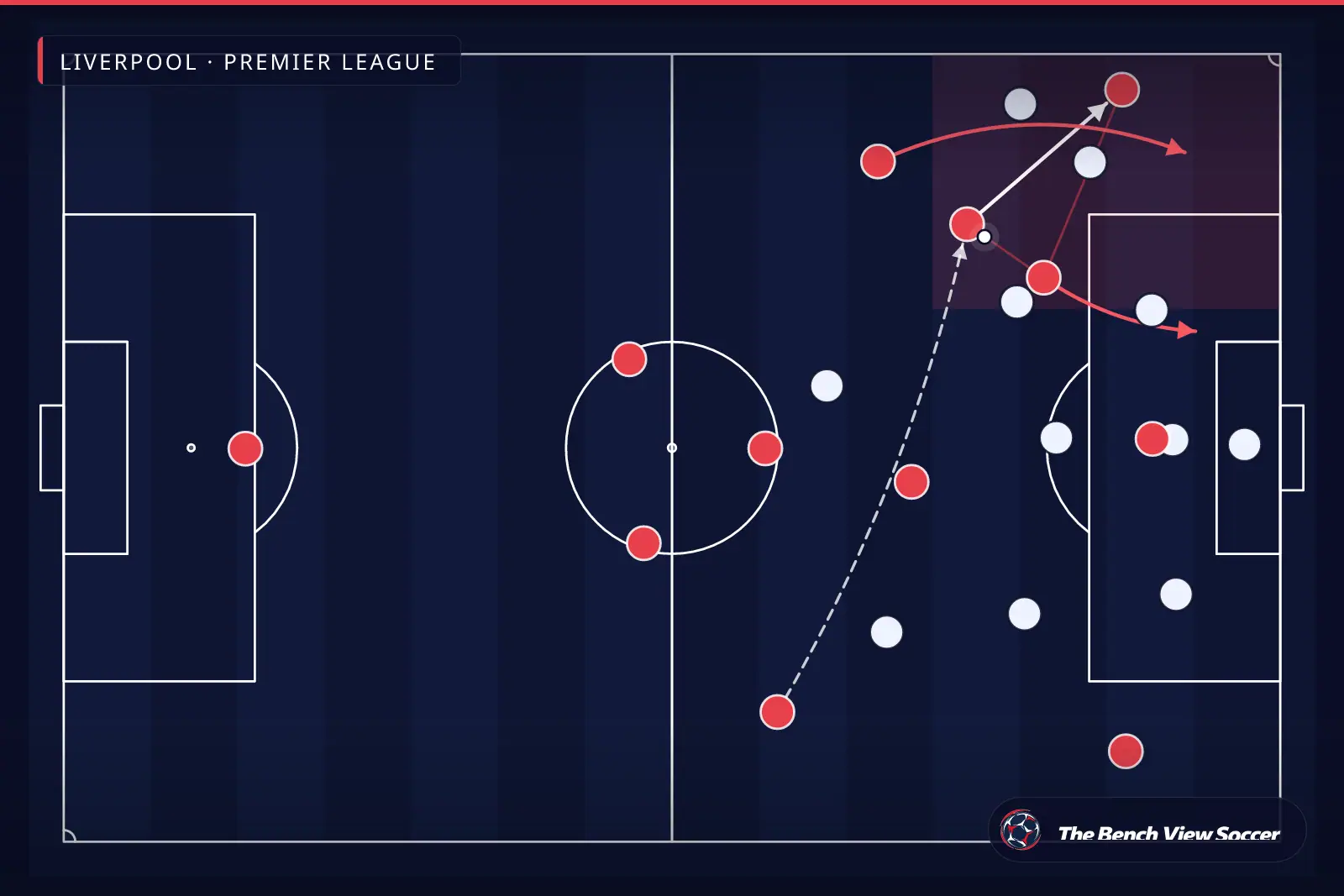
The moment: a rejected bid and the real story behind Liverpool’s right flank
Multiple outlets report Liverpool have seen a sizeable bid for Yankuba Minteh turned down. There’s also fresh noise around big-ticket forwards, from South American phenoms to elite Premier League names. But strip the headlines back and a tactical logic emerges: this is not just a hunt for a goalscorer. It’s a hunt for the next iteration of right-flank control under Arne Slot — a system piece that changes how Liverpool press, progress and unbalance opponents when Mohamed Salah is on the pitch or rotated out.
Our view: Liverpool’s move for Minteh is less about replacing Salah’s goals and more about rebuilding the right side as a fast, pressing, vertically devastating lane within Slot’s positional play.
Tactically speaking, the urgency makes sense. The modern Liverpool machine has always started on the right: ball-wins high, vertical carries through the right half-space, and final-third combinations that pull back-fours inside-out. Salah has been both the gravity and the release valve. What the club is targeting now — if we read the player profiles and Slot’s patterns together — is a winger who can keep that chain of actions intact while adding breathless transition speed and out-of-possession bite. That is Minteh’s calling card.
Why Minteh? The Slot connection and a right-side rebuilt around speed and shadow
Start with the profile. Minteh is a north-south winger who lives for the space behind a full-back’s shoulder. He attacks on the outside at pace, then knifes diagonally into the right half-space to receive third-man passes. Out of possession, he’s a trigger — not a passenger — in high press.
If Liverpool’s interest is genuine, the logic sits squarely within Slot’s 4-3-3/4-2-3-1 hybrid. Under Slot, the right winger is asked to do three things at once:
- Lock a full-back with an aggressive starting position to widen the backline.
- Sprint into depth to create a vertical passing lane from the base (the “long wall pass” to flip the press).
- Hit the counterpress immediately on turnovers to seal the outside and funnel play into a midfield trap.
Minteh’s tool kit maps onto those tasks. He’s a high-frequency sprinter who can threaten the back line early, and he presses with angle discipline — using his cover shadow to deny the return pass while chasing a centre-back to the touchline. He’s not yet the polished inside-forward who curls into the far corner like peak Salah, but that’s precisely the point: Liverpool’s right side under Slot doesn’t have to be a copy-paste. It can be a rotation device.
Inside-out rotations: the right back sets the angle, the winger sets the depth
Slot’s best teams build a ladder on the right touchline. The right back alternates between underlap and overlap to force a decision from the opposing left-back. If the full-back follows inside, the winger rides the paint and receives to feet. If the full-back steps out, the winger darts in behind and the eight (think Dominik Szoboszlai or Harvey Elliott) slides into the half-space pocket. The ball then travels: base → eight → winger in stride. That is a third-man run sequence drilled to repetition.
With Minteh, you can tilt that rotation earlier and faster. The immediate gain is tempo: Liverpool can go from a 2-3 rest structure to a 3-1-6 attacking picture in one pass because Minteh’s depth run commands the covering centre-back. That creates the classic Slot “pin and play” on the far side — Luis Díaz or Cody Gakpo can crash the back post while Darwin Núñez (or the No.9 profile of the week) pins the near-side centre-back.
Pressing triggers: back passes, square hips, and the trap at the chalk
Minteh’s out-of-possession value might be the cleaner fit. Slot’s right winger jumps when either of two things happen: a back pass from full-back to centre-back with the receiver’s hips square to goal, or a heavy touch under touchline pressure. In both cases, the job is to sprint at the outside shoulder and show inside — not to win the ball outright, but to bait the centre-back into the vertical pass that the right eight is coiled to intercept. That’s where Liverpool have looked most “Slot” already: strangling the first escape to flip the field in two touches.
Where Salah has evolved toward conservation — picking his sprints, preserving the final action — Minteh’s energy profile is more expendable. He can lead those sprints for 60-70 minutes without diluting his ball-carrying threat. Tactically, that lets Liverpool keep Salah closer to the box in mixed minutes, receiving in the right ten pocket instead of doing all the chase work himself.
The Salah question: not replacing gravity — redistributing it
No one one-for-one replaces Salah’s shot gravity, disguise, and world-class execution on the inside channel. The more productive way to see this is as a redistribution of threat. Slot can stage the right flank in three distinct modes:
- Salah wide, technician inside: RB overlaps, right eight underlaps, Salah receives at the angle he loves and either reverses to the left or cuts inside for the shot.
- Salah narrow, runner wide: the winger (Minteh-type) runs beyond, pulling the full-back deep and isolating the right half-space for Salah to combine with the No.9.
- Press-first unit: the runner leads the press, Salah plays off the trap as the first receiver, Liverpool attack against a broken line with Salah already goal-adjacent.
Each mode keeps Salah’s touches in high-value zones while outsourcing much of the legwork. That’s the defining difference between “replacing Salah” and “future-proofing Salah minutes.” The latter is the more sensible, lower-variance bet.
Endrick noise and the No.9/9.5 debate: a different jigsaw piece
Reports linking Endrick with Liverpool read like a fantasy of ceiling, but tactically the fit is about the middle corridor, not the right wing. Endrick profiles as a nine-and-a-half — a striker who loves the face-up duel, can burst diagonally across a centre-back, and has the balance to spin in tight zones. In Slot’s structure, a player like that changes the behaviors of the right side:
- The right winger’s depth runs can become decoys, freeing central lanes for the 9.5 to receive on the half-turn.
- The right eight becomes a wall-passer rather than a primary chance creator, knocking layoffs to the accelerating central forward.
- The rest defense tightens because your No.9 is more likely to be ahead of the ball when possession is lost, forcing a slightly deeper starting position for the wingers to support the counterpress.
Could Liverpool tune that to work? Absolutely. But it’s a different design problem from the “who does the right-lane running and pressing so Salah can conserve” question. That’s why stacking the Minteh-type profile with a 9.5 is intriguing: you give yourself both the depth runner and the penalty-box accelerator for different game states.
If not Minteh, then who? The archetype, not the name
The market will debate names. The archetype is what matters. Liverpool need a right-sided wide forward who:
- Runs off the ball repeatedly, and doesn’t need the ball to feel involved.
- Has the top-end pace to threaten depth on minute one and minute ninety.
- Understands cover-shadow pressing and accepts the dirty work of closing lanes for others to win the ball.
- Can finish at the back post and attack cutbacks — not just curler merchants, but cross-and-crash wingers who live on timings.
That’s why the chatter inevitably mentions elite right wingers around Europe. Bukayo Saka’s game is the gold standard for completeness on that flank — strong receiving under pressure, two-footed crossing, tireless pressing — but the practicalities are obvious. Liverpool’s likely path is the apex of that profile curve at a lower price point, then trust their development environment to flatten the learning curve.
Internal options exist in different shades: Harvey Elliott gives you the half-space technician who can rotate with the eight and maintain possession under pressure; Ben Doak offers the pure running threat with a steep learning curve at elite decision speed; Diogo Jota can park wide situationally to attack the box diagonally but gives up some of the winger behaviors in build-up. None gives you the full template today. That’s why the external search is happening.
How Slot’s right flank actually works: from 2-3 base to 3-1-6 dagger
Slot’s positional play at Liverpool has developed a stable launchpad. In the first phase, the team settles into a 2-3 or 3-2 rest structure. The right back’s role is the swing variable. When he inverts, you get a 3-2 build with the six anchoring and the right eight stepping a line higher. When he stays wide, the structure reads 2-3 with the right eight hovering behind the winger.
This is not sterile possession. The second the ball breaks free on the right touchline, three things happen:
- The winger sprints the channel, aiming to pin the left-back and the near-side centre-back on separate vertical lines.
- The right eight takes two steps inside, ready for the wall pass or the steal if the opposition bite on the trap.
- The No.9 starts on the blindside of the far centre-back and moves across him as the ball carrier lifts his head.
If the opponent compresses to the ball, Liverpool go diagonal and wide to the left. If they hold, the winger takes the outside and either cuts back from the byline or returns the underlap to the right back. Every choice is prodded by the run. That’s what Minteh-style players deliver consistently: runs that force decisions at elite speed.
Rest defense and transition cover: the non-negotiable
Pressing is not just what you do; it is what you can afford to do without dying on the counter. With a high-octane right winger, Liverpool can afford to let Trent Alexander-Arnold vary his positioning without collapsing the rest defense. Why? Because your first line of counterpressure rides the touchline rather than the half-space, buying a split-second for the six to slide and the far-side eight to tuck. That one beat is usually the difference between a 3v3 retreat and a contain-and-reset sequence.
The corollary: the right winger must recover diligently after failed dribbles. Slot’s training ground solutions generally coach this through role clarity — if the winger goes, the right eight holds; if the right eight darts, the winger sits. A Minteh profile simplifies that rule because he’s comfortable being the runner in most patterns.
Set plays and second phases: the quiet value of a runner
Set-piece threat often comes from unusual suspects: the second-phase runner who attacks the clearance at speed. A fast right winger adds:
- Near-post flick threat on outswingers from the left — a glancing run across the six to keep the ball alive.
- Edge-of-box rebound control on cleared corners — immediate pressure on the outlet pass to stop counters at birth.
- A back-post crash on right-sided free kicks when the delivery is overhit — arriving late on the blindside of a ball-watching full-back.
These are marginal gains, but in a title race, marginal becomes material. They also widen the band of games you can win ugly — something Liverpool have traditionally excelled at when the machine hums.
Historical context: from Mane–Salah–Firmino to the Slot era
The Klopp vintage of Liverpool is defined by Mane–Salah–Firmino: positional superiority created by relentless movement rather than slowed, possession-first control. Under Slot, the principles remain — press, run, overwhelm transitions — but the shell is subtly different. There’s more comfort in the 4-2-3-1 look, more emphasis on the ten channel, and a little less insistence that the right winger be the primary shot-taker every phase.
Look across Europe for precedents. Manchester City’s evolution from the Sterling/Sané verticality to Mahrez/Grealićh control showed how a superclub can rewire its wing threat without losing output — by redistributing chances and recalibrating the rest defense. Bayern moved on from Robben and Ribéry by first building transitional redundancy before nurturing Gnabry/Coman/Sané. In each case, the key was not finding clones, but coupling a runner with a technician and protecting the zone behind them. Liverpool are attempting the same dance on the right.
Why now? Squad bandwidth, intensity economics, and the market window
Talk of a “thin squad” bubbles whenever the fixture list snaps tight. Tactically, that thinness is felt first on the wings — the most sprint-heavy roles in modern football. When the right flank is staffed by players better suited to on-ball control than out-of-possession sprints, Liverpool’s press loses five percent of edge. Five percent is everything at the top.
Acquiring a specialist runner in his early 20s addresses multiple constraints:
- Minutes economy: you can rotate Salah without losing the right-flank press.
- Game-state toggles: you have a high-transition unit for chasing games and a control unit for managing them.
- Cap table sanity: you avoid overpaying late on a 28–30-year-old winger profile whose sprints will likely decline inside the deal term.
That last point matters. The market is currently pricing wingers with top-end speed at a premium, especially those who can both run and press. If the price for a Minteh-type has already inflated, the decision is about cost of waiting versus the cost of a year of tactical compromise. Liverpool, historically, are bold when the risk-adjusted fit is clear.
How it looks in practice: three right-side patterns Liverpool can bank
1) The staple: pin-and-square in the right half-space
- Base shape: 2-3 with the right back high and wide.
- Action: The six finds the right back. The winger sprints beyond the full-back, the right eight drops one step, and the pass goes into the winger’s feet on the touchline.
- Outcome: With the full-back pinned, the winger carries to the byline and hits a cutback to the penalty spot. Salah arrives late from the half-space to finish across goal, or the No.9 converts at the near post.
Why it works: The early depth run forces the back line to retreat. The cutback arrives against stationary defenders, Liverpool’s favourite finish.
2) The trap: fake wide, steal central
- Base shape: 3-2 with the right back inverted.
- Action: Opponent plays to their left-back, who returns it square to the near centre-back. The winger jumps on the centre-back’s outside shoulder; the right eight pinches the passing lane to the six.
- Outcome: Interception in the inside-right lane. Two touches later, Salah receives in Zone 14. Shot, or slip to the overlapping right back.
Why it works: The winger doesn’t win the ball; he closes the return path, forcing the risky ball that the right eight is primed to attack.
3) The switch: overstack right, score left
- Base shape: 2-3, inviting the press to the right.
- Action: Winger checks short to draw the full-back; right back sits. Three short passes bait the overload. The six whips a diagonal to Díaz on the far side.
- Outcome: Far-side 1v1 with a disorganised block. Back-post run from the right winger becomes the unseen finisher.
Why it works: The right winger’s decoy movement triggers the trap; his weak-side crash becomes the payoff.
Counterargument: is the end product there, and what about decision speed?
A fair sceptic’s take: runners without elite decision-making can stall possession and waste touches in big Champions League nights. The Premier League punishes loose touches more ruthlessly than most leagues. If the right winger is a chaos agent, you can break your own rest defense and spend too long chasing transitions back toward your own goal.
Response: that is precisely why the fit is so manager-dependent. Slot’s patterns reduce the winger’s decision tree. Receive on the move, one of three options, repeat. The chaos is curated. Liverpool don’t need a wing playmaker to replace Salah’s creative load; they need a runner who can execute rehearsed movements at speed. The finishing can be developed in a structure that manufactures tap-ins and late-arrival finishes. And if the finishing tops out at “good, not elite,” the press value and territorial advantage can still make the signing net-positive.
What this means for Liverpool’s season: toggles, timelines, and title maths
In tactical terms, adding a Minteh-type profile would give Slot two right sides:
- Control Right: Salah wide, right back overlapping, right eight conservative. Useful against low blocks, where patience and disguised through-balls matter.
- Transition Right: Runner wide, Salah or a ten tucked inside, right back underlapping. Useful against aggressive presses and in away matches where space opens.
Squad bandwidth rises because minutes can be shared by role, not just by name. It also reshapes the late-game substitution map. Instead of swapping like-for-like, Slot can flip the flank’s behaviour with one change: technician → runner or vice versa. That’s how you steal six to eight points across a season — by making the last 20 minutes a different sport.
The bedding-in timeline is realistic. Runners integrate faster than schemers because their tasks are clearer and less partner-dependent. Expect immediate pressing value, immediate depth runs, and finishing that warms over a few months as timings with the No.9 settle.
Zooming out: the strategic bet Liverpool appear to be making
Across the last decade, Liverpool’s best signings have aligned three axes: role fit, physical profile, and age curve. A right winger in his early 20s who can press and sprint for days aligns with all three. Critically, it aligns with Salah’s next phase at the club — whether that’s one season or more. Instead of chasing a spotless curler merchant who will always be compared unfavourably to Salah during the teething months, Liverpool can change the question. They can say: our right wing now has two speeds. When we need gravity, Salah creates it. When we need verticality, the runner creates it. When we need both, they share the lane.
Comparative lenses: how top sides retool a flank without losing output
Look at Real Madrid’s post-Benzema ecosystem. They didn’t buy one “Benzema replacement.” They built a new shape where Vinícius and Rodrygo took turns carrying depth and gravity while Bellingham ate the ten space. City’s post-Agüero scene repeated the trick: output redistributed across a more modular front. The lesson is straightforward: don’t hunt a ghost, shift the geometry.
For Liverpool, the geometry shift is right-flank first. Salah’s unique gifts remain; the team just changes how and when it leans on them. A runner on the right lets Liverpool start more possessions in the final third, tilt the xG race early, and survive those scrappy winter fixtures where everyone’s legs are heavy but the schedule won’t stop.
The human layer: role clarity breeds confidence
Wingers live on feedback loops. When their first three sprints pull a back four five metres deeper, they feel the game is theirs. When the press clicks and they start possessions 30 metres from goal, the first touch calms. In Slot’s training vocabulary, clarity is kindness. “Run on this cue. Press on that cue. If you can’t go, hold.” That environment is where a Minteh-type can accelerate. It’s also where Salah can conserve, choose his moments, and sharpen the final action volume he’s judged by.
What fans should watch for in pre-season and early matches
- Right-back inversion frequency: if Trent or his alternate spends more time in the half-space, expect the right winger to be the consistent depth runner.
- Right eight’s height: a higher starting point often means the winger is the outlet; a flatter line suggests the winger will be asked to receive to feet and combine.
- Counterpress shape: after turnovers on the right, do Liverpool seal the touchline or funnel inside? Touchline seals mean the winger is the first responder; inside funnels suggest the right eight is the hunter.
These micro-signals tell you the plan before the first goal arrives. They will also show you how quickly a new signing — if one lands — has internalised the cues that make Slot’s touchline game sing.
A word on risk: variance lives on the wings
All transfers carry error bars. Wingers live in high-variance actions — dribbles, shots under pressure, recovery sprints. The reduction strategy is to control the contexts. Liverpool can do that with role design and partner selection. Pair a young runner with a right back who communicates early and loudly. Keep the right eight’s pass map simple. Give the winger a clear back-post crash schedule on far-side attacks. If you treat the right wing as a choreography, not a vibe, the variance narrows.
The decisive verdict
In our view, Liverpool’s push for a Minteh-type profile is an elegant answer to the most complex right-flank question in European football: how to evolve with Salah without erasing Salah. The answer is not to find the next left-footed demigod whose first touch kills all sound. It’s to change the geometry of the lane so that Salah’s superpowers appear at better moments, more often, with fewer wasted miles.
That is why a rejected bid doesn’t end the story; it clarifies it. Liverpool are not chasing headlines — they’re chasing behaviours. A high-press, high-sprint, depth-run right winger doesn’t replace a legend. He protects him, amplifies him, and gives Slot the tactical toggles a modern title charge demands.
If — or when — Liverpool add that runner, the right touchline will look different: louder in the press, longer in the run, simpler in the choices. And that difference, more than any single name on a team sheet, is what wins the next phase of Liverpool’s biggest games.
The Bench View app
Don’t just read football — train it
Everything you read here, turned into training you can follow step by step.
Physical training at home
AI daily sessions adapted to your level and position. No equipment needed.
Tactical training courses
Step-by-step courses on positioning, pressing, build-up and decision making.
- 7 days free
- No commitment
- Cancel anytime
Free account: 2 physical sessions + the first tactical course. PRO: 7-day free trial — cancel before day 8 and you pay nothing.
More Analysis
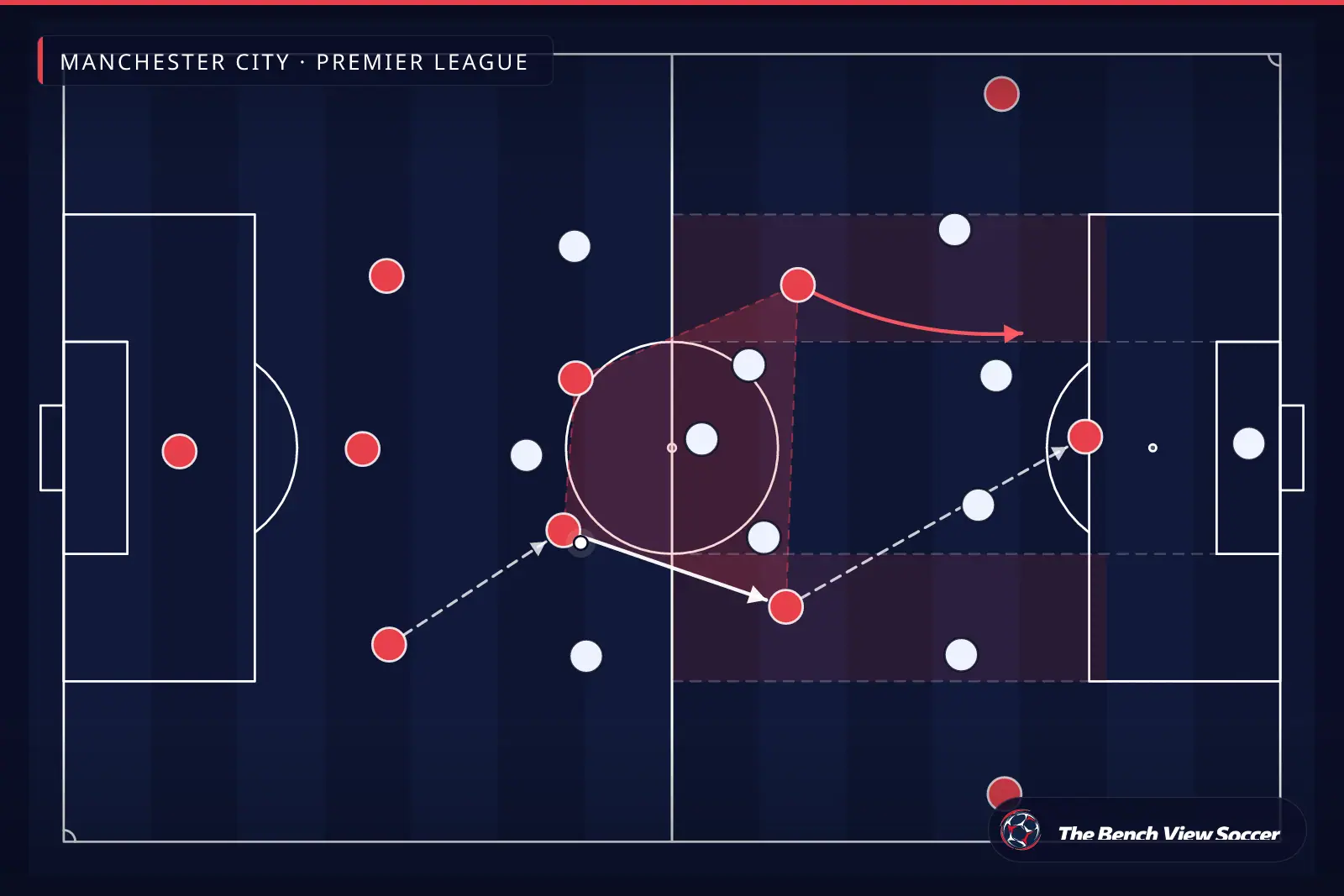
Manchester City: How Gakpo Unlocks Pep’s Left Half-Space Engine
August 25, 2026
Liverpool's Inverted Trent Unlocks Salah vs Newcastle's Press
August 23, 2026
Hull City, Fulham and Ipswich: How the Box Midfield Changes Them
August 18, 2026
Nigeria's Vertical-Run DNA: How Osimhen Shapes Every Game Plan
August 14, 2026