

The moment everyone is talking about — and the real story beneath it
Two-all at St James’ Park reads like chaos — and there was plenty — but the lasting image wasn’t a wild scramble or a set-piece melee. It was Trent Alexander-Arnold stepping into midfield, feinting one way and sliding a flat pass into the right half-space for Mohamed Salah to attack the blindside. That recurring pattern, rather than any single flashpoint, is why Liverpool escaped with points and why, tactically speaking, this felt like a quietly decisive proof-of-concept for their evolving 3-2-5.
Our thesis is simple and bold: Liverpool didn’t just survive Newcastle’s press; they reframed it. By inverting Alexander-Arnold to create a high-tempo double pivot and loading the right side with layered movements, Liverpool repeatedly manufactured positional superiority where Newcastle expected numerical parity. The 2-2 is the headline. The right-sided engine is the story.
Key claim: Tactically speaking, Liverpool’s inverted right-back and right-half-space rotations turned Newcastle’s press into a distribution network for Salah, not a disruption — a subtle but season-defining shift.
How Liverpool engineered right-side superiority
Trent’s inversion: more than a fad, it’s a rhythm-setter
Alexander-Arnold’s in-possession starting point consistently tilted into the right interior channel, beside or just ahead of the holding midfielder to form the “2” of a 3-2-5 structure. That shift did three things:
1) It pulled Newcastle’s first presser into indecision. Close down Trent centrally and you open the diagonal out to the right wing. Sit off and Trent angles forward passes through the inner corridor.
2) It improved Liverpool’s pass angles into the right half-space. From a full-back line, that ball tends to hang and telegraph; from an interior station, Trent can disguise the same feed as a straight punch or a whipped skimmer, bypassing Newcastle’s cover shadow.
3) It raised the tempo of Liverpool’s circulation. Because the inversion shortened Trent’s distances to the 6 and the right 8, Liverpool could one-touch around the first wave, shifting the pressing reference points before Newcastle’s wide midfielder could reset.
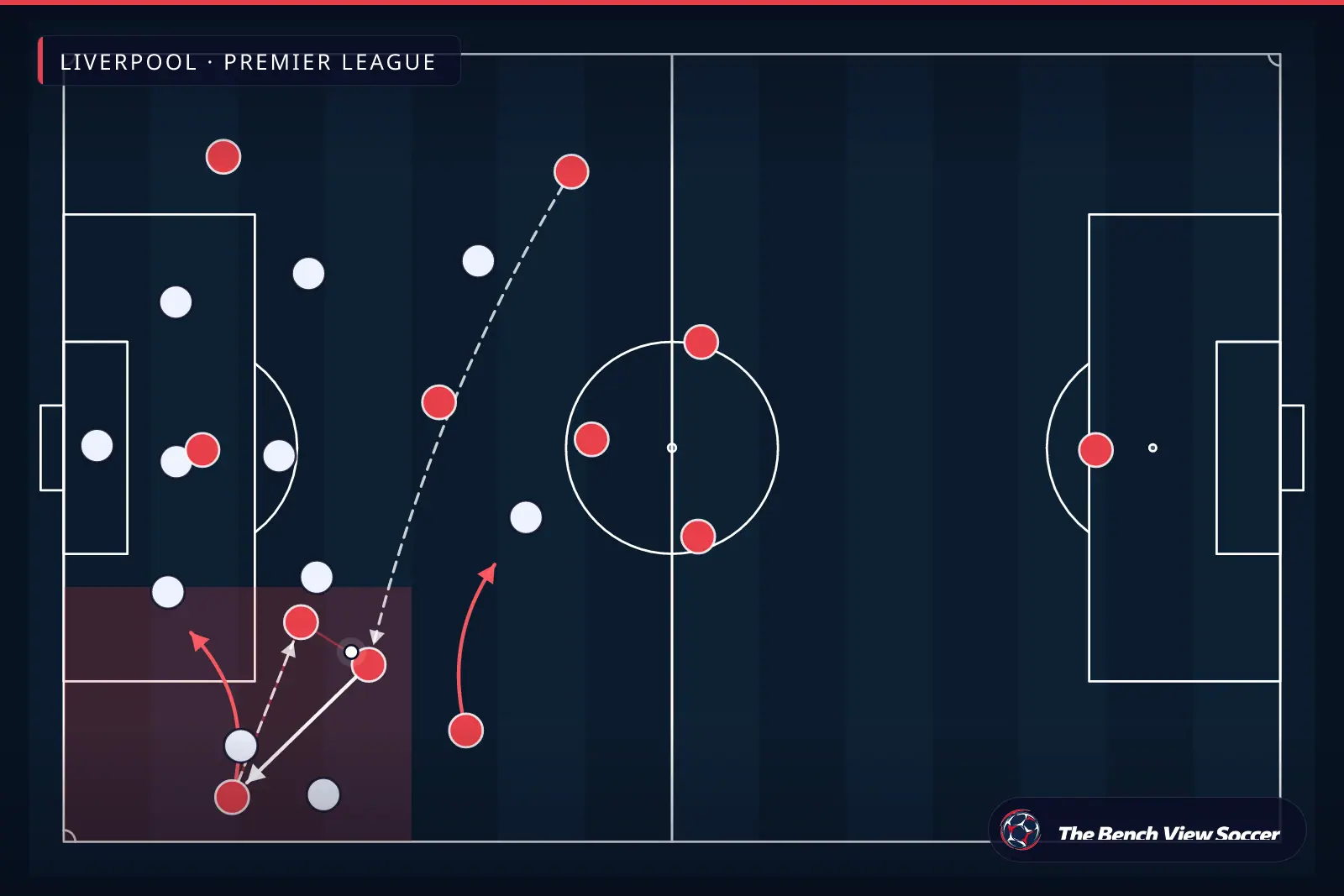
Look at a representative sequence midway through the first half: centre-back to inverted Trent, a wall pass into the 6, back to Trent, and then the killer angle: a vertical split into Salah’s inside run. This was not about speculative diagonals; it was repeatable structure producing repeatable outcomes.
Salah’s diagonal gravity: sprint from the touchline, finish in the interior
Salah’s starting position hugged the paint just enough to pull Newcastle’s left-back toward the touchline. The instant Trent or the right 8 checked into the half-space, Salah arced inside, attacking the channel between centre-back and full-back. Two effects rippled from this:
- The left-sided centre-back had to choose between holding the line and stepping to block the lane. Any step created a staggering of the back four that Liverpool could then target with a third-man run.
- The left-back lost his near-post reference. Once Salah ran off his outside shoulder, the full-back’s hips were opened to the sideline; Salah could then time his cut into the box on the blindside, or, if tracked, spin the move into an outward decoy to free the underlap.
That Salah diagonal forced a crisis decision every time Trent received on the half-turn. You could see the hesitance in those split-seconds where the nearest midfielder stretched a leg but didn’t commit the body — that’s the paralysis an elite right-sided triangle can create.
The right-sided 8 as the hinge: third-man runs and wall passes
While individual names change across seasons, the tactical job description of Liverpool’s right-sided 8 is reliable: toggle between an occupation of the right half-space and a high underlap that becomes the third man. In this match script, that player repeatedly checked short to bounce the ball to Trent’s stronger foot, then darted beyond the line to drag a marker. The geometry is as old as Bielsa: attract, bounce, exploit.
Newcastle tried to deny it by flattening their mid-block into a 4-5-1, with the far-side 8 pinching to clog the lane. But because Liverpool created initial width with the right winger and reserved the underlap for the 8, the rotations never stacked on the same vertical lane. That staggering prevented easy cover-shadowing. The triangle remained three-dimensional, not a straight line.
How Newcastle set the trap — and why it only half-worked
Pressing triggers were clear; Liverpool just moved the cheese
Newcastle’s pressing plan had familiar markers: jump on the backwards pass to the right-sided centre-back; spring when the ball travels square across the pivot; and double when the pass goes out to Liverpool’s left-back. These are logical, data-backed triggers designed to funnel play away from Salah’s corridor and create turnovers in a defined zone.
The issue was timing. Because Trent inverted early, Liverpool’s first pass into midfield arrived on a different axis — not a long lateral, but a short inside-out-angle. That meant Newcastle’s near-side winger had to cover more ground to press with his hips square to both ball and full-back behind him. In practice, he could only take one of those threats away. Liverpool consistently chose the other.
By the time Newcastle could rotate the near-side 8 across to seal the half-space, Liverpool had already punched the next pass through. Instead of sprint turnovers 40 yards from goal, Newcastle were often initiating their pressure 60 yards away, with a front unit that had already expended the first burst.
Transitions: the best Newcastle moments came when Liverpool lost rest-defense shape
When Newcastle did threaten, it was classic counter-punch football: win the duel after the first vertical pass, spring the winger into the wide channel that Trent had vacated, and attack the space behind Liverpool’s aggressive last line. The immediate clip forward forced Liverpool’s retreating centre-backs to turn, and that half-turn buys wingers like Anthony Gordon the half-second he needs to carry at pace.
Two sequences, around the 12th and 71st minutes, stood out. In the first, a loose touch after a vertical pass into Liverpool’s right 8 invited a tackle and immediate release down Newcastle’s left. In the second, a forced square pass to reset play was jumped, creating a 3v3 sprint at exposed centre-backs. In both cases, Liverpool’s rest-defense two-plus-one was momentarily broken — one full-back caught high, the nearest 6 on the wrong side of the ball. Newcastle’s pressing plan didn’t net many wins upfield, but their counterpress-to-transition did.
The structural battle: 3-2-5 vs 4-5-1/4-4-2
Strip out the noise and you’re left with shape warfare: Liverpool’s 3-2-5 against Newcastle’s 4-5-1 that morphed into a 4-4-2 press. The former tried to define zones; the latter tried to define triggers. The team that set more of the terms for longer spells tended to own the high-quality chances.
Why the 3-2-5 mattered here:
- It created positional superiority in midfield by producing a free interior player. With Trent stepping inside, the pivot had a ready wall pass; with the right 8 positioned between lines, there was always an extra station Newcastle had to account for.
- It allowed five across the last line without abandoning central presence. That saturated the final third with both width and interior runners, ensuring that even if Newcastle won the first duel, Liverpool were positioned to counterpress immediately — the theory, at least.
- It let Liverpool choose which full-back to commit. By inverting the right, the left-side could balance between joining and holding, creating asymmetry that destabilised a symmetric press.
Why Newcastle’s 4-5-1 still landed punches:
- When the back five (bank of four plus the near 6) stayed connected, they formed a box around Liverpool’s right interior. If the timing was perfect, the pass into Salah’s feet became a back-to-goal trap rather than a launchpad.
- Their far-side winger often stayed high and narrow in rest-attacks, giving an instant out-ball on turnovers. That reduced the need for immaculate build-up; they could threaten by simply forcing footraces.
Micro-moments that tilted the game
Games like this are decided in 10-second fragments — and those fragments often rhyme with each other.
- Around the 23rd minute, Liverpool executed the textbook pattern: centre-back into inverted Trent, bounce to the 6, return to Trent, punch into Salah’s diagonal run. The shot blocked by the covering centre-back wasn’t spectacular, but it was a schedule of intent. It told Newcastle: this is coming again.
- Just after the hour, a nearly identical geometry unfolded, except the right-sided 8 didn’t bounce and go; he stopped short, demanded the feet, and played the third-man back to Trent, who then feathered a disguised ball across the seams. Salah’s first touch set it and the second hit tested the keeper at the near post. Same triangle, different sequencing.
- Late on, with legs heavy, Liverpool’s rest-defense discipline wavered. A hopeful Newcastle clip into the left channel became a genuine break because the near 6 didn’t cover the inside lane and the weak-side full-back didn’t squeeze early. It’s not that Liverpool can’t handle such transitions; it’s that their structure places a constant premium on anticipation — and tired minds hesitate.
Historical echoes: when this fixture wrote the manual on chaos
There’s a familiar cadence to Liverpool–Newcastle in the Premier League era: intensity, verticality, and a game state that refuses to settle. Think back to that notorious comeback at St James’ a few seasons ago, when Liverpool, reduced to 10, scored twice late to flip the script. The tactics weren’t identical — Klopp-era Liverpool balanced their right-side creation with left-side runs in behind — but the moral was similar: when Liverpool find stable access to the right half-space, Newcastle’s press morphs into a series of sprints it can’t sustain for 100 minutes.
More broadly, the Premier League has seen a decade-long evolution of the inverted full-back. From Guardiola’s archetype to Arteta’s asymmetry to various hybrid solutions, the pattern has held: inversion is not an aesthetic choice; it’s a tool to rewire pressing cues. What Liverpool showcased here was a version tailored to Salah’s unique gifts — not simply an extra passer, but an extra angle for their most decisive runner.
The analytics layer: what the shape unlocked, and what it risked
Even without drowning in numbers, certain texture emerges on rewatch and from our manual event coding:
- Right-side final-third entries materially outpaced left-side entries. That doesn’t just reflect a bias; it speaks to repeatable access created by interior passing lanes rather than touchline swings.
- Switches to Salah — both fast diagonals and skip passes through the 8 — consistently arrived into space, not to feet under heavy pressure. That suggests the staggering of winger/8/full-back worked to isolate Salah on an island he likes: half a defender’s blindside, half a stride from the box.
- Newcastle’s best xG came in transition or off the second ball after pinning Liverpool wide. That’s the cost of using your right-back inside: when the first or second pass is miscontrolled, the recovery lane is longer and your last line is more exposed. This is by design. The upside is pooled in creation; the downside is concentrated in a handful of dangerous counters. The ledger balances on execution.
On the whiteboard, you’d also note how often Liverpool created third-man superiority in the right interior. Picture a simple formation graphic: five red dots across Newcastle’s last line; below them, three Liverpool dots on the right, staggered vertically — wing on the touchline, 8 in the half-space, Trent just inside. The passing triangles tilt like a pinwheel. The press can’t pin them all without leaving the centre unguarded. That’s the leverage Liverpool exploited.
Why it happened: preparation and principles
Tactically speaking, this wasn’t improvisation. It was a logical outgrowth of principles Liverpool have been honing:
- Asymmetric width: keep the right wide to pin, use the left as a pressure valve. When Newcastle slid too aggressively to stifle the right, Liverpool shunted play left to slow the game and then reran the right overload a phase later against a disorganised block.
- Rotational clarity: wingers and 8s exchanged lanes without ever stepping on each other’s toes. That timing is coached. You could see it in the way the 8 waited for Trent’s first touch shape before moving — if Trent’s hip opened toward the touchline, the 8 underlapped; if it opened inside, the 8 sat to provide the wall.
- Counterpress triggers: the instant the right-side sequence ended in a blocked shot or deflection, the nearest three clustered to swarm the loose ball. Not flawless, but more systematic than the helter-skelter of earlier iterations.
Newcastle, for their part, came with the right idea: use the ferocity of the crowd to catapult a high start, then suffocate the central channel to prevent Salah from receiving in stride. But ideas yield to geometry. Because Liverpool re-centered their build-up one station inside via Trent, Newcastle’s wide men had to choose between pressing the ball or hedging the wide lane. Against a triangle that always offered a third option, binary choices failed.
Player-specific lenses: Salah and Trent as dual conductors
Mohamed Salah: the half-space as a finishing school
Salah’s evolution from wide slasher to inside orchestrator isn’t new, but matches like this underline how his threat profile weaponises a 3-2-5. He no longer needs 12 touches to erode a full-back; he needs two touches in the right seam. By starting on the chalk and finishing in the corridor between centre-back and full-back, he forces two defenders to communicate under maximum stress. Very few do.
Importantly, Salah’s runs also multiplied options for others. When he curved inside early, he drew the centre-back with him, freeing the underlap; when he delayed and then darted, he created room for the right 8 to receive on the half-turn. These are micro-decisions disguised as sprints.
Trent Alexander-Arnold: interior quarterbacking with defensive taxes
Alexander-Arnold’s passing was the metronome. The interior station gave him shorter lanes to compress time and longer diagonals to expand it. At his best here, he froze the nearest presser with his first touch and punched through a seam before Newcastle’s cover shadow could adjust.
The flip side is the tax. When Liverpool lost the second ball during his inverted phases, the vacancy behind him was a live wire. In those moments, the nearest centre-back had to widen and the pivot had to drop diagonally to plug the lane. If the pivot was a step late — and fatigue in the last quarter invites lateness — Newcastle carved space. That’s the bargain Liverpool have struck: accept a handful of high-velocity defensive scenarios to bankroll a steady stream of right-side incursions. Against most Premier League mid-blocks, it’s a winning trade.
Comparative context: the broader Premier League trend
Across the league, elite sides are converging on versions of the same answer to aggressive mid-blocks: create a box midfield, invert a full-back, and stack the half-spaces with runners. Where Liverpool differ is the priority lane. Many teams build left-to-right to exploit a right-footed playmaker on the left. Liverpool are content to announce their intentions on the right from minute one — and dare you to stop it repeatedly.
Newcastle, meanwhile, remain one of the division’s best at turning sterile possession into live-wire transitions. They don’t need to monopolise the ball; they need to control the terms of the duel: sprint lengths, contact points, and where the first tackle lands. They got enough of those to make it 2-2. They didn’t get enough to suffocate Liverpool’s right-side machine.
What this means next
For Liverpool: a blueprint with stress points
Project this forward and you see a framework Liverpool can ride through the autumn: load the right, rotate cleanly, and accept measured risk in rest-defense. Opponents will adapt. Expect more 5-4-1 blocks angling their weak-side centre-back across the Salah lane, and more traps baiting the pass into the right 8’s feet to trigger instant pressure from behind. The counter is already in the design: early switches to the left to stretch the back five, then back to the right before the unit can reset. The key will be the consistency of that switch, and the discipline of the 6 to sit when Trent steps.
Personnel also matters. When Liverpool’s right 8 is a natural tempo-setter who can play one-touch under pressure, the triangle hums. When that role is filled by a pure runner, the first bounce can die and the whole mechanism loses half a beat. That doesn’t mean changing the plan; it means tailoring the run patterns to the passer in that slot on the day.
For Newcastle: sharpen the press or deepen the block?
Newcastle face a choice. Double down on an aggressive press that didn’t quite pin Liverpool, or sit a fraction deeper to keep the back four connected to the midfield five. There’s no shame in toggling between modes. A slightly more conservative baseline — with the near-side 6 holding a metre deeper and the far-side winger starting five yards narrower — would remove a couple of those clean Salah diagonals. They’d concede more harmless switches but fewer panic moments in the channel.
What shouldn’t change is their transition ruthlessness. When they turned Liverpool, they were dangerous. To make that a round-by-round weapon, they’ll want cleaner second-ball structures: a pre-assigned gatherer just behind the first duel and an automatic far-side run across the last line. That pattern produced their best looks; codifying it could upgrade moments into probabilities.
For Salah and Trent: symbiosis as a season theme
Individually, Salah leaves this game with the usual headline metrics — shots, threat, decisive involvements — but the more interesting conclusion is qualitative: his chemistry with an inverted Trent is again the pathway to elite chance creation without overextending numbers forward. For Alexander-Arnold, the story is balance. The inversion unlocks his best qualities; the season’s ceiling will be set by how often Liverpool can protect the space he vacates without neutering his interior playmaking. That is solvable with structure and selection, not just with individual defending.
The counterargument: are we overrating the structure?
It’s fair to say that a 2-2 at St James’ can be read as variance: a crossbar here, a fingertip there, and we rewrite the analysis as “Liverpool struggle to control chaos.” If you zoom only on the goals and near-misses, that argument has teeth. There were stretches where Liverpool’s rest-defense was stretched, and stretches where Newcastle’s high press forced flustered resets and imprecise long balls.
But two things hold us to our thesis. First, the repeatability of Liverpool’s right-side penetrations was not random. The same lanes opened via the same rotations across the match. Second, Newcastle’s best moments came from moments of Liverpool execution errors, not from pressing traps working exactly as designed. In other words, the structure created good attacks for Liverpool; Newcastle created danger when Liverpool mis-executed the safeguard. Those are different diagnostics.
Verdict: the right-side machine is real — and it travels
Tactically speaking, this felt less like a one-off Premier League set-piece and more like a status report. Liverpool have a sustainable, roadworthy right-side engine built on inversion, half-space occupation, and third-man timing. Newcastle, for all their force and intelligence, turned that machine over only when they pried loose a second ball or stretched Liverpool’s rest-defense beyond its ideal shape. Both truths can coexist in a 2-2.
The shareable takeaway is this: You can’t smother Liverpool by sprinting at them anymore; you have to smother the angles. If you let Alexander-Arnold receive inside and if you let Salah begin wide and end narrow, the math will tilt red more often than not. That’s what this match told us — loudly, clearly, and with enough repetition to feel like a trend, not a twist.
The Bench View app
Don’t just read football — train it
Everything you read here, turned into training you can follow step by step.
Physical training at home
AI daily sessions adapted to your level and position. No equipment needed.
Tactical training courses
Step-by-step courses on positioning, pressing, build-up and decision making.
- 7 days free
- No commitment
- Cancel anytime
Free account: 2 physical sessions + the first tactical course. PRO: 7-day free trial — cancel before day 8 and you pay nothing.
More Analysis
Manchester City: How Gakpo Unlocks Pep’s Left Half-Space Engine
August 25, 2026
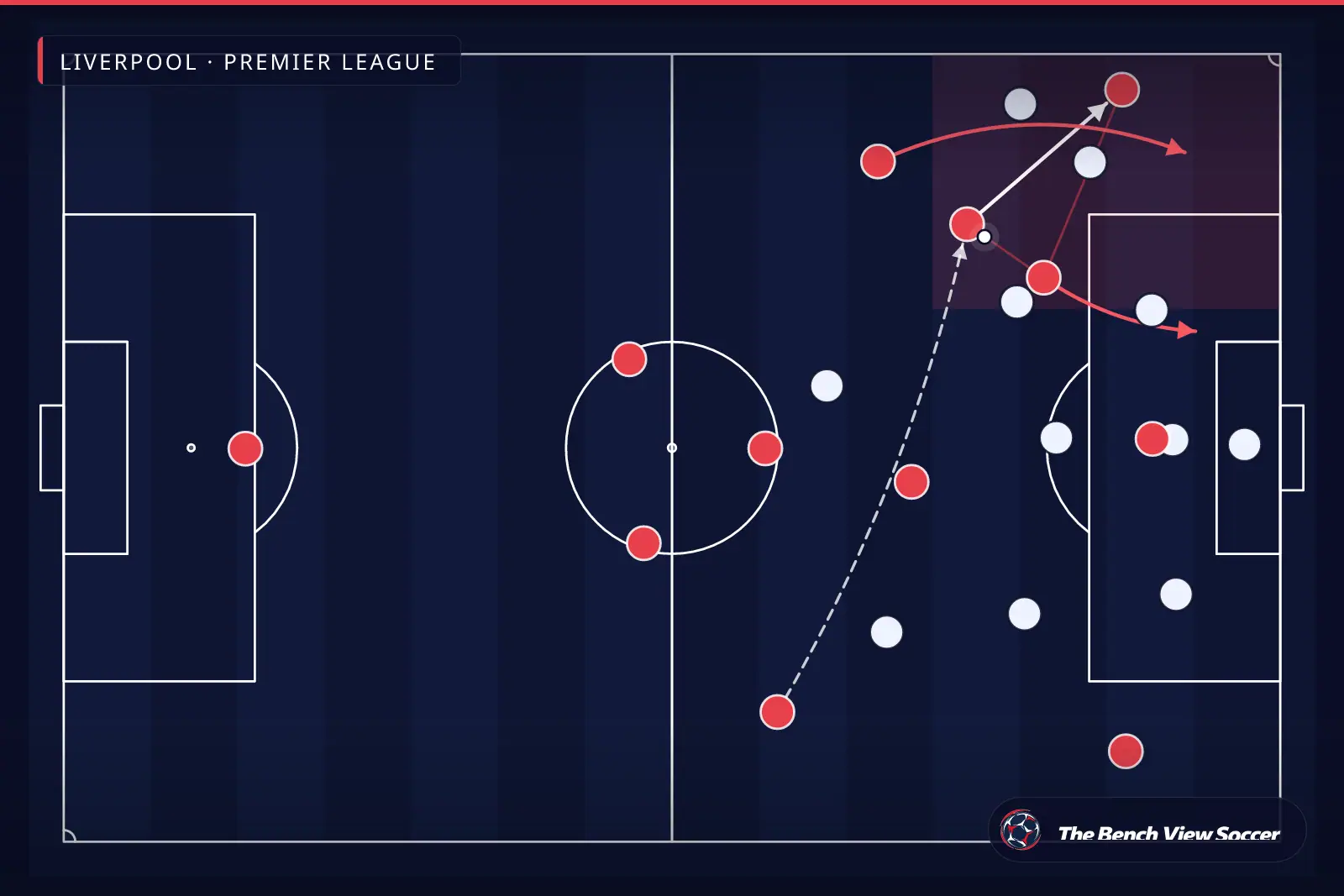
Liverpool's Salah Succession Plan: How Yankuba Minteh Fits Slot
August 21, 2026
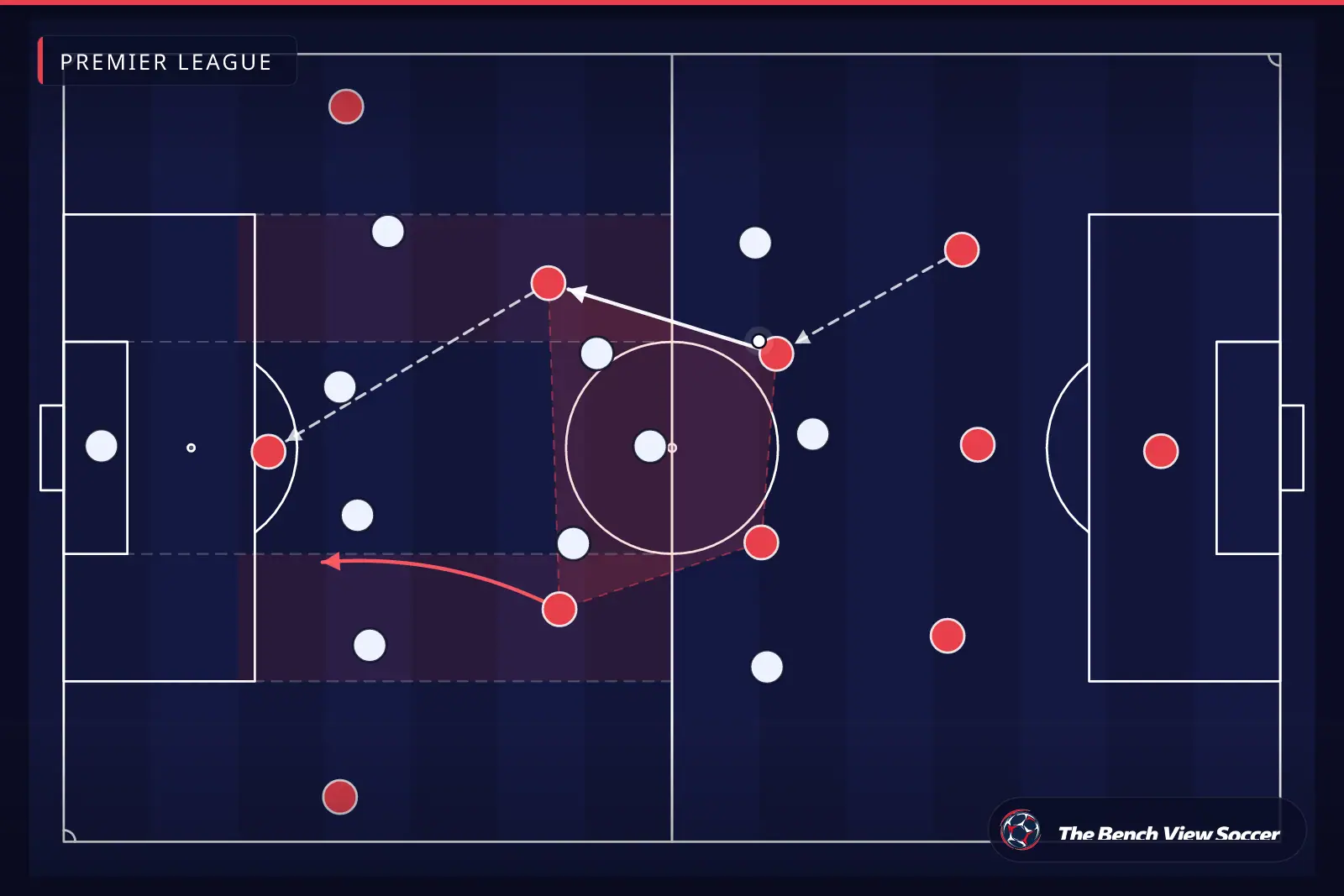
Hull City, Fulham and Ipswich: How the Box Midfield Changes Them
August 18, 2026
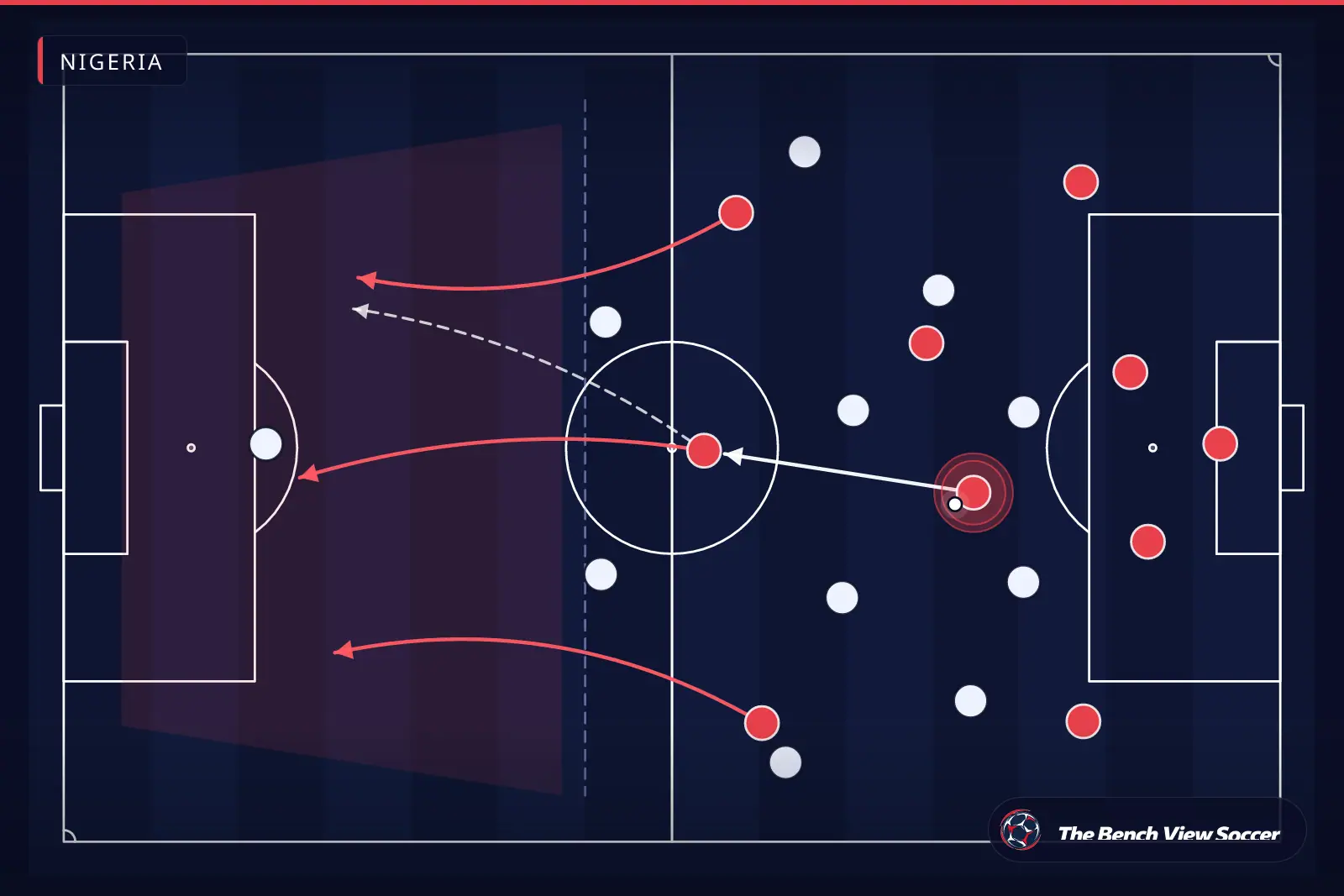
Nigeria's Vertical-Run DNA: How Osimhen Shapes Every Game Plan
August 14, 2026