

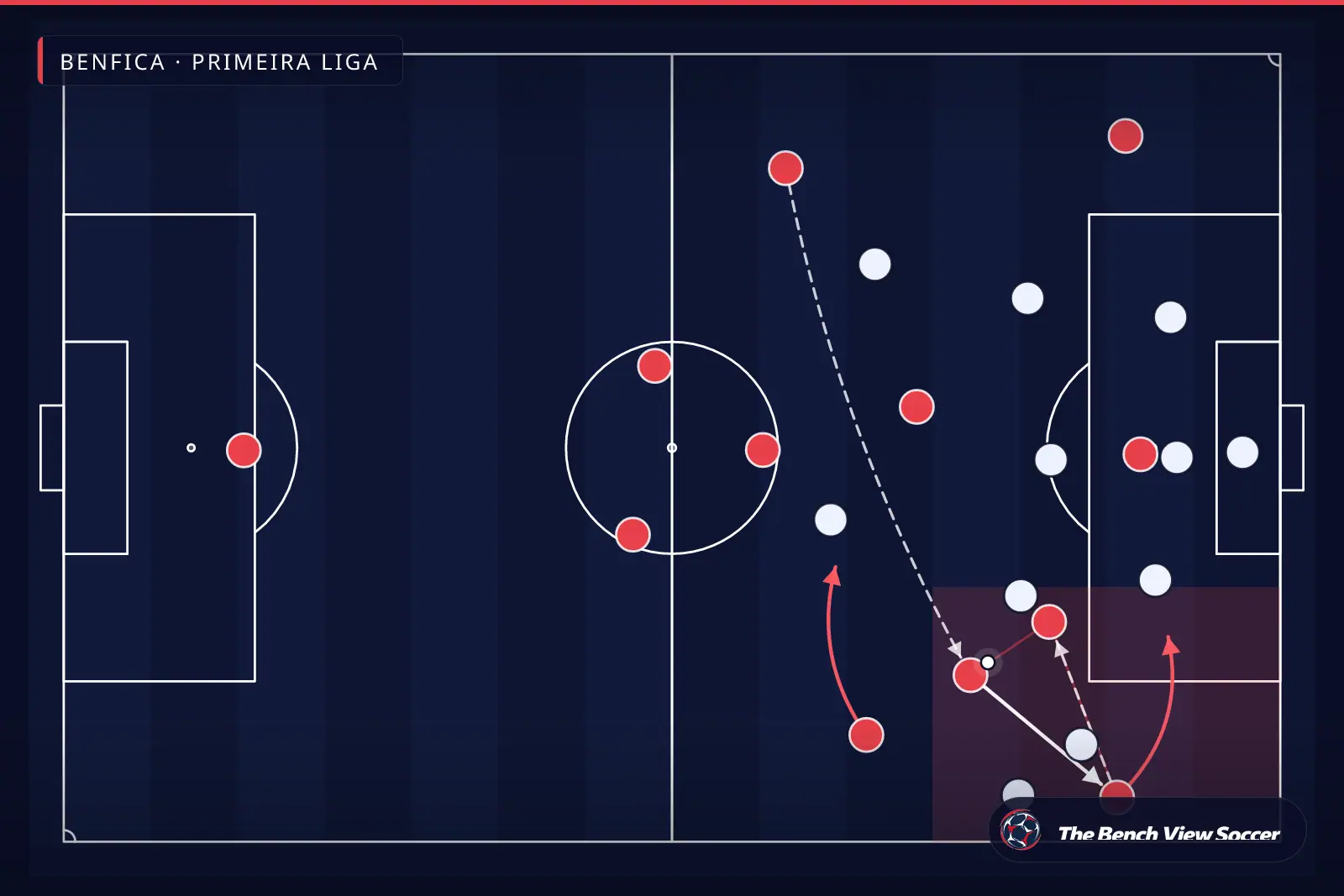
Trending moment: Dedić goes to Newcastle — and Benfica quietly sell a system
Amar Dedić is out the door, headed to Newcastle in a deal near the £30m mark. That’s the headline. The deeper story, tactically speaking, is this: Benfica didn’t just sell a right-back; they sold the repeatable mechanics of an inverted right-back system that manufactures value and field control. The player was the vector — the blueprint was the product.
In our view, Benfica’s right flank under their current principles has been a laboratory for the modern full-back: part deep-lying playmaker, part third-man runner, part rest-defense stabiliser. Dedić fit the mould so completely that his price tag looks less like a one-off premium and more like the fee for a turnkey solution Premier League clubs are actively trying to buy — fast exits under pressure, half-space superiority, and a reliable route to the byline without ceding transition control.
Key analytical claim: Benfica’s right-back role creates positional superiority in three phases — build-up, consolidation, and rest-defense — and that structure, more than any single attribute, is what Newcastle have paid for.
What Benfica built on the right: a four-phase job description
Phase 1 — Build-up: the 3+2 that inverts by stealth
Tactically, Benfica use the ball to create a back three without always announcing it. The right-back steps inside the first line, not necessarily as a pure pivot, but as a lane-guarding interior who protects the nearest central midfielder. The centre-backs split, the weak-side full-back holds width, and the double pivot staggers — one drops to receive, one sits slightly higher to pin the nearest marker.
Dedić’s job in that first phase was to become a pressure-release valve while drawing a winger into a no-win choice: jump inside and leave the channel, or sit wide and concede the middle. Benfica engineered a pressing trigger where a vertical pass into the inside-right lane would pull an opposition eight forward; the following third-man run from the 10 or wide forward then hit the space behind that press. When the opponent refused to bite, Dedić recycled with minimal risk and created angle superiority for the centre-back to carry. That’s not mere caution; it’s a pattern designed to bend the first line, then spring.
Phase 2 — Consolidation: the underlap as the decisive knife
Once established in the opponent’s half, Benfica didn’t treat the right-back as a chalk-hugger. They sought underlapping runs into the right half-space, often cueing them off a simple rotation: winger comes short to feet, right-back darts inside the marker, and the nearest midfielder screens the counter channel. Dedić’s timing here was crucial — too early and the lane closes, too late and the angle is gone. His acceleration from a standing start turned drawn presses into downhill possessions, with cutbacks from the byline arriving to the penalty spot rather than hopeful wide deliveries.
This is where Benfica’s system shone: third-man combinations ripped open closed blocks without sacrificing rest-defense. Because the right-back started inside, the distance to recover in transition was manageable and the structure behind the ball (a 2+3 or 3+2 depending on the weak-side full-back’s height) remained intact.
Phase 3 — Final-third delivery: cutbacks over floaters
The club’s right-sided delivery menu prioritised ground cutbacks and early driven crosses over floated far-post balls. That’s not an aesthetic choice — it’s data-aligned. Cutbacks retain shot quality and defensive shape. Dedić, tactically speaking, was asked to keep his hips open to either thread a low ball to the penalty spot or to bounce the pass one layer higher to the edge of the box for a late-arriving eight. In short: make the final ball a continuation of the positional advantage already earned, not a lottery.
Phase 4 — Rest-defense: control the first three seconds
None of this works without a robust rest-defense. Benfica’s right-back lane emphasised immediate counter-pressing angles: body orientation to trap inside, show the touchline when isolated, and funnel loose balls toward the deeper six. Dedić’s role was less about winning the duel on the spot and more about closing the escape hatch so the nearest midfielder could pile in. The result: shorter transitions against, fewer footraces, and a midfield that felt heavier than the pure numbers suggested.
Why this move happened: the market is hunting for hybrid full-backs
Let’s move from theory to dynamics. The top leagues are converging on similar ideas: build with a 3-2 rest shape, press with aggressive wingers, and compress the centre to kill counters. That places a premium on full-backs who can invert, carry pressure away, and still recover wide when opponents break. The supply of that profile is thin, the demand is global, and Portugal remains the finishing school of choice for this archetype — high possession share, intense pressing habits, and plenty of game-state variety to stress-test a defender’s decision-making.
Benfica understand this supply-demand mismatch better than most. Their recruitment and development pipeline doesn’t simply ask, “Is he a good right-back?” It asks, “Can he be the fulcrum of a flank that changes shape by phase without changing personnel?” That’s how you mint value in today’s market. You don’t just showcase physical tools; you prove a player can live inside complex structures without breaking them.
Newcastle, tactically speaking, have been iterating toward this very need: finding a right-sided operator who can beat pressure on first touch, step into midfield to create a spare man, and still pin the outside lane with a burst through the channel. Premier League matches offer two recurring problems: (1) compressed-space build-ups against organized high presses, and (2) low blocks that punish predictable wing-play. Dedić, as used by Benfica, presents answers to both — a safety valve under pressure and a mechanism to vary the angle of attack in the final third.
The Benfica right flank, in detail: how the machine made the man
1) Angles before speed
Benfica’s first instruction to their right-back is to build the angle, then choose the tempo. That’s a quiet revolution. So many full-backs lean on straight-line sprints outside their winger. Benfica inverted that sequence. Start inside; own the passing lane; and then, only when the opponent’s shoulders are square to the ball, burst past. Dedić’s repeated “shoulder turns” — little feints that moved the pressing nine off the lane — were not dribbles for the crowd; they were invitations for the centre-back to stride into midfield. The benefit compounds: as centre-backs carry, the six can hold his zone; as the six holds, the rest-defense hardens.
2) Pressing traps in the right half-space
On the defensive side, Benfica laid an elegant trap. By inviting passes into the inside-right lane, they constructed a three-man vice: right-back tight to the receiver’s back, nearest eight pinching across to block the return, and the winger collapsing from outside to sever the outlet to the full-back. Win the duel or not, the funnel predetermined the next touch. This kept transitions predictable and created advantageous throw-in situations — valuable in Portugal, where set plays and restarts are a significant source of chances.
3) The six-lane model, actually used
The six-lane model — two wings, two half-spaces, two central channels — can become coaching-speak. Benfica executed it with sincerity. Dedić started in the right half-space, the winger toggled between the touchline and the inside pocket, and the right-sided eight mirrored the winger. It produced positional superiority: the man in space before the ball arrived. That superiority is why the final actions looked clean; no one was improvising blind. You could see the scaffolding in the patterns.
Historical context: Benfica’s flank as a talent escalator
This is not the first time Benfica have turned a full-back corridor into a value machine. Over the last decade, they’ve consistently produced or polished top-level wide defenders. The names and exact profiles vary, but the theme holds: teach the role in layers, then test it across game states. They’ve leaned on overlapping specialists and on inverters, on pure sprinters and on pass-first metronomes — and crucially, they’ve proved that the system can foreground different attributes without breaking down.
Comparatively, think of elite clubs who have defined eras with full-back reinvention: Manchester City’s inward shifts with a centre-back stepping into midfield; Liverpool’s playmaking right-back redefining delivery patterns; Leverkusen’s wing-backs in an aggressive five-lane press. Benfica’s twist is the portability of their model. They sell players who look pre-integrated into modern builds. That’s the pitch to buyers: you won’t be starting from zero.
Cause and effect: the price is a fee for solved problems
Why did this signing clear the near-£30m line? Because buyers in top-five leagues are now paying for time. Every week spent teaching a full-back to invert safely under pressure is a risk window. Every month required to rehearse third-man patterns is a month of points potentially dropped. Benfica’s demonstration effect — dozens of possessions per match where the right-back toggles responsibilities without drama — reduces those windows. Clubs pay to skip the assembly manual.
In our analysis, three Benfica-specific factors inflated Dedić’s value:
Repetition under stress: Portugal’s top sides see compact blocks that force full-backs to make 60–80 micro-decisions a match. That’s a rich dataset for scouts.
Structural insulation: The double pivot and nearest centre-back were tasked to guard counters the instant the right-back vacated his lane. That means the clips buyers watched showed attacking bursts without transition chaos attached. It’s persuasive tape.
Role versatility on demand: Benfica toggled between an overlapping RB to unlock back-fives and an inverted RB to punish mid-blocks. That duality sells well to clubs who face varied Premier League schemes week to week.
What Newcastle are really buying: two game-state levers
Lever 1 — Exiting high pressure
Premier League opponents will swarm the first pass. A right-back who can receive on the back foot, turn pressure into a progressive carry, and find the inside pocket converts a potential turnover into a positional win. Dedić’s Benfica education trained him to invite the press, then break it diagonally. That diagonality matters; vertical carries are easier to trap, diagonal carries force the press to rotate and expose the half-space seam.
Lever 2 — Varying the final-third angle
When low blocks refuse to be stretched, repeating outside-to-inside crosses loses edge. Benfica weaponised the underlap to change angles and reduce the defender’s line of sight. A right-back arriving on the penalty-area lane with a grounded cutback often beats both centre-backs’ blind spots. That repeatable action gives Newcastle a pattern beyond the recurving cross or the recycled switch — it puts their finishers onto square passes in zone 14 and the penalty spot.
What Benfica lose — and how they’ll replace it
Losing a player trained for this multi-tool role is not trivial. But Benfica’s great strength is modularity. They can respond in two coherent ways:
Option A — Keep the inversion, change the cadence
Promote another profile who prefers to invert earlier and pass more than carry. That preserves the 3+2 build and the central control, even if the underlap threat dims slightly. It asks more from the winger to attack the byline and shifts chance creation from RB cutbacks to inside-out combinations at the edge of the box.
Option B — Return to an overlapper to bend deep blocks
When opponents sit in a back five, a high, chalk-on-boots right-back can still be the better knife. Benfica have run this solution before: fix the winger inside as a second striker and unleash the full-back outside repeatedly. The trade-off is in rest-defense. They’d need tighter spacing from the double pivot and more conservative opposite full-back positioning to avoid 2v2s in transition.
Either path is credible inside Benfica’s framework. The point is the structure survives the sale. That’s the magic trick. You can replace an actor more easily than you can replace a script.
Micro-tactics: the small details that travel well
Body shape and first touch
Benfica coached the right-back to receive with hips open to both the touchline and the inside lane, essentially holding two plays in one. The defender marking must decide in a split-second which to respect. Dedić’s first touch usually bought half a yard inward; the second touch then varied — either consolidate inside or push to the seam. This two-touch rhythm lets a team solve pressure without heroic dribbling.
Third-man timing
The classic pattern: centre-back to right-back (inside), bounce to the 10, then sprayed into the winger who’s reversed his run behind the full-back. The right-back’s value is often hidden here: his initial angle sets the whole chain. If he receives too wide, the bounce is flat and the press stays connected. If he receives too deep, the 10 must drop, killing the gap. Benfica’s repetition made this pattern feel inevitable.
Defensive starting positions
Against transitions, starting two steps narrower than a traditional full-back is a cheat code. It closes the inside gate first and still allows a recovery sprint to the flank. Benfica embedded this into the right-back’s muscle memory. You can see it in how few emergency slides are needed; most interventions are positional rather than desperate.
Comparative lens: lessons from other right-back evolutions
Look around Europe. Elite sides have solved similar puzzles in different dialects:
Centre-back inverting (City school): protects aerially but can blunt final-third dynamism.
Playmaking RB staying wide (Liverpool school): crosses from deep keep shape but can be predictable against compact fives.
Wing-back dominance (Leverkusen school): murders transitions against but requires a back three and different midfield coverage rules.
Benfica’s model sits between these. The right-back inverts early enough to secure build-up but remains a true runner into the box. It’s a hybrid that many buyers want because it doesn’t force a personality transplant on the rest of the squad.
Set plays and restarts: the hidden two per cent
We talk patterns, but marginal gains live in restarts. Benfica leaned on the right-back for specific throw-in routines and short-corner decoys. Quick throws into the inside lane, with the right-back immediately underlapping to receive the bounce, produced unexpected entries along the byline. It’s not glamorous, but those create three or four extra penalty-box touches per match — enough to move an xG needle over a season.
Counterargument: was Dedić a product of league context?
Fair question. Tactically speaking, Benfica enjoy more of the ball than most of their domestic opponents. That environment makes it easier for a right-back to look polished in consolidation and final-third actions. The Premier League compresses time and space, and transition risks are cruelly amplified. A skeptic might argue that the same underlaps that looked surgical in Lisbon could turn into high-wire acts away at grounds where counter-presses hit harder and wide forwards are more explosive.
We’d also register another caution: inverting full-backs can subtly disconnect the wing if the winger prefers to come inside too early. If Newcastle’s right winger naturally drifts narrow, Dedić will need a disciplined eight to hold the outer channel occasionally or else possession will collapse into the crowd. Without that choreography, the “hybrid” becomes an “inside-only” and the team can look claustrophobic.
These are real risks. But they’re solvable within the very framework that made the player valuable. The whole point of buying a system-trained profile is shortening the adaptation arc. The patterns are portable if the roles around them are clarified early.
What it means for Benfica’s season
Short-term, there will be a learning dip. The right flank is a high-cognition lane; early-season misreads happen when a new full-back and right winger haven’t established their triggers. Expect a few possessions lost on mistimed underlaps or a couple of cautious build-ups where the inversion doesn’t arrive early enough to unhook the press. Long-term, Benfica’s recruitment history suggests they’ll either plug in a similar profile or temporarily lean into a more orthodox overlap-and-cross approach away to stubborn blocks, saving the inversion for home matches or big European nights where build-up control is paramount.
In squad-building terms, selling now makes sense. The fee aligns with a market peak for hybrid full-backs, and Benfica’s wage structure is set up to reinvest in two roles for the price of one: a developing right-back and an auxiliary midfielder to keep the 3+2 stable. It’s the classic Lisbon playbook: sell the solved problem, buy the next two questions, and keep the cycle moving.
What it means for Newcastle’s trajectory
For Newcastle, the signing is both tactical and symbolic. Tactically, they have purchased two levers — a press-resistance tool in build-up and a new cutback source in the final third. Symbolically, they’re signaling a commitment to multi-phase full-backs rather than single-skill specialists. In matches where opponents press high and narrow, expect the right-back to tuck in early, creating a pseudo-double-pivot that unlocks diagonal carries. Against back-fives, watch for a switch to wide starts and late underlaps — the exact toggling that made the player special at Benfica.
Success will hinge on role clarity around him. The right winger must alternate between hugging the touchline and vacating the lane. The right-sided eight should be an expert in pausing runs to hold the half-space for the underlap. And the six must be comfortable sliding laterally to cover the right-back’s forays without leaving the centre hollow. Get those three interactions right and the new signing will look pre-installed.
Scouting checklist: portability indicators to watch
First-touch orientation under pressure: does he still open his hips to two lanes when traps are tighter?
Underlap timing vs. back-fives: can he disguise his run late enough to beat the wing-back’s blindside?
Recovery decisions in transition: sprint wide first or step inside to block the lane — how good is his read in the first two seconds?
Combination cues with the 10: is the bounce-and-spin automatic or laboured when the 10 is tightly marked?
The bigger picture: Benfica’s right flank as a case study in value creation
Zoom out. This transfer is a lesson in how systems mint money. Benfica standardised a cognitively rich role, repeated it across game states, and filmed a season’s worth of problem-solving for buyers to watch. The individual deserves credit — athleticism, bravery under pressure, and clean final-third habits don’t grow on trees — but the club’s design is the context that makes those traits legible to the market.
That’s why, in our view, calling this a simple right-back sale undersells it. This was a transfer of assurances. Newcastle are not only betting on a player; they’re buying the certainty that those patterns can live inside their own structure with minimal surgery. Benfica cash out because they know they can re-teach the role. That is the strategic advantage.
Verdict
Strip away the transaction noise and what remains is instructive. Benfica spent two seasons refining an inverted right-back lane that turns pressure into positional superiority and underlaps into high-value cutbacks. Newcastle have paid a premium to import that exact functionality.
There will be adaptation wrinkles — league tempo, wing partnerships, and transition reads always test the export model — but the underlying blueprint is robust and modern. If Newcastle give the role proper choreography, they will have purchased a two-phase upgrade: cleaner exits under pressure and more dangerous, angle-shifting entries into the box.
And Benfica? They’ll do what they always do: reload the corridor, rehearse the patterns, and wait for the next buyer who wants to skip the installation manual.
In our view: Benfica didn’t sell a defender — they sold a lane. And in 2026, lanes are where the value lives.
The Bench View app
Don’t just read football — train it
Everything you read here, turned into training you can follow step by step.
Physical training at home
AI daily sessions adapted to your level and position. No equipment needed.
Tactical training courses
Step-by-step courses on positioning, pressing, build-up and decision making.
- 7 days free
- No commitment
- Cancel anytime
Free account: 2 physical sessions + the first tactical course. PRO: 7-day free trial — cancel before day 8 and you pay nothing.
More Analysis
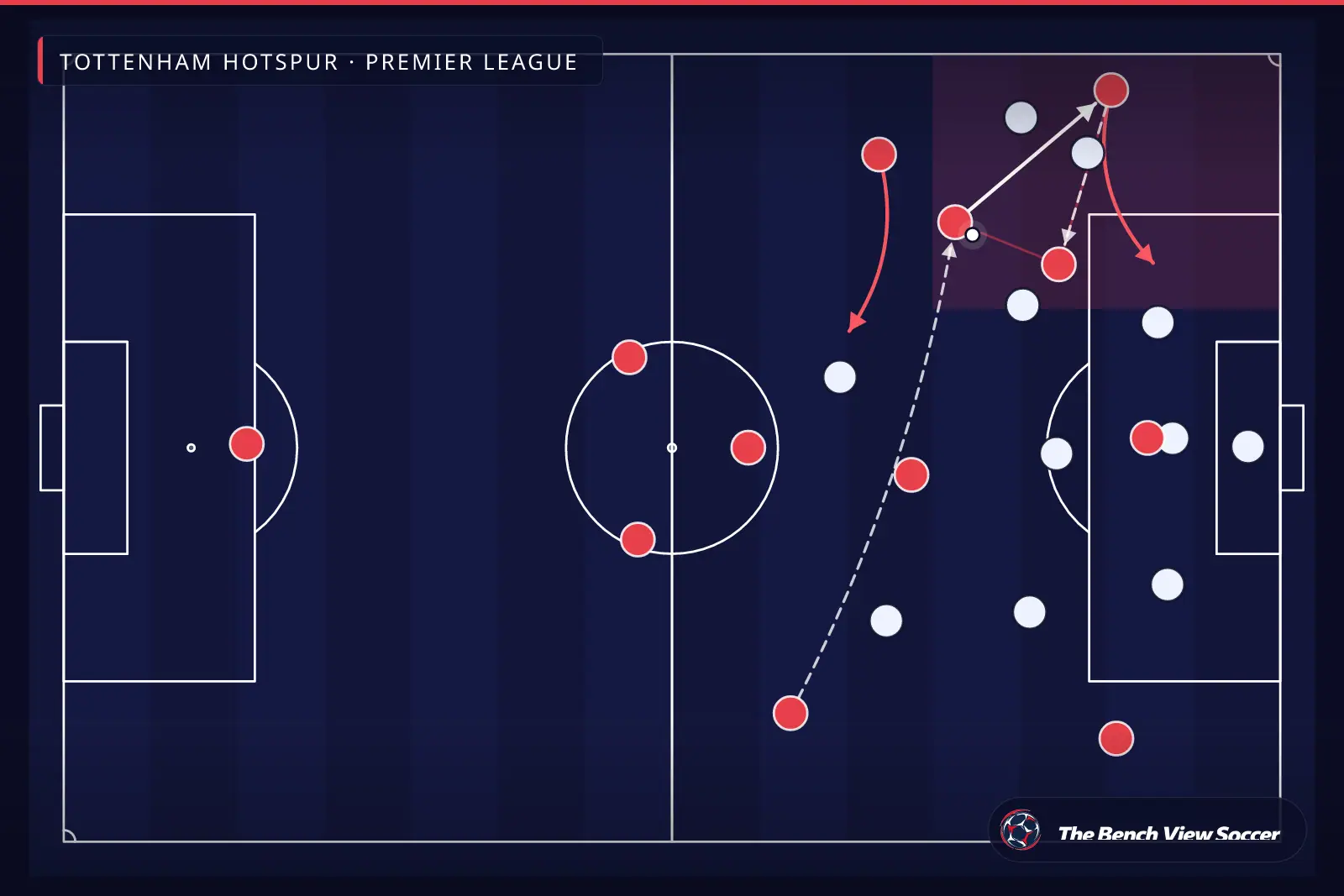
Tottenham Hotspur: Why a Gakpo-Style Inverted Winger Unlocks 3-2-5
August 25, 2026
Manchester United's Baleba Move Fixes Their Rest-Defense Gap
August 22, 2026
Rodri to FC Barcelona: How the Pivot Reinvents Rest-Defense
August 19, 2026
Manchester City's Rest-Defense Without Rodri: The Real Test Ahead
August 18, 2026